 Nana Wu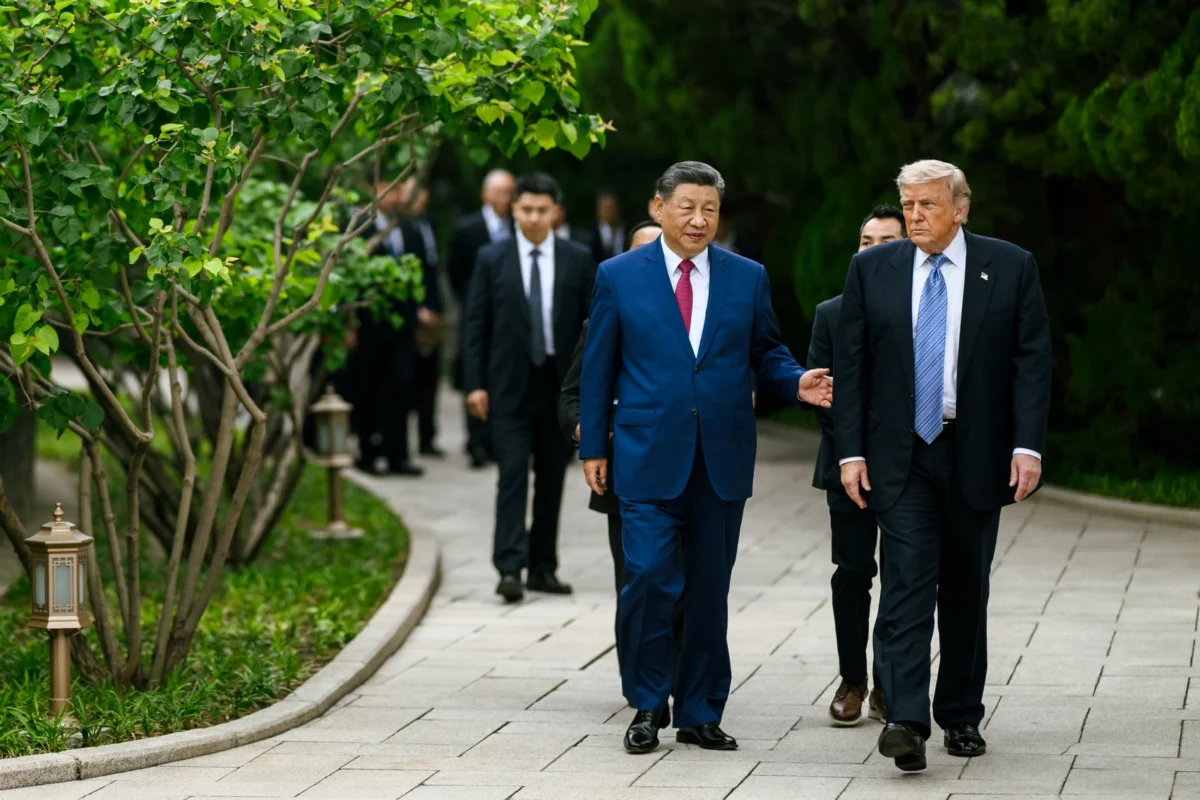
Beijing has voiced "serious concern" over Washington’s recent economic and trade restrictions, China’s top trade official conveyed to his American counterparts during a high-level video conference on Thursday. This latest exchange underscores the persistent and often fraught economic relationship between the world’s two largest economies, signaling a renewed phase of tension following a period of relative calm. The call, which included Chinese Vice Premier He Lifeng, US Treasury Secretary Scott Bessent, and US Trade Representative Jamieson Greer, took place amidst a backdrop of new US tariffs and a targeted ban on certain Chinese-manufactured robots, actions that Beijing views as a deliberate attempt to suppress its industrial and technological advancement.
The discussions, characterized by China’s state news agency Xinhua as "candid, in-depth and constructive," nevertheless revealed deep divisions. While both sides ostensibly sought to "maintain stable economic and trade ties" and "properly address mutual concerns," the differing readouts from Washington and Beijing highlighted fundamental disagreements. US Treasury Secretary Bessent, in a statement released via social media, affirmed the call and stressed Washington’s expectation for China to "fully meet its commitments on rare earths and US agricultural products," further indicating that compliance with existing agreements remains a key US priority. He also mentioned the "implementation of the Trade and Investment Boards as a mechanism to secure concrete progress toward a more balanced, fair, and constructive US-China economic relationship," suggesting a desire for structured dialogue despite the ongoing friction.

Deepening Trade Tensions: New Tariffs and Strategic Bans
The immediate catalyst for China’s "serious concern" stems from two distinct, yet interconnected, US actions. Firstly, the United States recently imposed fresh tariffs on a majority of its trading partners, including China and 59 other countries. These duties were levied over alleged forced labor concerns, a contentious issue that has increasingly become a focal point of US trade policy towards China. Beijing vehemently condemned these tariffs, warning Washington against initiating a broader trade war and asserting that the allegations are unfounded.
Allegations of Forced Labor and the Uyghur Forced Labor Prevention Act
The forced labor allegations primarily relate to the Xinjiang Uyghur Autonomous Region, where the US government and various international human rights organizations claim that China is engaging in systematic human rights abuses, including forced labor in manufacturing supply chains. The US has operationalized its concerns through legislative measures such as the Uyghur Forced Labor Prevention Act (UFLPA), enacted to ensure that goods made with forced labor in Xinjiang do not enter the American market. This act places the burden of proof on importers to demonstrate that their supply chains are free from forced labor. While the original article specifies "tariffs imposed on 60 countries," the primary driver for such tariffs against China specifically, in the context of forced labor, is almost certainly related to Xinjiang. China consistently denies these accusations, characterizing them as internal affairs and Western interference, designed to destabilize the region and impede China’s economic development. The imposition of tariffs on this basis marks a significant escalation, intertwining human rights concerns directly with trade policy and potentially impacting a vast array of Chinese exports.
The Strategic Significance of the Robot Ban
Adding another layer of complexity, Washington also announced a ban on imports of humanoid and quadruped robots manufactured abroad, specifically targeting Chinese companies. This move, separate from the broader tariffs, was explicitly described by China as an attempt to "suppress" Chinese companies. The ban highlights a growing trend of technological decoupling, where the US seeks to limit China’s access to advanced technologies or prevent the entry of Chinese high-tech products into its markets, citing national security concerns. Robots, particularly advanced humanoid and quadruped variants, are considered critical technologies with dual-use potential, having applications in both civilian industries and military operations. This ban reflects a strategic effort by the US to safeguard its technological leadership and supply chain security in emerging sectors, further exacerbating the tech rivalry between the two nations.

Background: A Protracted Trade Saga
The current surge in tensions is not an isolated incident but rather the latest chapter in a protracted economic rivalry that has defined US-China relations for several years. The foundational elements of this conflict were firmly established during the administration of former US President Donald Trump.
Origins of the Trade War (2018-2019)
The US-China trade war officially ignited in early 2018, when the Trump administration began imposing tariffs on billions of dollars worth of Chinese goods. The initial tariffs were justified under Section 232 of the Trade Expansion Act of 1962, targeting steel and aluminum imports, which the US claimed posed a national security threat. This quickly escalated into a broader dispute, with the US initiating a Section 301 investigation into China’s intellectual property practices, forced technology transfer policies, and state-subsidized industries. The findings of this investigation led to successive rounds of tariffs on a wide range of Chinese products, prompting retaliatory tariffs from Beijing on US agricultural products, automobiles, and other goods. The trade war saw both nations imposing duties on hundreds of billions of dollars worth of each other’s exports, creating significant uncertainty for global businesses and supply chains. The primary US objectives were to reduce the substantial trade deficit with China, compel China to cease alleged unfair trade practices, and protect American industries.
The Phase One Truce and Unfulfilled Pledges
A temporary de-escalation occurred following a meeting between President Trump and Chinese President Xi Jinping in October of last year (referring to October 2019). This meeting laid the groundwork for what became known as the "Phase One" trade deal, formally signed in January 2020. The agreement represented a significant truce, with China committing to purchase an additional $200 billion worth of US goods and services over two years (2020 and 2021), relative to 2017 levels. These purchases included substantial increases in agricultural products, manufactured goods, energy, and services. In return, the US agreed to halve some tariffs and postpone others. Crucially, the deal also included provisions addressing intellectual property protection, technology transfer, and currency practices. However, even with the Phase One deal in place, significant tariffs remained on approximately $370 billion worth of Chinese imports, and many structural issues underlying the trade dispute were left unresolved, setting the stage for future conflicts. Data subsequently showed that China fell significantly short of its purchase commitments, particularly in energy and manufactured goods, fueling US frustration and contributing to the renewed tensions observed today.

The High-Level Dialogue: Diplomatic Exchange Amidst Strain
The video call on Thursday represented a critical high-level engagement between economic leaders of both nations, occurring at a moment when bilateral relations are particularly strained. The participants underscore the importance of the economic portfolios each holds.
China’s Stance: Concern Over Suppression
Chinese Vice Premier He Lifeng, a key economic policy advisor to President Xi Jinping and a prominent figure in China’s financial and economic decision-making, led the Chinese delegation. His expression of "serious concern" regarding recent US restrictions signals China’s official displeasure and its perception that these actions are not merely about trade imbalances or fair competition, but rather a concerted effort to hinder China’s economic rise. Beijing views the forced labor allegations as politically motivated and an infringement on its sovereignty, while the robot import ban is seen as a direct attack on its burgeoning high-tech sector, aimed at stifling innovation and growth in strategically important industries. This perspective frames the US actions as part of a broader "containment" strategy rather than legitimate trade enforcement. Xinhua’s description of the call as "candid" suggests that these concerns were articulated directly and forcefully.
US Demands: Commitment Fulfillment and Balanced Trade
On the US side, Treasury Secretary Scott Bessent and US Trade Representative Jamieson Greer represented Washington. Bessent, as the head of the Treasury Department, plays a crucial role in economic diplomacy, financial stability, and sanctions policy. Greer, as the chief trade negotiator, is responsible for developing and coordinating US trade policy, overseeing trade agreements, and enforcing trade laws. Their joint participation highlights the multifaceted nature of the US approach, encompassing both financial and trade aspects. Bessent’s statement emphasized two key US demands: the fulfillment of past commitments and the pursuit of a more balanced and fair economic relationship. This focus on "commitment fulfillment" directly refers to China’s unmet purchase targets under the Phase One trade deal, signaling that the US expects adherence to existing agreements as a prerequisite for improving trade ties. The call for a "balanced, fair, and constructive" relationship reiterates long-standing US grievances regarding market access, intellectual property protection, and China’s industrial policies.

Strategic Commodities and Unmet Commitments
The US explicitly highlighted China’s commitments on "rare earths and US agricultural products," two categories that hold immense strategic and economic importance for both nations.
Rare Earths: A Geopolitical Chess Piece
Rare earth elements are a group of 17 chemically similar metallic elements that are critical components in a vast array of high-tech products, including smartphones, electric vehicles, wind turbines, and advanced military equipment. China dominates the global supply chain for rare earths, accounting for a significant majority of mining, refining, and processing. This dominance grants Beijing considerable geopolitical leverage. Under the Phase One trade deal, China made commitments regarding energy products, which often include rare earths and other critical minerals. The US concern over China meeting these commitments underscores its broader anxiety about supply chain vulnerabilities and reliance on a single foreign source for strategically vital materials. Ensuring a stable and diversified supply of rare earths is a national security imperative for the US, as disruptions could severely impact its defense industry and technological innovation.
Agricultural Products: A Key US Export
US agricultural products, such as soybeans, pork, corn, and wheat, represent a substantial component of American exports to China. Farmers in key agricultural states are a powerful political constituency in the US, and their economic well-being is often tied to access to large export markets like China. Under the Phase One deal, China pledged to significantly increase its purchases of US agricultural goods. While China did increase some purchases, particularly soybeans, it ultimately fell short of the ambitious targets set, partly due to factors like the African Swine Fever outbreak affecting demand for feed and the overall economic impact of the COVID-19 pandemic. The US reiteration of these commitments reflects ongoing pressure from American agricultural producers and the administration’s desire to rectify the trade imbalance and demonstrate tangible benefits from trade agreements.

Mechanisms for Engagement: Trade and Investment Boards
Secretary Bessent’s mention of the "implementation of the Trade and Investment Boards" points to an ongoing effort to establish structured dialogue channels between the two economic powerhouses. These boards, if fully operationalized, would likely serve as platforms for regular, detailed discussions on trade disputes, investment policies, and economic cooperation, aiming to prevent disputes from escalating into full-blown crises. Such mechanisms are vital for managing complex bilateral relationships, providing a framework for technical experts and policymakers to address specific grievances and explore areas of mutual interest, even as broader geopolitical tensions persist. Their effectiveness, however, relies heavily on the political will of both sides to genuinely engage and seek common ground.
Looking Ahead: The September Summit
The Thursday video call was also framed as part of the preparations for an anticipated high-stakes meeting between US President Donald Trump and Chinese President Xi Jinping in September. President Trump had extended an invitation to President Xi during his visit to Beijing in May, though the September visit remains unconfirmed. Such a summit, if it proceeds, would be a pivotal moment for bilateral relations. High-level leader-to-leader engagements offer the potential for breakthroughs in stalled negotiations, but also carry the risk of further public disagreement if expectations are not managed carefully. For the US, the objectives would likely include securing concrete commitments on trade rebalancing, intellectual property protection, and human rights issues, as well as de-escalating the technological rivalry. For China, the goal would be to push back against perceived US containment efforts, emphasize mutual respect and non-interference, and potentially seek a reduction in tariffs and restrictions. The success or failure of such a summit could significantly shape the trajectory of US-China relations for years to come.
Broader Implications: Global Economic Ripple Effects
The ongoing trade tensions between the US and China carry profound implications far beyond their bilateral relationship, impacting global economic stability, supply chains, and international cooperation.

Global Economic Ripple Effects
Persistent trade disputes create uncertainty for businesses worldwide, disrupting global supply chains that have become deeply intertwined over decades. Industries reliant on components or raw materials from either the US or China face increased costs and operational challenges due to tariffs and import bans. This uncertainty can deter foreign direct investment, slow economic growth, and potentially contribute to inflationary pressures globally. Furthermore, the strategic decoupling, particularly in technology, could lead to a fragmentation of global technological standards and ecosystems, forcing other nations and multinational corporations to choose sides, thereby increasing inefficiencies and hindering innovation. The economic health of these two giants directly influences global commodity prices, financial markets, and the overall pace of global economic recovery.
The Future of US-China Economic Relations
The current state of US-China economic relations is characterized by a complex interplay of competition and interdependence. While both countries benefit from trade, the strategic rivalry has intensified, leading to a more protectionist and nationalistic approach to economic policy. The trajectory suggests a future where economic engagement is increasingly filtered through lenses of national security, human rights, and technological supremacy. This could manifest in continued targeted restrictions, export controls, and investment screening, even as diplomatic channels remain open to manage crises and prevent outright conflict. The rhetoric surrounding "serious concern" and "suppression" indicates that fundamental ideological and strategic differences continue to overshadow the practical benefits of cooperation, pointing towards a prolonged period of cautious engagement punctuated by moments of renewed tension. The ability of both nations to navigate this complex landscape will be crucial not only for their own prosperity but for the stability of the global economic order.


 Jia Lissa