 Jia Lissa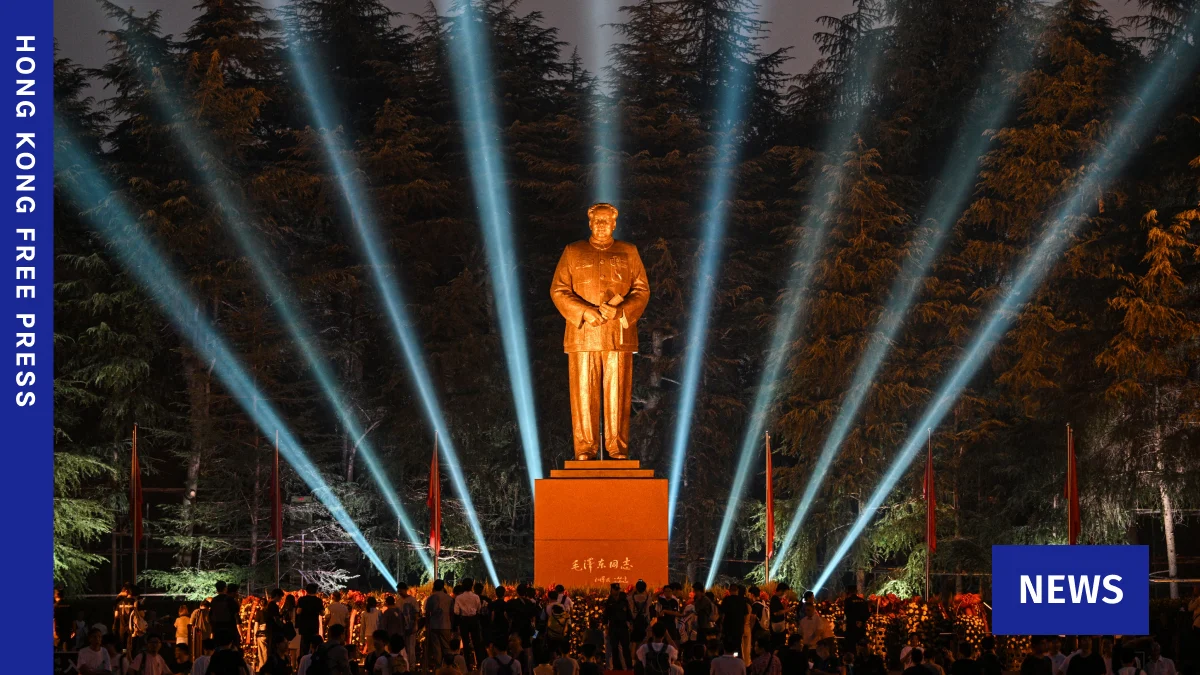
Fifty years after the death of Chairman Mao Zedong, the iconic leader who founded the People’s Republic of China, thousands of devoted admirers gathered in his birthplace of Shaoshan, Hunan province, to pay their respects. On Wednesday, September 9, 2026, a day marked by both solemn remembrance and fervent displays of allegiance, diehard fans lined up, holding aloft portraits of the late leader, waving national flags, and laying immense floral tributes, underscoring the enduring, yet deeply complex, legacy of one of the 20th century’s most transformative figures.
The anniversary of Mao’s passing on September 9, 1976, has become a significant occasion for many Chinese, particularly those who revere him as a visionary revolutionary and a symbol of national strength. The commemorations in Shaoshan, his remote hometown, served as a powerful testament to this continued devotion, even as historians and international observers grapple with the more devastating aspects of his rule. The atmosphere was a blend of organized reverence and spontaneous emotional outpouring, reflecting the nuanced official stance and diverse public perceptions of Mao Zedong in contemporary China.

A Pilgrimage to Shaoshan: Scenes of Reverence
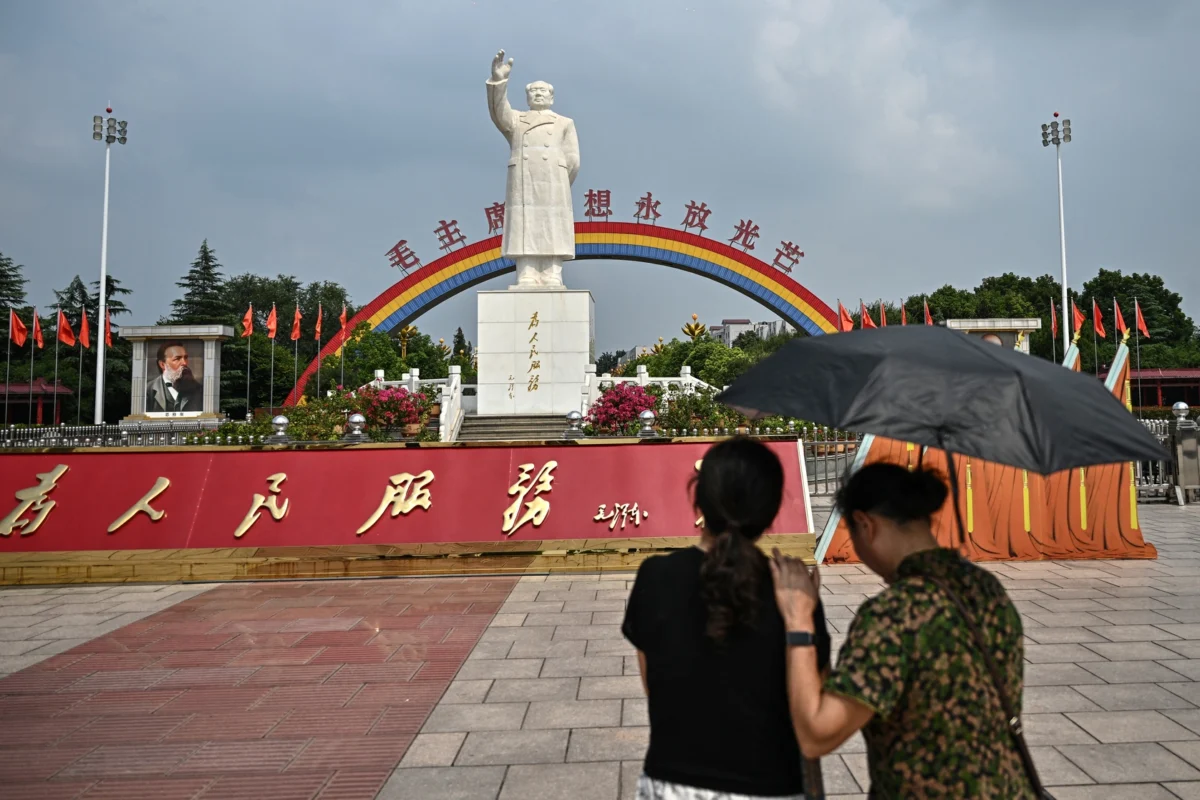
In Shaoshan, a village propelled from obscurity to national prominence by its most famous son, the central square was a focal point of the day’s events. Dominating the square is a towering 10-meter-tall bronze statue of Mao Zedong, depicting him in a classic, resolute pose. From early morning, a continuous stream of visitors, many of them university students and families, converged on the site. They moved in carefully organized queues, a testament to both the sheer number of attendees and the meticulous crowd management by local authorities, which included watchful police ensuring a steady flow and preventing prolonged lingering.
At the foot of the imposing statue, visitors laid a variety of offerings. Chrysanthemum wreaths, traditional symbols of mourning and respect, were abundant, alongside bottles of Chinese baijiu (alcohol) and cigarettes, offerings often associated with honoring ancestors and respected figures. Each individual or group paused for a few seconds of silent contemplation, bowing solemnly before the statue, a gesture of profound respect. Many also took the opportunity to pose for photographs, capturing their presence at this historic commemoration.
The reverence extended into the evening of September 8, the day before the official anniversary. Around 1,000 ardent admirers participated in an emotional ceremony at the statue. Dressed in the iconic, tunic-style Mao suits, a sartorial emblem of the revolutionary era, they brandished relics from a bygone age: old portraits of Mao and copies of the "Little Red Book," the collection of his quotations that was once a ubiquitous fixture of Chinese life. The air was filled with chants of "Long live Chairman Mao!" and the spirited singing of revolutionary songs, with some participants pumping their fists in the air, echoing the fervent political rallies of decades past.

One such visitor, Deng, a 28-year-old tourist, articulated a sentiment shared by many younger attendees. "I suddenly felt like coming here today to commemorate him, because the 50th anniversary is something that only comes around once in a lifetime," he told reporters, emphasizing the profound influence Mao’s spirit had on him. This generational engagement highlights how, for some, Mao represents not just a historical figure, but an enduring ideal, a point of reference for national identity and aspiration.
The Duality of Mao’s Legacy: Visionary Leader and Architect of Catastrophe
Chairman Mao Zedong’s life and leadership are inextricably linked to the birth and early decades of the People’s Republic of China. Born in Shaoshan in December 1893, he rose through the ranks of the Chinese Communist Party (CCP), eventually leading it to victory in the civil war and proclaiming the establishment of the PRC on October 1, 1949. His supporters laud him as the architect of modern China, a figure who liberated the nation from foreign domination and internal strife, unifying a fractured country and laying the groundwork for its emergence as a global power. They often point to his egalitarian ideals, his vision for a society free from exploitation, and his role in mobilizing the masses for national development.
However, Mao’s tenure was also marked by policies that led to immense suffering and loss of life. Historians widely attribute mass starvation and millions of deaths to his drastic campaigns, particularly the Great Leap Forward and the Cultural Revolution.

The Great Leap Forward (1958-1962): This ambitious economic and social campaign aimed to rapidly transform China from an agrarian economy into a communist society through industrialization and collectivization. Peasants were forced into communes, private farming was abolished, and agricultural targets were massively inflated. The policy resulted in catastrophic famine, exacerbated by poor harvests, mismanagement, and the diversion of labor to industrial projects. Estimates vary, but a consensus among historians suggests that between 30 to 45 million people died of starvation during this period, making it one of the deadliest famines in human history.
The Cultural Revolution (1966-1976): Launched by Mao to reassert his authority and purge perceived ideological enemies within the party and society, this decade-long sociopolitical movement plunged China into chaos. It involved the mobilization of Red Guards, mostly young students, who attacked traditional customs, culture, habits, and ideas, leading to the destruction of countless cultural relics and historical sites. Intellectuals, party officials, and anyone deemed "bourgeois" or counter-revolutionary faced public humiliation, persecution, imprisonment, torture, and death. The exact death toll is debated, but figures range from hundreds of thousands to several million. Widely regarded as China’s most shameful and destructive period since the Communist Party came to power, it brought the country to the brink of economic and social collapse.
The Official Narrative and Public Memory
Despite these devastating episodes, the Chinese Communist Party has maintained a carefully calibrated official assessment of Mao. The prevailing judgment, formulated after his death under Deng Xiaoping’s leadership, acknowledges his "mistakes" while affirming his overall contributions. The party line often summarizes his legacy as "70 percent good, 30 percent bad," portraying him as a great revolutionary leader whose later years were marred by errors. This narrative is crucial for the CCP’s legitimacy, as undermining Mao completely would question the very foundations of the People’s Republic.

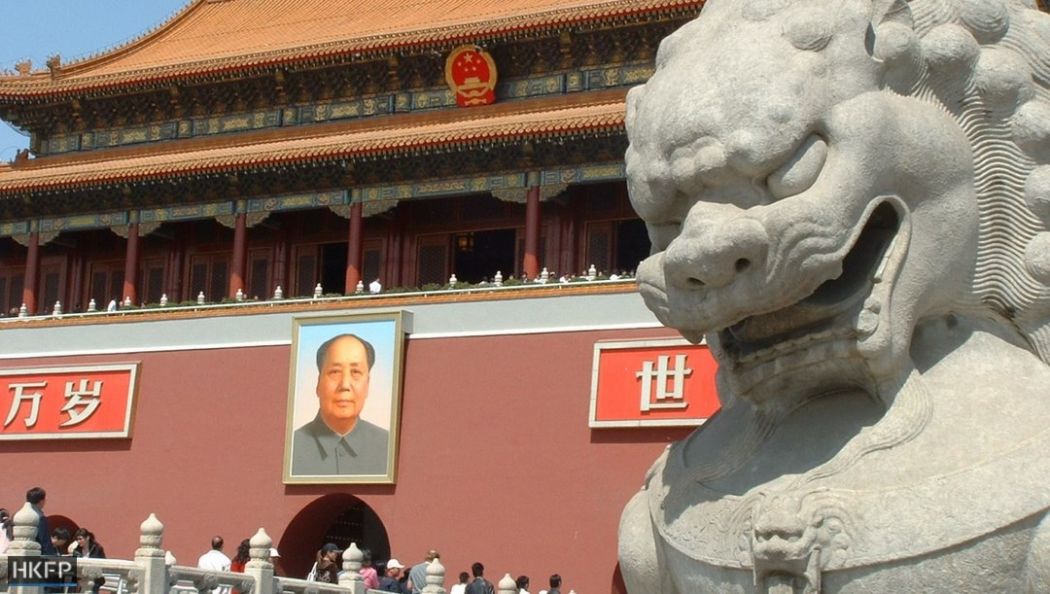
This official stance is reflected in the omnipresence of Mao’s image across China. His face is emblazoned on all denominations of the renminbi (Chinese banknotes). A colossal portrait of him gazes over Tiananmen Square in Beijing, an iconic symbol recognized globally. Many Chinese taxi drivers hang good luck charms bearing his face from their rear-view mirrors, a blend of superstition and reverence. In Shaoshan, souvenir stores thrive, selling hordes of Mao paraphernalia including badges, bronze figurines, caps, and T-shirts, demonstrating the commercialization and popular embrace of his image. Ouyang Qianli, a 40-year-old shop owner, expressed her joy at the crowds, saying, "He was selfless and pioneered a new era for China." She referred to him affectionately as "Grandpa Mao," a common term of endearment.
Red Tourism and the Reinforcement of History
Shaoshan’s status as Mao’s birthplace has made it a cornerstone of "red tourism," a government-backed initiative to encourage domestic travel to sites significant in the history of the Chinese Communist Revolution. Busloads of visitors arrive daily, drawn to the historical significance of the village where Mao was born in December 1893. Visitors form snaking queues to enter Mao’s childhood home, a humble abode overlooking rice paddies, where signs claim he helped cultivate the land in his youth.
This "red tourism" serves a dual purpose: it generates economic activity in revolutionary sites and, more importantly, functions as a powerful tool for ideological education and national cohesion. By promoting these historical landmarks, Beijing reinforces its preferred narrative of the Party’s heroic struggle and the nation’s revolutionary past, fostering patriotism and loyalty to the current leadership. Jing Shiming, a 63-year-old visitor from Shanghai, articulated this sentiment, stating, "We must never forget the people who dug the well from which we drink." He added that Mao and his generation "transformed China from a backward and impoverished… country into the prosperous and strong nation it is today."
Nostalgia Amidst Economic Headwinds
The fervent commemoration of Mao Zedong this year also occurs against a backdrop of China grappling with a slowing economy, increasing social pressures, and widening income disparities. This economic context is seen by many analysts as a significant driver behind the growing nostalgia for Mao’s egalitarian ideals. For some segments of the population, the Mao era, or at least an idealized version of it, represents a time of greater social equality, communal spirit, and national purpose, in stark contrast to the intense competition, high cost of living, and perceived moral erosion of contemporary society.
Johnny Wei, 30, observed that the current younger generation has "experienced certain pressures in their daily lives," leading them to "reflect on society, and they are beginning to look to history for answers." This suggests that for some, Mao’s revolutionary fervor and promise of a classless society offer a symbolic antidote to modern anxieties. The shop owner, Ouyang, recounted how her parents, who lived through the 1960s, "even cry" when speaking of that period. Yet, she also acknowledged a societal tendency to let "past hardships recede into the background" as people live "happy lives," hinting at a selective memory that often romanticizes the past.
The complex interplay of memory, official narrative, and contemporary challenges was evident in Deng’s reflections on the Cultural Revolution. While acknowledging it as "controversial," he concluded, "I see all of this as Comrade Mao Zedong’s arduous process of constantly exploring and striving for China. In his heart, I believe, he was ultimately seeking an ideal and equitable society for China." This perspective, which seeks to understand Mao’s actions through the lens of his perceived noble intentions, reflects a widespread desire among many admirers to reconcile the undeniable suffering of his era with their reverence for his foundational role.

A Timeline of Key Events in Mao Zedong’s Life and Legacy:
- December 26, 1893: Born in Shaoshan, Hunan province.
- 1921: Becomes a founding member of the Communist Party of China (CCP).
- 1927: Develops the strategy of "rural revolution," advocating for peasant-based insurgency.
- 1934-1935: Leads the Long March, solidifying his leadership within the CCP.
- 1937-1945: Plays a crucial role in the Second Sino-Japanese War.
- October 1, 1949: Proclaims the establishment of the People’s Republic of China (PRC) in Tiananmen Square, Beijing.
- 1950-1953: Oversees China’s involvement in the Korean War.
- 1958-1962: Initiates the Great Leap Forward, leading to widespread famine and millions of deaths.
- 1966-1976: Launches the Great Proletarian Cultural Revolution, causing widespread social, political, and economic upheaval.
- September 9, 1976: Dies in Beijing at the age of 82.
- 1978: Deng Xiaoping initiates economic reforms, moving away from Maoist economic policies.
- 1981: The CCP issues a resolution, "On Questions of Party History," officially assessing Mao’s legacy as "70 percent good, 30 percent bad."
- September 9, 2026: 50th anniversary of Mao Zedong’s death, marked by significant commemorations in Shaoshan and across China.
Broader Implications and Enduring Influence
Mao Zedong’s legacy remains a powerful and carefully managed force in Chinese politics and society. For the current leadership, particularly under President Xi Jinping, evoking Maoist themes of national rejuvenation, strong leadership, and ideological purity serves to reinforce the Party’s authority and continuity. While the excesses of the past are acknowledged, the foundational narrative of Mao as the architect of a strong, independent China is paramount.
Internationally, Mao’s legacy is viewed with greater critical scrutiny, with academic discourse often focusing on the human cost of his policies. However, within China, this critical perspective is largely absent from public discourse, replaced by a narrative that emphasizes his role in nation-building and revolution. The ongoing commemorations, therefore, are not merely historical tributes but active affirmations of a particular historical memory that continues to shape China’s national identity and political landscape.
As China navigates its path in the 21st century, the figure of Mao Zedong remains deeply embedded in its consciousness – a symbol of revolutionary triumph, a source of national pride, and a figure whose controversial past continues to spark debate and inspire profound, often contradictory, emotions among its people. The 50th anniversary of his death serves as a potent reminder of this enduring and complex historical presence.

 Sagoh
Sagoh