Lina Irawan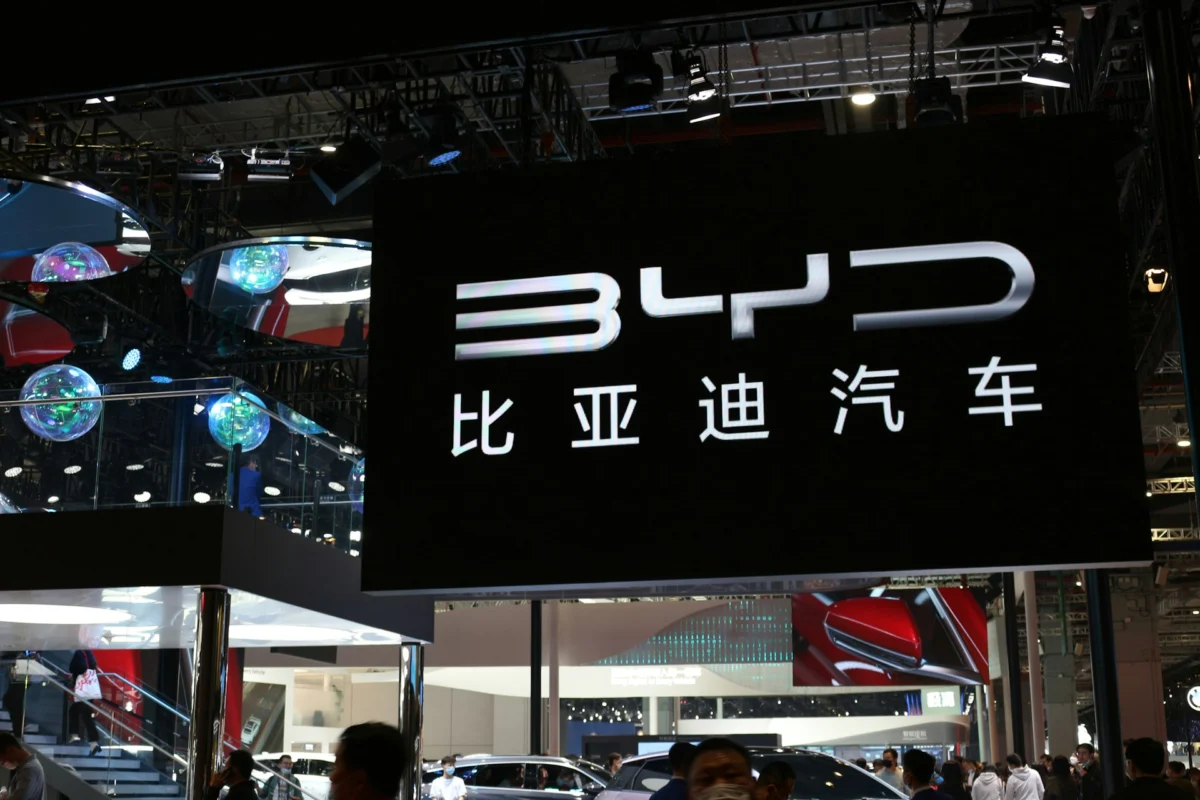
BYD, the world’s leading manufacturer of new energy vehicles (NEVs), has announced plans for an overseas launch event for its ultra-luxury Yangwang brand, signaling a significant escalation in its global premiumization strategy. This pivotal move, revealed in the record of the company’s September 29 shareholder meeting, underscores BYD’s ambition to challenge established luxury automotive marques on an international scale. While specific dates and locations for the Yangwang debut abroad were not disclosed, the announcement coincides with an aggressive expansion of BYD’s global manufacturing footprint, with its Brazil plant targeting an annual production of approximately 250,000 vehicles and its Hungary plant poised to commence production soon. These strategic initiatives collectively form part of BYD’s broader and meticulously orchestrated effort to solidify its premium brand presence and manufacturing capabilities beyond its domestic market in China.
Yangwang: BYD’s Foray into Ultra-Luxury Electric Vehicles
The Yangwang brand, launched domestically in China in January 2023, represents BYD’s most ambitious foray into the high-end automotive segment. Positioned as an ultra-luxury electric vehicle marque, Yangwang aims to combine cutting-edge technology, unparalleled performance, and opulent design to redefine the premium EV experience. Its inaugural models, the U8 SUV and the U9 supercar, have already garnered significant attention for their innovative features and formidable capabilities.
The Yangwang U8, an all-electric off-road SUV, is particularly notable for its "e4" platform, a quad-motor independent drive system that allows for unprecedented maneuverability, including the ability to perform a "tank turn" – a 360-degree rotation in place. This system also offers enhanced safety features, such as emergency flotation capabilities, showcasing BYD’s commitment to pushing the boundaries of automotive engineering. With a starting price point exceeding 1 million Chinese Yuan (approximately $140,000 USD), the U8 directly targets the luxury off-road segment dominated by vehicles like the Mercedes-Benz G-Class and Land Rover Defender, but with a fully electric, technologically advanced proposition.
The Yangwang U9 supercar, on the other hand, is designed to compete with the likes of electric hypercars from established European brands. Featuring BYD’s DiSus-X intelligent body control system, the U9 promises exceptional handling, acceleration, and a dynamic driving experience. The decision to introduce Yangwang to overseas markets reflects BYD’s confidence in its technological prowess and its belief that its premium offerings can resonate with discerning global consumers who seek innovation, performance, and exclusivity in their luxury vehicles. This global launch is not merely about selling cars; it is about elevating BYD’s brand perception from a mass-market EV producer to a leader in luxury electric mobility.
BYD’s Global Expansion: A Strategic Imperative
BYD’s announcement regarding Yangwang’s overseas launch is a direct manifestation of its overarching "Go Global" strategy, which has seen the company rapidly expand its international presence across multiple continents. From its origins as a battery manufacturer in the mid-1990s, BYD has evolved into a vertically integrated automotive giant, controlling everything from battery production and semiconductor manufacturing to vehicle assembly. This vertical integration provides a significant competitive advantage, enabling greater cost control, supply chain resilience, and faster innovation cycles.
Over the past few years, BYD has aggressively entered new markets, establishing sales and distribution networks in Europe, Latin America, Southeast Asia, and Australia. The company’s international sales have seen exponential growth, contributing an increasing share to its overall revenue. In 2023, BYD surpassed Tesla in global EV sales for the first time, cementing its position as the world’s largest EV manufacturer by volume. However, volume alone is not enough for long-term sustainable growth and enhanced profitability. The premium segment offers higher margins and contributes significantly to brand equity, making Yangwang’s global push a critical component of BYD’s future trajectory.
The expansion into new geographical markets is driven by several factors: the desire to diversify revenue streams away from a heavily competitive Chinese domestic market, the ambition to establish BYD as a truly global automotive brand, and the need to circumvent potential trade barriers or geopolitical challenges by localizing production. The strategic investments in manufacturing facilities in Brazil and Hungary are prime examples of this multi-faceted approach.
Manufacturing Hubs: Bolstering Global Production Capacity
The revelation of ambitious production targets for the Brazil plant and the imminent operational status of the Hungary facility highlights BYD’s commitment to building regional manufacturing hubs to support its global sales ambitions. These plants are crucial for BYD to serve diverse international markets efficiently, reduce logistics costs, mitigate import tariffs, and respond more agilely to local market demands.
Brazil: A Gateway to Latin American Growth
BYD’s plant in Camaçari, Bahia state, Brazil, represents a monumental investment and a strategic foothold in the burgeoning Latin American automotive market. Announced in July 2023, the complex is being developed on the site of a former Ford factory, underscoring the shift in global automotive manufacturing dynamics. BYD has committed approximately R$3 billion (around $600 million USD) to establish a multi-factory complex that will encompass three distinct units: a passenger electric vehicle production plant, a chassis production plant for electric buses and trucks, and a dedicated facility for processing lithium and iron phosphate for battery materials.
The target of producing about 250,000 vehicles annually from the Brazil plant is highly ambitious and would position BYD as a significant player in the region’s automotive landscape. This capacity will enable BYD to supply its growing demand across Brazil and potentially other Latin American countries, where EV adoption is steadily increasing. Local production offers numerous advantages, including job creation, technology transfer, and the ability to tailor vehicles more precisely to local consumer preferences and regulatory requirements. It also strengthens BYD’s supply chain resilience by reducing reliance on exports from China, a critical factor in today’s complex global trade environment.
Hungary: BYD’s Strategic European Production Base
The decision to establish a passenger car manufacturing plant in Szeged, Hungary, marks another landmark for BYD. Announced in December 2023, this facility will be the first passenger car factory built by a Chinese automaker in Europe, signifying a pivotal moment for both BYD and the European automotive industry. The plant is expected to create thousands of jobs and will serve as a crucial production hub for BYD’s rapidly expanding European market presence.
While the initial production models from the Hungarian plant are likely to be BYD’s more mainstream passenger vehicle offerings, such as the Atto 3 (Yuan Plus) or Dolphin, its establishment paves the way for potential future localization of other models, including potentially components or even full assembly of premium brands like Yangwang, should demand warrant it. Europe is a highly competitive and discerning market, and local production provides BYD with a significant advantage in terms of meeting local content requirements, reducing logistical lead times, and enhancing its image as a committed European stakeholder rather than just an importer. The plant will also help BYD navigate potential trade protectionist measures that could arise in the future, particularly as European policymakers express concerns over the influx of Chinese-made EVs.
The Competitive Landscape of Luxury EVs
The global luxury EV market is intensely competitive, with established players like Porsche (Taycan), Mercedes-EQ (EQS, EQE), BMW i (i7, i5), Audi (e-tron GT), and Tesla (Model S, Model X) already vying for market share. Newer entrants like Lucid Motors and Rivian also offer premium electric experiences. BYD’s entry with Yangwang into this arena represents a formidable challenge to these incumbents, but also an opportunity to differentiate itself through its unique technological propositions.
Yangwang’s e4 platform, with its independent quad-motor drive, offers a level of control and performance that few competitors can match. The DiSus-X intelligent body control system, capable of precise vertical, lateral, and longitudinal control, further enhances vehicle dynamics and comfort, setting a new benchmark for luxury EVs. Furthermore, BYD’s proprietary Blade Battery technology, known for its safety, longevity, and energy density, underpins all its vehicles, offering a compelling package of innovation and reliability.
However, brand perception and service infrastructure remain critical hurdles for any new luxury brand, especially one originating from China, in established Western markets. Building trust, desirability, and a robust after-sales network will be paramount for Yangwang’s success overseas. BYD will need to invest heavily in marketing, dealer networks, and customer experience to cultivate the exclusive image and service expectations associated with ultra-luxury brands.
Implications and Future Outlook
The combined strategic moves — the global launch of Yangwang and the significant expansion of overseas manufacturing — carry profound implications for BYD, the broader automotive industry, and the global EV transition.
For BYD, these actions are critical for solidifying its position as a global automotive powerhouse. By diversifying its product portfolio into the lucrative luxury segment and localizing production, BYD is de-risking its business model, enhancing its brand equity, and creating new avenues for growth and profitability. Success in the premium segment will also boost the perception of its more mainstream offerings, demonstrating the company’s advanced technological capabilities across its entire product range.
For the automotive industry, BYD’s aggressive internationalization, particularly with a luxury brand, signals a continued shift in global automotive power dynamics. Chinese automakers, once primarily focused on their domestic market, are now formidable global competitors, driving innovation and accelerating the transition to electric vehicles worldwide. This increased competition will likely spur further technological advancements, potentially leading to more competitive pricing and a wider array of choices for consumers.
The establishment of manufacturing plants in Brazil and Hungary also reflects a broader trend of supply chain regionalization. As geopolitical tensions rise and the importance of localized production for resilience and tariff avoidance grows, more automakers are likely to invest in regional manufacturing hubs. This could lead to shifts in employment, industrial development, and economic landscapes in host countries.
In conclusion, BYD’s announcement regarding the overseas launch of its Yangwang luxury brand, coupled with the rapid expansion of its production facilities in Brazil and Hungary, marks a pivotal moment in the company’s ambitious global strategy. These initiatives underscore BYD’s unwavering commitment to becoming a dominant force in the global automotive landscape, not just in volume but also in the prestigious and highly competitive luxury electric vehicle segment. The coming years will reveal the extent to which BYD can translate its domestic success and technological prowess into a globally recognized and revered premium automotive brand, reshaping the future of mobility in the process.

 Suro Senen
 Reynand Wu