Suro Senen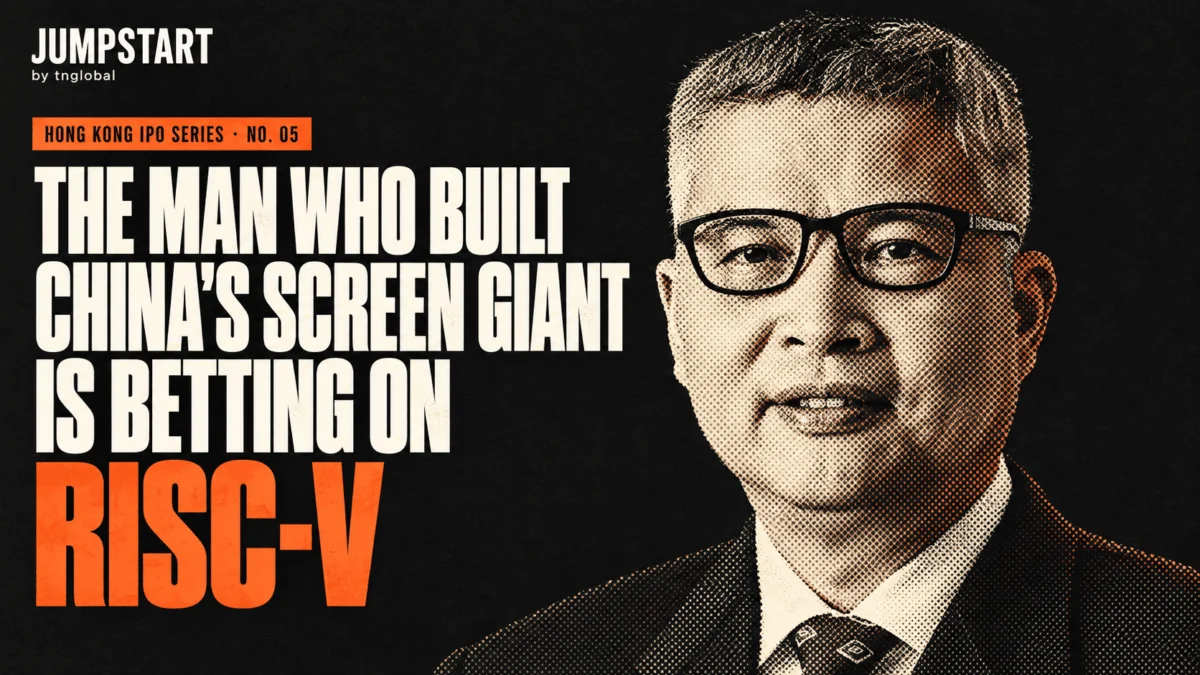
ESWIN Computing, a Beijing-based chip company spearheaded by veteran industrialist Wang Dongsheng, is poised to make its debut on the Hong Kong Stock Exchange, offering 1.57 billion H shares at an indicative price range of HK$1.48 to HK$1.59 each. Trading is slated to commence on October 9 under the stock code 1256, according to its recently published prospectus. This listing marks a significant turning point for ESWIN, positioning it as a key player in the burgeoning RISC-V ecosystem, an open instruction-set architecture that is rapidly gaining traction across diverse sectors including embedded devices, automotive, robotics, and artificial intelligence. The move is particularly notable given Wang Dongsheng’s illustrious first career, where he founded BOE, transforming it into a global leader in display manufacturing and proving China’s capability to excel in capital-intensive technology industries.
A Visionary’s Second Act: From Displays to Semiconductors
Wang Dongsheng, at 62, an age when many industry leaders contemplate retirement, embarked on his second major venture with ESWIN Group in 2019, separating its semiconductor activities into distinct business units. ESWIN Computing emerged from this restructuring, focusing on chip products that had been under development since 2018 within a predecessor organization. This strategic pivot into the highly competitive semiconductor landscape is reminiscent of Wang’s earlier ambition with BOE. In 1993, he led the charge to establish BOE at a time when China’s electronics industry was heavily reliant on imported display technologies and manufacturing equipment. Under his stewardship, BOE not only survived the punishing cycles of capital expenditure and rapid technological obsolescence but thrived, becoming one of the world’s largest producers of screens, supplying panels for hundreds of millions of televisions, laptops, and smartphones globally.
Wang’s departure from BOE’s chairmanship in 2019 did not signal a retreat from industrial innovation. Instead, it marked the beginning of ESWIN, founded on the same core philosophy: that an industrial platform, capable of enduring multiple product generations and market shifts, holds greater long-term value than any single product. This ethos is now being applied to the semiconductor industry, particularly through the lens of RISC-V, an open and royalty-free standard that offers unprecedented flexibility for chip designers.
The RISC-V Revolution: An Open Standard for a New Era
RISC-V, pronounced "risk five," is not a chip itself but an instruction-set architecture (ISA) – the fundamental set of commands that software uses to communicate with a processor. Unlike proprietary ISAs like x86 (Intel, AMD) or Arm, which typically involve licensing fees and commercial constraints, RISC-V’s open nature allows companies, universities, and developers to design custom processors without incurring direct costs for the instruction set. Its modular design is a significant advantage, enabling designers to start with a minimal core and add specific capabilities tailored to a product’s needs, such as a car controller, industrial sensor, or AI accelerator.
This openness is particularly appealing in a global technology landscape increasingly focused on supply chain resilience and national technological sovereignty. With rising geopolitical tensions and concerns over reliance on foreign intellectual property, RISC-V offers a viable alternative for countries and companies seeking greater control over their foundational hardware. The RISC-V International organization, which stewards the standard, has seen a surge in membership and adoption, indicating a strong industry shift towards more flexible and customizable chip design. Market analysts project significant growth for RISC-V-based processors, especially in embedded systems, IoT, and AI edge devices, with some forecasts predicting billions of RISC-V cores to be shipped annually within the next decade.
ESWIN Computing aims to capitalize on this trend by developing RISC-V cores and reusable intellectual property (IP), integrating them with other processing and connectivity functions, and providing the necessary software for specific applications. The company’s development environment, dubbed RISAA, is designed to facilitate the reuse of hardware and software modules, theoretically accelerating product development and distributing research costs across a broader product portfolio. As of March 2026, ESWIN reported an impressive library of over 620 IP modules, more than 20 series of RISC-V cores, and over 1,740 patent applications, underscoring its commitment to building a comprehensive platform.
Chronology of ESWIN’s Evolution and Strategic Milestones
- 1993: Wang Dongsheng leads the founding of BOE in Beijing, initiating China’s journey towards display manufacturing self-sufficiency.
- 2016: Wang steps down as CEO of BOE, continuing as Chairman.
- 2018: A predecessor organization begins operating chip product development, laying the groundwork for ESWIN Computing.
- June 2019: Wang Dongsheng’s term as BOE Chairman concludes.
- September 2019: ESWIN Group is formally established in Beijing, with Wang Dongsheng initially serving as Chairman. The group’s semiconductor activities are structured into chip products (ESWIN Computing), 12-inch silicon wafers, board-level packaging and testing, and display-driver packaging and testing. A central research institute for RISC-V architecture and high-speed interfaces is also created.
- 2019: Mi Peng joins ESWIN as Chief Financial Officer, later becoming Chairman and Chief Executive. Wang Dongsheng remains an executive director and chairs the strategy and investment committee.
- 2021: ESWIN delivers its first 32-bit RISC-V IP, signaling its deep dive into the open architecture. The company also begins emphasizing edge and automotive products.
- 2022: The automotive development program is launched, targeting a crucial and complex market.
- 2023: ESWIN releases a 64-bit RISC-V IP. Its RISC-V microcontroller enters mass production with an automotive-parts supplier and a vehicle manufacturer, a critical validation of its technology in a stringent industry.
- 2025: A leading monitor manufacturer begins mass production of a RISC-V multimedia controller supplied by ESWIN. Its OLED display-driver chip is adopted by a leading smartphone manufacturer.
- March 2026: ESWIN reports over 620 IP modules, 20+ RISC-V core series, and 1,740+ patent applications, with over 150 commercialized hardware-software products serving 220 customers.
- 2026 (first three months): Computing revenue surges, accounting for almost half of quarterly sales. The company also begins developing a high-performance RISC-V AI system-on-chip for large-model inference, and another RISC-V AI chip is adopted by a consumer-storage manufacturer.
- September 2026: ESWIN Computing announces its Hong Kong IPO, setting the stage for public trading.
The Foundation: Display-Related Chips Fueling Innovation
Despite its strategic focus on RISC-V and emerging computing applications, ESWIN’s current revenue streams remain heavily anchored in display-related chips, reflecting Wang Dongsheng’s deep expertise in that industry. In 2025, human-machine interaction (HMI) chips constituted the largest product group, generating RMB1.86 billion and accounting for 76.3% of total revenue. These components, critical for the functionality of televisions, monitors, laptops, smartphones, and smartwatches, include timing controllers, touch controllers, power management chips, and display drivers. ESWIN was recognized as China’s largest domestic provider of HMI chips for smart devices by revenue in 2025, according to market research cited in its prospectus.
Multimedia-processing chips, encompassing television system-on-chips (SoCs), monitor scalers, and Mini-LED or Micro-LED controllers, contributed an additional 6.2% of revenue. Collectively, screen-related products represented over four-fifths of ESWIN’s business in 2025. This established revenue base is not merely a historical legacy but the financial engine supporting ESWIN’s ambitious expansion into new markets and its substantial investment in RISC-V development. The continued success in this sector, including the adoption of ESWIN’s OLED display-driver chip by a leading smartphone manufacturer, demonstrates how RISC-V can be incrementally integrated into existing, high-volume devices, often in backend control functions invisible to the end-user.
Charting New Territories: Embodied Intelligence and High-Performance Computing
ESWIN’s strategic growth areas are categorized into interconnectivity and computing, grouped under the umbrella term "embodied intelligence" – machines that perceive and interact with the physical world. This includes applications in automotive systems, robotics, industrial automation, and advanced edge computing. The company began prioritizing edge and automotive products in 2021, a pivotal shift towards more complex and demanding applications.
The financial impact of this diversification is becoming increasingly evident. Computing products, which generated a mere RMB375,000 in 2023, saw a dramatic increase to RMB72.3 million in 2024 and further surged to RMB319.8 million in 2025, reaching 13.2% of total revenue. The first quarter of 2026 showcased even more accelerated growth, with computing revenue hitting RMB223 million, nearly half of the quarterly sales. While such fluctuations can be common in large system projects, this trend strongly indicates a successful penetration into new market segments.
ESWIN’s portfolio in these areas spans edge-computing chips, multi-purpose computing hardware, and video-transcoding cards. The company’s development of a high-performance RISC-V AI system-on-chip for large-model inference and the adoption of another RISC-V AI chip by a consumer-storage manufacturer highlight its ambition to become a significant player in the rapidly evolving AI hardware landscape. The challenge, however, lies in proving that the underlying platform of processor cores, interfaces, software, and supply-chain relationships can genuinely be reused across vastly different application requirements, from a simple monitor controller to a complex automotive microcontroller or an AI inference engine. Each market demands specialized engineering, stringent qualification, and dedicated customer support, testing the true versatility of ESWIN’s platform strategy.
Financial Performance and the IPO’s Strategic Imperative
ESWIN’s revenue has demonstrated consistent growth, rising from RMB1.75 billion in 2023 to RMB2.03 billion in 2024 and RMB2.43 billion in 2025. Gross margin has also shown improvement, from 15.4% to 18.6% over the same period. However, the company remains significantly loss-making, reflecting its heavy investment in research and development and its expansion into new, capital-intensive markets. ESWIN reported net losses of RMB1.84 billion in 2023, RMB1.55 billion in 2024, and RMB1.52 billion in 2025, with a further loss of RMB374.9 million in the first quarter of 2026. The company explicitly states that it anticipates continued losses for the foreseeable future, a common characteristic for technology companies in their intensive growth phases.
The primary driver of these losses is substantial R&D expenditure, which reached RMB1.44 billion in 2023—representing over 80% of that year’s revenue—and remained above RMB1 billion in 2025. This aggressive investment underscores ESWIN’s commitment to building out its RISC-V platform, developing new products, and expanding its IP library. While administrative and sales expenses add to the cost burden, the bulk of the financial strain comes from product development that requires significant upfront investment long before generating meaningful commercial volumes. The adjusted net loss, excluding share-based payments and listing expenses, narrowed from RMB1.70 billion in 2023 to RMB1.16 billion in 2025, indicating some efficiency gains but still highlighting the significant capital requirements.
The Hong Kong IPO is therefore crucial for ESWIN, providing the necessary capital runway to sustain its ambitious development plans. At the midpoint of its price range, the offering is expected to yield approximately HK$2.27 billion in net proceeds. The planned allocation of these funds is highly strategic: 35% will be dedicated to developing and updating chip products, 30% to enhancing the RISAA hardware-software platform, 15% to potential acquisitions that could bolster its technology or market reach, 10% to marketing and strengthening the RISC-V ecosystem, and 10% to working capital. This allocation clearly signals to investors that the listing’s primary purpose is to finance further platform development and market penetration, rather than immediate profitability.
Risks and Competitive Landscape
ESWIN faces several inherent risks, characteristic of a rapidly expanding technology company in a highly competitive sector. Customer concentration is a significant concern; in 2025, the five largest customers accounted for 89.5% of revenue, with the largest single customer contributing 64.6%. While this concentration has shown signs of decreasing (to 39.3% in Q1 2026 as computing revenue grew), it still exposes ESWIN to substantial influence from a limited number of clients regarding pricing, inventory management, and order timing. The prospectus describes this largest customer as a Shenzhen-listed provider of intelligent interface products, primarily purchasing HMI chips for televisions, monitors, and smartphones—a clear link back to Wang Dongsheng’s BOE heritage.
Inventory management also presents a challenge. Net inventory increased from RMB328.6 million at the end of 2023 to RMB780.1 million by March 2026, as the company geared up for new product launches and anticipated demand. In the fast-paced semiconductor industry, balancing inventory levels is critical: too little can mean missed market opportunities, while too much risks obsolescence and costly write-downs, as previously experienced with earlier-generation connectivity products.
The competitive landscape for ESWIN’s target markets is intense. While RISC-V offers an open alternative, the broader chip market is dominated by established giants like Qualcomm, MediaTek, Intel, AMD, Nvidia, and Arm, all with vast resources, extensive IP portfolios, and deep customer relationships. Even within the RISC-V ecosystem, ESWIN competes with well-funded startups like SiFive, Andes Technology, and even internal RISC-V initiatives from major tech companies like Alibaba’s T-Head. Entry into specialized markets such as automotive computing involves stringent qualification processes and long design cycles, further increasing the competitive pressure.
Broader Implications and Future Trajectory
ESWIN Computing’s journey, much like BOE’s, carries significant implications beyond its financial performance. For China’s ambitious drive for technological self-reliance, ESWIN’s success in building a robust domestic RISC-V ecosystem could be a vital contribution, reducing dependence on foreign chip architectures and fostering local innovation. For the global RISC-V movement, ESWIN’s ability to translate the open standard into commercially successful, high-volume products will serve as a crucial test case, potentially accelerating broader industry adoption and investment.
Ultimately, the Hong Kong listing is not merely a fundraising exercise; it is a public validation of Wang Dongsheng’s audacious second industrial bet. His first venture with BOE demonstrated that sustained investment, manufacturing discipline, and a long-term vision for an industrial platform could transform a nation’s capabilities. ESWIN is now making a similar argument for computing platforms in the age of open architectures. The difference, however, is that while RISC-V lowers the barrier to entry for processor design, success will hinge on ESWIN’s ability to build a comprehensive, reliable, and economically viable ecosystem around that open standard—one that can attract and retain customers in a fiercely competitive global market. The coming years will reveal whether Wang Dongsheng can indeed replicate his logic of industrial transformation in this even more unforgiving arena.

 Lina Irawan
 Reynand Wu