Rifan Muazin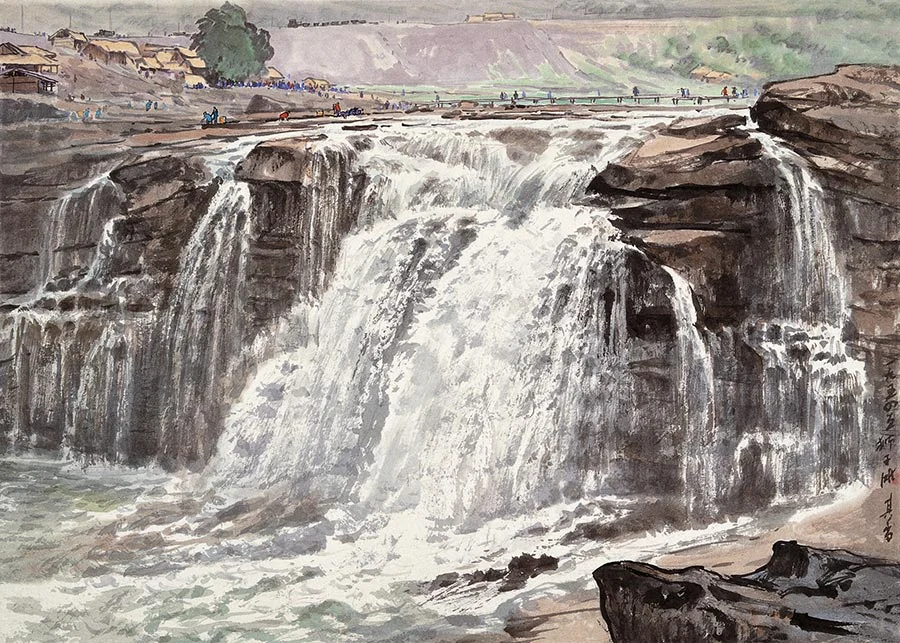
The National Art Museum of China (NAMOC) in Beijing has recently been enriched by a significant donation of 71 artworks from the esteemed painter and educator Zong Qixiang (1917-99). This generous contribution from his family marks the second major endowment to NAMOC, following a previous gift of 36 ink-brush paintings and watercolors in 2005. A selection of these newly donated pieces is currently being showcased at an exhibition at NAMOC, running through Sunday, titled Born to Painting. This exhibition serves as a poignant tribute to the artist’s centennial birth anniversary, celebrating a life dedicated to artistic innovation and profound engagement with the world.
A Legacy of Artistic Exploration
Zong Qixiang, a pivotal figure in 20th-century Chinese art, left an indelible mark on both painting and art education. His artistic journey was characterized by a relentless pursuit of aesthetic truth, a deep appreciation for nature, and a commitment to fostering independent thought among his students. The recent donation underscores the enduring legacy of his work and the family’s dedication to ensuring its accessibility to the public and its preservation within a national institution.
![Zong Qixiang's family donates 71 paintings to NAMOC[1]- Chinadaily.com.cn](http://www.chinadaily.com.cn/culture/art/tplimages/99330.files/f_art.gif)
The exhibition Born to Painting offers a comprehensive look at Zong’s diverse oeuvre, with a particular focus on his celebrated ink-brush series depicting Chongqing’s nocturnal cityscape. These powerful works emerged from a period of profound historical upheaval. Zong first sought refuge in Chongqing approximately 78 years ago, during the arduous War of Resistance Against Japanese Aggressions (1931-45). It was amidst this challenging backdrop that he found inspiration in the city’s unique topography and vibrant, albeit often obscured, nocturnal life.
His innovative approach to capturing the essence of Chongqing’s night is a testament to his mastery of ink wash techniques. Zong employed a sophisticated interplay of varying ink densities to delineate the subtle gradations of light and shadow characteristic of a dark night. Crucially, he adeptly utilized the traditional Chinese artistic principle of liubai, or "leaving blanks," not merely as empty space, but as an active element to convey the luminescence and atmosphere of the city. Through these carefully considered omissions and evocations of light, he was able to render the twinkling urban lights, the tiered settlements clinging to the mountainous terrain, the winding, rugged paths, and the bustling, sometimes chaotic, street scenes with remarkable vividness and emotional resonance. This meticulous attention to detail, combined with his profound understanding of atmospheric perspective, transformed the cityscape into a dynamic and living entity on paper.
A Life Rooted in Nature and Independent Thought
Beyond his urban nocturnes, Zong’s artistic vision was deeply interwoven with a lifelong love for nature. His canvases frequently burst with the vitality and grandeur of the natural world, reflecting a keen observation of its intricate beauty and elemental power. Whether depicting serene landscapes or dynamic natural phenomena, his work consistently conveyed a profound respect for the environment and its enduring spirit. This passion for nature was not merely an aesthetic pursuit but a philosophical underpinning of his artistic practice.
![Zong Qixiang's family donates 71 paintings to NAMOC[1]- Chinadaily.com.cn](http://www.chinadaily.com.cn/culture/art/tplimages/99330.files/w_art.gif)
Zong’s commitment to nurturing critical thinking was a cornerstone of his pedagogical philosophy. As an educator, particularly at the esteemed Central Academy of Fine Arts, he instilled in his students the importance of original thought and personal interpretation. His oft-quoted advice, "If you see the world from the perspective of other people, without the critical thinking of yourself, you will end up being nobody," encapsulates his belief in the artist’s responsibility to cultivate a unique vision. This philosophy not only shaped generations of artists but also informed his own creative output, pushing him to constantly explore new frontiers in his artistic language.
Chronology of Zong Qixiang’s Artistic Journey and Legacy
- 1917: Born, marking the beginning of a life that would profoundly influence Chinese art.
- 1930s-1940s: Period of significant artistic development, including his time in Chongqing during the War of Resistance Against Japanese Aggressions, which inspired his iconic night view series.
- Post-War Era: Continued to develop his artistic style and gained recognition for his innovative techniques in ink wash painting.
- Mid to Late 20th Century: Became a respected educator, influencing students at the Central Academy of Fine Arts and advocating for independent artistic thought.
- 1999: Passes away, leaving behind a rich artistic legacy.
- 2005: Zong Qixiang’s family makes their first significant donation of 36 ink-brush paintings and watercolors to the National Art Museum of China, establishing a crucial connection with the institution.
- 2017: The family’s second, larger donation of 71 paintings is received by NAMOC, coinciding with the artist’s centennial birth anniversary. The exhibition Born to Painting opens to the public, showcasing a selection of these donated works.
Supporting Data and Context
The donation of 71 paintings is a substantial addition to the national collection. While specific details regarding the types of media within this latest donation are not exhaustively detailed in the initial report, the previous donation in 2005 included "ink-brush paintings and watercolors." This suggests that the current gift likely comprises a diverse range of Zong’s artistic expressions, potentially including oil paintings, sketches, and further explorations in traditional Chinese media. The inclusion of his Chongqing night view series, a body of work recognized for its technical innovation and historical significance, is particularly noteworthy. These works, created during a tumultuous period in Chinese history, offer a unique visual record and an artistic response to the exigencies of war and urban transformation.
The National Art Museum of China, established in 1963, is the nation’s premier art institution, dedicated to collecting, preserving, exhibiting, and researching Chinese art and cultural heritage. Its holdings span a vast period of Chinese art history, from ancient artifacts to contemporary creations. The inclusion of Zong Qixiang’s works within its permanent collection signifies his established importance in the canon of modern Chinese art. The museum’s exhibition spaces are crucial for disseminating artistic knowledge and fostering public appreciation for the nation’s cultural achievements.
![Zong Qixiang's family donates 71 paintings to NAMOC[1]- Chinadaily.com.cn](http://www.chinadaily.com.cn/culture/art/tplimages/99330.files/in_art.gif)
Inferred Statements and Reactions
While direct quotes from family members or museum officials are not provided in the original text, the act of donation itself speaks volumes. The family’s repeated generosity towards NAMOC demonstrates a deep commitment to honoring Zong Qixiang’s artistic contributions and ensuring that his legacy is accessible to a broad audience. This sustained engagement with the museum suggests a collaborative spirit and a shared vision for the preservation and promotion of Chinese art.
One can infer that museum curators and art historians would view this donation as a significant event. It not only enhances the museum’s collection with works of high artistic merit and historical importance but also provides invaluable material for scholarly research and public education. The exhibition Born to Painting is a direct manifestation of this institutional appreciation, offering the public an opportunity to engage with a master artist’s oeuvre and understand his place within the broader context of Chinese art history.
Broader Impact and Implications
The donation of Zong Qixiang’s works to NAMOC carries several important implications for the art world and the public. Firstly, it reinforces the role of private philanthropy in enriching national cultural institutions. Such donations are vital for the growth and diversification of museum collections, enabling them to showcase a more comprehensive narrative of artistic achievement.
![Zong Qixiang's family donates 71 paintings to NAMOC[1]- Chinadaily.com.cn](http://www.chinadaily.com.cn/culture/art/tplimages/99330.files/more_art.gif)
Secondly, the exhibition provides an educational opportunity for contemporary audiences to connect with a pivotal figure of 20th-century Chinese art. By studying Zong’s techniques, his thematic concerns, and his philosophical outlook, viewers can gain insights into the evolution of Chinese art during a period of immense societal change. His emphasis on independent thought remains a relevant message for artists and the public alike, encouraging critical engagement with the world around us.
Furthermore, the inclusion of his Chongqing night view series highlights the capacity of art to document history and reflect the human experience during times of crisis. These paintings are not just aesthetic objects but also historical documents, offering a unique perspective on life during wartime. The enduring appeal of these works suggests that art can transcend its immediate context to resonate with universal themes of resilience, adaptation, and the enduring human spirit.
The donation and subsequent exhibition serve as a powerful reminder of the importance of preserving artistic heritage and celebrating the individuals who have shaped our cultural landscape. Zong Qixiang’s legacy, now further secured within the National Art Museum of China, will undoubtedly continue to inspire and educate for generations to come. The exhibition Born to Painting stands as a testament to a life dedicated to art, a life that continues to illuminate and enrich through the generosity of his family and the stewardship of a national institution.

 Asep Darmawan