Dwi Wanna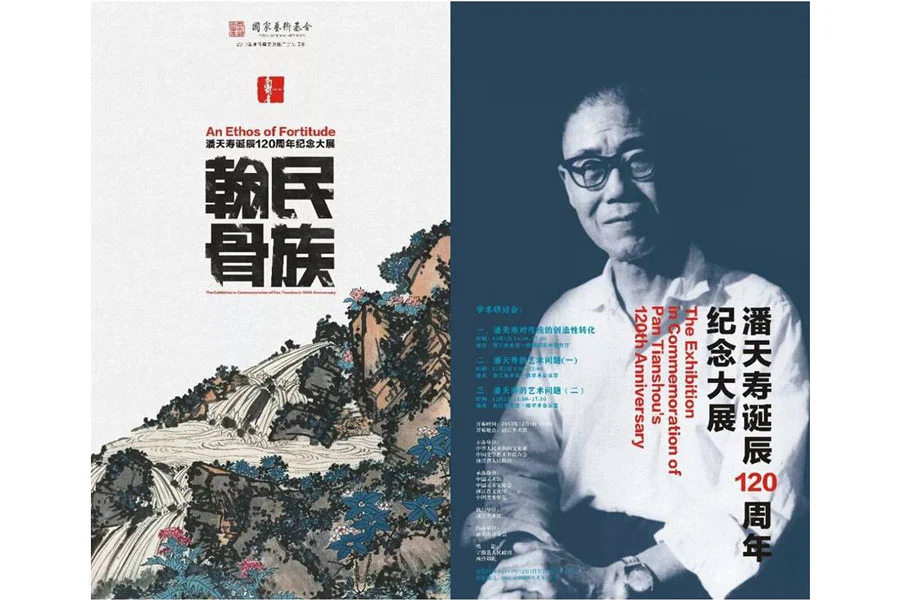
The Zhejiang Art Museum in Hangzhou, East China’s Zhejiang province, has unveiled a landmark exhibition, "An Ethos of Fortitude – The Exhibition in Commemoration of Pan Tianshou’s 120th Anniversary," which opened on Friday. This extensive presentation, the largest to date of the revered artist’s oeuvre, features over 120 meticulously selected artworks and manuscripts, offering an unparalleled glimpse into the life and legacy of one of China’s most influential modern art figures.
Pan Tianshou, a titan of 20th-century Chinese painting and a pivotal figure in art education, was born in the very province that now celebrates his enduring contributions. His career was marked by significant leadership roles, including serving as president of the Zhejiang Academy of Fine Arts (now the China Academy of Art), vice-president of the China Artists Association, and vice-president of the Xiling Seal Engravers Society. These positions underscore his profound impact not only as a creator but also as an educator and administrator who shaped the trajectory of Chinese art during a period of immense societal and cultural transformation.
A Retrospective of a Master’s Life and Art
The exhibition is more than just a display of paintings; it is a comprehensive retrospective designed to illuminate the multifaceted genius of Pan Tianshou. Visitors are greeted by a curated selection that spans his artistic development, from his early explorations to his mature and iconic style. The over 120 pieces on display include not only his celebrated ink wash paintings, characterized by their bold compositions, powerful brushwork, and profound thematic depth, but also his significant contributions to calligraphy and seal carving. Manuscripts, sketches, and personal correspondence are also included, providing invaluable insights into his creative process, his philosophical underpinnings, and his engagement with the intellectual currents of his time.
The sheer scale of the exhibition is a testament to Pan Tianshou’s prolific output and the enduring appeal of his artistic vision. Each artwork serves as a window into his unique perspective, where traditional Chinese aesthetics are infused with a modern sensibility. His mastery of the brush, his innovative use of space and form, and his ability to imbue his subjects – often birds, flowers, and insects – with a palpable sense of life and spirit have long captivated art enthusiasts and scholars alike.
Pan Tianshou: A Pillar of Modern Chinese Art and Education
Born in 1897 in Ninghai, Zhejiang province, Pan Tianshou (original name Pan Tianshou) emerged during a period of profound upheaval and change in China. The nation was transitioning from imperial rule to a republic, and the art world was grappling with the challenge of preserving traditional artistic values while embracing new ideas and Western influences. Pan Tianshou became a central figure in this intellectual and artistic discourse.
His early education laid the groundwork for his lifelong dedication to art. He was deeply influenced by the classical masters of Chinese painting but also possessed a forward-thinking spirit that allowed him to experiment and innovate. His role as president of the Zhejiang Academy of Fine Arts from 1945 to 1963, and again from 1977 to 1979, was instrumental in shaping the curriculum and fostering a new generation of artists. He championed a rigorous approach to art education, emphasizing the importance of both technical skill and intellectual depth. His pedagogical philosophy, which stressed the fusion of tradition and innovation, continues to resonate within Chinese art institutions today.
Beyond his academic pursuits, Pan Tianshou was a prominent figure in national art organizations. His vice-presidency of the China Artists Association placed him at the forefront of the country’s artistic leadership, while his involvement with the Xiling Seal Engravers Society, a prestigious organization dedicated to the art of seal carving, highlighted his mastery in this highly specialized and historically significant art form. These roles allowed him to advocate for the preservation and development of traditional Chinese arts while also engaging with contemporary artistic trends.
Chronology of a Distinguished Career
The exhibition likely unfolds chronologically, guiding visitors through the key phases of Pan Tianshou’s artistic journey.
- Early Years (Late 19th – Early 20th Century): Born in 1897, Pan Tianshou would have received traditional schooling and begun his artistic training during a time when Chinese art was undergoing introspection. His formative years would have been shaped by the artistic landscape of late Qing dynasty and early Republican China.
- Ascension in Academia (Mid-20th Century): Pan Tianshou’s career as an educator began to flourish. His appointment as president of the Zhejiang Academy of Fine Arts in 1945 marked a significant milestone, allowing him to implement his educational philosophies. This period saw the consolidation of his artistic style and his growing influence in the art world.
- National Recognition and Leadership (Mid-to-Late 20th Century): His roles in national art associations, such as the China Artists Association and the Xiling Seal Engravers Society, solidified his status as a national art leader. He would have been instrumental in shaping art policies and promoting Chinese art both domestically and internationally.
- Later Years and Enduring Legacy (Late 20th Century): Despite facing political and social upheavals, Pan Tianshou continued to create and teach. His return to the presidency of the China Academy of Art in 1977, after the end of the Cultural Revolution, signified a period of artistic revival and his unwavering commitment to education. He passed away in 1979, leaving behind a rich and profound artistic legacy.
Supporting Data and Artistic Significance
The exhibition’s selection of over 120 works provides a robust dataset for understanding Pan Tianshou’s artistic evolution. His paintings are characterized by a distinctive style that often defies conventional categorization. He is known for his monumental ink paintings, which often feature a limited palette and a powerful sense of composition. His use of negative space is particularly noteworthy, creating a sense of vastness and depth that draws the viewer into the artwork.
His subjects, while often traditional, are imbued with a unique vitality. His eagles possess a formidable presence, his sparrows are rendered with exquisite detail and liveliness, and his flowers and insects are depicted with a keen observation of nature. These elements are not merely decorative; they often carry symbolic weight, reflecting his deep understanding of Chinese philosophy and his contemplation of the natural world.
The inclusion of manuscripts and sketches offers crucial supporting data for art historians and enthusiasts. These materials reveal the meticulous planning and intellectual rigor behind his finished works. They showcase his exploration of different compositions, his studies of form and texture, and his engagement with artistic theories. This aspect of the exhibition provides a valuable educational component, demystifying the creative process of a master.
Official Responses and Cultural Significance
The opening of such a major exhibition is typically met with considerable enthusiasm from cultural institutions and government bodies responsible for the promotion and preservation of Chinese heritage. While direct quotes are not available, it is reasonable to infer that officials from the Zhejiang Provincial Department of Culture and Tourism, the China Artists Association, and the Zhejiang Art Museum would have expressed their profound appreciation for Pan Tianshou’s contributions.
Statements would likely have highlighted the exhibition’s importance in commemorating Pan Tianshou’s 120th anniversary, underscoring his role as a national treasure and a vital link to China’s artistic past. Such events serve as crucial platforms for cultural diplomacy, showcasing China’s rich artistic heritage to both domestic and international audiences. The Zhejiang Art Museum, as the host institution, plays a pivotal role in this endeavor, utilizing its platform to educate, inspire, and foster a deeper understanding of Chinese art.
Broader Impact and Implications
The "An Ethos of Fortitude" exhibition carries significant implications for the broader art world and cultural landscape. Firstly, it reaffirms the enduring relevance of traditional Chinese art forms in the 21st century. By showcasing Pan Tianshou’s masterful works, the exhibition demonstrates that these seemingly ancient techniques and aesthetics continue to possess a powerful contemporary resonance.
Secondly, the exhibition serves as a vital educational resource. For art students and aspiring artists, it provides an unparalleled opportunity to study the techniques, philosophy, and artistic vision of a master. It reinforces the importance of a strong foundation in traditional art while encouraging innovative approaches. For the general public, it offers an accessible entry point into the world of Chinese art, fostering appreciation and understanding.
Furthermore, the exhibition contributes to the ongoing discourse about cultural identity in a globalized world. Pan Tianshou’s art embodies a unique synthesis of Chinese tradition and modern sensibility, offering a model for how cultural heritage can be both preserved and dynamically evolved. His "ethos of fortitude" – a spirit of resilience, perseverance, and artistic integrity – is a message that resonates deeply in any era, particularly during times of rapid change and uncertainty.
The success of such a large-scale exhibition also has economic implications, attracting art enthusiasts, scholars, and tourists to Hangzhou, thereby boosting local cultural tourism and economic activity. It solidifies Hangzhou’s reputation as a significant hub for arts and culture in China.
In conclusion, "An Ethos of Fortitude – The Exhibition in Commemoration of Pan Tianshou’s 120th Anniversary" is a momentous occasion. It is not merely a retrospective but a vibrant celebration of a master artist whose legacy continues to inspire, educate, and enrich the world of art. Through its comprehensive presentation, the exhibition ensures that Pan Tianshou’s profound artistic spirit and his unwavering commitment to the ethos of fortitude will be appreciated by generations to come.

 Asep Darmawan
 Rifan Muazin