Jia Lissa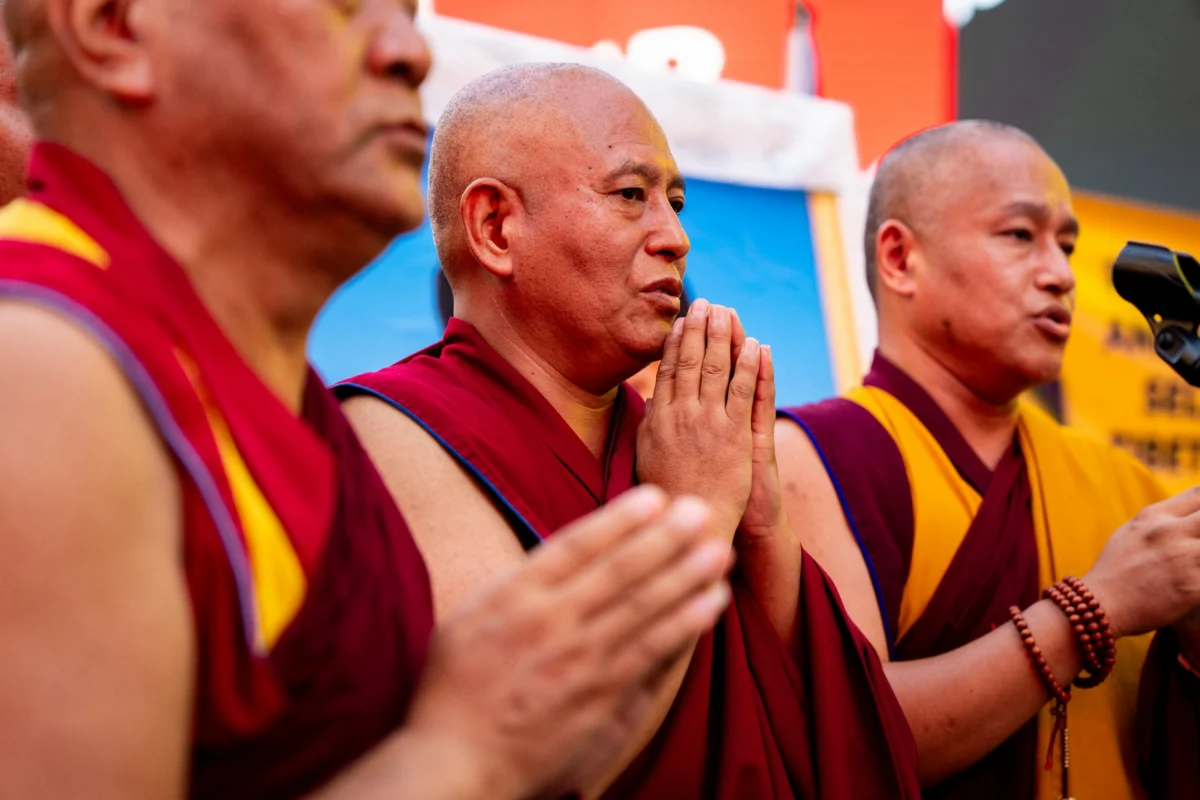
The news of Lobga Rangzen’s self-immolation, a profound act of protest that ended his life outside the United Nations Headquarters in July, sent shockwaves through the Tibetan diaspora, though it was largely overshadowed by celebrity news in the United States. Rangzen, a 52-year-old Tibetan activist living in New York, set himself ablaze on the evening of July 2nd, a stark and tragic demonstration against China’s continued occupation of Tibet. The incident, which occurred on a balmy summer night, barely registered in mainstream American media, which was captivated by the wedding of pop superstar Taylor Swift. However, for exiled Tibetans, Rangzen’s sacrifice was a powerful, albeit heartbreaking, testament to their enduring struggle for freedom and self-determination.

His niece, Tenzin Choekyi, 21, learned of the horrific event from a friend while watching the World Cup in Queens. Initially imagining a minor accident, the chilling details that followed plunged her into "a wave of absolute terror." Rangzen, known for his lifelong dedication to the Tibetan cause, had made the ultimate sacrifice, a desperate act born from decades of observing the erosion of Tibetan culture and autonomy under Chinese rule.
The shocking incident has ignited a somber but determined response from the Tibetan community. A makeshift shrine, adorned with flowers and traditional white khata scarves, has been erected at the site of his immolation, beneath the imposing facade of the UN. This poignant memorial has become a rallying point for activists, a visible reminder of the sacrifices made in the pursuit of Tibetan independence.

"His passing has left many of us Tibetans with the fervor to act," stated Jampa Choedup, a monk who had known Rangzen since 1997 and last saw him the day before his death. Choedup’s words underscore the profound impact of Rangzen’s act, not just as a personal tragedy, but as a catalyst for renewed activism within the diaspora.
A History of Sacrifice: Echoes of Past Protests
Lobga Rangzen’s self-immolation is not an isolated event but rather the latest in a series of desperate acts of protest by Tibetans against Chinese rule. Between 2009 and 2022, an estimated 170 monks and other Tibetans have self-immolated, primarily within Tibet but also in exile communities in India and Nepal. These acts of self-sacrifice emerged as a last resort following a brutal crackdown on mass demonstrations in Tibet in 2008. The crackdown, characterized by widespread violence and arrests, stifled open dissent and pushed many Tibetans to seek more drastic means of expression.

Beijing, which maintains that Tibet is an inalienable part of China, has consistently tightened its grip on the region. In the days leading up to Rangzen’s death, China enacted an "ethnic unity" law, which critics argue further undermines the rights of ethnic minorities, including Tibetans. This legislative move, perceived by many Tibetans as an attempt to erase their distinct identity, likely intensified Rangzen’s sense of urgency and despair.
Jigme Ugen, president of the exiled Tibetan National Congress, where Rangzen led the New York and New Jersey chapter and was a regular participant in protests at the UN and the Chinese consulate, emphasized that Rangzen’s actions were not impulsive. "He clearly prepared himself," Ugen stated, indicating that Rangzen had been contemplating this drastic measure for some time, driven by a deep-seated commitment to his homeland.

Rangzen’s final act was captured in a livestream, a chilling testament to his resolve. The video shows him, clad in a traditional Tibetan chuba robe, striding across a street and planting a Tibetan flag outside the UN. He then ignites himself, engulfed in flames twice his height, with dark smoke billowing into the night sky. A UN security guard’s belated attempt to extinguish the flames with a fire extinguisher proved futile. Rangzen was pronounced dead at a local hospital approximately an hour later. The New York Police Department has confirmed that an investigation into his death is ongoing.
A Life Dedicated to Independence
Rangzen, whose birth name was Lobsang Palden, was born in Tibet and fled the country as a young man. He spent 14 years as a monk in southern India, immersing himself in Buddhist teachings and the Tibetan exile community. In 2006, he relocated to the United States, settling in Queens, New York. It was here that he adopted the name "Rangzen," meaning "independence" in Tibetan, a powerful declaration of his unwavering aspiration for a free Tibet.

Despite facing challenges with fluent English and navigating various jobs, including as an Uber driver, Rangzen remained steadfast in his activism. He described himself as "married to the movement," a sentiment deeply rooted in his family history. According to Ugen and Choedup, Rangzen’s lineage was marked by resistance against Chinese forces. One of his uncles reportedly died in combat, while another succumbed to injuries sustained in prison after being captured while fighting with Chushi Gangdruk, an anti-Chinese guerrilla force that received support from the CIA in 1958. "He grew up with these stories," Ugen remarked, highlighting the generational legacy of defiance that shaped Rangzen’s convictions.
The Dalai Lama’s Dilemma and Beijing’s Accusations
The recurring acts of self-immolation have placed the Dalai Lama, the spiritual leader of Tibet and a Nobel Peace Prize laureate, in a difficult position. While the Dalai Lama has expressed sorrow over these tragic events and questioned their effectiveness as a protest strategy, some scholars have criticized him for not actively intervening to halt the practice. Beijing, meanwhile, has consistently accused the Dalai Lama of "glorifying" self-immolations, while simultaneously claiming to have improved economic and social conditions in Tibet.

In the wake of Rangzen’s death, Penpa Tsering, the head of the Tibetan government-in-exile, issued a statement urging all Tibetans to "cherish" their lives. "While we honor his devotion, human life is precious and must be preserved to serve the long-term struggle for Tibet," Tsering stated, acknowledging the profound commitment of Rangzen while emphasizing the importance of sustained, long-term efforts for Tibetan freedom.
Rangzen himself, in his pre-recorded farewell video, which was timed to be released after his death, articulated his motivations and urged his fellow Tibetans to carry on the fight. "Today, if I engage in alarming activism, it is not because I do not have food, or clothes or out of sadness. I do it for the Tibetan nation," he stated in Tibetan, his voice strained with emotion and sweat beading on his brow. He concluded his message with a poignant plea: "There is no need to mourn for me," signaling his desire for his sacrifice to be remembered not as an end, but as a call to action.

The Broader Implications and International Scrutiny
Rangzen’s self-immolation in the United States marks a significant development, as he is the first Tibetan to engage in such a protest on American soil. The US is home to an estimated 25,000 Tibetans, many of whom are followers of the Dalai Lama, who has lived in exile in India since 1959. This act brings the Tibetan struggle for independence into sharper focus on a global stage, particularly within the influential diplomatic arena of New York City.
The incident also underscores the persistent challenges faced by Tibetan activists in gaining international attention for their cause. Despite decades of advocacy, the global community’s engagement with the Tibetan issue has often been inconsistent, influenced by geopolitical considerations and economic ties with China. Rangzen’s sacrifice, however, has reignited discussions and protests, prompting renewed calls for international pressure on China to address the grievances of the Tibetan people.

The memorial outside the UN serves as a constant reminder of the human cost of the ongoing conflict. Tibetan monks continue to lead prayers and vigils at the site, drawing attention to the plight of their homeland and the suppression of their cultural and religious freedoms. The stark contrast between the vibrant international hub of New York City and the stark reality of Tibet under Chinese rule has been brought into sharp relief by Rangzen’s ultimate act of protest.
As investigations continue, the story of Lobga Rangzen serves as a tragic yet powerful reminder of the unwavering determination of the Tibetan people to preserve their identity and achieve self-determination. His sacrifice, though met with international media silence on the night it occurred, has resonated deeply within the Tibetan diaspora, fueling their resolve and amplifying their voices in the ongoing struggle for freedom. The international community, while perhaps slow to respond, cannot ignore the potent symbolism of a life given in protest outside the very institution tasked with upholding human rights and promoting peace. The ashes of Lobga Rangzen have become a stark symbol of a nation’s enduring hope for independence, a silent testament demanding a global reckoning with China’s policies in Tibet.


 Ammar Sabilarrohman
 Nana Wu