Suro Senen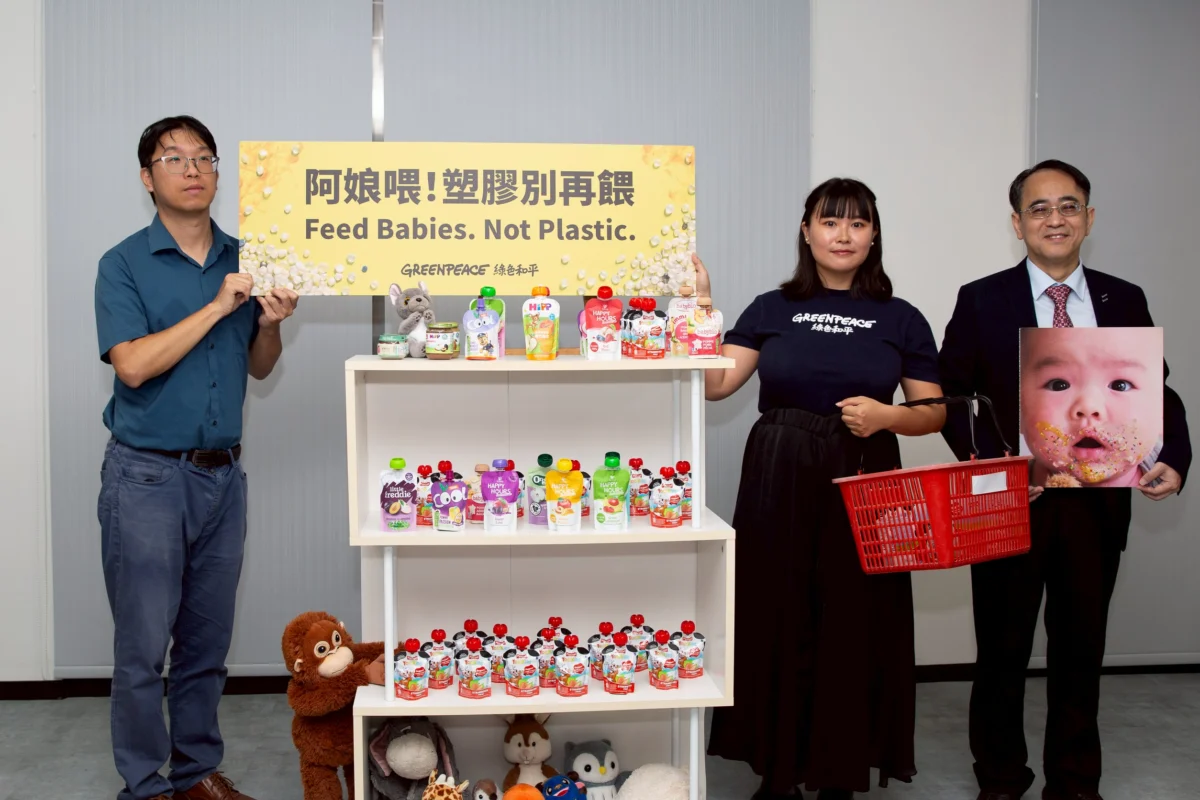
Taipei, July 14, 2026 – A child’s introduction to solid foods, a milestone often marked by the gentle offering of pureed fruits and yogurts, is increasingly becoming an unwitting initiation into the world of plastic contamination. A groundbreaking report released today by Greenpeace Taiwan, titled "Packaging Survey of Baby Food Products, Including Fruit Purees and Yogurts, in Major Retail Channels in Taiwan," reveals a stark reality: nearly 80 percent of baby fruit puree and yogurt products available in Taiwan are encased in plastic pouches. The situation is even more dire in hypermarkets, where 100 percent of these essential infant foods are packaged in plastic, leaving parents with virtually no non-plastic alternatives when making purchasing decisions for their young children.
The comprehensive survey, conducted in April 2026, meticulously examined baby fruit puree and yogurt offerings across prominent retail avenues, including hypermarkets, pharmacies, specialized baby product stores, and major online shopping platforms such as Momo, PChome, Shopee, and Coupang. The findings underscore a systemic reliance on plastic packaging for infant nutrition. While hypermarkets presented a uniform plastic pouch landscape, pharmacies, baby product stores, and online retailers showed slightly varied, yet still alarmingly high, proportions of plastic pouch packaging, ranging from 74 percent to 79 percent. Prominent brands frequently found in these plastic pouches included Babybio, HiPP, Pascual, and Earth Love.
"Parents endeavor to provide the purest nutrition for their children, not to expose them to the inherent risks associated with plastics from their very first sustenance," stated Chi Lo, Communications Officer at Greenpeace Taiwan. "When nearly 80 percent of products are presented in plastic pouches, this transcends the realm of parental choice. The market has demonstrably failed to offer adequate safer alternatives, and crucially, government regulations have lagged significantly behind the evolving scientific understanding of these risks."
Plastic Pouches Emerge as a Significant Vector for Microplastic Ingestion
The ubiquitous plastic pouches, typically constructed from a composite of materials including polyethylene terephthalate (PET), aluminum foil, and polyethylene (PE), present a layered barrier between the food and the external environment. However, it is the inner PE layer, along with the spout and cap, that comes into direct contact with the food. Emerging scientific research is increasingly pointing towards the potential for plastic packaging to be a substantial source of human microplastic exposure, extending beyond the well-documented environmental pollution concerns associated with their disposal.
In a significant 2025 investigation commissioned by Greenpeace International, Norway’s SINTEF Ocean laboratory conducted rigorous testing on pouch-packaged baby food products from two major multinational brands. The results were deeply concerning: microplastics were detected in every single product subjected to analysis. Some fruit puree samples yielded an astonishingly high concentration of up to 99 microplastic particles per gram of food, translating to over 10,000 microplastic particles within a single pouch. Similarly, certain yogurt products were estimated to contain upwards of 5,000 microplastic particles per pouch.
The analysis further identified specific polymer types, including polyethylene (PE) and polypropylene (PP), within the food samples, strongly suggesting that the packaging materials themselves are a primary origin of these microscopic plastic fragments. Beyond microplastics, the study also identified dozens of plastic-associated chemicals, some of which have been linked to toxicity and endocrine-disrupting properties. This dual threat of microplastic particles and potentially harmful chemical leachates raises significant questions about the long-term health implications for infants.
Experts Advocate for the Precautionary Principle to Safeguard Child Health
In light of these findings, medical and scientific experts are urging a proactive approach to minimize children’s exposure to potential plastic-related hazards. Dr. Tzung-Hai Yen, a distinguished nephrologist at Chang Gung Memorial Hospital in Linkou, emphasized the urgency of action, even in the absence of definitive human health impact studies. He explained that while the precise threshold for harmful microplastic exposure in humans remains under investigation, existing animal and cellular studies have indicated that high levels of microplastic exposure can induce detrimental effects such as oxidative stress, inflammation, and even organ damage.
"Intervention should not be contingent upon the absolute, irrefutable proof of harm to human health," Dr. Yen asserted. "The precautionary principle must serve as the guiding ethos for our actions, compelling us to proactively mitigate human exposure to microplastics. Infants and young children are at a particularly vulnerable stage of their physical development. Their developing systems are inherently more susceptible to environmental contaminants than those of adults. Therefore, prioritizing the reduction of their exposure is not merely advisable; it is a critical imperative."
Complementing this perspective, Dr. I-Lun Hsiao, Director of the Food Safety Testing and Functional Development Research Center at Taipei Medical University, highlighted that plastic pouches are not solely a source of microplastics. They can also leach a complex array of chemically synthesized substances, known as non-intentionally added substances (NIAS), which can be generated during the manufacturing process or through degradation during use.
Dr. Hsiao pointed out a significant regulatory gap: Taiwan’s current framework for governing chemicals within plastic food packaging and mandating their disclosure lags behind international standards set by regions like the European Union, the United States, and Japan. He further elaborated on the potential risks posed by NIAS, noting that some plastic-related chemicals possess endocrine-disrupting properties. The cumulative effect of multiple chemical exposures, he warned, can lead to synergistic interactions, amplifying potential health risks beyond the impact of individual substances.
Joint Call for Enhanced Government Regulation and Industry Accountability
In response to the escalating concerns, Greenpeace and the assembled experts are issuing a unified call to action directed at Taiwan’s Food and Drug Administration (TFDA) and other relevant governmental bodies. Their primary demands include:
- Strengthening Regulations: Implementing more stringent regulations on food packaging materials for infant and child products, with a particular focus on minimizing or eliminating the use of plastics that pose microplastic or chemical leaching risks.
- Mandatory Testing and Disclosure: Requiring baby food manufacturers to conduct regular and comprehensive testing of their products for microplastics and hazardous chemicals, and to publicly disclose these findings transparently.
- Promoting Safer Alternatives: Actively encouraging and incentivizing the development and adoption of alternative, non-plastic packaging materials for baby food.
- Public Awareness Campaigns: Launching educational initiatives to inform parents about the potential risks associated with plastic packaging in baby food and to guide them towards safer choices.
Greenpeace is also extending its appeal directly to baby food manufacturers, urging them to take immediate and proactive steps to assess the microplastic and hazardous chemical content of their products and to share these results openly with consumers and regulatory agencies.
"Every parent is driven by the fundamental desire to provide the very best nutritional foundation for their children," Lo reiterated. "The next generation should not be burdened with the health consequences stemming from the widespread use of plastic packaging. Given the ongoing scientific uncertainties surrounding the long-term health impacts of plastic pollution, it is incumbent upon the government to bolster food packaging regulations. Simultaneously, we must address the root cause by reducing unnecessary plastic production at its source and phasing out single-use plastic products and packaging that are both unnecessary and pose high risks. Only through such comprehensive and decisive action can we genuinely safeguard the future health of our children from the pervasive threats of microplastics and associated chemicals."
The appendices referenced in the report, "Packaging Survey of Baby Food Products, Including Fruit Purees and Yogurts, in Major Retail Channels in Taiwan" and Greenpeace’s "The Microplastics Crisis: Hidden Risks of Plastic Pouches in Baby Food," provide detailed methodologies and specific findings that underpin these urgent calls for change. The implications of this report extend beyond Taiwan, serving as a potential catalyst for a global re-evaluation of plastic packaging practices in the infant food industry.

 Pevita Pearce
 Siti Muinah