Ali Ikhwan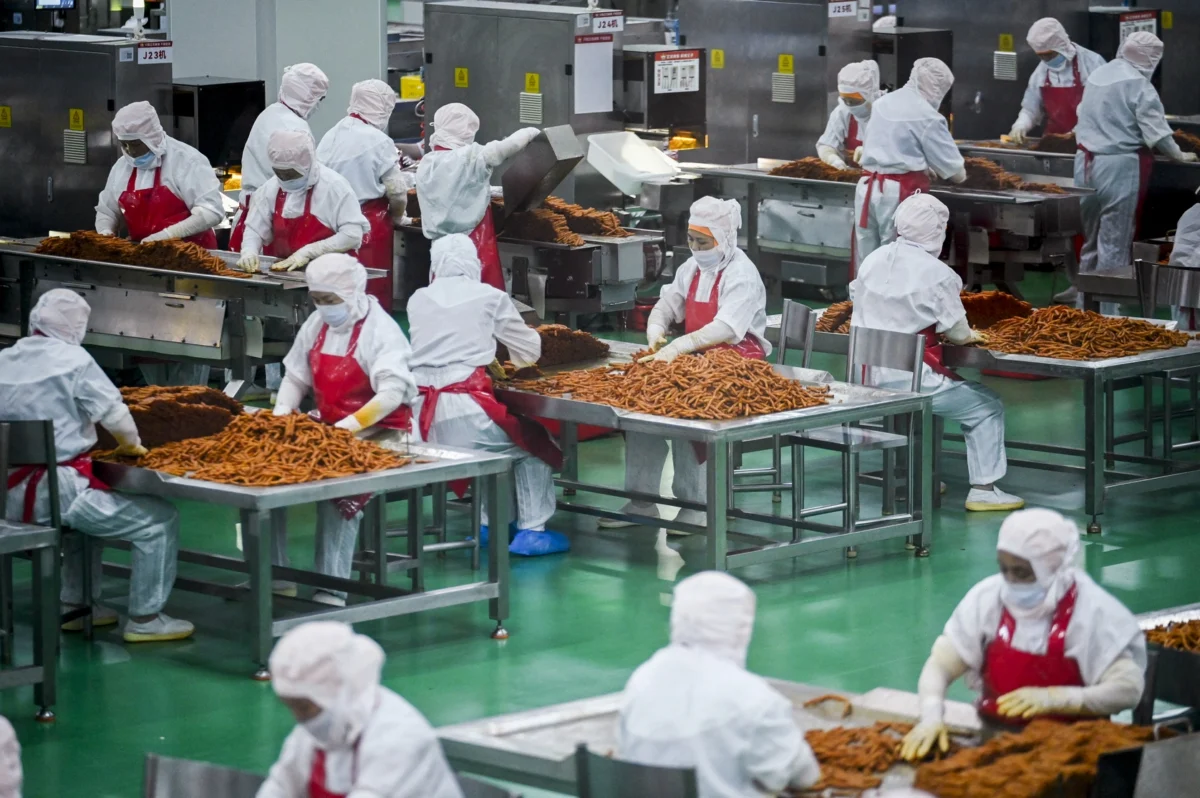
At a gleaming new factory in China’s central hinterland, masked workers in pristine white uniforms meticulously season and sift through mounds of latiao, a snack that has transcended its humble origins to become a global sensation. Once a ubiquitous, yet often maligned, local treat, these spicy strips are now finding hungry fans across continents, fueling an industry valued at more than 60 billion yuan ($8.9 billion) and marking a significant moment for Chinese culinary soft power.
The Genesis of a Snack Phenomenon
Latiao, literally translating to "spicy strips," are characterized by their distinctive spicy, sweet, and curiously chewy texture. Crafted from wheat flour dough, cooked under high temperature and pressure, these spongy, red-hued strips resemble flattened, oil-coated French fries. While often dismissed as "junk food" in the past, latiao originally emerged from necessity. The snack’s genesis can be traced back to Pingjiang county in Hunan province in 1998. Following devastating floods that decimated the local soybean crop, a crucial ingredient for traditional tofu-based snacks, local entrepreneurs innovated by utilizing readily available wheat flour. This ingenuity led to the creation of latiao, which quickly became an emergency staple and subsequently, a popular, affordable snack across China.

Hunan province, particularly Pingjiang, has long been renowned as a hub for snack food production. The region’s rich culinary history, characterized by bold and spicy flavors, provided a fertile ground for latiao to flourish. In its early days, latiao was primarily produced in small, often unregulated workshops, contributing to its reputation for questionable hygiene and excessive additives. This image persisted for years, leading many parents, like Beijing resident Wang Jingfei, 22, to discourage their children from consuming it due to perceived health risks. However, as the industry matured and competition intensified, a concerted effort began to address these concerns, paving the way for its modern-day resurgence.
Industrialization and a Commitment to Quality
The transformation of latiao from a street food staple to a meticulously produced export commodity is best exemplified by modern facilities like the Mala Wangzi factory in Pingjiang. This state-of-the-art plant, which AFP visited, showcases the industrial scale and improved standards now common in the sector. Here, nearly 700 tonnes of the spicy strips are produced daily, a testament to the snack’s immense popularity. While Mala Wangzi currently focuses on the domestic market, its advanced production capabilities reflect a broader industry trend towards internationalization.
Li Manliang, Vice President of Mala Wangzi, emphasized the industry’s commitment to higher standards, stating that their processes are based on those used in the pharmaceutical industry. This rigorous approach includes strict quality control measures, enhanced hygiene protocols, and continuous investment in modern manufacturing equipment. Furthermore, Li noted a conscious evolution in the latiao recipe itself, with brands actively working to make the snack healthier. "We’re reducing the use of oil, salt, sugar and additives, and using more natural raw ingredients," he affirmed. This pivot towards healthier formulations is a strategic response to evolving consumer demands, both domestically and internationally, where health and wellness trends are increasingly influential in food choices.

The shift in consumer perception is evident. Wang Jingfei, who once avoided latiao, now acknowledges, "as the industry has developed and more brands have emerged, food safety has drawn a lot of attention… so I don’t think it’s a big problem to eat it now and then." This change highlights the successful efforts of leading brands to rebuild trust through transparency and demonstrable improvements in production quality. Many factories now utilize livestreaming to showcase their hygienic conditions, offering consumers a direct, unfiltered look into their operations, a practice that builds confidence in an era of heightened consumer scrutiny.
The "Chinamaxxing" Effect and Global Market Penetration
The true catalyst for latiao’s global ascent has been the burgeoning online enthusiasm for Chinese culture, a phenomenon sometimes dubbed "Chinamaxxing." Social media platforms, particularly TikTok and Instagram, have become fertile ground for showcasing Chinese food, fashion, and lifestyle, exposing millions worldwide to products like latiao. Influencers, content creators, and everyday users regularly post videos of themselves trying the fiery snacks, generating millions of views and igniting curiosity among international audiences.
The statistics underscore this global outreach. Latiao is now exported to more than 160 countries worldwide, a remarkable expansion that points to a rapidly internationalizing market. While East and Southeast Asia have seen rapid growth, with a natural affinity for spicy and flavorful snacks, demand has also surged in distant markets like the United States and Australia. Consumers in these regions are increasingly sourcing latiao from specialist grocery stores, dedicated e-commerce platforms, and directly through viral social media marketing campaigns on TikTok.

Weilong, China’s largest latiao producer and a Hong Kong-listed company, stands as a prime example of this international success. Last year, the company reported overseas sales of 117 million yuan, representing a nearly 50 percent increase from 2024. This robust growth trajectory is indicative of a broader trend where Chinese consumer brands are successfully tapping into global appetites for unique and authentic cultural experiences. The global snack market, valued at hundreds of billions of dollars, is constantly seeking novelties, and latiao, with its distinct flavor profile and cultural backstory, fits this niche perfectly. Market analysts predict continued strong growth in the ethnic snack segment, driven by globalization and increased cultural exchange facilitated by digital platforms.
Viral Marketing and Cultural Resonance
The power of viral marketing has been instrumental in latiao’s international breakthrough. TikTok and Instagram are replete with engaging videos featuring foreigners experiencing the snack for the first time. These range from simple taste tests to elaborate stunts designed to capture attention. One influencer, for instance, garnered 1.5 million views by consuming a model house intricately constructed entirely from the glutinous strips. Another TikTok video, amassing an impressive 2.6 million views, featured an Australian reviewer enthusiastically tackling a giant latiao. Her verdict, "If you can handle your spice, I think you would enjoy this… Highly, highly recommend," resonates deeply with a global audience increasingly adventurous in their food choices.
Beyond mere taste, latiao has also cultivated a strong emotional connection with its primary consumer base – younger generations in China. Brands like Mala Wangzi have masterfully leveraged this connection through innovative marketing strategies designed to appeal to youth culture. These initiatives include opening pop-up museums dedicated to latiao, organizing over 4,000 latiao-themed weddings for superfan couples, and sponsoring popular e-sport events, music festivals, and animation conventions. These unconventional campaigns have transformed latiao from a mere snack into a cultural touchstone, a symbol of youthful rebellion, and a source of shared nostalgia.

For many young consumers like 24-year-old Yang Xuhao, latiao offers more than just sustenance. "I find latiao is quite addictive and also stress-relieving," Yang shared. "When I don’t feel like having a proper meal, I’ll just eat latiao instead. I also like to snack on them while watching TV shows." This sentiment highlights the snack’s role as a comfort food, a quick fix, and a companion during leisure time, cementing its place in the daily lives of millions.
Navigating the Challenges: Health Perceptions and Market Evolution
Despite its newfound global appeal and concerted efforts to improve its image, latiao still faces challenges, particularly concerning health perceptions. While brands have reduced harmful additives and improved hygiene, the snack remains relatively high in sodium, fat, and calories. This is a significant hurdle in an era where consumers worldwide are increasingly prioritizing healthier food options.
The skepticism is not entirely gone. Li Peng, 22, represents a segment of consumers who have consciously moved away from latiao. Having developed a habit in his school days, he stated, "I want to have a healthy lifestyle and get in shape, so I’ve stopped eating them." This reflects a broader trend among health-conscious individuals who are opting for cleaner, less processed alternatives. Foreign reviewers also sometimes highlight its less appealing attributes; one video, watched 2.8 million times, described latiao as "kind of like chewy tofu" and "very oily," indicating that not all international palates are universally receptive to its unique characteristics.

The industry must continue to innovate and adapt to these evolving preferences. This could involve developing new, healthier formulations, exploring different flavor profiles to cater to diverse international tastes, or expanding into niche markets that value authenticity over strict nutritional guidelines. The success of latiao brands in balancing traditional taste with modern health demands will be crucial for sustaining their international growth trajectory.
Broader Economic and Cultural Implications
The global rise of latiao carries significant economic and cultural implications. Economically, it has provided a substantial boost to regional economies in China, particularly in areas like Pingjiang, which has historically relied on agriculture. The expansion of latiao factories creates jobs, stimulates local supply chains (for wheat flour, spices, and packaging), and contributes to industrial modernization in the central hinterland. The industry’s 60 billion yuan valuation underscores its critical role in China’s domestic consumption landscape and its growing contribution to export revenues.
Culturally, latiao serves as a potent symbol of China’s burgeoning soft power. As part of the "Chinamaxxing" phenomenon, it introduces aspects of Chinese everyday life and culinary traditions to a global audience, fostering cultural exchange and curiosity. The snack’s journey from a humble, localized emergency food to an internationally recognized delicacy mirrors China’s own economic transformation and its increasing presence on the global stage. It represents a shift in perception, moving beyond the traditional image of "Made in China" as solely mass-produced goods, towards products that carry cultural narratives and innovative branding.

The success of latiao also paves the way for other Chinese consumer goods to gain international recognition. It demonstrates the power of digital platforms in overcoming geographical barriers and the increasing receptiveness of global consumers to authentic, culturally rich products from diverse origins. As China continues to integrate into the global economy and its cultural influence expands, snacks like latiao will likely remain at the forefront, bridging cultural divides one spicy, chewy strip at a time. The ongoing evolution of latiao, both in its production and its perception, offers a compelling case study of how traditional fare can be reimagined and marketed for a globalized world.

 Nila Kartika Wati
 Muslim