
 Nila Kartika Wati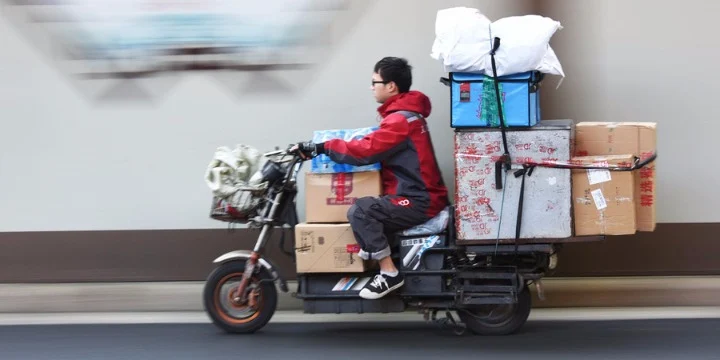
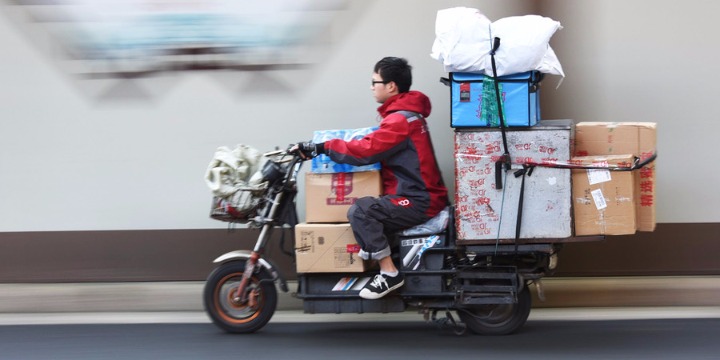
A recent survey conducted by 58.com, a prominent online marketplace operator in China, has revealed that couriers overwhelmingly perceive their occupation as the loneliest, with 69.57 percent of respondents identifying with this sentiment. The findings, reported by cyol.com, shed light on the social isolation experienced within a sector synonymous with China’s booming digital economy and rapid urbanization. Following couriers, financial staff ranked as the second loneliest profession, garnering 67.39 percent of the votes, while new media operators were also identified among the top five. This data underscores a growing concern regarding mental well-being and social connection in high-demand industries across the nation.
The Unseen Burden: Couriers and the Gig Economy’s Isolation
China’s delivery services industry has experienced an unprecedented boom over the past decade, driven by the explosive growth of e-commerce giants like Alibaba and JD.com, as well as food delivery platforms such as Meituan and Ele.me. This sector has become an indispensable backbone of modern Chinese life, enabling rapid consumption and convenience for millions. In 2023 alone, China’s express delivery sector handled over 130 billion parcels, a staggering figure that highlights the immense scale and relentless pace of operations. The market value of the online food delivery sector also reached hundreds of billions of yuan, demonstrating the pervasive integration of delivery services into daily routines.
Despite the industry’s economic vitality and its integral role in daily life, the survey indicates a profound sense of isolation among its frontline workers. Couriers, who are often the visible face of this logistical marvel, describe their work as "both heavy and dull," requiring them to "run around every day." A courier surnamed Liu, quoted by cyol.com, articulated this sentiment: "Except for the moment when you hand the parcel to the client, you barely have time to communicate with anyone." This statement encapsulates the transactional nature of their interactions, which rarely extend beyond a brief exchange.
The structure of the gig economy, prevalent in the delivery sector, further exacerbates this isolation. Many couriers operate as independent contractors, lacking the traditional workplace environment that fosters camaraderie and social interaction among colleagues. Their work is largely solitary, dictated by algorithmic routing and tight schedules, leaving little room for informal conversations or team-building activities. Long working hours, often extending late into the night, coupled with the physical demands of navigating crowded urban environments and adverse weather conditions, contribute to a challenging work-life balance that further limits opportunities for social engagement outside of work. The pressure to meet stringent delivery targets and customer satisfaction metrics adds another layer of stress, transforming what might otherwise be a simple interaction into a high-stakes moment, devoid of genuine human connection.
High Stakes and Solitude: The Financial Sector’s Hidden Toll
The financial sector, ranking as the second loneliest occupation, presents a different but equally compelling narrative of isolation. With 67.39 percent of respondents identifying with loneliness, the report highlights the inherent pressures of an industry characterized by high stress, intense competition, and the imperative to constantly adapt to market fluctuations and regulatory changes. Financial professionals, from investment bankers and traders to analysts and wealth managers, often operate in environments that demand exceptional cognitive effort, long hours, and a relentless pursuit of performance.
The rapid pace of globalization, coupled with technological advancements like fintech, has fundamentally reshaped the financial landscape. Professionals are expected to be perpetually updated on global economic trends, geopolitical events, and technological innovations, creating an "always-on" culture. This constant vigilance, combined with the often-solitary nature of detailed analytical work, can lead to significant psychological strain. While financial institutions may appear to be bustling hubs of activity, the interactions within can often be highly formalized, competitive, and task-oriented, leaving little space for the development of deep interpersonal bonds.
Furthermore, the pressure to achieve ambitious targets, manage significant financial risks, and navigate complex client relationships can lead to a sense of individual burden. The fear of failure in a highly scrutinized environment can discourage open communication about challenges, fostering an internal sense of isolation even amidst a crowded office. The transition towards digital platforms and remote work, accelerated by recent global events, has also altered the traditional office dynamic, potentially reducing incidental social interactions that previously served as outlets for stress and sources of connection.
Connectivity Paradox: The Digital Isolation of New Media Operators
Ranking fifth on the list, new media operators represent a contemporary profession that paradoxically experiences isolation despite being constantly engaged in digital connectivity. These professionals are responsible for creating, managing, and disseminating content across various online platforms, engaging with audiences, analyzing data, and striving for virality. Their work often involves an intricate blend of creativity, technical skill, and strategic thinking, demanding continuous presence in the digital realm.
The "always-on" nature of new media work means that operators are perpetually monitoring trends, responding to comments, and producing content, often blurring the lines between their professional and personal lives. While they are experts at fostering online communities and driving digital engagement, their own work environment can be solitary. Many new media operators work remotely, or in small, often insular teams, with their primary "interactions" occurring through screens rather than face-to-face.
The pressure to constantly generate engaging content and maintain a vibrant online presence can be mentally taxing. The pursuit of likes, shares, and views can lead to an unhealthy obsession with external validation, while exposure to online negativity and criticism can take a significant psychological toll. The very tools designed to connect people can, for these professionals, become conduits for isolation, as the depth of real-world human interaction diminishes in favor of broad, superficial digital engagement. This highlights a critical modern paradox: the proliferation of digital communication technologies does not necessarily translate into deeper social connections and can, in fact, contribute to feelings of loneliness in certain professions.
The Broader Landscape of Workplace Loneliness in China
The findings of the 58.com survey, as reported by cyol.com, resonate with broader global and national discussions around mental health in the workplace. While the survey’s methodology, being an online poll, might lean towards self-selected respondents, 58.com’s position as a major online marketplace operator suggests its reach to a significant segment of China’s working population, particularly those in service and digitally-enabled roles. The results provide valuable insights into the psychological well-being of workers in key sectors of the Chinese economy.
The issue of workplace loneliness is not unique to China, but its manifestation within the context of China’s rapid economic development, intense work culture (often characterized by "996" — 9 am to 9 pm, 6 days a week), and massive rural-to-urban migration, adds specific layers of complexity. Many workers, particularly those in the gig economy like couriers, are migrants who may be far from their family and traditional support networks, making them particularly vulnerable to social isolation.
Expert Perspectives and Calls for Action
Psychologists and labor experts highlight the significant implications of prolonged workplace loneliness. Dr. Li Wei, a Beijing-based industrial psychologist, notes, "Humans are inherently social creatures. When professional roles systematically strip away opportunities for genuine connection, it can lead to increased stress, anxiety, depression, and burnout. For individuals, this impacts their mental and physical health; for companies, it can translate into decreased productivity, higher turnover rates, and a less engaged workforce."
Sociologists like Professor Chen Guang from Fudan University point to the erosion of traditional community structures. "The gig economy, while offering flexibility, often atomizes the workforce. Workers become independent nodes rather than integral parts of a cohesive team. This necessitates a rethinking of how we build social capital and support networks within these new economic models."
There is a growing call for employers, industry associations, and policymakers to address these issues proactively. For the delivery sector, this could involve:
- Creating formal or informal social hubs: Designated break areas or organized social events that encourage interaction among couriers.
- Team-based incentives: Shifting from purely individual performance metrics to team-based goals that foster cooperation and mutual support.
- Mental health support: Providing access to counseling services and promoting awareness campaigns around mental well-being.
- Fairer labor practices: Ensuring stable income, reasonable working hours, and access to social security benefits, which can alleviate broader anxieties that contribute to loneliness.
In the financial sector, strategies could include:
- Promoting work-life balance: Encouraging reasonable working hours and discouraging an "always-on" culture.
- Mentorship programs and peer support groups: Facilitating stronger bonds and providing avenues for shared experiences and advice.
- Leadership training: Equipping managers to recognize and address signs of stress and isolation among their teams.
For new media operators, fostering healthier work environments might involve:
- Scheduled "offline" time: Encouraging breaks from digital engagement and promoting real-world social activities.
- Team collaboration tools that emphasize human connection: Moving beyond purely task-oriented communication.
- Training on digital well-being: Helping professionals manage the psychological demands of constant online presence.
Looking Ahead: Addressing Isolation in Modern Work
The survey findings serve as a critical indicator of the evolving challenges in the modern workplace, particularly in a rapidly digitizing economy like China’s. As technology continues to reshape job roles and work environments, the imperative to prioritize human well-being and social connection becomes ever more crucial. The paradox of an increasingly connected world leading to heightened individual isolation is a significant societal concern that transcends economic efficiency.
Addressing workplace loneliness requires a multi-faceted approach involving not just individual coping strategies but systemic changes from employers, industry leaders, and government regulators. It necessitates a re-evaluation of performance metrics, a greater emphasis on creating supportive work cultures, and the recognition that mental health is as vital as physical health for a productive and thriving workforce. The long-term implications of widespread loneliness in essential professions could manifest as higher rates of burnout, reduced innovation, and a decline in overall societal well-being. By acknowledging and actively working to mitigate these issues, China can ensure that its economic progress is built on a foundation of human sustainability and genuine connection, rather than silent isolation.


 Evan Lee Salim
 Suro Senen