Basiran
Beijing has issued a resolute warning, signaling its intention to enact "countermeasures" in response to the United States’ recent finalization of new regulations that significantly curtail the permissible duration of stay for foreign journalists, with Chinese nationals facing the most stringent limitations. The move by Washington, officially announced on a recent Friday, has intensified an already strained diplomatic relationship, particularly regarding media access and press freedom, prompting immediate and strong condemnation from the Chinese government.
Under the new directives, which could see implementation as early as September, foreign journalists from most nations will be restricted to initial stays of 240 days, approximately eight months, though they retain the option to apply for extensions of similar length. However, Chinese journalists find themselves under a disproportionately stricter regime, with their initial visas capped at a mere 90 days, subject to extensions of identical short durations. This disparity has been singled out by Beijing as a clear act of discrimination, exacerbating a tit-for-tat cycle of restrictions that has increasingly hampered the ability of journalists to report freely from both countries.
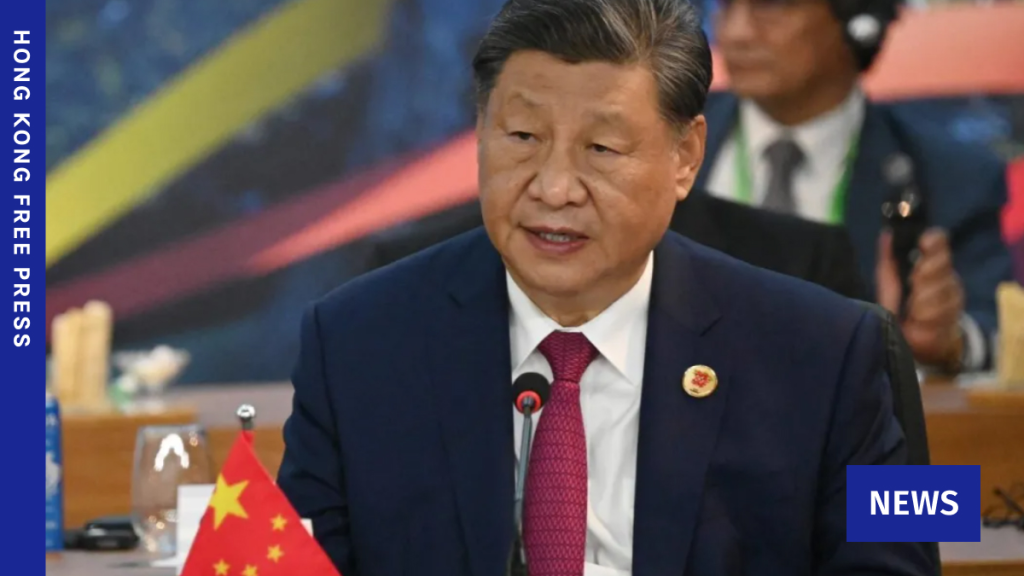
Lin Jian, a spokesperson for China’s Ministry of Foreign Affairs, unequivocally voiced Beijing’s deep displeasure during a regular news briefing. "China is firmly opposed to the United States’ discriminatory actions targeting specific countries," Lin stated, underscoring the perceived unfairness of the new policy. He further articulated China’s demand, insisting that "China demands the United States immediately undo its discriminatory policies against Chinese journalists." The spokesperson concluded with a potent, albeit unelaborated, threat: "China reserves the right to take reciprocal countermeasures." This statement leaves open a wide array of potential retaliatory actions, from further visa restrictions on American journalists to other diplomatic or economic measures, injecting an element of unpredictability into an already volatile bilateral relationship.

Chronology of Escalating Media Tensions
The current standoff is not an isolated incident but rather the latest escalation in a series of punitive actions and counter-actions that have characterized US-China media relations over the past few years. The roots of this particular conflict can be traced back to early 2020, amidst a broader downturn in US-China relations encompassing trade, technology, human rights, and geopolitical influence.
- February 2020: The US State Department designated five prominent Chinese state media outlets – Xinhua News Agency, China Global Television Network (CGTN), China Radio International, China Daily Distribution Corporation, and Hai Tian Development USA – as "foreign missions." This designation, which required the outlets to register their personnel and property with the US government, was viewed by Washington as a measure to increase transparency regarding entities controlled by foreign governments, particularly those perceived as propaganda arms.
- March 2020 (US Action): Following the "foreign mission" designation, the US announced a cap on the number of Chinese citizens allowed to work for these five media organizations in the United States, effectively reducing their personnel by about 40 percent. This move was framed by the US as a response to China’s long-standing restrictions on American journalists within its borders.
- March 2020 (China’s Retaliation): In a swift and forceful act of retaliation, China revoked the press credentials of American journalists working for The New York Times, The Wall Street Journal, and The Washington Post. These journalists, many of whom had years of experience reporting from China, were effectively expelled from the country. Beijing justified its actions as a necessary response to what it deemed the US’s "unreasonable oppression" of Chinese media organizations in America.
- May 2020: The US Department of Homeland Security issued a rule limiting the duration of stay for Chinese journalists in the United States to a maximum of 90 days, with the possibility of extensions. This was a direct precursor to the rules finalized this week, solidifying the restrictive framework specifically targeting Chinese media personnel. The rule also required these journalists to reapply for visas every three months, creating significant administrative hurdles and uncertainty.
- Present Day (Friday): The US finalizes these rules, making them official and potentially implementable by September, further cementing the severe restrictions on Chinese journalists compared to their international counterparts. This finalization triggers China’s current warning of "reciprocal countermeasures."
This sequence of events illustrates a dangerous pattern where journalistic freedom and access become pawns in a larger geopolitical struggle, with reporters increasingly caught in the crossfire.
Supporting Data and Broader Context of US Immigration Policies

The new visa limits for journalists are not an isolated policy but form part of a more extensive immigration crackdown that has been a defining characteristic of the Trump administration’s tenure. This broader strategy has included aggressive enforcement operations in major cities, increased deportations, and the imposition of new restrictions on various legal pathways to citizenship and residency. The administration has frequently cited national security concerns and the protection of American jobs as justifications for these stringent measures.
In the context of US-China relations, the argument has often been made by Washington that Chinese state media outlets are not merely news organizations but rather instruments of the Chinese Communist Party, used for propaganda and influence operations abroad. US officials have expressed concerns about espionage and intellectual property theft, framing these visa restrictions as part of a broader effort to counter what they perceive as China’s malign activities within the United States. While these concerns are often cited, critics argue that broad restrictions on journalists, regardless of their affiliation, ultimately harm the free flow of information and undermine principles of press freedom.
The number of Chinese journalists working in the US has fluctuated but has typically involved hundreds of individuals across various state-affiliated and ostensibly independent outlets. Similarly, the number of US journalists in China, while smaller, has been crucial for providing independent reporting on a vast and increasingly influential nation. The reduction in numbers and the heightened uncertainty imposed by visa restrictions on both sides significantly diminish the capacity for in-depth, nuanced reporting, leading to information vacuums that can be filled by conjecture or propaganda.
Official Responses and Reactions from Related Parties

Beyond the immediate statements from the Chinese Foreign Ministry, the international community and media rights organizations have expressed grave concerns over these developments.
Reporters Without Borders (RSF), a prominent international non-profit organization that safeguards the right to freedom of information, swiftly condemned the US decision. Speaking to AFP on Thursday, RSF conveyed its outrage over the limitations, highlighting the detrimental impact on press freedom. "This policy not only jeopardizes the ability of journalists to do their jobs but also sets a dangerous precedent for other nations to follow," an RSF spokesperson reportedly stated, underscoring the global implications of such actions. Media rights advocates consistently argue that restricting journalistic access, regardless of the perceived political alignment of the media outlet, ultimately harms the public’s right to know and impedes accurate reporting on international affairs. They contend that a robust and free press, even one operating under different political systems, is essential for fostering international understanding and accountability.
Domestically, the new rules are subject to review by the Republican-led Congress. While the Trump administration has generally enjoyed congressional support for its tough stance on China and its immigration policies, there remains a segment of lawmakers and policy experts who express reservations about actions that could undermine American values of free press and open society. However, given the current political climate and bipartisan consensus on confronting China, it is widely anticipated that the rules will likely pass congressional review without significant challenge.
Broader Impact and Implications

The escalation of visa restrictions on journalists carries far-reaching implications, extending beyond the immediate professional lives of those affected.
Firstly, impact on information flow and public understanding: By limiting the number and duration of foreign correspondents, both the US and China risk creating information deserts. When fewer journalists are on the ground, less independent and diverse reporting emerges, leading to a narrower understanding of complex issues in each country. This lack of nuanced information can exacerbate stereotypes, fuel misunderstandings, and hinder effective diplomacy and people-to-people exchanges. For instance, reporting on critical issues such as the COVID-19 pandemic, economic developments, or human rights in either nation becomes significantly harder without sustained journalistic presence.
Secondly, erosion of press freedom principles: The tit-for-tat actions undermine the universal principles of press freedom and journalistic independence. When governments use journalists as leverage in diplomatic disputes, it sends a chilling message to media professionals globally. It creates an environment where reporting is not solely judged on its merit or accuracy but also on the nationality or perceived political alignment of the reporter and their outlet. This could lead to self-censorship and a reluctance to cover sensitive topics, further compromising the integrity of news gathering.
Thirdly, escalation of US-China tensions: The media dispute is symptomatic of a deeper, more pervasive deterioration in US-China relations. It adds another layer of friction to an already complex geopolitical landscape, where trade wars, technological rivalry, military posturing in the South China Sea, and differing approaches to human rights and democracy are constantly at play. Each reciprocal action reinforces a cycle of distrust and confrontation, making cooperation on global challenges like climate change, pandemics, and nuclear non-proliferation increasingly difficult. The targeting of journalists signifies a broadening of the conflict, indicating that few areas of interaction between the two superpowers remain untouched by strategic competition.

Fourthly, potential for further retaliation: China’s explicit warning of "reciprocal countermeasures" is not to be taken lightly. Historically, Beijing has matched US actions with its own, often with equivalent or even more severe responses. This could mean further expulsions of US journalists, more restrictive visa policies for other categories of American citizens (e.g., academics, businesspeople, cultural exchange participants), or even broader diplomatic sanctions. The ambiguity of "countermeasures" allows China flexibility but also creates uncertainty for American individuals and entities operating in or seeking access to China.
Finally, long-term consequences for global journalism: If major powers like the US and China continue to weaponize journalist visas, it could set a dangerous global precedent. Smaller nations might feel emboldened to impose similar restrictions on foreign media, citing national security or reciprocal treatment as justification. This would contribute to a worldwide trend of shrinking space for independent journalism and a fragmentation of the global information ecosystem.
Conclusion
The United States’ finalization of more restrictive visa rules for foreign journalists, particularly the harsher limits imposed on Chinese nationals, marks a significant and concerning development in the ongoing diplomatic feud between Washington and Beijing. China’s immediate and unequivocal warning of "reciprocal countermeasures" underscores the high stakes involved, portending further escalation in a relationship already fraught with tension. While the US justifies its actions by citing concerns over transparency and perceived Chinese influence operations, and China decries them as discriminatory and an affront to its media, the ultimate casualties are journalistic freedom, the free flow of information, and the public’s ability to gain a nuanced understanding of the world’s two largest economies. As both nations continue to use journalists as pawns in their geopolitical chess game, the international community watches with apprehension, recognizing the profound and potentially irreversible damage to global press freedom and international relations.

 Sagoh
Sagoh
 Asro
Asro