Asro
Asro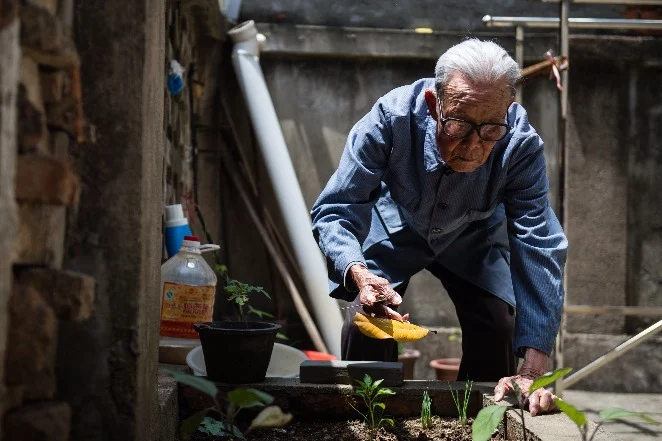
The oldest known survivor of the Nanjing Massacre, Guan Guangjing, passed away on Sunday at the venerable age of 100, just days before China observed its National Memorial Day for Nanjing Massacre Victims. His death leaves fewer than 100 living survivors of the horrific event, intensifying the urgency of preserving their testimonies and ensuring that this dark chapter of history is never forgotten. The passing of Guan Guangjing serves as a poignant reminder of the dwindling number of direct witnesses to one of World War II’s most brutal atrocities in Asia, placing greater emphasis on the solemnity of Wednesday’s public memorial ceremony, which will be attended by state leaders at the Memorial Hall of the Victims in the Nanjing Massacre by Japanese Invaders.
A Life Marked by Trauma and Resilience: The Story of Guan Guangjing
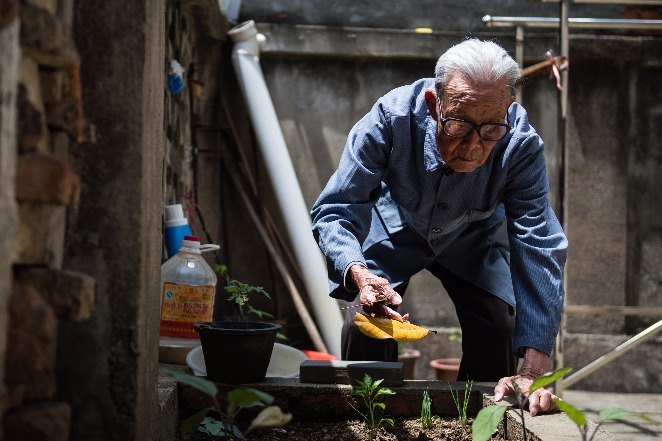
Guan Guangjing, born in 1917, lived a century that spanned profound societal change and bore the indelible scars of a past atrocity. His death on Sunday, December 10, 2017, came after six months of being bedridden due to heart disease, ultimately succumbing to multiple organ failure at his home. The timing of his passing, merely three days before the 80th anniversary of the Nanjing Massacre, resonated deeply across China, drawing widespread mourning on social media platforms like Sina Weibo, where the Memorial Hall announced his death. His 76-year-old son-in-law, who wished to be identified only by his surname Liu, confirmed the details of his peaceful passing at home.
Before the cataclysmic events of 1937, Guan Guangjing was an orphan, navigating life without siblings. His wife, who passed away five years prior at the age of 84, had been his lifelong companion. In his earlier years, Guan was known as a barrel maker in Lishui county, a craft that spoke to his industrious and frugal nature. Beyond his trade, he was revered in his local community for his unwavering willingness to help others, earning him immense respect and esteem. This quiet dignity and resilience defined his character even after enduring unimaginable horror.
Guan’s invaluable contribution to historical record includes his verbal testimony, featured prominently in "Irrefutable Evidences, A Memoir of the Lishui Bombing Caused by Japanese Invaders." Published by Nanjing Press in November 2016, this book meticulously compiled the oral accounts of 31 survivors of the Lishui bombing, a precursor event to the full-scale massacre. On November 29, 1937, Japanese invaders launched a devastating aerial attack on Lishui county, claiming more than 1,200 lives. Guan, then a young man, vividly recounted hiding under a large rock, a desperate act that saved his life, while witnessing the indiscriminate slaughter of his neighbors, including four generations of a family surnamed Sun.
His survival during the subsequent Nanjing Massacre itself was a testament to his sheer will to live, as he continuously found places to hide amidst the chaos and brutality that engulfed the city. Officials from the Memorial Hall confirmed that Guan had repeatedly narrated his harrowing experiences of witnessing Japanese invaders killing people multiple times, providing crucial first-hand evidence of the atrocities. In a gesture of profound significance, his family donated several of his personal articles – including a paper fan, a watch, and a teapot – to the Memorial Hall, transforming these mundane objects into tangible links to a painful past and powerful symbols of remembrance for future generations.
The Nanjing Massacre: A Dark Chapter in History
The Nanjing Massacre, often referred to as the "Rape of Nanjing," stands as one of the most egregious war crimes of the 20th century. It commenced in December 1937, following the capture of Nanjing, then the capital of the Republic of China, by the Imperial Japanese Army. After a fierce resistance and the eventual fall of the city on December 13, Japanese forces unleashed an unimaginable wave of violence, murder, rape, looting, and arson that lasted for six weeks.
The scale of the atrocities was staggering. Historical records, corroborated by international tribunals and extensive research, indicate that more than 300,000 Chinese civilians and unarmed combatants were systematically murdered. The methods of killing were often brutal and inhumane, including bayoneting, beheading, burning alive, and live burial. An estimated 20,000 to 80,000 women were raped, often gang-raped, and many were subsequently mutilated or killed. Widespread looting and destruction of property further devastated the city. The international community, including foreign residents who remained in Nanjing and established a Safety Zone to protect Chinese civilians, bore witness to these horrors, their diaries and testimonies providing crucial evidence that continues to inform historical understanding. The events in Nanjing became a symbol of the brutality of war and the extreme depravity to which humanity can sink.
Chronology of Remembrance and Denial
The memory of the Nanjing Massacre has been a contested historical terrain, particularly between China and Japan, since the end of World War II.
- 1946-1948: Tokyo Trials and War Crimes Tribunals. Following Japan’s surrender, the International Military Tribunal for the Far East (IMTFE) in Tokyo prosecuted Japanese war criminals. Key figures responsible for the Nanjing Massacre, such as General Iwane Matsui, were tried and convicted of war crimes and crimes against humanity, and subsequently executed. However, these trials, while affirming the facts of the massacre, did not fully resolve the historical narrative in Japan.
- Post-War Decades: Emergence of Denial and Revisionism. In the decades following the war, various factions within Japan, particularly ultra-nationalist and conservative groups, began to deny the extent of the massacre or even its occurrence. Textbooks were revised, and political figures sometimes made statements downplaying or outright rejecting the historical consensus, causing significant diplomatic friction with China and other Asian nations.
- 1985: Establishment of the Memorial Hall. In a crucial step towards institutionalized remembrance, the Memorial Hall of the Victims in the Nanjing Massacre by Japanese Invaders was established in Nanjing. This national museum serves as a primary site for historical education and commemoration, housing artifacts, documents, and survivor testimonies.
- 2014: National Memorial Day Designated. Recognizing the profound significance of the event, China’s top legislature officially designated December 13 as the National Memorial Day for Nanjing Massacre Victims. This formal recognition elevated the commemoration to a national level, ensuring annual remembrance ceremonies and educational initiatives.
- 2015: UNESCO Memory of the World Register. The inclusion of documents related to the Nanjing Massacre in UNESCO’s Memory of the World Register marked a significant international affirmation of the historical facts. This decision, aimed at preserving documentary heritage, further solidified the global recognition of the massacre, despite objections from Japan.
- 2017: 80th Anniversary. The year 2017 marked the 80th anniversary of the Nanjing Massacre, a solemn milestone that brought renewed focus to the event. The passing of Guan Guangjing just before this anniversary underscored the urgency of collecting and preserving the stories of the remaining survivors.
The Dwindling Voice: Significance of Survivors’ Testimony
With Guan Guangjing’s passing, the number of verified Nanjing Massacre survivors has fallen to fewer than 100. This stark reality highlights the precarious nature of oral history and the race against time to document the experiences of those who directly witnessed the atrocities. As Zhang Sheng, a history professor at Nanjing University, points out, only about half of the remaining survivors, most of whom are over 85 years old, can express themselves clearly due to advanced age and health conditions. This makes the work of historians and memorial institutions even more critical.
The testimonies of survivors are irreplaceable. They provide a human face to the statistics, lending visceral truth to historical accounts that might otherwise seem abstract. These personal narratives serve as powerful counter-narratives to denialism, anchoring the historical facts in individual memory and suffering. Projects dedicated to collecting these oral accounts, such as the one led by Wu Lisong, a history lecturer at Nanjing University, are invaluable. Since September 2016, Wu has been at the forefront of efforts to gather and preserve these crucial first-hand accounts.
The psychological impact on survivors is profound and enduring. Wu Lisong notes that the public often mistakenly believes the pain of survivors eventually fades, but in reality, it lasts a lifetime. Many survivors exhibit symptoms akin to post-traumatic stress disorder (PTSD). Some are "stricken with fright when people wearing Japanese military uniforms appear on the TV screen," while others "become irritable whenever people mention those years to them." These reactions underscore the deep-seated trauma that continues to affect them decades later, manifesting in various forms of emotional and psychological distress. Their lives, though lived for many decades after the massacre, remain inextricably linked to the horrors they endured. Their existence itself is a testament to the resilience of the human spirit, but also a constant reminder of the wounds that never truly heal. The urgency of recording their stories is not merely academic; it is an act of historical justice and compassion.
Official Responses and Commemoration
The Chinese government maintains a consistent and firm stance on the historical facts of the Nanjing Massacre. The annual National Memorial Day on December 13 is a significant national event, symbolizing China’s commitment to remembering its history and honoring the victims. The attendance of state leaders at the public memorial ceremony underscores the gravity with which the nation approaches this remembrance.
While China emphasizes the importance of remembering history to promote peace, it also firmly rejects any attempts to deny or distort the facts of the massacre. The official narrative consistently calls for Japan to confront its wartime past honestly and to take responsibility for its atrocities. This stance is rooted not in fostering hatred, but in the belief that a true understanding of history is fundamental for genuine reconciliation and the prevention of future conflicts. The commemoration serves as a powerful reminder of the devastating consequences of unchecked aggression and militarism, advocating for a future built on peace, mutual respect, and adherence to international law.
Broader Impact and Implications: Historical Memory and International Relations
The Nanjing Massacre remains a sensitive and complex issue in Sino-Japanese relations. While economic and cultural ties between the two nations have grown, historical grievances, particularly surrounding wartime atrocities and their interpretation, continue to surface and influence diplomatic interactions. For China, the memory of the massacre is not just about historical fact; it is deeply intertwined with national identity, sovereignty, and the suffering endured during a period of immense national humiliation.
The passing of the last generation of direct witnesses to the Nanjing Massacre presents a critical challenge for historical education and memorialization. The task now falls to historians, educators, and institutions to ensure that the stories, artifacts, and documented evidence continue to speak powerfully across generations. This involves not only academic research but also innovative methods of public education, including digital archives, documentaries, and interactive exhibits, to convey the human impact of the atrocities.
The imperative of historical education extends beyond national borders. The lessons of Nanjing resonate globally, serving as a stark warning against the dangers of war, ethnic hatred, and the dehumanization of ‘the other.’ Remembering such events is crucial for fostering a collective global consciousness that champions human rights, advocates for peace, and condemns genocide and mass atrocities wherever they may occur. As Wu Lisong aptly noted, "Neither an apology nor compensation can reverse the traumas to the victims and survivors, but we still must make clear the history, which may be a starting point of reconciliation." This sentiment encapsulates the enduring significance of historical truth as a foundation for genuine healing and the pursuit of a more peaceful world. The legacy of survivors like Guan Guangjing, who endured unimaginable suffering yet chose to share their stories, will continue to serve as living testaments to the profound importance of never forgetting.

 Sagoh
Sagoh