Neng Nana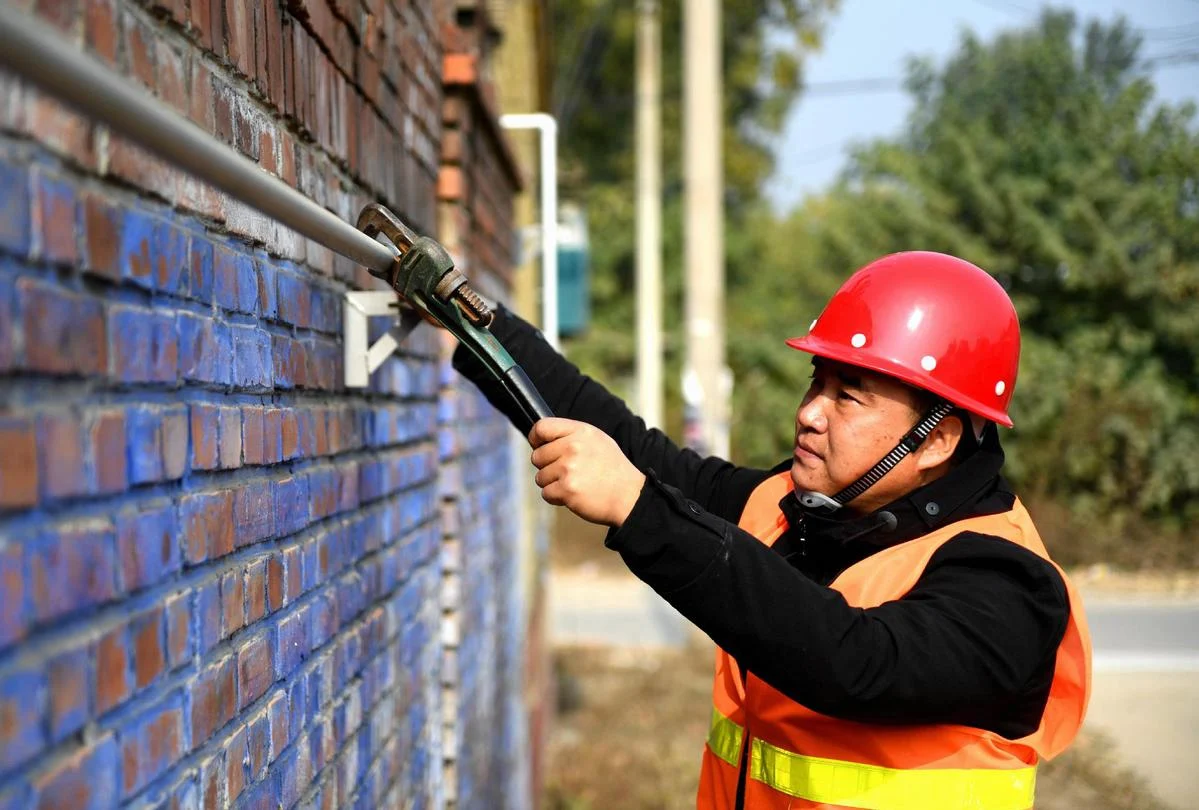
The Asian Infrastructure Investment Bank (AIIB) announced a significant milestone with the approval of a $250 million loan for a natural gas project in Beijing, marking its inaugural direct investment in China and its first corporate financing deal. This pivotal initiative is designed to substantially reduce coal consumption and enhance air quality across the capital region, aligning with China’s ambitious environmental protection agenda. The loan, extended to the Beijing Gas Group Co., will fund extensive coal-to-gas conversion programs, facilitating the transition of rural households from coal to cleaner natural gas for essential cooking and heating needs. The project encompasses the construction of vital natural gas distribution networks, pipelines, and the necessary household connection infrastructure, as detailed by the Beijing-based multilateral financial institution.
Addressing China’s Environmental Imperative: The War on Pollution
China, as the world’s second-largest economy, has long grappled with severe air pollution, a direct consequence of its rapid industrialization and heavy reliance on coal for energy production. The Beijing-Tianjin-Hebei (Jing-Jin-Ji) region, in particular, has frequently experienced hazardous levels of fine particulate matter (PM2.5), sulfur dioxide (SO2), and nitrogen oxides (NOx), leading to widespread health concerns and environmental degradation. In response to mounting public pressure and a growing understanding of the long-term economic and social costs of pollution, the Chinese government declared a "War on Pollution" in 2014. This declaration ushered in a new era of stringent environmental regulations, ambitious targets, and comprehensive strategies aimed at shifting the nation’s energy mix towards cleaner sources.
Key among these strategies has been the aggressive promotion of coal-to-gas conversion, especially in residential and small industrial sectors, as a crucial step towards achieving "blue skies." This policy gained significant momentum in the mid-2010s, with various provinces and municipalities, including Beijing, setting aggressive timelines for phasing out coal heating in urban and peri-urban areas. The challenge, however, lay not only in policy formulation but also in the monumental task of infrastructure development and securing sufficient financing for such large-scale energy transitions. This is where the AIIB’s intervention becomes particularly impactful, providing crucial long-term capital for a project central to China’s environmental aspirations.
The AIIB’s "Lean, Clean, and Green" Mandate in Action
The Asian Infrastructure Investment Bank, officially launched in January 2016, was established with a mission to foster sustainable economic development, create wealth, and improve infrastructure connectivity in Asia. With its core principles emphasizing "lean, clean, and green" operations, the AIIB quickly positioned itself as a significant player in financing environmentally responsible infrastructure projects. Its investment in the Beijing natural gas project is a powerful testament to this mandate, showcasing its commitment to supporting member countries in their efforts to combat climate change and transition to lower-carbon economies.
This $250 million loan is noteworthy for two primary reasons beyond its environmental impact. Firstly, it marks the AIIB’s maiden corporate financing deal, signaling an expansion of its operational modalities beyond sovereign-backed loans. This approach allows the bank to directly engage with state-owned enterprises or private entities that are critical implementers of national development strategies. Secondly, it is the AIIB’s first investment within China, its host country and largest shareholder. This demonstrates the bank’s willingness to invest in its domestic market, reinforcing its commitment to its foundational principles even at home, while also showcasing a model of green infrastructure development that could be replicated across the region. AIIB President Jin Liqun emphasized that this investment perfectly aligns with the bank’s mission of supporting members’ green and sustainable development. "China’s commitment to reducing its reliance on coal will change lives and improve the environment, and that is why we are investing in a project aligned with that ambitious plan," Jin stated, highlighting the dual benefits of environmental improvement and economic stimulation in one of Asia’s most vital economic hubs.
Project Scope, Timeline, and Tangible Environmental Benefits
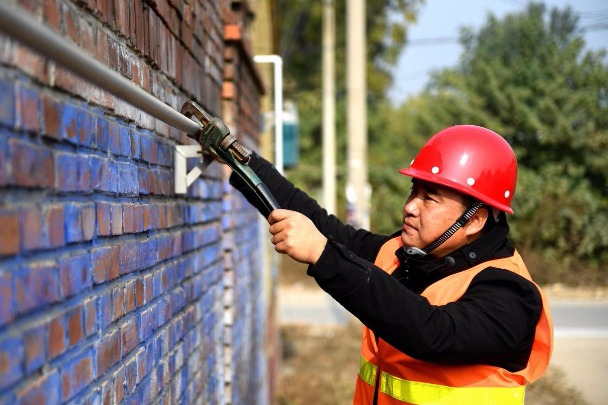
The Beijing natural gas project, spearheaded by the Beijing Gas Group Co., is an ambitious undertaking with a targeted completion date of 2021. Upon full implementation, the project is projected to connect approximately 216,750 households across an estimated 510 rural villages to the newly expanded natural gas distribution network. This massive infrastructure rollout includes laying thousands of kilometers of new pipelines and establishing localized distribution systems, ensuring reliable and safe access to natural gas for heating and cooking.
The environmental dividends of this project are substantial. The AIIB estimates that the conversion will lead to an annual reduction of approximately 650,000 metric tons of coal use. This direct reduction in coal burning will significantly mitigate the release of harmful pollutants, including PM2.5, SO2, and NOx, which are primary contributors to smog and acid rain. Improved air quality will have immediate and long-term positive impacts on public health, reducing respiratory illnesses and improving the overall quality of life for residents in the affected regions. Furthermore, the shift from coal to natural gas, while still a fossil fuel, represents a substantial step down in carbon intensity, contributing to China’s broader efforts to peak carbon emissions before 2030 and achieve carbon neutrality by 2060. The project serves as a concrete example of how targeted infrastructure investment can directly translate into measurable environmental improvements and advance national climate goals.
Expert Perspectives and Broader Implications
The AIIB’s landmark investment has garnered positive reactions from financial experts and energy analysts, who view it as a strategic move with far-reaching implications. Zeng Gang, a financial researcher at the Chinese Academy of Social Sciences, underscored the significance of this deal, stating, "Green financing in China will clearly be an important target for the AIIB." He further elaborated that it is "reasonable that the AIIB is the provider of long-term financing with relatively low cost for such infrastructure projects, especially when Chinese commercial banks are facing greater liquidity pressure." This perspective highlights the crucial role multilateral development banks play in providing stable, affordable capital for large-scale, long-term infrastructure projects that commercial banks might be less willing or able to finance, particularly given the inherent risks and extended payback periods associated with such ventures.
However, the transition to natural gas is not without its complexities and challenges, as noted by Li Li, energy research director at ICIS China, an energy consulting firm. While welcoming the AIIB financing, Li emphasized that the nation must also "boost investment in seasonal gas storage facilities, diversify import channels and improve the pricing mechanism to address potential shortages." China’s ambitious coal-to-gas conversion push has, at times, led to supply bottlenecks and price volatility, particularly during peak winter demand. Ensuring energy security, establishing robust storage capabilities, and creating a flexible, market-responsive pricing mechanism are critical to the sustainable success of such large-scale transitions. Diversifying import sources, including pipeline gas from Central Asia and Russia, and increasing liquefied natural gas (LNG) imports, will be paramount in mitigating supply risks.
A Model for Sustainable Development and International Cooperation
This project’s success extends beyond the immediate environmental benefits for Beijing. It serves as a powerful model for sustainable development and international cooperation in addressing global challenges. For China, it reinforces the government’s commitment to ecological civilization and provides a tangible demonstration of progress in its "Blue Sky Protection Campaign." It also showcases how international financial institutions can play a vital role in complementing domestic efforts to achieve national environmental and climate targets.
For the AIIB, this investment strengthens its reputation as a credible and impactful development bank dedicated to its "green" mandate. By investing in a high-profile environmental project in its largest member country, the AIIB sets a precedent for future engagements, not just in China but across Asia. It signals to other member nations facing similar environmental and energy transition challenges that the AIIB is a willing and capable partner in financing cleaner energy infrastructure. The project also demonstrates the practical application of corporate financing, opening avenues for future direct engagements with enterprises capable of executing large-scale, impactful initiatives.
Looking ahead, the successful implementation of the Beijing natural gas project is expected to inspire similar initiatives in other heavily polluted regions of China and beyond. It underscores the importance of a multi-faceted approach to energy transition, combining robust policy frameworks, significant financial investment, technological innovation, and international collaboration. While natural gas serves as a crucial bridge fuel in the transition away from coal, continuous efforts towards renewable energy sources and improved energy efficiency will remain essential for achieving a truly sustainable and low-carbon future. The AIIB’s $250 million loan is not merely a financial transaction; it is an investment in cleaner air, better health, and a more sustainable development pathway for millions.


 Jia Lissa
 Azzam Bilal Chamdy