Suro Senen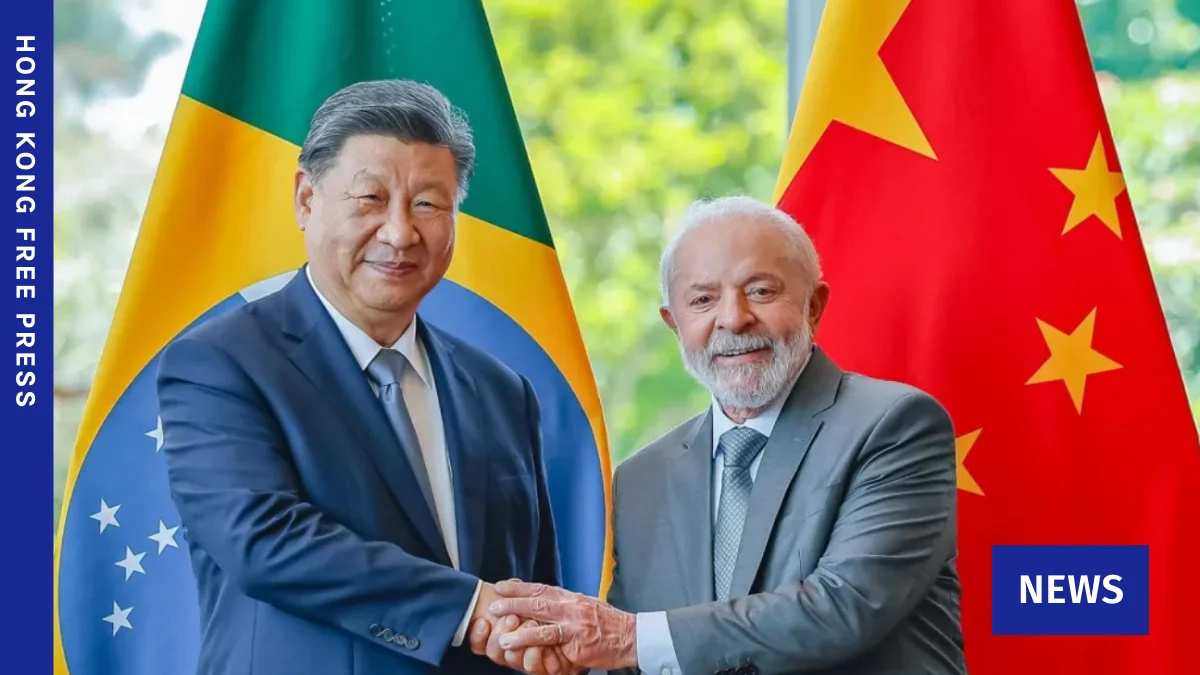
Chinese President Xi Jinping communicated his robust support for Brazil in "opposing external interference" during a significant phone call with Brazilian President Luiz Inacio Lula da Silva on Monday, as reported by Beijing’s state media. This high-level interaction underscores a deepening alignment between the two BRICS nations, coming at a crucial juncture for Brazil, less than three months before a highly contested presidential election and amidst escalating economic tensions with the United States. The conversation, which reportedly lasted over an hour, touched upon geopolitical stability, economic diversification, and accelerated trade negotiations, signaling a strategic move by China to reinforce its partnership with Latin America’s largest economy.
Deepening Diplomatic and Economic Alignment
The pronouncement from President Xi, conveyed through China’s official Xinhua news agency, highlighted Beijing’s high regard for Brazil’s international standing and significant global influence. Xi explicitly stated, "China highly values Brazil’s international status and important influence," adding that Beijing "supports Brazil in safeguarding its sovereignty and independence, opposing external interference, and contributing to maintaining regional and world peace and stability." This strong diplomatic language from China arrives as Brazil navigates a complex domestic political landscape and increasing external pressures, particularly from Washington.

For Brazil, the timing of this support is particularly salient. The country is gearing up for a presidential election that pits the incumbent, Luiz Inacio Lula da Silva, against right-wing candidate Flavio Bolsonaro, the son of former president Jair Bolsonaro. The political climate is charged, with accusations of electoral insecurity mirroring similar narratives seen in the United States. Xi’s reaffirmation of support for Brazil’s sovereignty and opposition to external interference can be interpreted as a subtle but firm diplomatic gesture in favor of the current administration, aligning with Lula’s own public stance against foreign intervention in Brazilian affairs.
Beyond political solidarity, the two leaders also made substantial progress on economic fronts. According to a statement released by the Brazilian presidency, Presidents Lula and Xi "agreed on the importance of speeding up negotiations for a Mercosur-China agreement." Mercosur, a powerful South American trading bloc comprising Brazil, Argentina, Uruguay, and Paraguay, represents a significant market. A comprehensive trade agreement with China would dramatically reshape global trade flows and enhance economic integration between Asia and South America. President Lula, during the call, reiterated his administration’s "commitment to diversifying markets and trade partners," a strategic imperative that has gained urgency due to recent tariff impositions by the United States.
The Backdrop of US-Brazil Tensions and the Brazilian Election
The phone call between Xi and Lula cannot be fully understood without examining the fraught relationship between Brazil and the United States. Washington has recently levied two rounds of tariffs on various Brazilian products this month, following an initial major tariff hike in 2025. These measures were reportedly enacted as retaliation for a coup-plot trial in Brazil that resulted in the imprisonment of former president Jair Bolsonaro. This punitive economic action by the US has drawn sharp criticism from the Lula administration, which views it as a blatant attempt to exert political influence in an election year. Lula has publicly denounced Washington’s tariff pressure, characterizing it as an infringement on Brazil’s sovereign economic policy and an effort to meddle in its domestic political processes.

Adding another layer to these tensions, Brazil recently denied visas to two United States officials who had sought to meet with election authorities in Brasília ahead of the October vote. A diplomatic source confirmed this development, suggesting Brazil’s heightened sensitivity to perceived foreign interference in its electoral integrity. This decision underscores Brazil’s resolve to manage its own internal affairs without external oversight, a stance that resonates strongly with China’s long-standing foreign policy principle of non-interference.
The specter of "external interference" is further complicated by the domestic political discourse in Brazil. Flavio Bolsonaro, a sitting senator and the son of the former president, has recently revived unsubstantiated claims regarding the insecurity of the country’s electronic voting system. These claims echo similar narratives propagated by former US President Donald Trump concerning American elections, creating a parallel of concern over electoral legitimacy that could potentially be exploited by foreign actors. While the Brazilian statement on the call between Lula and Xi did not explicitly mention whether the issue of "external interference" was raised by Lula, Xinhua’s reporting indicates that Xi’s remarks were made in direct reference to such a possibility, suggesting a shared understanding or concern between the two leaders.
China-Brazil Economic Ties: A Growing Powerhouse
China has been Brazil’s largest trading partner for over a decade, with bilateral trade reaching record highs in recent years. In 2023, trade between the two nations surpassed $150 billion, far exceeding Brazil’s trade volume with its second-largest partner, the United States. Brazil primarily exports raw materials to China, including soybeans, iron ore, crude oil, and beef, which are crucial for China’s industrial and agricultural demands. In return, China exports manufactured goods, electronics, and machinery to Brazil. This robust economic relationship has fostered significant Chinese investment in Brazil’s infrastructure, energy, and agricultural sectors, cementing China’s position as a vital economic ally.

The pursuit of a Mercosur-China agreement is a strategic move that could further solidify this economic partnership. Mercosur represents a combined GDP of over $4.5 trillion and a market of more than 300 million people. A free trade agreement with China would provide Mercosur members, particularly Brazil, with enhanced access to the vast Chinese consumer market, potentially reducing their reliance on traditional Western markets. This diversification is critical for Brazil, especially as it faces tariff barriers and political pressure from the United States. For China, such an agreement would deepen its economic footprint in Latin America, securing critical resources and expanding its influence in a region traditionally dominated by the US. The "more than one hour" duration of the call itself speaks to the depth and strategic importance of the discussions, indicating a comprehensive exchange on these multifaceted issues.
Broader Geopolitical Implications and the BRICS Context
The convergence of Chinese and Brazilian interests, as highlighted by this phone call, carries significant geopolitical implications. Both nations are prominent members of the BRICS group (Brazil, Russia, India, China, South Africa), an economic bloc that seeks to challenge the unipolar global order and promote a more multipolar world. Within this framework, China and Brazil often find common ground on issues of national sovereignty, non-interference in internal affairs, and the reform of international institutions. Xi’s strong statement of support for Brazil’s autonomy reinforces this shared vision and sends a clear message to other global powers about the evolving dynamics of international relations.
The concept of "external interference" is a cornerstone of China’s foreign policy, often invoked in contexts ranging from Taiwan to Hong Kong. Its application to Brazil signifies China’s willingness to extend this principle to its strategic partners, particularly when they face pressure from Western powers. This stance provides diplomatic cover and moral support for countries like Brazil seeking to assert greater independence in their foreign and economic policies.

For the United States, these developments pose a challenge to its traditional dominance in Latin America. The escalating trade disputes and diplomatic spats with Brazil risk pushing Brasília further into the economic and political orbit of Beijing. The denial of visas to US election officials, coupled with Xi’s public support, illustrates Brazil’s increasing confidence in asserting its sovereignty and charting an independent course. This dynamic could lead to a more fragmented global economic and political landscape, where emerging powers like Brazil, backed by China, play a more assertive role in shaping regional and international affairs.
Conclusion: A Strategic Reorientation
The recent phone call between Presidents Xi Jinping and Luiz Inacio Lula da Silva marks a pivotal moment in China-Brazil relations and carries profound implications for global geopolitics. Xi’s unequivocal support for Brazil’s sovereignty and opposition to external interference provides a diplomatic bulwark for Lula’s administration, especially as it confronts US tariff pressure and navigates a contentious election cycle. The mutual commitment to accelerating a Mercosur-China trade agreement further cements their economic alignment, promising significant shifts in international trade patterns and regional power balances.
This high-level engagement reflects a strategic reorientation for Brazil, moving towards greater diversification of its economic partnerships and a more assertive stance on its national interests. For China, it represents a continued expansion of its influence in Latin America, leveraging economic ties and shared principles of non-interference to build a more multipolar world order. As the Brazilian election approaches and global trade tensions persist, the strengthened bond between Beijing and Brasília will undoubtedly be a key factor in shaping both regional dynamics and the broader international stage. The unfolding narrative suggests a world where traditional alliances are being re-evaluated, and new centers of power are increasingly asserting their collective will.

 Jia Lissa
 Azzam Bilal Chamdy