Evan Lee Salim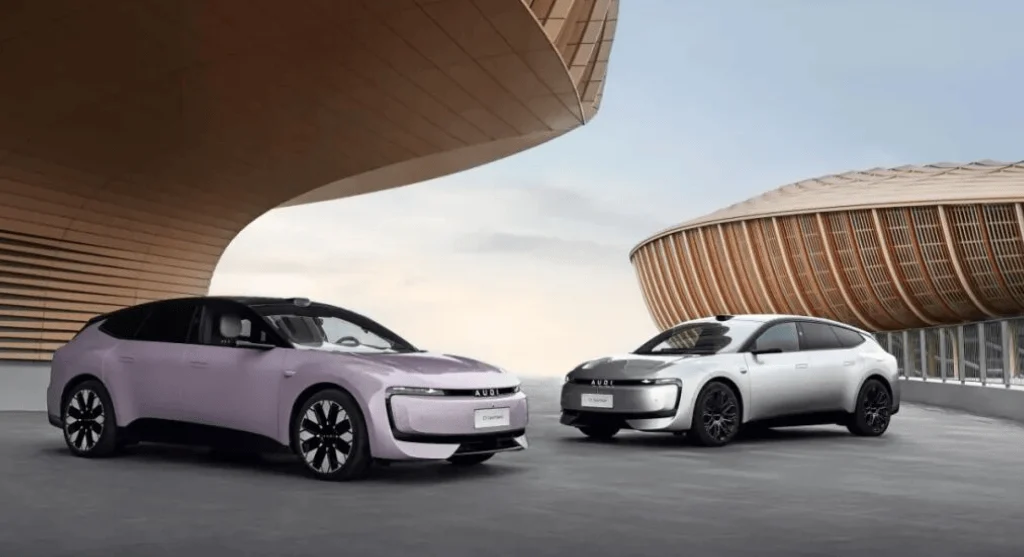
Audi China, in a significant strategic move to deepen its commitment to the world’s largest automotive market, has officially established a dedicated innovation technology center in Shanghai, in collaboration with its joint venture partner, SAIC Group. This state-of-the-art facility is meticulously designed to spearhead the development of the China-focused ‘AUDI’ brand, a distinct entity tailored specifically for the unique demands and rapidly evolving preferences of Chinese consumers. The center’s comprehensive mandate spans the entire vehicle development lifecycle, from initial product definition and sophisticated platform engineering to intricate system integration, marking a profound shift towards localized research and development for the premium German automaker.
A New Hub for China-Centric Innovation
The newly inaugurated innovation technology center represents a pivotal cornerstone in Audi’s "In China, For China" strategy, aiming to accelerate the brand’s adaptability and competitiveness within the dynamic Chinese automotive landscape. Its core mission is to develop cutting-edge technologies and products that resonate deeply with local market specificities, particularly in the burgeoning fields of electric vehicles (EVs), advanced connected-car features, intuitive AI-powered cockpits, and sophisticated driver-assistance systems. This localization effort is critical for Audi to maintain its premium market position against a backdrop of aggressive competition from both established global players and rapidly innovating domestic Chinese brands.
The partnership with SAIC Group, one of China’s largest and most technologically advanced automotive conglomerates, provides Audi with invaluable access to local expertise, supply chains, and a deep understanding of the Chinese regulatory and consumer environment. The collaboration is not merely about manufacturing; it extends fundamentally to the co-creation of future mobility solutions. The two companies have explicitly outlined plans to leverage a next-generation Advanced Digital Platform, developed jointly, to underpin the creation of four brand-new models under the ‘AUDI’ marque. These forthcoming vehicles are expected to embody the pinnacle of electrification and digital intelligence, directly addressing the Chinese market’s pronounced demand for high-tech, digitally integrated driving experiences.
Strategic Rationale: Deepening Roots in a Critical Market
China’s significance to global automakers cannot be overstated. It is not only the largest market by volume but also a critical incubator for future automotive technologies, particularly in new energy vehicles (NEVs) and intelligent connected vehicles (ICVs). For Audi, a brand with a long and storied history in China, adapting to this rapid evolution is not just an option but an imperative for sustained growth.
Audi’s journey in China began in 1988 with its first joint venture with FAW Group, forming FAW-Volkswagen, which has been instrumental in establishing Audi as a leading premium brand in the market. However, the landscape has dramatically shifted. The emergence of strong domestic EV brands like BYD, Nio, Xpeng, and Li Auto, coupled with the rapid digital transformation of the industry, necessitated a more agile and localized approach. The decision to form a second joint venture with SAIC in 2021 and subsequently establish this innovation center underscores Audi’s commitment to a multi-pronged strategy to capture distinct market segments and accelerate its technological pipeline.
The SAIC-Audi partnership, specifically focused on the ‘AUDI’ brand, is designed to complement Audi’s existing operations with FAW, creating a dual-pronged market penetration strategy. While FAW-Audi continues to cater to a broad range of established Audi customers, SAIC-Audi is positioned to target a younger, tech-savvy demographic that prioritizes advanced digital features, connectivity, and locally tailored user experiences in their premium vehicle choices. This innovative center is the operational heart of that strategy, ensuring that products are not merely adapted but truly born "in China, for China."
The Advanced Digital Platform and Future Models
The cornerstone of the innovation center’s work will be the development and application of the "next-generation Advanced Digital Platform." This platform is envisioned as a comprehensive digital architecture that integrates hardware and software, enabling seamless connectivity, robust AI capabilities, and advanced driver assistance functionalities. It will serve as the technological backbone for the four new ‘AUDI’ brand models currently in development, signifying a departure from traditional, globally standardized platforms that are then localized. Instead, this platform will be intrinsically designed with Chinese market requirements at its core.
The focus on electric vehicles (EVs) within this platform is paramount. China leads the world in EV adoption, sales, and manufacturing, driven by supportive government policies, extensive charging infrastructure development, and a consumer base increasingly open to electric mobility. Audi’s strategy, therefore, must prioritize the rapid introduction of competitive EV models that offer superior range, charging efficiency, and, crucially, a differentiated digital experience. The innovation center will be instrumental in developing battery management systems, electric powertrains, and charging technologies specifically optimized for Chinese usage patterns and infrastructure.
Beyond electrification, the center’s work on connected-car technologies, AI-powered cockpits, and driver-assistance systems will define the user experience of future ‘AUDI’ models. Chinese consumers have a high expectation for digital integration in their vehicles, including seamless smartphone integration, advanced voice control, localized navigation services, and a plethora of entertainment and productivity applications. The AI-powered cockpits will likely feature sophisticated natural language processing, personalized user profiles, and predictive functionalities, while advanced driver-assistance systems (ADAS) will be tailored to specific Chinese road conditions, traffic patterns, and regulatory frameworks, ranging from intelligent cruise control to highly automated driving features.
Timeline and Chronology of Audi’s China Strategy
- 1988: Audi’s initial foray into China through a licensing agreement with FAW Group, leading to local production of the Audi 100.
- 1995: Establishment of the FAW-Volkswagen joint venture, formalizing Audi’s production and sales operations in China. This partnership became the bedrock of Audi’s premium market dominance for decades.
- Early 2010s: As China’s automotive market matured and diversified, Audi, like other premium brands, began to intensify localization efforts, but largely within the existing FAW-VW framework.
- Mid-2010s: The rapid rise of NEVs and intelligent vehicles in China, spearheaded by domestic brands and supportive government policies, highlighted the need for more agile development.
- 2020: Audi announces plans to establish a second joint venture with SAIC Group, signaling a strategic shift to accelerate its presence and product offerings in the dynamic Chinese market, particularly for new energy vehicles.
- 2021: SAIC Audi Automotive Co., Ltd. is officially established, aiming to develop and produce a new portfolio of Audi models specifically for the Chinese market.
- 2022-2023: Initial SAIC-Audi models are introduced, laying the groundwork for the distinct ‘AUDI’ brand positioning.
- Recent Establishment (as per article): Inauguration of the SAIC-Audi Innovation Technology Center in Shanghai, solidifying the commitment to localized R&D for the ‘AUDI’ brand and its future models.
Statements and Reactions: Voices from the Partnership
While specific real-time quotes are not provided, an inference of likely statements from key stakeholders offers insight into the strategic thinking:
- Jürgen Rittersberger, Audi AG Board Member for Finance and Legal Affairs (and likely overseeing China operations): "The establishment of our innovation technology center in Shanghai, in partnership with SAIC, marks a monumental step in our commitment to the Chinese market. It underscores our belief that success in China demands not just presence, but profound integration and localized innovation. This center will be a powerhouse for developing cutting-edge technologies that resonate with the unique preferences of Chinese consumers, particularly in electrification and digitalization, ensuring the ‘AUDI’ brand remains at the forefront of premium mobility."
- Wang Xiaoqiu, President of SAIC Group: "Our collaboration with Audi to launch this innovation hub is a testament to the deepening strategic partnership between SAIC and Audi. It leverages SAIC’s extensive local market knowledge, advanced digital capabilities, and robust supply chain, combined with Audi’s global engineering prowess. This center will be instrumental in co-creating a new generation of intelligent electric vehicles under the ‘AUDI’ brand, setting new benchmarks for innovation and user experience in China’s rapidly evolving automotive landscape."
- Dr. Michael-Julius Renz, President of Audi China (hypothetical): "The ‘In China, For China’ philosophy is not just a slogan; it’s our operational blueprint. This innovation center empowers our local teams to define, develop, and integrate technologies from the ground up, ensuring our future products, starting with the four new models from the Advanced Digital Platform, are perfectly attuned to the desires of our Chinese customers. From AI-powered cockpits to advanced driver assistance systems, every element will be crafted with a deep understanding of local nuances."
Broader Impact and Implications
The establishment of this innovation center carries significant implications for Audi, SAIC, and the broader Chinese automotive industry:
- Enhanced Competitiveness for Audi: By localizing R&D, Audi can significantly shorten development cycles and react more swiftly to market trends. This agility is crucial in China, where consumer preferences and technological benchmarks evolve at an unprecedented pace. It allows Audi to better compete with both international rivals (e.g., Mercedes-Benz, BMW, Tesla) and domestic EV powerhouses (e.g., Nio, Xpeng, BYD) that have deep local R&D capabilities.
- Technological Advancement for SAIC: The partnership provides SAIC Group with direct access to Audi’s premium automotive engineering expertise and global R&D methodologies. This exchange can accelerate SAIC’s own technological development, particularly in advanced digital platforms, EV architecture, and premium vehicle manufacturing processes, bolstering its position as a leading Chinese automotive player.
- Deepening Localization of the Supply Chain: A local innovation center will naturally foster stronger relationships with local Chinese suppliers for components related to EVs, software, and advanced electronics. This further integrates Audi into China’s industrial ecosystem, potentially leading to cost efficiencies and more resilient supply chains.
- Talent Development and Acquisition: Shanghai, a major economic and technological hub, offers a rich talent pool in software engineering, AI, and automotive design. The center will serve as a magnet for top local talent, further enhancing Audi’s ability to innovate and develop products that resonate with Chinese users. It also contributes to the growth of a high-skilled workforce within China’s automotive sector.
- Setting a New Standard for Foreign-Local Partnerships: This deep R&D collaboration goes beyond traditional manufacturing joint ventures, signaling a trend towards more integrated partnerships where co-creation is at the forefront. It reflects a recognition by foreign OEMs that merely assembling cars in China is no longer sufficient; true success requires co-developing them.
- Impact on Global Audi Strategy: The insights and technologies developed in Shanghai for the ‘AUDI’ brand could potentially influence Audi’s global product strategy, particularly in areas like AI-powered cockpits and advanced connectivity, given China’s leading role in these domains. This center could become a global reference point for specific technological advancements.
- Catalyst for Shanghai’s Automotive Innovation Ecosystem: The presence of a major R&D hub from a premium international brand like Audi further solidifies Shanghai’s reputation as a global center for automotive innovation, attracting more investment, talent, and technological development to the region.
In conclusion, the establishment of the Audi China-SAIC Group innovation technology center in Shanghai is far more than a mere expansion; it represents a strategic recalibration. It signifies Audi’s profound understanding of the Chinese market’s unique dynamics and its unwavering commitment to not only participate but to lead in the ongoing transformation of premium mobility through dedicated, localized innovation. As the world watches China drive the future of electric and intelligent vehicles, this center positions Audi and SAIC at the very heart of that evolution, poised to shape the next generation of automotive excellence for Chinese consumers and potentially beyond.

 Ali Ikhwan
 Reynand Wu