Asro
Asro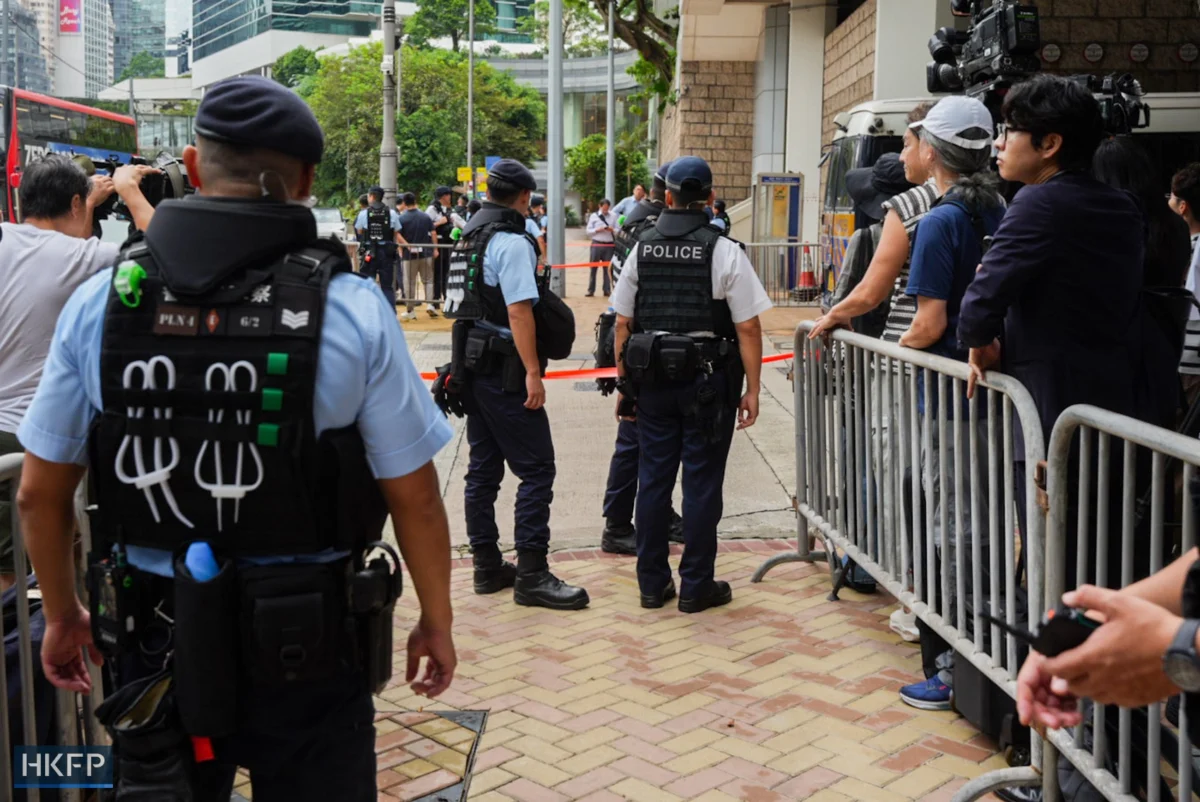
Hong Kong pro-democracy activist Joshua Wong has entered a guilty plea to a charge of conspiracy to collude with foreign forces, marking his second conviction under Beijing’s stringent national security law. This development follows his prior conviction in a landmark subversion case, further intensifying the legal scrutiny on prominent figures advocating for greater autonomy in the city. The 29-year-old activist, already serving a significant prison sentence, faces the prospect of additional years behind bars, underscoring the escalating crackdown on dissent in Hong Kong.
A Second Conviction Under the National Security Law
The guilty plea was entered by Wong at the High Court on Wednesday, pertaining to accusations of conspiring with self-exiled activist Nathan Law and others. The prosecution alleged that in 2020, this group sought to solicit foreign countries to impose sanctions, blockades, or engage in other hostile activities against Hong Kong and China. This offense carries a maximum penalty of life imprisonment, a stark indicator of the severity with which such actions are now treated under the national security framework.

Wong is currently incarcerated, serving a substantial term of four years and eight months for conspiracy to subvert state power. This earlier conviction stemmed from the high-profile "Hong Kong 47" national security case, in which he was one of 45 prominent campaigners found guilty in 2024. Initially, his release was anticipated around 2027, but this new conviction for foreign collusion significantly extends his potential time in prison.
The activist’s legal troubles did not cease with his initial imprisonment. He was arrested in Stanley Prison by the national security department of the Hong Kong Police Force in June of the previous year. Wong has been in detention since November 2020, a period that has seen a dramatic reshaping of Hong Kong’s political and social landscape under the shadow of the national security law.
Allegations of "International Front" Activities
During the court proceedings on Wednesday, Wong, dressed in a navy shirt and sporting his signature thick black-rimmed glasses, was escorted into the dock. He acknowledged friends and supporters present in the public gallery with a nod. Judge William Tam noted the significant public interest in the case, leading to the charge being formally read out to Wong. In a clear voice, Wong responded, "guilty," after the charge was articulated by a court clerk.

Prosecutors, presenting a summary of facts, outlined that Wong and Law, through their involvement with the pro-democracy party Demosisto which they co-founded in 2016, pursued the concept of "democratic self-determination." The court document detailed accusations that in the aftermath of the 2019 protests and ensuing unrest, the group engaged in an "international front" to solicit foreign sanctions.
Prosecutor Mingme Yeung stated, "The defendant, [Law] and their affiliates had adopted international lobbying strategies to seek foreign attention and support." The prosecution asserted that Wong actively engaged in international lobbying efforts aimed at securing sanctions against Hong Kong or China. Specifically, he was accused of urging the United States to enact the Hong Kong Human Rights and Democracy Act in 2019 and imploring other Western nations to implement Magnitsky-style sanctions.
Crucially, the prosecution highlighted that Wong continued these international lobbying activities even after the national security law was imposed by Beijing in June 2020. Meanwhile, Nathan Law had reportedly relocated overseas to continue advocating for their cause from abroad. This continuity of action, even after the implementation of the national security law, forms a core part of the prosecution’s case.

Background of the National Security Law and its Impact
Beijing’s imposition of the national security legislation directly into Hong Kong’s Basic Law in June 2020 followed a year of widespread pro-democracy protests and significant civil unrest. The law criminalizes four broad categories of offenses: subversion, secession, collusion with foreign forces, and terrorism. These definitions are notably expansive, encompassing activities such as disruption to transportation and other critical infrastructure.
The introduction of the national security law fundamentally altered the legal landscape in Hong Kong. It granted the police extensive new powers, leading to hundreds of arrests and the establishment of new legal precedents. Concurrently, numerous civil society groups have disbanded or ceased operations in the wake of the law. While authorities maintain that the legislation has restored stability and peace to the city, it has drawn widespread criticism from international trade partners, the United Nations, and various non-governmental organizations.
Demosisto, the political group co-founded by Wong and Law, announced its dissolution on the very day the national security law came into effect, signaling the immediate impact of the legislation on the pro-democracy movement. Nathan Law, a key figure in the foreign collusion charge, is currently wanted by Hong Kong’s national security police, with a bounty of HK$1 million offered for information leading to his arrest.

Timeline of Key Events Leading to the Conviction
- 2016: Joshua Wong and Nathan Law co-found Demosisto, a pro-democracy political party advocating for self-determination.
- 2019: Large-scale pro-democracy protests erupt in Hong Kong, drawing international attention. Wong actively participates and engages in international advocacy. The US passes the Hong Kong Human Rights and Democracy Act.
- June 2020: Beijing imposes the National Security Law on Hong Kong, criminalizing acts of subversion, secession, collusion with foreign forces, and terrorism. Demosisto disbands on the same day.
- November 2020: Joshua Wong is arrested and subsequently detained.
- June (Year Unspecified, presumed prior to current article date): Wong is arrested while in Stanley Prison by the national security department on charges of conspiracy to collude with foreign forces.
- September 2 (Year Unspecified, based on article date): Wong pleads guilty to conspiracy to collude with foreign forces at the High Court. He is already serving a sentence for conspiracy to subvert state power from the "Hong Kong 47" case.
Supporting Data and Contextual Information
The national security law has been a catalyst for significant changes in Hong Kong’s political and social fabric. Data indicates a dramatic reduction in public protests since its implementation. Furthermore, the number of political organizations and civil society groups has significantly declined, with many either disbanding or ceasing operations due to pressure or legal restrictions. International human rights organizations and legal experts have repeatedly voiced concerns over the erosion of freedoms and the rule of law in Hong Kong since the enactment of the law.
The "Hong Kong 47" case, from which Wong’s prior conviction stems, involved a mass trial of individuals accused of conspiracy to commit subversion for their alleged roles in an unofficial primary election. The convictions in that case, which included many prominent activists and former lawmakers, represented a significant blow to the city’s democratic opposition. The broad interpretation of offenses under the national security law has led to convictions for activities previously considered legitimate forms of political expression and advocacy.
Broader Implications and Analysis
Wong’s guilty plea to the foreign collusion charge carries significant implications for the future of dissent and political activism in Hong Kong. It signifies the Beijing-aligned authorities’ unwavering commitment to prosecuting individuals perceived as threats to national security, even for actions taken prior to the law’s enactment. The conviction underscores the government’s objective of severing any perceived external influence on Hong Kong’s internal affairs.

The extended prison sentence that Wong now faces serves as a potent deterrent for others who might consider engaging in similar forms of international advocacy or political activism. The case also highlights the ongoing division between Hong Kong and Beijing’s interpretation of national security and international relations, and the international community’s concern over the shrinking space for freedoms in the city. The prosecution’s detailed account of Wong’s alleged lobbying activities, including specific requests for sanctions, suggests a methodical approach by the authorities to build cases against individuals accused of undermining national security through external engagement.
The sentencing hearing for Wong’s foreign collusion charge is anticipated to reveal the full extent of the legal repercussions, potentially adding further years to his already substantial sentence. This latest conviction reinforces the narrative of a Hong Kong where the avenues for political expression and dissent are increasingly constrained, and where engagement with international bodies on human rights and democratic issues is viewed as a criminal act. The case of Joshua Wong continues to be a focal point in the broader international discussion surrounding Hong Kong’s autonomy and its future under Chinese sovereignty.

 Siti Muinah
 Lina Irawan