Nana Wu
Over the past five years, a distinctive China-style major-country diplomacy has profoundly reshaped Beijing’s engagement with the international community, largely spearheaded by the extensive overseas travels and strategic vision of Chinese President Xi Jinping. Through an impressive itinerary comprising 29 visits to 58 countries and numerous major international and regional organizations across all five continents, President Xi has earned the moniker of China’s "chief diplomat," solidifying his nation’s increasingly prominent role on the global stage. These diplomatic endeavors have not only enhanced China’s leadership in critical areas such as global peace, security, governance, and development but have also fostered a deeper worldwide understanding of China’s unique vision and approach, which prominently features win-win cooperation and a resolute commitment to building a community with a shared future for mankind.
The Genesis of a New Diplomatic Era: March 2013 and Beyond
The foundational principles of this new diplomatic approach were unveiled during President Xi’s inaugural foreign trip as Chinese president. In March 2013, barely two weeks after assuming office, Xi Jinping chose Moscow as the setting to articulate his vision for international relations. Addressing an audience at the Moscow State Institute of International Relations, he powerfully articulated a departure from outdated paradigms: "To keep up with the times, we cannot have ourselves physically living in the 21st century, but with a mindset belonging to the past, stalled in the old days of colonialism, and constrained by zero-sum Cold War mentality." This statement served as a clarion call for the establishment of a new type of international relations, one fundamentally anchored in the principle of win-win cooperation. This early declaration signaled China’s intent to move beyond traditional power politics, advocating for a more equitable and mutually beneficial global order.
This initial visit set the tone for a period of robust engagement. Over the ensuing five years, President Xi undertook six visits to Russia and engaged in more than 20 meetings with Russian President Vladimir Putin across various international forums. This sustained high-level interaction has been instrumental in elevating China-Russia ties to their historical zenith, fostering a comprehensive strategic partnership that both nations view as a crucial anchor for global peace and security. The Chairman of the Russian State Duma, Vyacheslav Volodin, underscored the significance of this relationship, stating, "I believe that the model of bilateral relations that we have created should become one of the examples of civilized interaction between countries in the 21st century." This sentiment highlights the depth of cooperation and mutual trust that has developed, encompassing diverse sectors from energy and trade to military and technological collaboration, often seen as a counterweight to perceived Western unilateralism.
Navigating Complex Global Dynamics: Bilateral Engagements
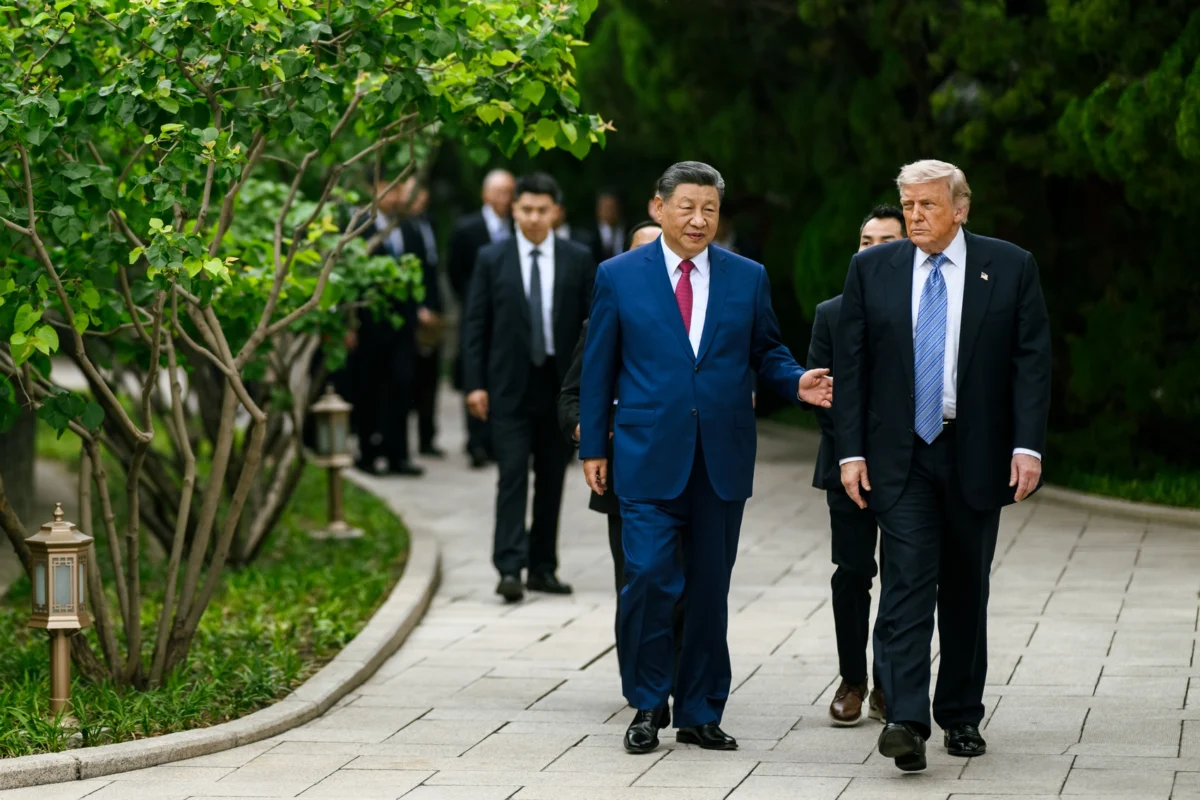
President Xi’s diplomatic philosophy, characterized by principles of non-conflict, non-confrontation, mutual respect, and win-win cooperation, has been rigorously applied across a spectrum of bilateral relationships, notably in managing the often-complex dynamics with the United States. Despite significant White House leadership changes and the consequent uncertainties inherent in U.S.-China relations, these guiding principles have contributed to a degree of stability. President Xi’s direct exchanges with U.S. President Donald Trump, including pivotal meetings such as the Mar-a-Lago summit in April 2017 and subsequent engagements on the sidelines of G20 summits, led to the establishment of new high-level dialogue mechanisms. These mechanisms, designed to promote global peace and security, aimed to manage disagreements and explore areas of cooperation, even as underlying trade tensions and geopolitical rivalries began to intensify. The interactions underscored China’s preference for dialogue and structured engagement, even with its most significant geopolitical competitor.
China-Europe relations have also experienced substantial expansion, marked by each of President Xi’s multiple tours to the continent. Beijing has actively pursued a comprehensive strategic partnership with the European Union, emphasizing cooperation founded on principles of peace, growth, reform, and mutually beneficial bilateral engagement. Key initiatives included high-level dialogues on economic and trade issues, cultural exchanges, and collaboration on climate change. Furthermore, China’s deepening relationships with countries in Central and Eastern Europe (CEE) through platforms like the "16+1" cooperation mechanism (now "17+1" with Greece’s inclusion), have significantly broadened China’s footprint across the continent. While these initiatives have at times sparked discussion within the EU regarding their broader implications for European unity and foreign policy, they have also fostered new avenues for trade, investment, and infrastructure development, largely easing earlier European anxieties about China’s intentions by demonstrating tangible economic benefits and a commitment to engagement. For instance, trade between China and the EU reached record highs during this period, signifying the deepening economic interdependence.
Regional Integration and South-South Cooperation
A significant portion of President Xi’s diplomatic efforts over the past five years – nearly half of his overseas visits – was strategically dedicated to strengthening ties with China’s immediate neighbors and the broader developing world. This focus underscores China’s commitment to fostering a stable and prosperous regional environment, vital for its own continued development. Initiatives such as the Lancang-Mekong Cooperation mechanism, which brought together countries sharing the Mekong River (China, Laos, Cambodia, Myanmar, Thailand, and Vietnam), aimed at promoting sustainable development and regional integration. The updated version of the China-Association of Southeast Asian Nations (ASEAN) Free Trade Area further deepened economic integration, boosting trade and investment flows across the region. Additionally, ambitious infrastructure and connectivity projects, exemplified by the Bangladesh-China-India-Myanmar Economic Corridor (BCIM-EC), sought to enhance regional connectivity and economic prosperity, demonstrating China’s practical commitment to regional development.
Simultaneously, cooperation with developing countries in Africa and Latin America experienced remarkable growth. China’s involvement in a vast number of infrastructure and development projects across these continents became a hallmark of its South-South cooperation. From railway lines in Kenya and Ethiopia to port expansions in various African nations, and significant investments in mining and energy sectors in Latin America, China positioned itself as a crucial development partner. These engagements were often framed as non-interfering and mutually beneficial, resonating with the aspirations of developing nations for economic growth and infrastructure modernization. Chinese foreign direct investment into Africa, for example, saw substantial increases, fostering job creation and local capacity building, albeit sometimes accompanied by scrutiny regarding debt sustainability and environmental impacts.
The Centrality of Multilateralism and a Shared Future
A cornerstone of President Xi’s major-country diplomacy and a central pillar of China’s re-engagement with multilateralism is his overarching proposal to build a "community with a shared future for mankind." This concept, first articulated in 2013 and progressively elaborated, transcends mere rhetoric, shining a light on China’s diplomatic efforts concerning individual states, regional blocs, and international organizations. It posits that humanity faces common challenges that require collective solutions, advocating for a world characterized by peace, security, prosperity, and ecological balance.
President Xi has consistently reaffirmed China’s unwavering commitment to economic globalization, UN-led multilateralism, and global peace across virtually every major international forum. From his addresses at the United Nations General Assembly and the World Economic Forum (WEF) in Davos to his participation in Asia-Pacific Economic Cooperation (APEC) leaders’ meetings, the Group of 20 (G20) forum, and the BRICS summit (comprising Brazil, Russia, India, China, and South Africa), Xi has championed a vision of inclusive global governance.
This stance gained particular prominence during a period marked by rising skepticism towards globalization. Many falsely attributed a sluggish global economy, high unemployment rates, the surge in trade protectionism, populism, isolationism, terrorism, and the refugee crises in Europe and the Middle East, along with the widening gap between rich and poor, to economic globalization itself. In a pivotal keynote speech at the WEF in Davos in January 2017, President Xi offered a counter-narrative and a roadmap forward. He declared, "In the face of both opportunities and challenges of economic globalization, the right thing to do is to seize every opportunity, jointly meet challenges and chart the right course for economic globalization." He then outlined a path forward for the global economy, emphasizing innovation-driven growth, open and win-win cooperation, fairer and more equitable governance, and balanced and inclusive development. His argument was clear: multilateralism is the indispensable solution for global problems, and China stands as its strong pillar.
The Belt and Road Initiative: A Manifestation of Shared Future
The most tangible and ambitious embodiment of the "community with a shared future for mankind" vision is the Belt and Road Initiative (BRI), proposed by President Xi in late 2013. This colossal undertaking aims to construct vast trade and infrastructure networks, largely resurrecting and expanding ancient Silk Road trade routes. Far from being a mere economic project, the BRI represents a strategic framework for global connectivity and cooperation, encompassing land-based "Silk Road Economic Belt" and maritime "21st Century Maritime Silk Road" components. It involves unprecedented investments in railways, roads, ports, pipelines, industrial zones, and digital infrastructure across Asia, Europe, Africa, and beyond.
The initiative’s projects are designed to be intrinsically aligned with the development strategies of numerous participating countries, fostering mutual growth and prosperity. Crucially, the BRI is also being hashed out with the United Nations 2030 Sustainable Development Goals in mind, aiming to contribute to poverty reduction, improved health, education, and environmental protection across the globe. By fostering connectivity and facilitating trade, the BRI seeks to create new engines of growth and reduce development disparities. Indeed, many international observers and developing nations have hailed the Belt and Road Initiative as potentially one of the greatest contributions China has offered to the world in terms of global public goods, offering a new model for international development cooperation.
During the Dialogue of Emerging Market and Developing Countries at the BRICS summit held in Xiamen, China, in September 2017, President Xi reiterated the core philosophy underpinning these efforts: "In an increasingly interdependent and integrated world where countries form a community of shared interests, openness, inclusiveness and win-win cooperation are the only viable option." This statement encapsulated the strategic rationale behind China’s proactive global engagement.
Global Acclaim and Contributions
The United Nations Secretary-General Antonio Guterres has openly acknowledged China’s pivotal role, stating, "Multilateralism is the solution for the global problems, and China has been a strong pillar of multilateralism." His predecessor, Ban Ki-moon, similarly recognized China as "an indispensable partner for the UN’s agenda," underscoring Beijing’s growing influence and responsibility within the international system.
China’s commitment to addressing global challenges is evident in its continued support for the Paris Agreement on climate change, even after the significant withdrawal of the United States. Beijing has positioned itself as a leading advocate for climate action, investing heavily in renewable energy and committing to ambitious emissions reduction targets, thereby playing a crucial role in maintaining global momentum on environmental protection. Furthermore, China’s substantial and growing contributions to UN peacekeeping missions, making it the second-largest financial contributor and a major troop contributor among the permanent members of the Security Council, exemplify its practical efforts to foster international peace and security. These multifaceted engagements collectively underscore China’s evolving identity as a responsible major power dedicated to shaping a more stable, equitable, and sustainable global future.
Broader Impact and Implications
The five years of President Xi Jinping’s major-country diplomacy have undeniably marked a significant turning point in China’s engagement with the world. This period has seen China move from a largely reactive foreign policy to a proactive and assertive one, characterized by a clear vision and ambitious initiatives. The implications are profound:
- Shifting Global Power Dynamics: China’s diplomatic surge has accelerated the multipolarization of the international system, challenging traditional unipolar assumptions and fostering a more diverse set of global leadership models.
- Economic Reconfiguration: Through the BRI and expanded trade agreements, China is actively reshaping global supply chains, infrastructure networks, and financial flows, creating new economic corridors and influencing development trajectories across continents.
- Normative Influence: Beijing is actively promoting its concepts of "win-win cooperation" and a "community with a shared future for mankind" as alternatives or complements to existing liberal international norms, fostering debate about the future of global governance.
- Challenges and Scrutiny: While China’s initiatives are welcomed by many, particularly in the developing world, they also face scrutiny regarding debt sustainability, transparency, human rights, and geopolitical competition, especially from Western nations. Navigating these criticisms while advancing its agenda remains a key challenge for China’s diplomacy.
- Future Trajectory: The foundations laid during these five years suggest a continued trajectory of active global engagement, with China likely to further refine its diplomatic approach, adapt to evolving global circumstances, and continue to advocate for a global order that reflects its interests and values.
In essence, President Xi Jinping’s diplomatic odyssey over these five years has not merely been a series of state visits; it has been a meticulously crafted strategy to project China’s power, articulate its vision, and solidify its position as an indispensable player in the complex tapestry of 21st-century international relations. The impact of this major-country diplomacy will continue to reverberate across the globe for decades to come, shaping the future of international cooperation and competition.

 Evan Lee Salim
 Jia Lissa