Dwi Wanna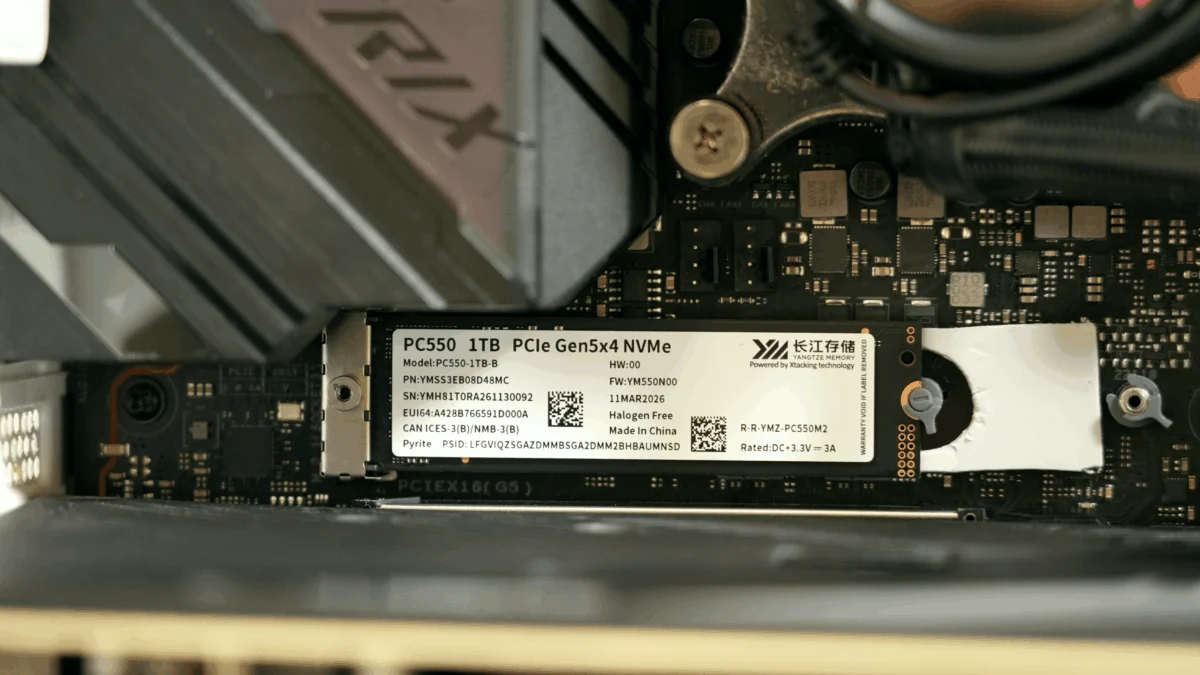
The advent of PCIe 5.0 Solid State Drives (SSDs) has ushered in a new era of storage performance, offering unprecedented sequential read and write speeds that redefine data transfer capabilities. While numerous drives now exist that can achieve these high benchmarks, the critical challenge lies in integrating such potent performance into compact form factors like laptops, mini PCs, and other space-constrained devices without introducing significant issues related to heat generation and power consumption. In these environments, effective thermal management often proves as crucial as raw speed, directly impacting system stability, component longevity, and overall user experience.
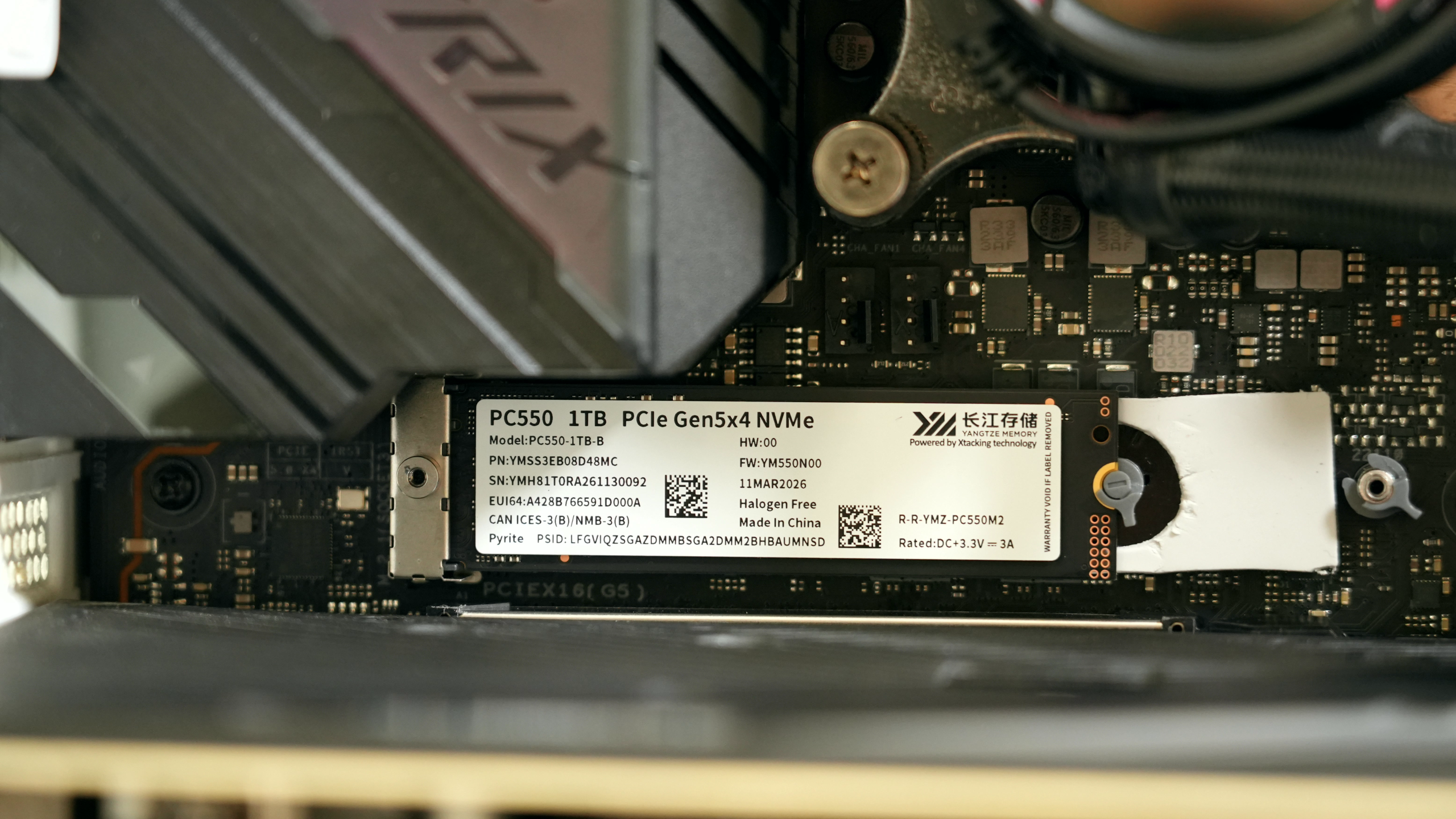
YMTC, a prominent player in the NAND flash memory industry, has addressed this intricate balance with its new PC550 PCIe 5.0 SSD. Through rigorous testing, the PC550 has demonstrated performance figures that not only meet but often exceed its official specifications across several key benchmarks. Crucially, it maintained remarkable thermal control even during demanding, multi-faceted workloads. This strategic design philosophy positions the YMTC PC550 not merely as a high-speed storage device, but as a practical and reliable solution for next-generation systems where sustained performance and thermal efficiency are equally paramount.
The Evolving Landscape of PCIe 5.0 SSDs and Its Challenges
PCIe 5.0 represents the latest iteration of the Peripheral Component Interconnect Express interface, doubling the bandwidth of its predecessor, PCIe 4.0. Each lane in PCIe 5.0 offers a transfer rate of 32 GT/s (gigatransfers per second), translating to a theoretical maximum bandwidth of approximately 15.75 GB/s for a standard x4 NVMe SSD configuration. This significant leap in data throughput enables faster application loading, quicker file transfers, and more efficient handling of large datasets, which are increasingly common in modern computing tasks such as artificial intelligence (AI) model training, high-resolution video editing, and complex scientific simulations. The transition from SATA III SSDs (max ~600 MB/s) to early NVMe PCIe 3.0 drives (max ~3,500 MB/s), then to PCIe 4.0 (max ~7,000 MB/s), and now PCIe 5.0, illustrates a rapid technological evolution driven by the ever-increasing demand for data-intensive applications.

However, harnessing this immense speed comes with inherent engineering challenges. Increased data transfer rates typically correlate with higher power consumption and, consequently, greater heat generation. For desktop PCs with ample space for large heatsinks, active cooling solutions, or even custom liquid cooling, managing this thermal output is often straightforward. The landscape shifts dramatically when considering compact systems. Laptops, mini PCs, and all-in-one devices have limited internal volume, restricting the size and effectiveness of passive heatsinks and airflow. Excessive heat can lead to thermal throttling, where the SSD automatically reduces its performance to prevent overheating, effectively negating the benefits of PCIe 5.0 speeds. Moreover, prolonged high temperatures can shorten the lifespan of the drive and other nearby components, while also increasing fan noise in systems that rely on active cooling. The industry has therefore been seeking solutions that deliver PCIe 5.0 performance without compromising the thermal envelopes of smaller devices.
YMTC’s Strategic Position in the NAND Flash Market
YMTC (Yangtze Memory Technologies Co.) has emerged as a significant force in the global NAND flash memory market. Founded in 2016, the company has rapidly advanced its proprietary 3D NAND flash technology, known as Xtacking. This innovative architecture separates the peripheral circuits from the memory array, allowing for independent manufacturing and optimizing both density and performance. Xtacking technology has enabled YMTC to produce competitive NAND flash products, challenging established players and contributing to the diversification of the global memory supply chain. The PC550 SSD leverages YMTC’s internal NAND flash, underscoring the company’s vertically integrated approach and control over key components, which often translates to optimized performance and efficiency. This background provides crucial context for understanding YMTC’s ability to engineer an SSD that balances speed with thermal management. Industry analysts have often highlighted YMTC’s rapid technological advancements as a key factor in its growing market share, particularly in the competitive high-performance segment.

Unpacking the PC550: Specifications and Design Philosophy
The YMTC PC550 SSD is designed with a keen focus on achieving high performance while maintaining stringent control over thermal behavior and power consumption. The 1TB version of the PC550, which was the subject of the detailed review, comes with impressive official specifications. YMTC rates its sequential read speeds at up to 10,500MB/s and sequential write speeds at up to 9,500MB/s. For random operations, which are crucial for tasks involving numerous small files or database interactions, the drive is specified to deliver up to 1,300K IOPS (Input/Output Operations Per Second) for both read and write operations.
Beyond raw speed, YMTC emphasizes the PC550’s efficiency, listing an operating power consumption below 6W and an idle power consumption below 3mW. These figures are particularly noteworthy in the context of PCIe 5.0 drives, many of which tend to consume more power and generate more heat, often necessitating bulky aftermarket heatsinks. YMTC’s stated objective for the PC550 is to provide a drive that is "not defined by a single peak number, but by how consistently its performance translates into practical use." This philosophy directly addresses the thermal and power challenges inherent in compact, high-performance computing, aligning with the growing market demand for efficient, yet powerful, components.

Beyond the Benchmarks: Real-World Performance Validation
To validate YMTC’s claims and assess the PC550’s capabilities, a comprehensive suite of benchmarks and real-world application tests was conducted. The results consistently demonstrated the drive’s robust performance, often surpassing its official ratings.
Synthetic Benchmarking with CrystalDiskMark:
CrystalDiskMark is a widely used synthetic benchmark that measures sequential and random read/write speeds, providing a clear snapshot of a drive’s peak theoretical capabilities. The PC550 exceeded its official sequential read rating significantly, achieving 11,712.69MB/s – an impressive 11.5% uplift over the rated 10,500MB/s. This places it among the fastest PCIe 5.0 drives available. Sequential write speeds also matched the official rating, hitting 9,501.92MB/s, indicating strong performance for large file transfers.

In random performance, which is a better indicator of responsiveness in everyday tasks like application launches and multitasking, the PC550 delivered substantial gains. 4K random read performance reached 1,403K IOPS, a 7.9% improvement over the rated 1,300K IOPS. Even more striking was the 4K random write performance, which soared to 1,789K IOPS, marking a significant 37.6% increase over the official specification. A mixed workload test (70% read, 30% write) further confirmed strong performance, recording 11,722.69MB/s read and 9,500.92MB/s write performance, highlighting its versatility. These results underscore the PC550’s capacity to handle both bandwidth-intensive tasks and highly parallelized operations efficiently, making it suitable for a diverse range of demanding desktop workloads.
Sustained Write Performance with Iometer:
While peak sequential speeds are impressive, real-world scenarios often involve sustained large file transfers that extend beyond the SSD’s high-speed SLC cache. To evaluate this crucial aspect, Iometer was used for a 1TB sequential-write test, employing 1MB transfers, a queue depth of 8, and 100% write operations. This rigorous test pushed the drive beyond its initial cache capacity. The resulting performance curve illustrated the transition from the initial cache-assisted write phase into a lower, yet remarkably stable, out-of-cache performance range. Across the entire 1TB workload, the PC550 maintained an average write speed of 2,002.69MB/s. This sustained performance figure is highly relevant for professionals dealing with massive datasets, such as video editors rendering large projects, game developers compiling extensive codebases, or data scientists processing gigabytes of information. It provides confidence that the drive can handle prolonged demanding write operations without significant slowdowns or unexpected performance dips, a common pitfall for some SSDs.

Everyday Workloads: PCMark 10 and 3DMark Storage:
To assess the PC550’s performance in more holistic, application-centric scenarios, PCMark 10’s Full System Drive Benchmark and 3DMark’s Storage Benchmark were utilized. PCMark 10 simulates a wide range of everyday tasks, from booting Windows and launching applications to copying files and gaming. The PC550 achieved a robust score of 5,213, with an an impressive average bandwidth of 803.70MB/s and an average access time of just 31 microseconds. These figures indicate excellent responsiveness across typical user activities, suggesting a smooth and fluid computing experience for general users and power users alike.
Similarly, 3DMark’s Storage Benchmark, which focuses specifically on gaming-specific workloads like loading games, saving progress, and recording gameplay, saw the PC550 score 4,963. It delivered an average bandwidth of 845.84MB/s and an average access time of 36 microseconds. Both benchmarks confirm that the PC550 effectively translates its raw speed into tangible benefits for general computing and gaming, ensuring a smooth and responsive user experience where storage bottlenecks are minimized.

AI Model Loading: Ollama and Qwen2.5 7B:
The increasing prevalence of local AI inference and development makes storage speed a critical factor, as large language models (LLMs) and other AI models often require rapid loading into memory. For this, the PC550 was tested by loading the Qwen2.5 7B model using Ollama. Across three runs, the average model loading time was a mere 2.07 seconds. This near-instantaneous loading time is a direct testament to the PC550’s high PCIe 5.0 read speeds. For AI professionals who frequently switch between models, perform iterative tests, run local inference, or experiment with Retrieval Augmented Generation (RAG) pipelines, such rapid loading times can significantly enhance workflow efficiency and reduce unproductive waiting periods, ensuring that storage does not become a bottleneck in compute-intensive AI tasks. This capability is particularly relevant as more AI applications move from cloud-based solutions to local, on-device processing.
Gaming Performance: Delta Force Loading Test:
Gaming remains a demanding application for storage, particularly with modern titles featuring vast open worlds, high-resolution textures, and complex game engines that stream assets dynamically. The PC550’s gaming prowess was evaluated using a Delta Force loading test, measuring the time from clicking "Start Game" in Black Hawk Down mode to the appearance of the character-selection screen. This scenario requires the rapid loading of extensive map and character assets while background game services are active. The PC550 completed this process in 15.38 seconds, outperforming a PCIe 4.0 reference drive on the same platform, which took 16.72 seconds. This 1.34-second advantage, while seemingly small in isolation, contributes to a snappier gaming experience and demonstrates the tangible benefits of PCIe 5.0 in reducing loading screens and improving overall responsiveness, crucial for competitive gamers and enthusiasts seeking minimal interruptions.

The Thermal Frontier: A Game-Changer for Compact Systems
Perhaps the most compelling aspect of the YMTC PC550 is its exceptional thermal performance. The high speeds of PCIe 5.0 SSDs are often accompanied by significant heat generation, with many mainstream Gen5 drives commonly reaching temperatures in the 60°C to 70°C range under sustained load. Some early high-performance designs have even approached 80°C in thermally constrained environments, leading to concerns about thermal throttling and system stability, especially in compact devices. Heat management has become an expected challenge with high-performance Gen5 storage, often requiring aftermarket heatsinks that add bulk and cost.
To rigorously test the PC550’s thermal resilience, a particularly demanding scenario was devised: a system stress test running concurrently with the Delta Force game in the background. This combined workload ensured constant activity across the system, game, and storage components. The test was sustained for approximately 30 minutes, with the PC550 installed beneath the motherboard’s standard M.2 heatsink in a room maintained at an ambient temperature of around 27°C. This setup represents a realistic scenario for many users, foregoing specialized cooling.

The results were remarkable. Throughout the entire 30-minute test, the PC550’s temperature remained consistently below 50°C. Its main temperature sensors averaged 45°C and peaked at a modest 48°C, while a third sensor registered an average of 42°C and peaked at 45°C. This sub-50°C operating temperature is an industry-leading achievement for a PCIe 5.0 SSD under such strenuous conditions, particularly when relying solely on a basic motherboard heatsink. This contrasts sharply with many competitors that often require substantial passive or even active cooling solutions to prevent throttling.
This level of thermal efficiency holds profound implications for compact systems. In laptops, mini PCs, and all-in-one devices, every heat source competes for limited cooling capacity. By operating at significantly lower temperatures, the PC550 reduces the overall thermal burden on the system, providing more headroom for other critical components like the CPU and GPU. This translates to more stable system operation, reduced risk of thermal throttling across the entire system, potentially quieter fan operation (as system fans don’t need to ramp up as aggressively), and extended component lifespan. Combined with YMTC’s stated below-6W operating power rating, the PC550 offers a distinct practical advantage in scenarios where the delicate balance between high performance and efficient thermal and power management is paramount, making it an ideal choice for thin-and-light devices.

YMTC’s Strategic Vision and Market Impact
YMTC’s development of the PC550 reflects a broader understanding of the evolving needs of the computing market. As devices become smaller and more integrated, raw performance alone is insufficient. The ability to deliver that performance consistently and efficiently, without creating cascading thermal or power issues, defines the true value of a component. The PC550, with its blend of speed and thermal discipline, positions YMTC as an innovator in addressing these complex engineering challenges. This strategy aligns with industry trends towards more power-efficient computing and compact form factors.
The implications for system builders and end-users are significant. For those designing high-performance laptops, compact workstations for content creation, or even advanced gaming mini PCs, the PC550 simplifies the thermal design process. It allows manufacturers to integrate cutting-edge storage without needing oversized heatsinks or complex active cooling solutions specifically for the SSD, thereby enabling thinner, lighter, and potentially more cost-effective designs. This reduction in cooling requirements can also free up valuable internal space for other components or larger batteries.

From a consumer perspective, the PC550 promises a premium experience without the typical drawbacks of high-performance storage. Users can expect sustained fast file transfers, rapid application and game loading, and seamless AI model interaction, all while enjoying a system that runs cooler and quieter. This balanced approach is likely to resonate strongly with professionals, enthusiasts, and even mainstream users who are looking to upgrade to PCIe 5.0 without inheriting its common thermal baggage. This focus on practical usability over theoretical peaks marks a maturing of the PCIe 5.0 SSD market.
Conclusion: A Balanced Approach to Next-Gen Storage
The YMTC PC550 PCIe 5.0 SSD stands out in a crowded market not just for its impressive speed, but for its intelligent engineering that prioritizes practical, sustained performance alongside exceptional thermal management. While PCIe 5.0 SSDs are often evaluated purely on their peak benchmark numbers, the PC550 demonstrates that real-world utility requires a holistic consideration of speed, heat generation, power consumption, and integration within the broader system architecture.

By delivering performance that frequently surpasses its official ratings in sequential and random operations, and by maintaining remarkably low operating temperatures even under intense combined workloads, the PC550 offers a compelling value proposition. It provides the necessary horsepower for demanding tasks such as large file transfers, rapid game asset loading, and professional local AI workflows, all while keeping its thermal footprint remarkably controlled. For individuals and system integrators focused on building compact PCs, all-in-one solutions, or other space-constrained devices, the YMTC PC550 presents a straightforward and highly effective pathway to leveraging the full potential of PCIe 5.0 performance. It signifies a more refined and usable side of the PCIe 5.0 platform—one that is not only incredibly fast but also thoughtfully designed for seamless integration and reliable, long-term operation, setting a new benchmark for efficiency in high-performance storage.


 Lina Irawan
 Muslim