Nana Wu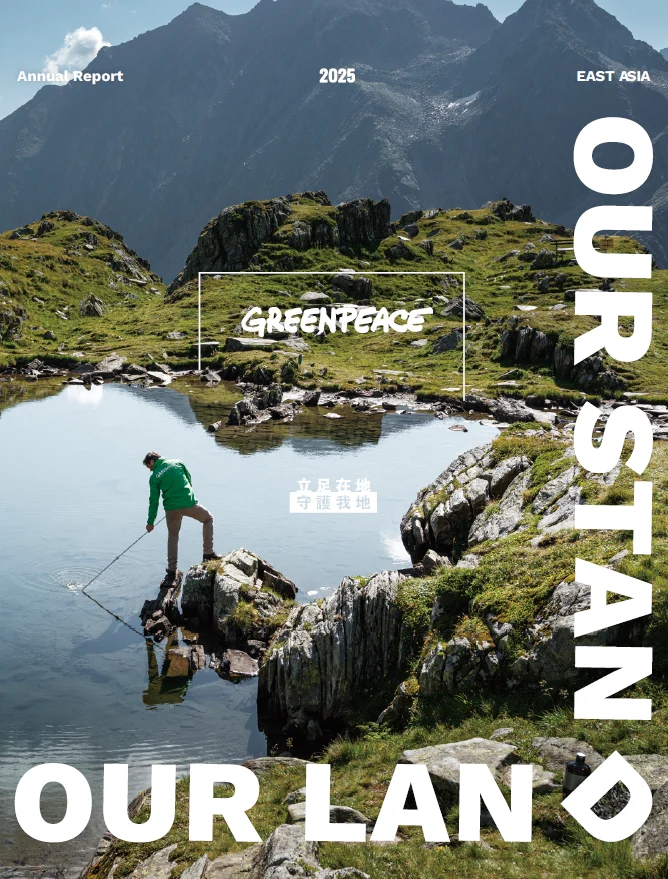
Nature’s stories are never just data. Our land, mountains, and oceans hold the shared memories of our coexistence with all living things. Environmental protection is ultimately about how we live in harmony with the Earth and remain connected to the generations that follow. Real change should not remain within academic debate alone – the challenges facing our land belong to all of us.
This profound statement, embedded within Greenpeace East Asia’s Annual Report 2025, underscores a philosophy that extends far beyond mere ecological statistics. It champions an intrinsic, almost ancestral, bond between humanity and the natural world, positioning environmental stewardship not as a detached scientific endeavor, but as a fundamental aspect of human existence and intergenerational responsibility. The report, released recently, details the organization’s activities and impact throughout the past year, emphasizing its unwavering commitment to fostering this connection and translating it into tangible protective actions.
The core message of the report is one of empowerment through independence. Greenpeace East Asia proudly asserts its 100% financial independence, a crucial detail that shields its operations and advocacy from the potential biases of political agendas and corporate interests. This autonomy, the report suggests, is the bedrock of its credibility and the efficacy of its campaigns. The narrative of independence is presented as a source of strength, originating in Hong Kong and radiating across the broader East Asian region, ultimately resonating on a global scale. The organization extends its gratitude to its supporters, framing their contributions as a direct translation of "love for our land and seas into actions to protect the home we share."
A Year in Review: Key Initiatives and Achievements
While the annual report itself is a comprehensive document, the overarching themes conveyed in the provided excerpt point to a year characterized by sustained advocacy, community engagement, and a deep-seated belief in the power of collective action. The report likely details specific campaigns focusing on critical environmental issues within East Asia. These could encompass a range of challenges, from combating plastic pollution in the region’s vital marine ecosystems to advocating for renewable energy transitions and protecting vulnerable biodiversity hotspots.
The emphasis on "shared memories of our coexistence" suggests that Greenpeace East Asia’s approach likely integrates cultural and historical perspectives into its environmental messaging. This could involve highlighting indigenous knowledge, traditional ecological practices, and the cultural significance of natural landscapes to local communities. By framing environmental protection as an extension of these deep-rooted connections, the organization aims to foster a more inclusive and compelling call to action.
The Significance of Financial Independence
Greenpeace East Asia’s declared financial independence is a critical aspect of its operational model. In the often-complex landscape of environmental advocacy, organizations frequently face pressure from vested interests. By operating on a 100% independent funding model, Greenpeace East Asia signals its commitment to unbiased reporting and advocacy. This independence allows the organization to:
- Maintain Unwavering Focus: Without the need to appease donors with specific agendas, Greenpeace East Asia can concentrate on the most pressing environmental issues as identified by its scientific and investigative teams.
- Conduct Robust Investigations: Investigative journalism and scientific research are often resource-intensive and can uncover uncomfortable truths about environmental degradation. Financial independence provides the security to pursue these investigations without fear of reprisal or funding withdrawal.
- Engage in Bold Advocacy: Taking on powerful corporations or governments often requires a strong stance. Independence ensures that such advocacy is driven by evidence and ethical principles, rather than financial considerations.
The report’s mention of scaling "across East Asia, and echoes around the world" suggests a strategic approach to environmental action. East Asia, with its rapidly developing economies and significant environmental footprints, presents both immense challenges and opportunities for sustainable development. Greenpeace East Asia’s work in this region likely involves navigating diverse political landscapes, cultural contexts, and economic priorities to promote environmental protection.
Supporting Data and Contextual Background
To fully appreciate the scope of Greenpeace East Asia’s work, it is essential to consider the broader environmental context of the region. East Asia is a global economic powerhouse, but this rapid growth has often come at a significant environmental cost.
- Air Pollution: Several major cities in East Asia consistently rank among the most polluted globally. The reliance on fossil fuels for energy and transportation, coupled with industrial emissions, contributes to severe air quality issues, impacting public health and ecosystems. For instance, data from the World Health Organization (WHO) frequently highlights the detrimental effects of fine particulate matter (PM2.5) on respiratory and cardiovascular health across the region.
- Marine Pollution: The seas surrounding East Asia are vital for biodiversity and livelihoods, yet they are increasingly threatened by plastic waste, industrial runoff, and overfishing. The Pacific Ocean, for example, is a significant recipient of plastic debris, with studies indicating that a substantial portion originates from East Asian rivers. The impact on marine life, from entanglement to ingestion of microplastics, is a growing concern.
- Deforestation and Biodiversity Loss: While some areas have seen reforestation efforts, significant biodiversity loss continues due to habitat destruction driven by agricultural expansion, logging, and infrastructure development. The region is home to a rich array of endemic species, many of which are endangered. Reports from the IUCN Red List consistently document species from East Asia facing extinction.
- Climate Change Impacts: East Asia is also particularly vulnerable to the impacts of climate change, including rising sea levels, more extreme weather events like typhoons and heatwaves, and disruptions to agricultural productivity. The region’s extensive coastlines and dense populations make it susceptible to coastal flooding and displacement.
Greenpeace East Asia’s annual report, by detailing their actions, implicitly addresses these multifaceted challenges. Their "actions to protect the home we share" likely involve a combination of grassroots activism, public awareness campaigns, policy advocacy, and potentially direct action, all aimed at mitigating these environmental threats.
Chronology of Impact (Inferred)
While a specific timeline is not provided in the excerpt, an annual report typically reflects a year’s worth of activities. We can infer a general chronology of impact based on the nature of environmental advocacy:
- Ongoing Monitoring and Research: Throughout the year, Greenpeace East Asia would have been engaged in continuous monitoring of environmental conditions, conducting scientific research, and gathering data to inform their campaigns.
- Campaign Launches and Activations: Specific campaigns would have been launched, likely involving public events, digital outreach, and possibly on-the-ground actions to raise awareness and pressure decision-makers. These could be timed to coincide with relevant international days or policy windows.
- Policy Engagement and Advocacy: The organization would have been actively engaging with governments and international bodies to influence environmental policies, advocate for stronger regulations, and promote sustainable practices.
- Community Mobilization: Building on the theme of shared responsibility, significant effort would have been directed towards mobilizing communities, empowering individuals to take action, and fostering a sense of collective ownership over environmental protection.
- Reporting and Evaluation: The culmination of the year’s efforts would be the compilation of the annual report, detailing achievements, challenges, and setting the stage for future work.
Statements and Reactions (Inferred)
The provided text offers a strong internal statement of purpose from Greenpeace East Asia. However, a comprehensive annual report would typically include or allude to reactions from various stakeholders:
- Supporters: The explicit "thank you" suggests a strong base of individual donors and supporters whose "love for our land and seas" is acknowledged. Their continued engagement is vital to the organization’s independence.
- Government Agencies: Greenpeace East Asia’s advocacy efforts would undoubtedly have led to interactions with environmental ministries and regulatory bodies in East Asian countries. Their report might allude to dialogue, constructive criticism, or even instances of resistance.
- Industry Representatives: Depending on the campaigns, there would have been engagement, and likely differing perspectives, with industries whose practices are under scrutiny. The report might highlight instances of collaboration on sustainable alternatives or instances of opposition to stricter environmental controls.
- Academic and Scientific Community: The report’s acknowledgment that "real change should not remain within academic debate alone" suggests a connection with researchers and academics, who provide the scientific basis for their advocacy. The report may cite studies or acknowledge collaborations.
- Other Environmental Organizations: In the broader environmental movement, collaboration is often key. Greenpeace East Asia might reference partnerships or joint initiatives with other NGOs working on similar issues within the region.
Broader Impact and Implications
The implications of Greenpeace East Asia’s work, as framed by its annual report, are far-reaching:
- Fostering Environmental Consciousness: By emphasizing the intrinsic connection to nature and the shared responsibility for its protection, the organization plays a crucial role in raising public awareness and fostering a deeper sense of environmental stewardship across East Asia and beyond.
- Driving Policy Change: Through persistent advocacy and the mobilization of public support, Greenpeace East Asia contributes to the development and enforcement of stronger environmental policies, which are essential for long-term ecological health.
- Promoting Sustainable Practices: By challenging environmentally damaging practices and advocating for sustainable alternatives, the organization influences corporate behavior and encourages the adoption of greener technologies and business models.
- Empowering Future Generations: The report’s focus on "generations that follow" highlights a commitment to safeguarding the planet for the future. By instilling a sense of responsibility and providing actionable pathways for engagement, Greenpeace East Asia empowers younger generations to become active participants in environmental protection.
- Strengthening Global Environmental Governance: As a globally recognized organization with a strong regional presence, Greenpeace East Asia contributes to the broader effort of strengthening international environmental cooperation and holding nations accountable for their environmental commitments.
The annual report, available for download, serves as a testament to Greenpeace East Asia’s dedication. It is more than a financial statement; it is a narrative of a shared journey, a commitment to a planet where humanity lives in "harmony with the Earth," and a call to action for all who recognize that "the challenges facing our land belong to all of us." The document invites readers to delve deeper into the specific actions, successes, and ongoing struggles that define the organization’s vital work in protecting our shared home.

 Asep Darmawan
 Asro
Asro