 Evan Lee Salim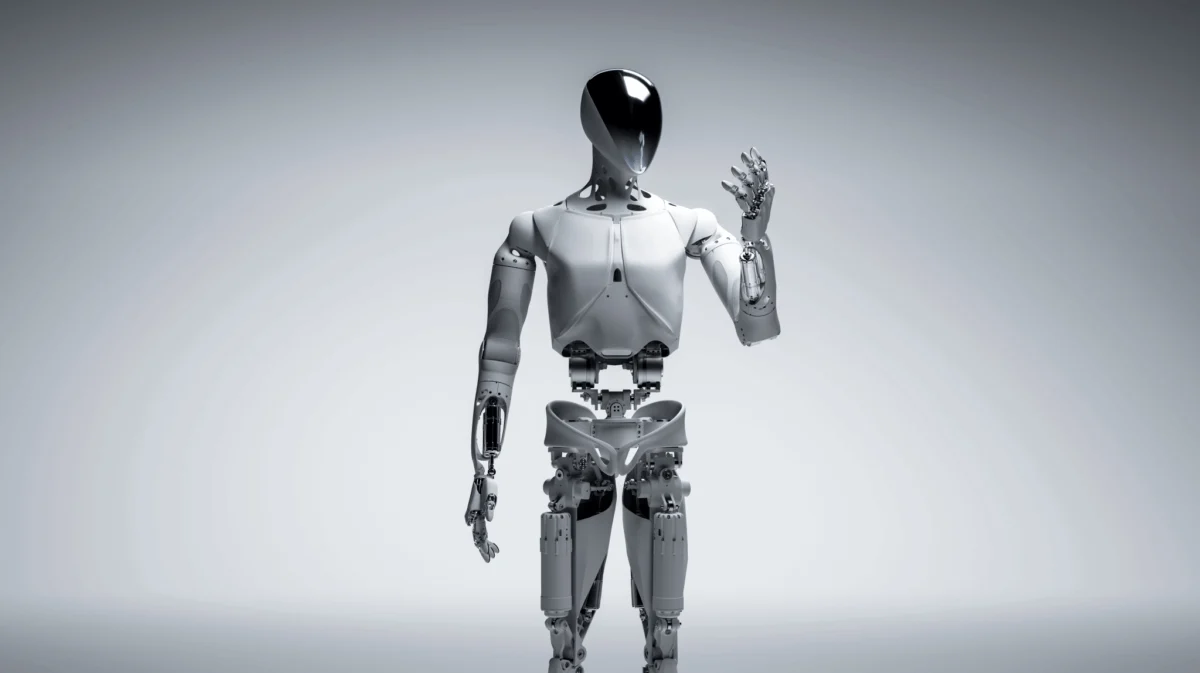
Beijing on Wednesday vehemently accused the United States of seeking to "suppress" Chinese companies, following Washington’s decision to ban imports of advanced robotic devices, specifically including humanoid and quadruped robots, manufactured abroad. The move by the US Federal Communications Commission (FCC) marks a significant escalation in the ongoing technological and trade rivalry between the two global powers, extending national security concerns into the rapidly evolving field of artificial intelligence and robotics.
The FCC’s Broadening Scope of National Security Concerns
The US Federal Communications Commission, an independent agency responsible for regulating interstate and international communications by radio, television, wire, satellite, and cable in all 50 states, the District of Columbia, and US territories, announced its decision on Tuesday. It added "advanced robotic devices" to its existing list of banned items, citing national security grounds. This designation specifically targets mobile robots that mimic human and animal locomotion, standing on two or four legs, encompassing both humanoid and quadruped designs.
This action stems from findings presented by a task force convened by the White House, which concluded that foreign-built robots could pose "a cybersecurity risk that threatens the security of critical infrastructure" and endanger "the safety and security" of US residents. While the FCC’s official statement did not explicitly name China, the context of the ban and Beijing’s immediate reaction leave little doubt about the primary target. Most humanoid and advanced mobile robots currently sold in the United States are imported, with a significant portion originating from China, where local companies have made substantial strides in this burgeoning technological sector.

The ban is not without precedent. The FCC’s list of banned items already includes certain types of drones and telecommunications equipment from Chinese firms such as Huawei and China Telecom. These previous measures were also justified on national security grounds, with US officials alleging that these companies’ products could be used for espionage or to disrupt American networks. The expansion of this list to include advanced robotics underscores a growing US apprehension regarding potential vulnerabilities in critical infrastructure and data security posed by foreign-made smart devices.
Beijing’s Forceful Rebuttal and Promise of Countermeasures
In response to the FCC’s decision, China’s Foreign Ministry spokesperson Mao Ning expressed Beijing’s "firm opposition" during a regular news conference. "China has always firmly opposed the US overstretching the concept of national security to suppress Chinese companies," Mao stated, echoing past criticisms leveled against Washington’s trade and technology policies. She reiterated that such actions are not merely about safeguarding national security but are a deliberate attempt to curb China’s technological advancement and economic competitiveness.
Mao Ning warned that Beijing would take "necessary measures" to safeguard the legitimate rights and interests of Chinese companies. While she did not specify what these measures might entail, previous responses to US sanctions have included filing complaints with the World Trade Organization, implementing retaliatory tariffs, issuing export controls on key materials, and accelerating domestic innovation to reduce reliance on foreign technology. The Chinese government views these bans as protectionist measures designed to stifle fair competition rather than genuinely address security concerns. Mao further asserted that "Protectionism cannot enhance US competitiveness. It will only harm the interests of American companies and consumers." This statement highlights China’s argument that such bans ultimately lead to higher costs, limited choices, and hindered innovation for American businesses and end-users.
The Global Robotics Landscape and China’s Ascendancy

The robotics industry is a cornerstone of the Fourth Industrial Revolution, with significant applications across manufacturing, logistics, healthcare, defense, and even consumer services. The global robotics market was valued at approximately $45 billion in 2023 and is projected to grow substantially, reaching well over $100 billion by the end of the decade, driven by advancements in AI, machine learning, and automation. Within this landscape, humanoid and quadruped robots represent a cutting edge, promising greater versatility and adaptability than traditional industrial robots.
China has emerged as a global leader in both the production and adoption of robotics. Driven by ambitious national strategies like "Made in China 2025," which prioritizes indigenous innovation in high-tech sectors, the country has heavily invested in robotics research and development. Chinese companies have rapidly advanced in areas such as perception, control systems, and locomotion for advanced mobile robots. From sprawling factories to bustling shopping centers and hotels, robots of various shapes and sizes are increasingly ubiquitous across China, demonstrating the nation’s commitment to integrating automation into daily life and industrial processes. This aggressive push has allowed Chinese manufacturers to produce sophisticated robots at competitive prices, making them attractive options for international markets, including the United States.
In the US market, while American firms like Boston Dynamics (known for its quadruped robot "Spot") are pioneers in advanced robotics, a significant portion of the supply chain, particularly for mass-produced components and certain finished products, has relied on overseas manufacturing, largely from China. This reliance creates an economic dilemma for US policymakers, balancing the desire for technological independence and national security with the realities of globalized supply chains and competitive pricing.
A Chronology of Tech Tensions and Decoupling Efforts
The FCC’s latest ban fits into a broader timeline of escalating tech tensions between the US and China.

- 2018-2019: The Trump administration initiated a trade war, imposing tariffs on hundreds of billions of dollars worth of Chinese goods, including electronics. Simultaneously, it began to target specific Chinese tech companies. Huawei, a global leader in 5G technology, was placed on the Entity List, effectively cutting off its access to crucial American technology and components due to national security concerns.
- 2020: The US government tightened restrictions on Huawei and ZTE, and began scrutinizing other Chinese tech firms like TikTok and WeChat, citing data privacy and national security risks. Efforts were made to ban TikTok in the US, though these faced legal challenges.
- 2021-2022: The Biden administration largely maintained the tough stance on China, focusing on "de-risking" supply chains and investing in domestic semiconductor manufacturing through initiatives like the CHIPS and Science Act. Export controls on advanced semiconductors and chip-making equipment to China were significantly tightened, aiming to impede China’s progress in AI and advanced computing.
- 2023: Concerns over Chinese-made drones, particularly those from DJI, intensified, leading to further restrictions and warnings about potential data exfiltration and surveillance. The White House also issued an executive order aimed at restricting US investments in certain Chinese high-tech sectors.
- Tuesday’s FCC Decision: The inclusion of "advanced robotic devices" on the banned list represents the latest expansion of this strategy, underscoring a continuous effort to limit China’s influence in emerging and critical technologies. This incremental approach suggests a long-term US strategy of targeted decoupling in key technological areas deemed vital for national security.
Economic Ramifications and Supply Chain Dynamics
The ban on advanced robotic imports from China carries significant economic implications for both sides. For the United States, while the immediate impact on industrial applications (like those in automobile factories or storage warehouses where most US humanoid robots are currently used) might be manageable, the long-term consequences could be more profound. US companies that have relied on cost-effective Chinese components or complete robotic systems will face increased procurement costs as they seek alternative suppliers, potentially leading to higher prices for end-products or slower adoption of automation. This could also force US businesses to invest more heavily in domestic manufacturing capabilities, which, while aligning with "reshoring" goals, requires substantial capital and time.
For Chinese robotics companies, the ban represents a loss of market access to a significant consumer base and a prestigious technology market. This could compel them to further diversify their export markets, focusing more on countries in Southeast Asia, Africa, and Latin America. More critically, it will likely accelerate China’s drive towards self-sufficiency in robotics and AI, channeling even more resources into domestic R&D and manufacturing to create fully indigenous supply chains, potentially leading to a more bifurcated global technology ecosystem.
Cybersecurity, Data Privacy, and Dual-Use Concerns
At the heart of the FCC’s decision are genuine cybersecurity and data privacy concerns. Advanced robots, especially those capable of autonomous navigation and interaction with complex environments, collect vast amounts of sensory data—visual, auditory, spatial, and even operational data from the facilities they operate in. If these robots are connected to networks, or if their embedded software contains vulnerabilities or backdoors, this data could theoretically be accessed by foreign adversaries.

The White House task force’s specific mention of "critical infrastructure" is particularly salient. Robots are increasingly deployed in sensitive environments such as power plants, water treatment facilities, logistics hubs, and defense contractors. A compromised robot could not only leak sensitive operational data but also potentially be remotely manipulated to disrupt services, sabotage equipment, or even cause physical harm, posing a direct threat to national security and public safety. The "dual-use" nature of advanced robotics—their potential application for both civilian and military purposes—further amplifies these concerns, as capabilities developed for industrial automation could be adapted for intelligence gathering or military operations.
Industry Reactions and Future Outlook
The robotics industry is likely to react with a mix of concern and adaptation. American robotics firms may see an opportunity to fill the void left by Chinese imports, but they will also face pressure to innovate rapidly and scale production to meet demand. Investment in domestic robotics startups and manufacturing facilities could surge. However, this shift will not be instantaneous and could lead to short-term supply constraints and higher prices.
Globally, the ban could further fragment the robotics market, leading to divergent technological standards and supply chains, making international collaboration and interoperability more challenging. It also raises questions about the definition of "foreign-built" and the complexities of global supply chains where components often originate from multiple countries.
The long-term implications for innovation are also a subject of debate. While some argue that protectionism can stifle global collaboration and slow down technological progress, others contend that it can stimulate domestic innovation and foster a more resilient national industrial base. For China, this ban might serve as another powerful impetus to double down on its indigenous innovation strategies, aiming to not only match but eventually surpass Western capabilities in advanced robotics.

As the US and China continue to navigate their complex relationship, the FCC’s ban on advanced robotic imports underscores a deepening divide in critical technology sectors. This move is not an isolated incident but a reflection of a broader geopolitical struggle for technological supremacy and national security in an increasingly interconnected yet fractured world. The "necessary measures" Beijing has promised, coupled with the ongoing US strategy of targeted decoupling, suggest that the future of robotics, like other advanced technologies, will continue to be shaped by geopolitical competition as much as by scientific advancement.


 Jia Lissa