 Ammar Sabilarrohman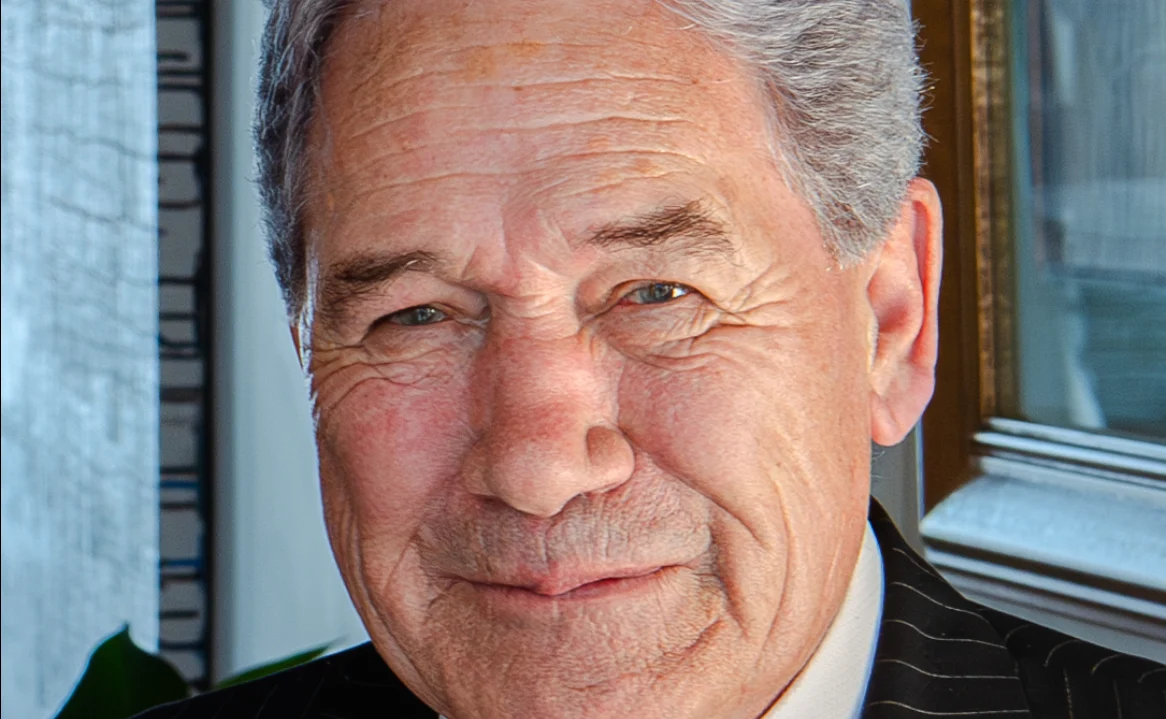
New Zealand’s veteran diplomat and Deputy Prime Minister, Winston Peters, ignited a significant controversy and drew the rare public condemnation of China’s ambassador in Wellington on Thursday, following a heated parliamentary exchange where he instructed a lawmaker of Chinese heritage to "go back to your own country." The remarks, made during a debate on New Zealand’s Covid-19 pandemic response, have not only raised questions about parliamentary decorum and racial insensitivity but also highlighted the delicate diplomatic balance New Zealand navigates with its largest trading partner, China. The incident has quickly escalated beyond a domestic political spat, forcing a spotlight on Peters’ long history of populist rhetoric and its potential implications for the nation’s international standing and internal social cohesion.
The Incendiary Exchange in Parliament
The contentious remarks were delivered on Wednesday during a parliamentary debate concerning New Zealand’s handling of the Covid-19 pandemic. Lawrence Xu-Nan, a Green Party Member of Parliament who was born in Tianjin, China, but grew up in Auckland, posed a direct question to Peters: "Are you vaccinated?" The question, presumably aimed at probing Peters’ stance or actions during the pandemic, elicited an unusually sharp and personal retort from the NZ First leader.
Peters, known for his fiery and often provocative style, responded by disparaging Xu-Nan’s background and questioning his legitimacy to speak on New Zealand matters. "You’ve come here five minutes ago," Peters began, immediately setting a tone of xenophobia. He then escalated his attack, stating, "Go back to your own country. That’s where they lie like a flatfish, but they don’t lie like that here." He continued, emphasizing a perceived contrast between New Zealand’s democratic values and Xu-Nan’s country of origin: "This is called a democracy, unlike what you’re used to. Go back to where you’ve come from, you loudmouth."

The "flatfish" analogy, implying deceitfulness, was a clear and direct jab at China’s political system and, by extension, at Xu-Nan himself, despite his long residency and political engagement in New Zealand. The implication that Xu-Nan, as a Chinese-born citizen, could not fully grasp or appreciate New Zealand’s democracy resonated deeply with accusations of racial bias and xenophobia. Xu-Nan has been a vocal advocate for environmental protection and social justice within the Green Party, having immigrated to New Zealand as a child and established a life and career there, ultimately becoming a Member of Parliament, a testament to his integration and contribution to New Zealand society.
Immediate Backlash and Diplomatic Escalation
The comments swiftly drew condemnation from various quarters, but none as significant and unusual as the intervention by Chinese Ambassador to New Zealand, Wang Xiaolong. Typically, foreign diplomats scrupulously avoid commenting on the domestic political affairs of their host nations. However, Ambassador Wang broke this convention, taking to the social media platform X (formerly Twitter) on Thursday to address the incident.
Ambassador Wang stated, "While I prefer to stay out of domestic politics, suffice it to say, sometimes, a statement says more about the person that makes it than anything or anybody else." This carefully worded statement, while indirect, was a clear rebuke, implying that Peters’ remarks reflected poorly on Peters himself rather than on Xu-Nan or China. The very act of issuing such a statement underscored the severity with which Beijing viewed Peters’ comments, especially given his high-ranking position as Foreign Minister.
Winston Peters, however, was undeterred. He quickly fired back at Ambassador Wang on X, seizing the opportunity to reiterate his stance and frame the situation as a defense of New Zealand’s democratic principles. "Wang Xiaolong’s comments have proven my point," Peters declared. He then elaborated, "We live in a democracy that includes free speech and rights — those two values that other certain countries not only limit, but do so with force." He concluded his retort with a defiant challenge: "If that offends the pearl clutchers and the communist shills labelling it as ‘dangerous’ — welcome to New Zealand." Peters’ response solidified the diplomatic spat, turning it into a public exchange between a foreign minister and an ambassador, a rare occurrence in the usually cordial New Zealand-China relationship.

Domestically, the Green Party was quick to condemn Peters’ remarks. Marama Davidson, co-leader of the Green Party, expressed solidarity with Xu-Nan, calling Peters’ comments "racist and offensive." She highlighted the importance of a diverse parliament where all voices, regardless of origin, are respected. Other opposition parties also voiced their disapproval, criticizing Peters for his divisive rhetoric and for undermining the inclusive spirit of New Zealand’s democracy. Political analysts noted that such comments from a Foreign Minister could damage New Zealand’s reputation as a welcoming and tolerant nation on the international stage.
A Pattern of Populist and Controversial Rhetoric
This is not an isolated incident for Winston Peters or his NZ First party. Peters has a long and storied career in New Zealand politics, often described as a populist leader. NZ First, known for its nationalist and sometimes anti-immigrant stances, frequently plays the role of "kingmaker" in New Zealand’s fractured political system, wielding significant influence in coalition governments despite often receiving a smaller share of the vote. This influence has allowed Peters to hold key ministerial positions, including Foreign Minister multiple times and Deputy Prime Minister.
Peters’ political style is characterized by a willingness to challenge perceived political correctness and to appeal to a segment of the electorate that feels marginalized or concerned about national identity and immigration. This approach has led to several previous controversies involving racially charged comments, painting a chronological pattern of similar incidents:
- "Butter Chicken Tsunami" (Earlier this year): Peters’ deputy, Shane Jones, criticized a potential free trade deal with India by warning of a "butter chicken tsunami." While ostensibly about trade, the phrasing was widely interpreted as an ethnically loaded jab at Indian culture and immigration, drawing significant criticism from the Indian-Kiwi community and beyond.
- "Send the Mexicans Home" (Last year): During another parliamentary debate, Shane Jones yelled "send the Mexicans home" at Mexican-born MP Francisco Hernandez. Following this, Peters himself told both Hernandez and Lawrence Xu-Nan to "show some gratitude" for being in New Zealand. These comments were met with widespread condemnation, forcing Peters and Jones to partially back down, though not without controversy. These incidents collectively illustrate a recurring theme in NZ First’s rhetoric, targeting individuals based on their ethnic origin or immigrant status and questioning their belonging or loyalty to New Zealand.
These past events provide crucial context, demonstrating that Peters’ latest remarks are part of a broader pattern rather than an isolated gaffe. His consistent use of such language suggests a deliberate political strategy, aimed at galvanizing his base and asserting a particular vision of New Zealand identity.

Broader Implications for New Zealand-China Relations
The diplomatic fallout from Peters’ comments extends beyond the immediate exchange on social media. China is New Zealand’s largest trading partner, with bilateral trade valued at billions of dollars annually. New Zealand relies heavily on Chinese markets for its agricultural exports, including dairy, meat, and timber, and increasingly for tourism and education. This economic interdependence makes the diplomatic relationship particularly sensitive.
New Zealand has historically pursued an independent foreign policy, balancing its traditional alliances with Western nations (including its Five Eyes intelligence-sharing partners) with its crucial economic ties to China. This balancing act often requires careful diplomatic language and a nuanced approach to issues concerning human rights, regional security, and trade disputes with Beijing. Peters’ blunt and provocative statements risk upsetting this delicate balance.
Ambassador Wang’s intervention, though mild in its phrasing, signals Beijing’s growing intolerance for perceived slights, especially from high-ranking officials of nations with whom it has significant economic relations. Such public spats can lead to a cooling of diplomatic ties, potentially impacting future trade negotiations, cultural exchanges, and even investment flows. While direct economic retaliation is not immediate, a strained relationship can create an environment less conducive to cooperation and mutual benefit.
Furthermore, the incident could complicate New Zealand’s efforts to maintain its independent voice on global issues. As a smaller nation, New Zealand often relies on its moral standing and principled diplomacy. Rhetoric perceived as xenophobic or racially insensitive by a key minister can undermine this standing and make it harder for New Zealand to advocate effectively on the international stage.

Domestic Political and Societal Impact
Domestically, Peters’ comments have reignited debates about racism, immigration, and national identity within New Zealand. New Zealand prides itself on its multicultural society and its commitment to diversity, enshrined in principles like "manaakitanga" (hospitality) and "whanaungatanga" (kinship). The remarks from a senior government minister challenge these ideals and can create an environment of unease for immigrant communities, particularly those of Asian descent.
For the Chinese-Kiwi community, who contribute significantly to New Zealand’s economy and culture, such statements can be deeply alienating and hurtful. It questions their sense of belonging and their legitimacy as New Zealand citizens, despite having lived, worked, and raised families in the country for decades or even generations. The incident may also empower anti-immigrant sentiments among certain segments of the population, further polarizing societal discourse.
Within the ruling coalition government, which includes Peters’ NZ First alongside the National and ACT parties, the incident poses a challenge. While Peters is known for his independent streak, his role as Foreign Minister means his words carry significant weight internationally. The Prime Minister and other senior ministers may face pressure to distance themselves from Peters’ remarks or to reaffirm New Zealand’s commitment to inclusive values, without overtly condemning their coalition partner. This balancing act is crucial for maintaining coalition stability, but also for upholding the government’s credibility.
Political analysts suggest that Peters’ comments, while controversial, might resonate with a segment of his voter base who appreciate his directness and nationalist stance. However, they also risk alienating moderate voters and drawing condemnation from a broader cross-section of society and political spectrum. The long-term impact on NZ First’s electoral prospects and Peters’ legacy remains to be seen.

Conclusion: A Test of New Zealand’s Values
The exchange between Winston Peters and Lawrence Xu-Nan, and the subsequent diplomatic fallout, serves as a significant test for New Zealand’s political system and its core values. It highlights the tension between freedom of speech and responsible public discourse, especially when exercised by high-ranking officials. It also underscores the complexities of managing a critical economic relationship with a global power like China, while maintaining domestic principles of inclusion and respect.
As the dust settles on this particular incident, the broader implications will continue to unfold. New Zealand’s government will need to navigate the diplomatic repercussions with Beijing, while simultaneously addressing the domestic concerns about racism and national identity. The episode serves as a powerful reminder that words from leaders carry immense weight, capable of shaping international relations and influencing the social fabric of a nation. The question now is how New Zealand, as a nation, will choose to respond to this challenge and reaffirm its commitment to its stated values on both the domestic and international stages.


 Nana Wu
 Jia Lissa