 Nana
Nana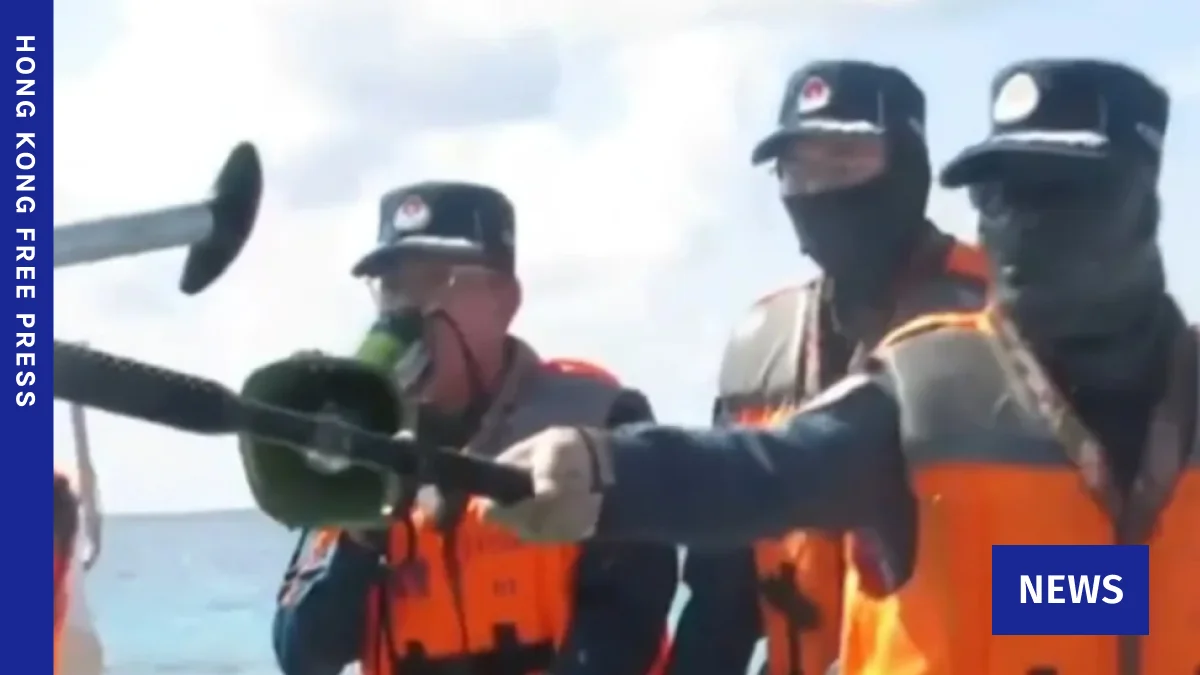
Manila, Philippines – The Philippines has vehemently accused the China Coast Guard (CCG) of deploying water cannons and executing a "dangerous manoeuvre" on Thursday to obstruct Filipino vessels delivering essential supplies to fishermen near the contested Scarborough Shoal. This latest confrontation marks a significant escalation in the ongoing maritime dispute, occurring mere hours before Manila was set to host a pivotal regional security forum attended by the top diplomats from both China and the United States, underscoring the immediate diplomatic ramifications of such incidents. The confrontation near Scarborough Shoal is the second such hostile encounter between the two Asian nations within a span of just four days, disrupting what had been a period of relative calm in the contentious waters.
The incidents highlight Beijing’s persistent assertion of sovereignty over vast swathes of the South China Sea, including the strategically vital Scarborough Shoal, despite a landmark 2016 international ruling that unequivocally invalidated its claims, deeming them without legal basis under international law. These acts of maritime aggression by China are viewed by the Philippines and its allies as a direct challenge to the rules-based international order and a threat to regional stability.
A Week of Heightened Tensions: A Chronology of Confrontations
The past week has witnessed a worrying surge in maritime incidents, signalling a renewed phase of heightened tensions in the South China Sea.

Thursday’s Confrontation Near Scarborough Shoal (Panatag Shoal / Huangyan Island):
On Thursday, the Philippine Coast Guard (PCG) reported a severe incident near Scarborough Shoal involving its vessels, the BRP Datu Dumangsil and its sister ship, the BRP Datu Paiburong. According to the PCG’s official statement, a China Coast Guard vessel approached the BRP Datu Dumangsil to within a perilous distance of 50 metres (approximately 164 feet) and subsequently fired water cannons at the Filipino vessel for a full two minutes. This unprovoked act of aggression was followed approximately half an hour later by a second Chinese coast guard vessel performing a "dangerous manoeuvre," crossing the bow of the BRP Datu Paiburong at a distance of only 500 metres. The Philippine authorities described these actions as not only dangerous but also a clear violation of international maritime safety regulations and a direct obstruction of humanitarian aid. Despite the aggressive tactics, neither Filipino vessel sustained direct hits, and they reportedly continued their mission to supply much-needed fuel and provisions to Filipino fishermen operating in the vicinity of the shoal.
Monday’s Clash Near Second Thomas Shoal (Ayungin Shoal):
The Thursday incident was preceded by another serious confrontation earlier in the week, on Monday, near the Second Thomas Shoal. In this earlier clash, the Philippine military accused China Coast Guard personnel of physically assaulting a Filipino sailor with a baton. This incident occurred during a routine resupply mission to the BRP Sierra Madre, a dilapidated Philippine naval vessel intentionally grounded on the shoal in 1999 to serve as a military outpost and assert Manila’s sovereignty. The Philippine military released images and accounts detailing the confrontation, which included Chinese vessels using water cannons, blocking manoeuvres, and the alleged use of force against Filipino personnel. China, in turn, asserted that the Philippines had instigated the incident, claiming its actions were defensive and lawful responses to what it termed an "intrusion" into its sovereign territory. The immediate aftermath of this Monday clash saw both countries summoning each other’s ambassadors, a strong diplomatic signal of protest, and drew swift condemnation of Beijing’s actions from Manila’s key allies, including the United States.
The Contested Waters: Background and Strategic Importance
The South China Sea, a vast and resource-rich body of water, is one of the world’s most critical geopolitical flashpoints. Its strategic importance stems from several factors:
- Vital Shipping Lanes: Over one-third of global shipping, carrying an estimated $3.4 trillion in annual trade, transits through the South China Sea. Any disruption to these routes has profound implications for the global economy.
- Abundant Natural Resources: The seabed is believed to hold significant reserves of oil and natural gas, while its waters are among the world’s most productive fishing grounds, crucial for the food security of littoral states.
- Geopolitical Significance: Control over these waters translates into considerable strategic advantage, projecting power and influence across the Indo-Pacific region.
China’s Expansive Claims and the Nine-Dash Line:
China’s claims over the South China Sea are encapsulated by its controversial "nine-dash line," an ill-defined demarcation that encompasses approximately 90% of the sea, including areas well within the Exclusive Economic Zones (EEZs) of neighbouring countries like the Philippines, Vietnam, Malaysia, Brunei, and Taiwan. Beijing bases these claims on historical usage, though this assertion lacks concrete legal backing under modern international maritime law.

The 2016 Permanent Court of Arbitration Ruling:
A pivotal moment in the dispute occurred in July 2016 when the Permanent Court of Arbitration (PCA) in The Hague delivered a unanimous ruling in a case brought by the Philippines against China. The tribunal concluded that China’s "nine-dash line" had no legal basis under the United Nations Convention on the Law of the Sea (UNCLOS), a treaty to which both China and the Philippines are signatories. The ruling clarified that features like Scarborough Shoal are rocks incapable of generating an exclusive economic zone or continental shelf and that China’s historical rights claims within the nine-dash line were incompatible with UNCLOS. Crucially, it affirmed the Philippines’ sovereign rights over its EEZ, including areas around Second Thomas Shoal. China vehemently rejected the ruling, calling it "null and void" and refusing to acknowledge its legitimacy, thereby undermining international efforts to resolve the dispute peacefully through legal channels.
Key Disputed Features: Scarborough Shoal and Second Thomas Shoal:
- Scarborough Shoal (Huangyan Island / Panatag Shoal): Located approximately 240 kilometres (124 miles) west of the main Philippine island of Luzon, and hundreds of kilometres away from mainland China, this triangular-shaped coral reef is a traditional fishing ground for Filipino, Vietnamese, and Chinese fishermen. China effectively seized control of the shoal in 2012 after a protracted standoff with the Philippines, denying Filipino fishermen consistent access despite the PCA ruling affirming it as a traditional fishing ground. The recent water cannon incident underscores China’s continued enforcement of its control.
- Second Thomas Shoal (Ayungin Shoal): This submerged reef, also within the Philippines’ EEZ, is the site of the BRP Sierra Madre, a World War II-era landing craft deliberately run aground in 1999 by the Philippines. It serves as a permanent outpost for a small contingent of Filipino marines, symbolically asserting Philippine sovereignty. Resupply missions to these marines are a constant source of tension and frequent flashpoints, as China consistently attempts to block or impede these missions, demanding the Philippines remove the vessel.
Official Responses and Diplomatic Fallout
The recent incidents have triggered a cascade of strong reactions from various stakeholders, elevating the South China Sea dispute to the forefront of regional and international diplomatic agendas.
The Philippines’ Firm Stance:
The Philippine government, under President Ferdinand Marcos Jr., has adopted a more assertive stance compared to its predecessor, consistently condemning China’s actions as illegal, dangerous, and a violation of its sovereign rights. Following the incidents, Manila lodged formal diplomatic protests, demanding an immediate cessation of China’s "aggressive and illegal actions." Philippine officials reiterated their unwavering commitment to protecting Filipino fishermen and military personnel and upholding national sovereignty and territorial integrity. Defence Secretary Gilberto Teodoro Jr. stated that "the Philippines will not be deterred by any foreign power’s attempts to intimidate us," emphasizing the country’s resolve to continue resupply missions and support its citizens. The summoning of China’s ambassador to Manila served as a clear signal of the Philippines’ serious concerns and demand for accountability.

China’s Counter-Narrative:
China, through its Foreign Ministry and Coast Guard spokespersons, maintained its long-held position that its actions were "lawful and professional." CCG spokesman Jiang Lue asserted that the Filipino vessels "intruded into the jurisdictional waters of China’s Huangyan Island despite repeated dissuasions and warnings." He further stated that "the China Coast Guard took necessary measures, including tracking, monitoring, blocking, and controlling the Philippine vessels in accordance with the law, and expelled them." Beijing consistently frames its actions as legitimate responses to perceived infringements on its sovereignty and maritime rights, urging the Philippines to "cease provocations" and adhere to China’s claims. China also summoned the Philippine ambassador to Beijing, issuing its own strong protest against what it deemed "illegal intrusions."
The United States’ Strong Condemnation and Alliance Reaffirmation:
The United States, a treaty ally of the Philippines, swiftly condemned China’s "dangerous and unlawful actions." U.S. State Department spokesperson Matthew Miller reiterated Washington’s unwavering commitment to the 1951 U.S.-Philippines Mutual Defense Treaty, which stipulates that an armed attack on Philippine armed forces, public vessels, or aircraft – including those of its Coast Guard – anywhere in the South China Sea, would invoke U.S. mutual defense commitments. This statement serves as a powerful deterrent and a clear signal of support for Manila. U.S. officials called on Beijing to respect international law and the 2016 arbitration ruling, emphasizing the importance of freedom of navigation and overflight in the South China Sea. The presence of U.S. Secretary of State Antony Blinken at the regional security forum in Manila, occurring concurrently with the latest incident, underscored the strategic partnership and shared concerns over China’s assertiveness.
ASEAN and Regional Concerns:
The recent confrontations cast a long shadow over the ongoing meetings of the Association of Southeast Asian Nations (ASEAN) and other dialogue partners in Manila. Maritime security issues are consistently high on ASEAN’s agenda, with member states expressing growing concern over the potential for miscalculation and conflict in the South China Sea. ASEAN has long sought to establish a legally binding Code of Conduct (COC) with China for the waterway, aiming to prevent disputes and manage incidents peacefully. However, progress on the COC has been painstakingly slow, largely due to differing interests among ASEAN members and China’s reluctance to agree to a robust, enforceable framework that might constrain its expansive claims. The latest incidents serve as a stark reminder of the urgency for an effective COC, yet also highlight the formidable challenges in achieving it.
Other International Reactions:
Beyond the immediate parties, several other nations have voiced concerns. Japan, a close security partner of the Philippines, expressed "serious concern" over the incidents, calling for adherence to international law. Australia and European Union nations have also consistently advocated for upholding the UNCLOS and freedom of navigation in the South China Sea, often issuing statements that implicitly criticize China’s unilateral actions. These collective international voices underscore the global nature of the South China Sea dispute and the widespread desire for a peaceful, rules-based resolution.

Broader Implications and Future Outlook
The escalating frequency and intensity of confrontations in the South China Sea carry significant implications for regional stability, international law, and the geopolitical balance of power.
Risk of Escalation and Miscalculation:
The repeated use of water cannons, dangerous manoeuvres, and alleged physical assaults dramatically increases the risk of miscalculation or accidental collision, which could rapidly escalate into a more serious armed conflict. The close proximity of vessels and the high-stakes nature of the missions create an environment ripe for unintended consequences. Such an event could draw in treaty allies like the United States, potentially transforming a regional dispute into a broader international crisis.
Impact on Diplomatic Efforts:
The timing of these incidents, coinciding with high-level regional security forums, is particularly disruptive. While such forums aim to foster dialogue and de-escalation, fresh provocations on the ground make constructive engagement exceedingly difficult, often forcing diplomats to address immediate crises rather than long-term solutions. It also tests the credibility of China’s stated commitment to peaceful resolution.
Strengthening the US-Philippines Alliance:
China’s assertive actions have inadvertently strengthened the resolve and cooperation between the Philippines and its traditional allies, particularly the United States. Manila has increasingly turned to Washington for security assurances, leading to enhanced joint military exercises, increased rotational presence of U.S. forces, and deeper intelligence sharing. This renewed alliance serves as a critical counterweight to China’s growing military presence in the region, but it also raises Beijing’s hackles, leading to accusations of external interference.

Economic Ramifications:
Beyond security concerns, the ongoing tensions threaten the livelihoods of thousands of fishermen who depend on the South China Sea’s rich resources. Restricted access to traditional fishing grounds, coupled with the dangers of operating amidst coast guard standoffs, severely impacts their economic well-being. Furthermore, persistent instability in these vital shipping lanes could eventually affect global supply chains and increase insurance costs for maritime transport, impacting trade and economic growth across the Asia-Pacific.
Challenges to International Law and Order:
China’s continued disregard for the 2016 PCA ruling poses a fundamental challenge to the efficacy of international law and institutions. If a major power can unilaterally reject legally binding arbitration, it undermines the principles of peaceful dispute resolution and could encourage other nations to disregard international norms, leading to a more chaotic global order.
Prospects for a Code of Conduct:
The renewed tensions underscore the urgent need for a substantive and effective Code of Conduct for the South China Sea. However, the gap between ASEAN’s desire for a binding, comprehensive framework and China’s preference for a non-binding, less prescriptive one remains wide. The latest incidents are likely to intensify calls for progress on the COC, yet also demonstrate the political will required to overcome entrenched positions.
In conclusion, the recent aggressive actions by the China Coast Guard against Philippine vessels in the South China Sea mark a concerning escalation in an already volatile region. These incidents not only endanger lives and livelihoods but also directly challenge international law and diplomatic efforts for peaceful resolution. The international community watches closely as the Philippines, backed by its allies, navigates these complex maritime disputes, while China continues to assert its expansive claims, setting the stage for ongoing geopolitical friction in one of the world’s most critical waterways. The path forward demands sustained diplomatic pressure, adherence to international legal norms, and a genuine commitment from all parties to de-escalation and peaceful dialogue to prevent the South China Sea from becoming a theatre of prolonged conflict.


 Jia Lissa