
 Ammar Sabilarrohman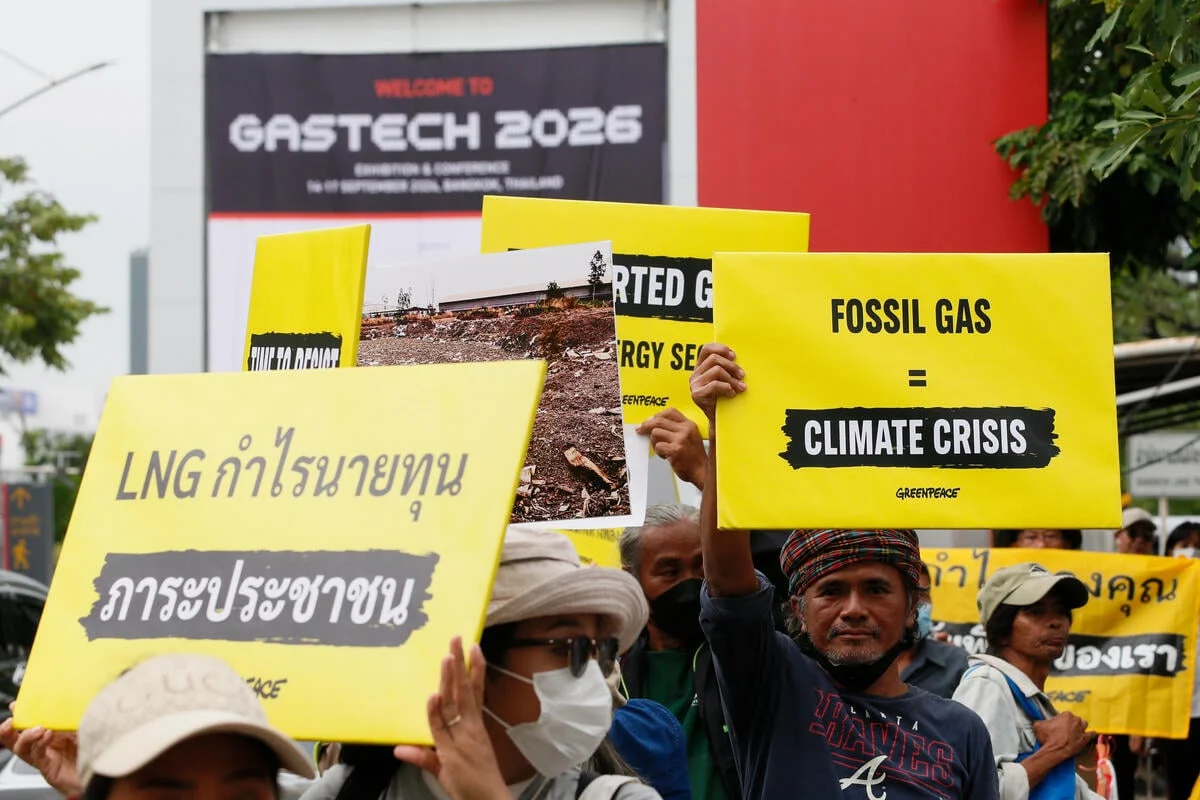
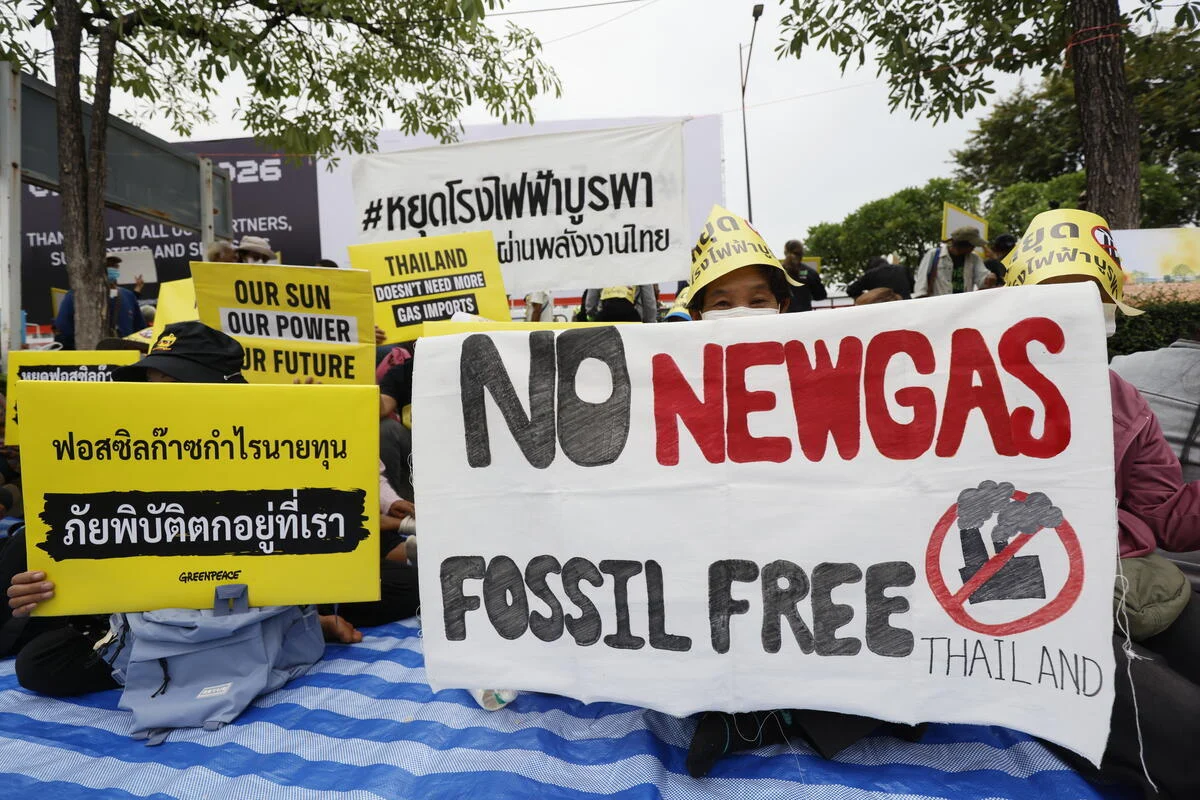
BANGKOK, THAILAND (17 September 2026) – As leading figures from the energy sector, technology giants, and government ministries convene in Bangkok for the AixEnergy Summit at Gastech 2026, environmental advocacy group Greenpeace East Asia has issued a stark warning: leveraging fossil gas to power the burgeoning artificial intelligence (AI) revolution represents a perilous gamble that jeopardizes global climate objectives and disproportionately impacts vulnerable communities. The summit, a pivotal gathering for the global gas industry, is currently witnessing a concerted push by corporate interests to frame natural gas as an indispensable solution to the escalating energy demands of AI-driven data centers, a narrative Greenpeace contends is fundamentally flawed and environmentally destructive.
The backdrop for this urgent call to action is the extraordinary growth projected for AI. Global capital expenditure on AI-driven data centers is anticipated to surpass a staggering US$700 billion in 2026, according to a report by PwC [1]. This surge in investment is being exploited by major technology corporations and utility providers, who are using the increased energy consumption as justification to secure long-term commitments to fossil gas and liquefied natural gas (LNG) infrastructure. Throughout Gastech 2026, industry leaders have actively promoted a narrative that positions natural gas as a critical "indispensable baseline" power source, essential to avert a hypothetical AI power crisis. Greenpeace, however, challenges this assertion, arguing that it masks a deliberate strategy to prolong reliance on fossil fuels and obstruct the transition to renewable energy sources.
The Flawed Logic of Gas-Powered AI
Greenpeace’s in-depth analysis of discussions surrounding AI and energy at Gastech 2026 has identified several critical weaknesses in the industry’s proposed approach to powering the next generation of computing capacity. The organization points to the following key concerns:
- Lock-in of Long-Term Fossil Fuel Infrastructure: The argument for gas as a "transition fuel" for AI is a misdirection. Instead, it serves as a pretext to build new, multi-decade gas pipelines, import terminals, and power plants. These investments will become stranded assets as renewable energy technologies continue to advance and become more cost-effective, while simultaneously locking in greenhouse gas emissions for decades to come.
- Ignoring Viable Renewable Solutions: The rapid advancements and declining costs of renewable energy sources, such as solar and wind power, coupled with sophisticated energy storage solutions, offer a viable and sustainable alternative to fossil fuels for powering data centers. The industry’s focus on gas overlooks the immense potential and proven scalability of clean energy.
- Exacerbating Climate Change Impacts: The continued reliance on fossil gas directly contradicts global efforts to limit global warming to 1.5 degrees Celsius, as outlined in the Paris Agreement. The methane emissions associated with natural gas extraction, transportation, and combustion are potent greenhouse gases, significantly contributing to climate change and its devastating consequences.
- Disregarding Frontline Communities: The expansion of fossil gas infrastructure often disproportionately impacts local communities, leading to environmental degradation, air and water pollution, and health problems. These communities, often already bearing the brunt of climate change impacts, are further burdened by the infrastructure required to support energy-intensive industries like AI.
A Call for Immediate Action and Policy Mandates
In response to these critical concerns, Greenpeace is urging a decisive shift in strategy from all stakeholders involved in the AI expansion and energy provision. The organization demands that hyperscalers, chip manufacturers, energy developers, and governments immediately cease using the growth of AI as a justification for developing new gas infrastructure.
Furthermore, Greenpeace insists that technology companies must implement stringent 100% renewable energy procurement policies across their entire supply chains and data networks. This includes ensuring that all facilities, from chip fabrication plants to the data centers that house AI operations, are powered exclusively by clean, renewable sources.
Voices from the Frontlines of the Climate Crisis
The urgency of Greenpeace’s message is amplified by the voices of its campaigners working directly with communities affected by climate change and the energy transition.
Yeonho Yang, Senior Climate & Energy Campaigner at Greenpeace East Asia, articulated the critical juncture facing the region: "Asia cannot afford to let its digital growth pull the plug on its energy transition. Tech giants like Nvidia, Microsoft and Google claim to be climate leaders and point to their net-zero targets, yet they are turning a blind eye as their suppliers and data center hosts construct massive gas plants to fuel compute power. From East Asian semiconductor hubs to Southeast Asian data center clusters, powering AI with fossil gas is a total climate failure. This is no longer a matter of voluntary targets. Policymakers must mandate 100% renewable procurement across big tech’s supply chains, and block energy suppliers from exploiting AI power demand to lock in new LNG infrastructure."
Manun Wongmasoh, Climate and Energy Campaigner at Greenpeace Thailand, highlighted the immediate consequences for Southeast Asia: "In Thailand and across Southeast Asia, communities are already suffering the frontline impacts of extreme weather, facing severe flood and heat impacts driven by the climate crisis. Watching utility companies and tech firms lock our energy systems into decades of gas under the badge of AI progress is deeply frustrating. Gas is not a transition fuel—it drives climate disruption. Southeast Asia has abundant solar and wind potential that can power our digital future safely. The energy for tomorrow’s technology must be built on 100% clean, renewable systems."
Joe Rafalowicz, Head of Climate and Energy at Greenpeace Australia Pacific, underscored the global responsibility, particularly as Australia prepares to host COP31: "The impacts of the climate crisis are escalating: As Australia takes the reins of global climate negotiations at COP31, it should be leading the region in phasing out coal and gas exports so we have a chance at avoiding the most extreme impacts of a hotter world—not opening up new gas projects to power hyperscale data centres running AI applications. Prolonging the life of polluting fossil fuels simply puts the profits of big tech and gas corporations ahead of communities and the natural world. It is indefensible. AI data centres should run on 100% renewable energy no matter where they are located, not serve as an excuse to fast-track new gas and keep polluting."
Regional Context: Asia Pacific at the Epicenter of Global AI Expansion
The Asia Pacific region finds itself at the nexus of the global AI infrastructure boom, presenting both immense opportunities and significant environmental challenges. East Asia, in particular, is the dominant force in global semiconductor manufacturing, with Taiwan and South Korea leading in advanced chip production. Concurrently, Southeast Asia, encompassing nations like Malaysia, Thailand, Indonesia, Vietnam, and the Philippines, has attracted tens of billions of dollars in new data center investments. This rapid expansion, fueled by the demand for AI processing power, presents substantial risks to local environments, air quality, and the livelihoods of communities across these key markets.
The push to meet AI’s voracious energy appetite with fossil gas threatens to exacerbate existing environmental pressures. For instance, in South Korea, concerns have been raised regarding the health impacts of proposed LNG power plants intended to support semiconductor clusters, as detailed in a Greenpeace Korea report [5]. Similarly, analysis of electricity consumption in Taiwan’s electronics industry has highlighted potential health implications of emissions from fossil fuel-based power generation [6]. In Southeast Asia, the expansion of data centers has prompted civil society calls for stricter regulations, including bans on facilities located near residential areas, to mitigate environmental and health risks [7]. Australia, too, is grappling with the energy demands of AI, with reports highlighting the strain on the national grid and the environmental consequences of powering these facilities with fossil fuels [8].
The Broader Implications of a Fossil-Fueled AI Future
The decision to power the AI revolution with fossil gas carries profound implications that extend far beyond the immediate energy supply chain.
- Undermining Climate Commitments: The continued investment in and reliance on fossil gas infrastructure directly undermines national and international climate commitments. It makes achieving the Paris Agreement goals increasingly difficult and risks pushing the planet towards irreversible climate tipping points.
- Economic Risks of Stranded Assets: The long-term viability of fossil gas infrastructure is questionable in a rapidly decarbonizing global economy. Investments in new gas projects now risk becoming "stranded assets" – investments that lose their economic value prematurely due to market shifts, regulatory changes, or technological advancements favoring clean energy.
- Perpetuating Environmental Injustice: The environmental and health burdens associated with fossil fuel extraction and combustion disproportionately affect marginalized communities, often those with the fewest resources to adapt or resist. Prioritizing gas for AI risks entrenching environmental injustice.
- Missed Opportunity for Innovation: A rapid and comprehensive shift to renewable energy for AI infrastructure could spur significant innovation in clean energy technologies, energy efficiency, and sustainable data center design, creating new economic opportunities and green jobs.
The Path Forward: A Mandate for 100% Renewables
The AixEnergy Summit at Gastech 2026 represents a critical juncture. While the demand for AI-driven computing power is undeniable, the proposed solution of relying on fossil gas is not only unsustainable but actively detrimental to global climate goals and the well-being of frontline communities. Greenpeace’s urgent plea is for a paradigm shift, advocating for policies and corporate commitments that prioritize 100% renewable energy for all AI infrastructure. This includes robust regulatory frameworks, transparent supply chain management, and a genuine commitment from tech giants and energy providers to lead a truly sustainable digital future. The time for incremental change has passed; bold, decisive action is required to ensure that the AI revolution powers progress, not planetary destruction.
References:
[1] PwC, Global Data Centre Outlook (September 2026)
[2] Energy Connects, Regulators Urged to Move Faster as AI Surge Now Shapes Energy Markets (September 2026)
[3] Yahoo Finance, Baker Hughes CEO Sees No ‘Slowdown’ in Energy Projects, Says High Prices Could Spur New Supply: ‘Full Steam Ahead’ (September 2026)
[4] Arizton, Southeast Asia Data Center Market Investment to Reach USD 35.08 Billion by 2031 (August 2026)
[5] Greenpeace Korea, Health Impact Assessment of the Proposed Yongin Semiconductor Cluster LNG Power Plant (April 2026)
[6] Center for Research on Energy and Clean Air (CREA) & Greenpeace East Asia, Health Impact Assessment of Electronics Industry Electricity Consumption in Taiwan (March 2026)
[7] Greenpeace Southeast Asia, Civil society calls for ban on data centres near residential areas (July 2026)
[8] Greenpeace Australia Pacific, Energy Vampires: The AI Data Centres Draining Australia (May 2026)
Media Contact:
Yujie Xue, International Communications Officer, Greenpeace East Asia, +852 5127 3416, [email protected]


 Asep Darmawan