
 Ammar Sabilarrohman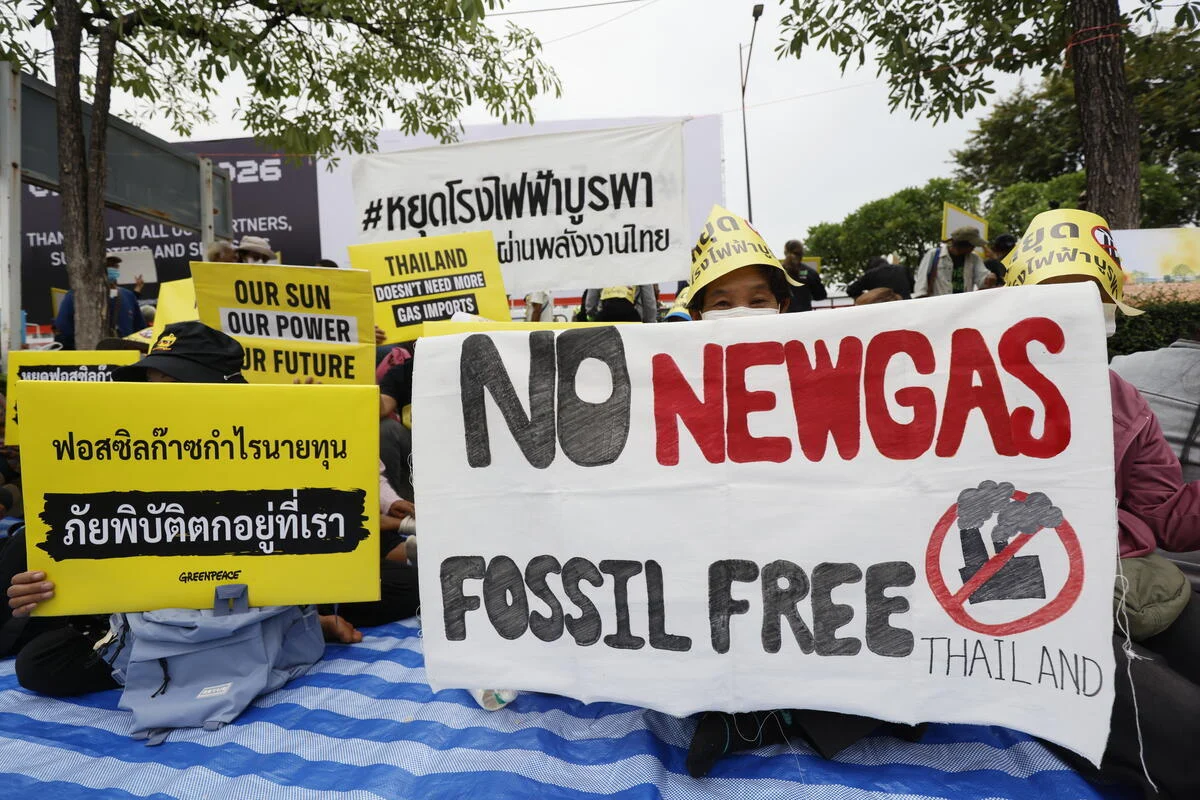
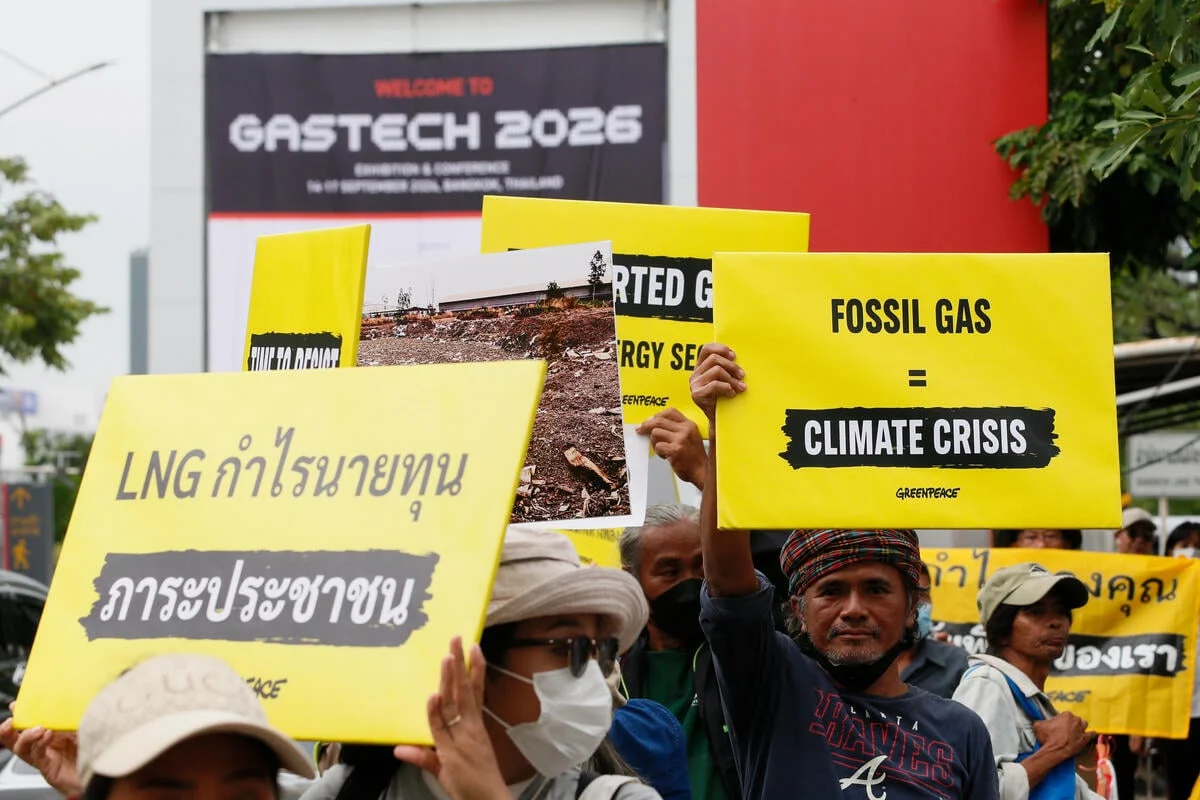
BANGKOK, THAILAND (15 September 2026) – Greenpeace East Asia has issued a stern condemnation of Japan’s ongoing commitment to fossil fuels, particularly natural gas and internal combustion engine (ICE) vehicles, as perceived drivers of regional growth and energy security. The environmental organization’s strong reaction comes in response to speeches delivered today at the Japan Energy Summit, held concurrently with Gastech 2026 in Bangkok, by Japanese government officials, including Tetsuya Azuma, Director at Japan’s Ministry of Economy, Trade and Industry (METI). Greenpeace argues that Japan’s strategy, exemplified by Prime Minister Sanae Takaichi’s “POWERR Asia” initiative and the continued subsidization of polluting vehicles, constitutes a perilous climate trap that jeopardizes global decarbonization efforts and undermines commitments made under the Paris Agreement.
The summit’s proceedings revealed significant energy vulnerabilities faced by Japan. Officials acknowledged the nation’s acute dependence on crude oil transiting the Strait of Hormuz, with approximately 93% of its supply routed through this critical chokepoint. This reliance exposes Japan to severe market disruptions in downstream products like naphtha and necessitates costly transport subsidies to circumvent Middle Eastern supply bottlenecks. Despite these acknowledged risks, the Japanese government, at Gastech, reaffirmed its intention to leverage “POWERR Asia” to expand overseas oil stockpiles and bolster fossil gas infrastructure. This stance appears to run counter to the global surge in electric vehicle (EV) adoption observed across China, Southeast Asia, and Europe. Greenpeace points out that while Japanese officials recognized this global trend, they simultaneously defended the nation’s policy of promoting ICE vehicles domestically and in the United States, while also advocating for biofuels as a climate solution, which the organization dismisses as a "false climate solution."
Greenpeace East Asia asserts that Japan’s approach, which combines the expansion of overseas fossil fuel investments with a deliberate slowdown in vehicle electrification, is a politically motivated decision driven by short-term industrial interests and powerful corporate lobbies, rather than being grounded in environmental science or economic pragmatism. The organization contends that Japan is effectively exporting its reliance on fossil fuels and delaying crucial auto sector decarbonization by propping up outdated, high-emission vehicle technologies. This strategy, Greenpeace warns, carries the risk of escalating global emissions, entrenching developing economies in the perils of stranded assets, and hindering the worldwide transition away from fossil fuels.
Japan’s Financial Footprint in Fossil Fuels
The scale of Japan’s financial commitment to fossil fuels is significant. From 2013 to 2024, Japan emerged as one of the world’s largest public financiers of fossil fuels, channeling an estimated US$93 billion into overseas oil and gas projects. This figure dwarfs the US$24.5 billion directed towards clean energy initiatives during the same period. Notably, gas-only projects constituted a substantial 60% of the total fossil fuel financing. Public financial institutions, such as the Japan Bank for International Cooperation (JBIC), are implicated in this strategy, with their attributable emissions reportedly exceeding 400 million metric tons of carbon dioxide equivalent annually. This figure is larger than the combined national emissions of the United Kingdom and France, highlighting the significant environmental impact of Japan’s public finance policies.
Economic Vulnerabilities and Energy Dependence
Domestically, Japan’s profound dependence on fossil fuels creates significant economic vulnerabilities. As the world’s fifth-largest energy market and the second-largest importer of Liquefied Natural Gas (LNG), Japan procured nearly 65 million tonnes of LNG in 2025. The nation’s crude oil imports are overwhelmingly sourced from the Middle East, with an estimated 90-95% originating from the region. A substantial portion, approximately 70-93%, of these shipments traverse the Strait of Hormuz. This critical transit point renders Japan’s economy highly susceptible to supply shocks, currency depreciation, and imported inflation.
The precariousness of this situation was underscored by events in recent years, including geopolitical tensions in the Middle East that have historically disrupted oil flows. Japan’s strategy to mitigate these risks, as articulated by its officials at the summit, includes expanding overseas oil stockpiles and investing in new fossil gas infrastructure under the "POWERR Asia" framework. However, Greenpeace argues that these measures do not address the fundamental issue of fossil fuel dependency and instead perpetuate a cycle of vulnerability.
Greenpeace’s Counter-Proposal: A Renewable Future
Greenpeace East Asia strongly advocates for an accelerated transition to renewable energy sources and the widespread adoption of electric vehicles as the only sustainable path to genuine energy security and climate resilience. The organization criticizes the Japanese government’s reliance on strategies such as regional oil stockpiling, downstream subsidies for fossil fuels, and unproven technologies like biofuels. Instead, Greenpeace insists that doubling down on imported fossil fuels, nuclear power restarts, and polluting combustion vehicles represents an unsafe and globally detrimental policy.
Kazue Suzuki, Climate & Energy Campaigner at Greenpeace Japan, voiced strong criticism of METI’s current direction: "METI’s vision locks Japan and the entire Asia region into expensive, imported gas at the exact wrong time. With supply routes through the Middle East becoming increasingly unstable, the plan raises energy bills and multiplies risk for households and businesses. Gas is not a bridge to growth but a financial trap. Nuclear power is costly and unsafe, and technologies like ammonia co-firing and CCUS are distractions. Japan needs to stop financing fossil gas overseas and put its money into solar and wind that actually deliver energy independence. Ultimately, the country needs a swift, decisive phaseout of all fossil fuels, starting with coal."
Echoing these sentiments, Manun Wongmasoh, Climate and Energy Campaigner at Greenpeace Thailand, highlighted the implications for Southeast Asia: "Southeast Asia does not need more fossil gas or Japanese financing for new gas infrastructure. Thailand and Japan should end their LNG cooperation MOU and avoid locking the region into decades of fossil fuel dependence. Our region has abundant renewable energy potential. What we need is investment in renewables, not new pipelines and LNG terminals that lock countries into volatile fossil fuel prices and risk becoming stranded assets. Doubling down on gas and nuclear, including Small Modular Reactors (SMRs) in the name of ‘energy security’ is reckless. It makes energy more expensive and leaves countries exposed to global market shocks, and leaves people across Southeast Asia to pay the price."
Broader Implications and a Call to Action
The implications of Japan’s current energy policy extend beyond its own borders. By continuing to finance and promote fossil fuel infrastructure abroad, Japan risks contributing to the development of stranded assets in recipient countries, particularly developing economies that may lack the capacity to transition away from these investments in the future. This, in turn, can exacerbate global inequalities and hinder the collective progress towards achieving the goals set forth in the Paris Agreement, which aims to limit global warming to well below 2, preferably to 1.5 degrees Celsius, compared to pre-industrial levels.
The summit’s timing at Gastech 2026, a major international energy conference, provides a platform for countries to showcase their energy strategies and forge new partnerships. However, Greenpeace argues that Japan is using this platform to promote an agenda that is fundamentally at odds with global climate imperatives. The organization points to the rapid technological advancements and cost reductions in renewable energy, particularly solar and wind power, as evidence that a transition to a clean energy economy is not only feasible but also economically advantageous.
Greenpeace East Asia’s call to action is clear: the Japanese government and its financial institutions must immediately cease all public financing for overseas fossil gas and oil infrastructure. Furthermore, the organization urges Japan to phase out support for internal combustion engines and make a firm commitment to a just and equitable energy transition globally, one that is powered by renewable energy and driven by the widespread adoption of electric vehicles. This shift, Greenpeace argues, is essential for ensuring long-term energy security, fostering sustainable economic growth, and safeguarding the planet for future generations. The organization emphasizes that the current trajectory, characterized by continued reliance on fossil fuels, represents a significant missed opportunity and a dangerous gamble with the future of the planet.
References:
[1] Solutions For Our Climate, Billions Off Course: Japan’s Oil and Gas Financing Fueling Climate Breakdown (3 August 2026).
[2] Friends of the Earth Japan, New Report on Climate Impacts of Japan’s Public Finance (5 November 2025).
[3] Energy Connects, The market outlook for gas and LNG in Asia (8 June 2026).
[4] International Energy Agency (IEA), Strait of Hormuz (10 July 2026).
Media Contact:
Yujie Xue, International Communications Officer, Greenpeace East Asia, +852 5127 3416, [email protected]


 Asep Darmawan