Layla Zulfa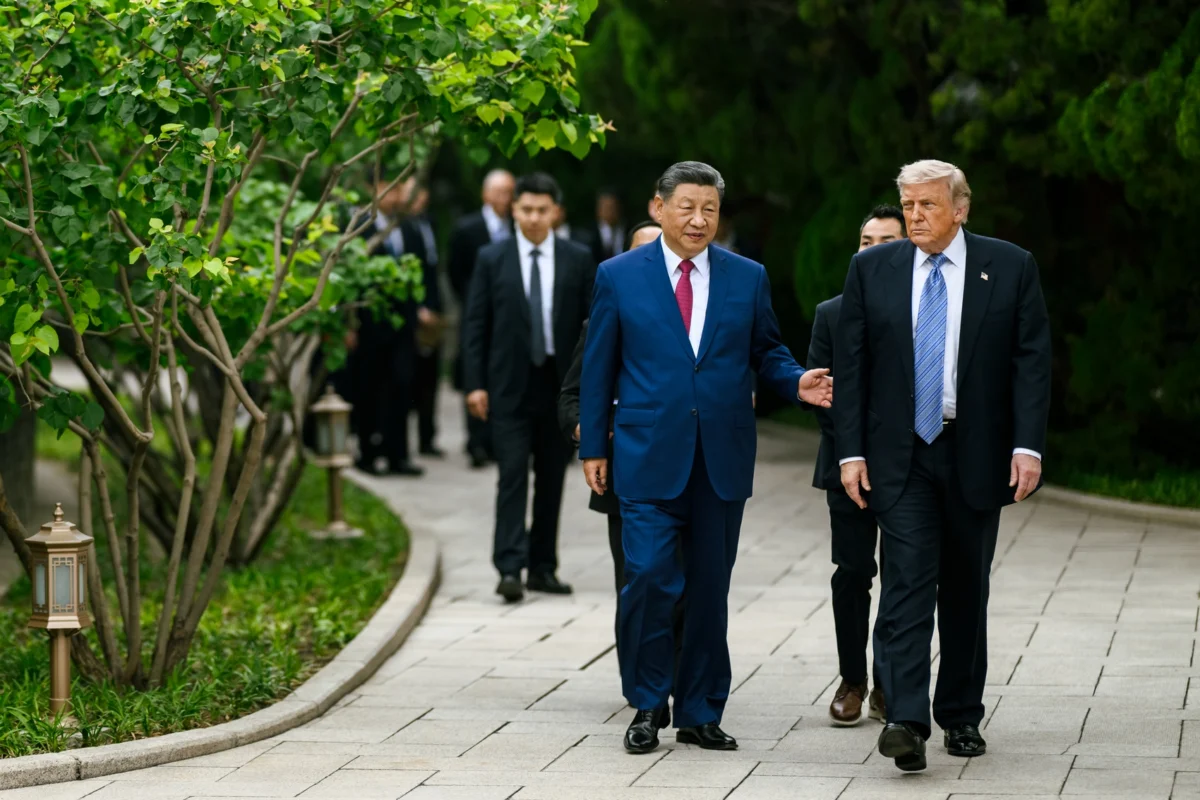
China’s top trade official, Vice Premier He Lifeng, conveyed Beijing’s “serious concern” to his United States counterparts on Thursday regarding Washington’s latest round of trade restrictions, according to reports from state media. This high-level video call, involving US Treasury Secretary Scott Bessent and US Trade Representative Jamieson Greer, underscores a significant re-escalation of economic friction between the world’s two largest economies, just months after a fragile truce had been established. The discussion touched upon the necessity of maintaining stable economic and trade ties and addressing mutual concerns, hinting at the deep-seated disagreements that continue to define the bilateral relationship.
The Resurgence of Tensions: New Tariffs and Tech Bans
The recent exchange follows a period of renewed pressure from Washington, which has introduced fresh tariffs on goods from China and 59 other trading partners last week. These duties are reportedly linked to growing international concerns over alleged forced labor practices, particularly within certain supply chains. Beijing swiftly condemned these measures, cautioning Washington against initiating a full-blown trade war and asserting that such actions are counterproductive to global economic stability.

In a move separate from the new tariffs, the United States also banned imports of humanoid and quadruped robots manufactured abroad. China interpreted this as a deliberate attempt to “suppress” its burgeoning technological sector, particularly targeting its advanced robotics industry. This restriction signals a broadening of the US strategy from traditional trade disputes to include national security and technological dominance, reflecting a more comprehensive competitive stance. The confluence of these new tariffs and technology-specific bans has rekindled fears of a deeper economic decoupling and intensified the already complex relationship between the two nations.
A History of Friction: The US-China Trade War
The current surge in tensions is not an isolated incident but rather a continuation of a protracted economic rivalry that dominated much of the previous year. The US-China trade war, which began in early 2018 under the Trump administration, was characterized by the imposition of reciprocal tariffs on hundreds of billions of dollars worth of goods. The initial catalysts for this trade dispute were multifarious, rooted in long-standing American grievances over China’s trade practices. Key among these were allegations of intellectual property theft, forced technology transfers from foreign companies operating in China, extensive state subsidies to Chinese industries, and a persistent, widening trade deficit in favor of China.
The United States argued that these practices created an unfair playing field, distorting global markets and harming American businesses and workers. China, in turn, consistently rejected these accusations, portraying the US tariffs as protectionist and a violation of World Trade Organization rules. The escalating tit-for-tat tariff exchanges disrupted global supply chains, created uncertainty for businesses worldwide, and had noticeable impacts on economic growth forecasts for both countries and the global economy.

A significant pause in this escalation occurred last October when US President Donald Trump and his Chinese counterpart Xi Jinping met and agreed to a truce. This led to the signing of the "Phase One" trade deal in early 2020, which aimed to address some of the most immediate points of contention. Under this agreement, China committed to significantly increasing its purchases of US agricultural products, manufactured goods, energy, and services over a two-year period, totaling an additional $200 billion above 2017 levels. Furthermore, the deal included provisions for stronger intellectual property protections, commitments to refrain from currency manipulation, and improved access for US financial services firms in China. While the Phase One deal offered a temporary reprieve and a framework for dialogue, it left many fundamental structural issues unresolved, setting the stage for the current re-emergence of trade friction.
Key Demands and Concerns from Both Sides
During Thursday’s video call, the Chinese side, represented by Vice Premier He Lifeng, explicitly articulated Beijing’s "serious concern over recent US economic and trade restrictions against China." State news agency Xinhua characterized the conversation as "candid, in-depth and constructive," indicating a direct and robust exchange of views. China’s concerns extend beyond the immediate economic impact of the tariffs to the broader implication of what it perceives as an American strategy of containment and suppression of its economic and technological rise. The ban on humanoid and quadruped robots, in particular, touches upon China’s strategic ambitions in advanced manufacturing and artificial intelligence, sectors it views as critical for its future economic prosperity and national security.
On the American side, Treasury Secretary Scott Bessent used his social media platform to confirm the call, emphasizing that Washington expects China "to fully meet its commitments on rare earths and US agricultural products." This highlights two critical areas where the US perceives China as falling short of its Phase One obligations. Rare earths, a group of 17 chemically similar metallic elements, are crucial components in a wide range of high-tech products, from smartphones and electric vehicles to military hardware. China dominates the global supply chain for rare earths, producing over 70% of the world’s refined output, giving it significant leverage. The US has long sought to diversify its rare earth supply to reduce its dependence on China, making Beijing’s commitments in this area strategically vital.

Similarly, agricultural products represent a significant export for the United States, and China’s promised purchases were a cornerstone of the Phase One deal. The agricultural sector was among the hardest hit by the initial trade war, and American farmers have been closely watching China’s adherence to its commitments. Bessent’s statement underscores the US’s continued focus on achieving a more balanced trade relationship and ensuring China upholds its end of existing agreements.
The Strategic Importance of Trade Boards and High-Level Dialogues
Beyond the immediate grievances, the US and China also discussed mechanisms for future engagement. Bessent specifically mentioned the "implementation of the Trade and Investment Boards as a mechanism to secure concrete progress toward a more balanced, fair, and constructive US-China economic relationship." These boards are intended to provide a structured framework for ongoing dialogue and problem-solving, moving beyond ad-hoc negotiations to establish a more stable channel for addressing trade and investment issues. The establishment and effective utilization of such mechanisms are crucial for managing the inherent complexities and potential flashpoints in the bilateral economic relationship.
The video call itself was also framed as part of the preparation for an expected meeting between US President Donald Trump and Chinese President Xi Jinping in September. Trump had extended an invitation to Xi during his trip to Beijing in May, and a high-level summit between the two leaders is seen as essential for guiding the trajectory of US-China relations. Such presidential meetings provide opportunities for direct communication, strategic alignment, and, critically, for de-escalating tensions and charting a path forward on contentious issues. The success of any future dialogue hinges on the ability of both sides to find common ground and demonstrate a willingness to compromise, a task made increasingly difficult by the broadening scope of their disagreements.

Beyond Tariffs: The Broadening Scope of US-China Competition
The current trade disputes are no longer solely about tariffs and trade imbalances; they are increasingly intertwined with broader geopolitical competition, national security concerns, and ideological differences. The US justification for its latest tariffs, citing "alleged forced labour concerns," directly links economic policy to human rights issues, particularly in the context of reports regarding the treatment of Uyghurs in Xinjiang. This integration of human rights into trade policy represents a significant evolution in the US approach to China, moving beyond purely economic considerations to encompass ethical and moral dimensions.
Similarly, the ban on humanoid and quadruped robots highlights the intensifying technological rivalry between the two superpowers. The United States views China’s advancements in artificial intelligence, robotics, and other cutting-edge technologies as a direct challenge to its own technological leadership and national security interests. Washington has implemented various restrictions, including export controls and investment screening, to curb China’s access to critical technologies and prevent their potential use in military applications. This "tech war" component adds another layer of complexity to the US-China relationship, making a purely economic resolution increasingly difficult. The strategic competition now spans economic, technological, ideological, and military domains, creating a multi-faceted challenge that requires nuanced and sustained diplomatic engagement.
Economic Impact and Global Repercussions

The re-escalation of trade tensions carries significant economic implications for both the United States and China, as well as for the global economy. For the US, continued trade friction could translate into higher costs for consumers, reduced competitiveness for certain industries, and uncertainty for businesses reliant on global supply chains. For China, the restrictions could hinder its economic growth, particularly in technologically advanced sectors, and accelerate the trend of supply chain diversification away from China, impacting its manufacturing powerhouse status.
Globally, a prolonged and intensifying US-China economic conflict risks fragmenting the global trading system, disrupting supply chains, and dampening international investment. Multilateral institutions like the World Trade Organization, already facing challenges, could see their relevance further diminished as bilateral disputes dominate international trade relations. Businesses worldwide, particularly those with operations or markets in both countries, face the unenviable task of navigating conflicting regulations and geopolitical pressures, often leading to increased costs and reduced efficiency. The global economy, still recovering from various shocks, can ill afford another period of instability driven by the world’s two largest economies.
Expert Analysis and Future Outlook
Analysts generally agree that the US-China relationship is at a critical juncture, characterized by a complex interplay of competition and interdependence. Many foresee continued friction, particularly in the technology and human rights domains, even if direct trade wars with broad tariffs are intermittently paused. The current administration in Washington, regardless of party, appears committed to a strategy of strategic competition with China, albeit with varying tactics.

The "candid, in-depth, and constructive" nature of the recent video call, as described by Xinhua, offers a glimmer of hope that channels for communication remain open. However, the persistent disagreements over trade commitments, coupled with new restrictions based on human rights and national security, underscore the deep structural challenges that remain. The anticipated September meeting between President Trump and President Xi will be crucial in setting the tone for the coming months, but it is unlikely to resolve all outstanding issues. Instead, it may serve as an opportunity to manage expectations, prevent further escalation, and perhaps lay the groundwork for a more stable, albeit competitive, relationship. The global community will be watching closely, as the trajectory of US-China relations will profoundly shape the future of international trade, technology, and geopolitical stability.
Conclusion
The recent exchange between high-ranking Chinese and US trade officials highlights the delicate and often contentious nature of their economic relationship. While both sides express a desire for stability, the imposition of new tariffs, technology bans, and unfulfilled commitments signal a deepening rivalry that extends beyond traditional trade imbalances. The upcoming months, particularly leading up to the potential presidential summit in September, will be critical in determining whether these economic superpowers can find a pathway to managed competition or if they are destined for further confrontation, with profound implications for the global economic and political landscape.


 Asep Darmawan
 Neng Nana