Nila Kartika Wati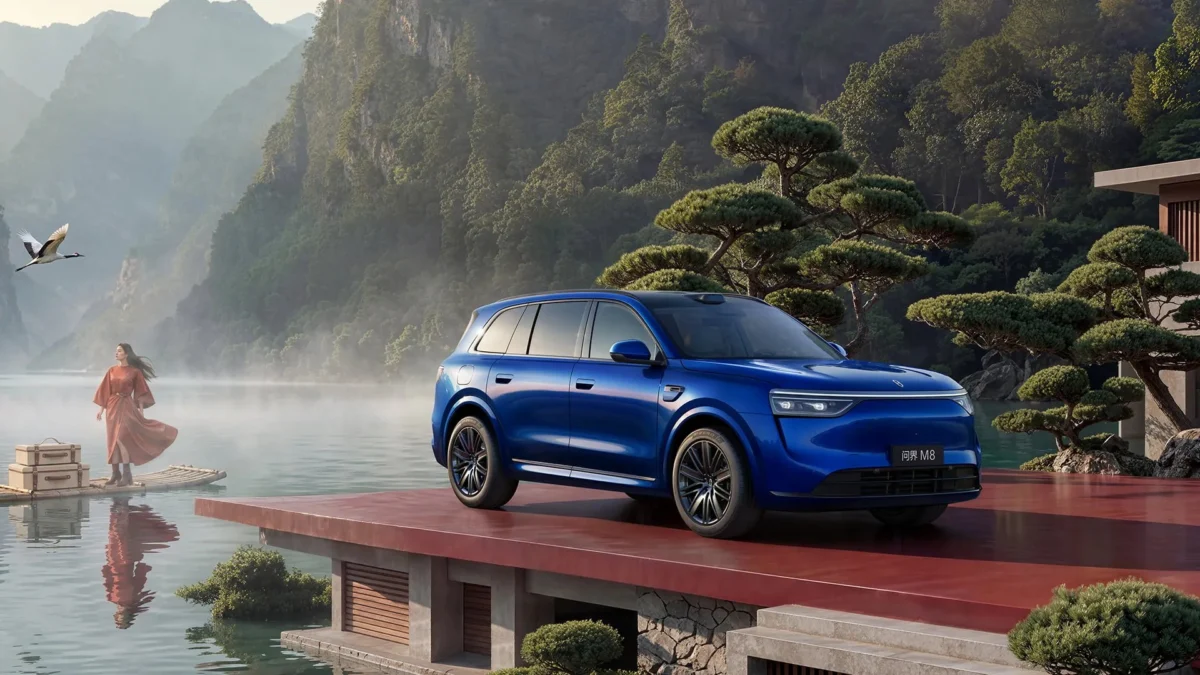
AITO officially initiated presales for its highly anticipated updated M8 SUV on September 30, signaling a significant move in China’s intensely competitive new energy vehicle (NEV) market. With an attractive starting price of RMB 389,800 (approximately $54,700 USD), the new M8 model is poised to capture consumer interest through its integration of cutting-edge technology, most notably Huawei’s advanced ADS 5 driver-assistance system and a vehicle architecture explicitly engineered with future Level 3 (L3) automated driving capabilities in mind. This strategic launch underscores AITO’s ambition to solidify its position in the premium intelligent SUV segment, leveraging the formidable technological prowess of its partner, Huawei. The vehicle will be available in both battery-electric (BEV) and range-extended electric vehicle (EREV) configurations, catering to a diverse set of consumer preferences regarding range and charging infrastructure access. The electric variant boasts an impressive CLTC-rated range of up to 830 kilometers, while the range-extended version offers an even more expansive combined range of up to 1,435 kilometers, addressing common range anxiety concerns among potential buyers.
The Huawei-AITO Partnership: A Strategic Alliance in Intelligent Mobility
The introduction of the AITO M8 is a direct result of the innovative partnership between Huawei and Seres, a subsidiary of Chongqing Sokon Industry Group. This collaboration, formalized in late 2021, established the AITO brand (meaning "Adding Intelligence to Auto") with the explicit goal of developing premium intelligent electric vehicles. Unlike traditional OEM-supplier relationships, Huawei’s involvement extends far beyond merely providing components; it encompasses vehicle design, software development, marketing, and sales channels. This deep integration is often referred to as Huawei’s "Huawei Inside" model, signifying a comprehensive technological and operational partnership rather than just a supply chain role. Huawei contributes its expertise in smart cockpits, electric drive systems, connectivity, and most crucially, its advanced driver-assistance systems (ADAS) and autonomous driving solutions. For AITO, this partnership provides a distinct competitive edge, allowing it to differentiate its products through state-of-the-art intelligent features and a robust technological ecosystem, appealing to a tech-savvy consumer base increasingly prioritizing smart features in their vehicle purchases. The AITO M8, therefore, represents the latest evolution of this strategic alliance, showcasing the fruits of sustained investment in research and development aimed at pushing the boundaries of automotive intelligence.
Chronology of Innovation: AITO’s Journey to the M8
AITO’s journey began with the launch of its first model, the AITO M5, in December 2021. The M5, a medium-sized luxury SUV, quickly garnered attention for its integration of Huawei’s HarmonyOS smart cockpit, setting a new benchmark for in-car connectivity and user experience. This was followed by the larger AITO M7, a full-size SUV, which debuted in July 2022. The M7 further refined AITO’s value proposition, offering increased space, enhanced comfort, and more advanced intelligent features, including early iterations of Huawei’s ADAS. Both the M5 and M7 have seen steady sales, helping AITO establish a foothold in the competitive premium NEV market in China. The brand’s sales performance, while not always leading the market, has demonstrated consistent growth, particularly in the intelligent vehicle segment, validating the Huawei-led strategy. For instance, cumulative deliveries for AITO models surpassed 100,000 units by early 2023, showcasing the brand’s rapid acceptance. The M8, therefore, arrives as the third flagship SUV in AITO’s lineup, building upon the successes and lessons learned from its predecessors. Its presale commencement on September 30 marks a pivotal moment, signaling AITO’s maturation and its ambitious stride towards higher levels of autonomous driving and enhanced user experience. This systematic release of progressively more advanced models underscores AITO’s commitment to continuous innovation and its long-term vision for intelligent mobility.
Deep Dive into the M8: Technology and Specifications
The updated AITO M8 is engineered to be a technological showcase, with its core strength residing in the seamless integration of Huawei’s advanced systems. At the forefront is the Huawei ADS 5 driver-assistance system. This fifth-generation ADAS platform leverages an array of sophisticated sensors, including high-resolution cameras, millimeter-wave radars, ultrasonic sensors, and potentially LiDAR (depending on specific configurations, as Huawei has been a proponent of LiDAR integration in its high-end solutions). ADS 5 is designed to provide comprehensive driving assistance, encompassing features such as adaptive cruise control, lane-keeping assist, automatic parking, traffic jam assist, and advanced navigation pilot functions that allow for point-to-point autonomous driving on designated highways and urban expressways. The system’s robustness is further enhanced by Huawei’s powerful computing platform and advanced AI algorithms, which enable real-time perception, accurate decision-making, and smooth control execution, significantly enhancing both safety and driving comfort.
Crucially, the M8’s vehicle architecture is designed with future Level 3 automated driving in mind. This means the vehicle incorporates redundant systems for critical functions like steering and braking, a powerful central computing platform capable of processing vast amounts of sensor data, and a robust communication infrastructure necessary for L3 operation. While L3 functionality requires regulatory approval and further software validation, the hardware readiness of the M8 positions it at the forefront of the industry’s push towards higher automation. This "future-proofing" aspect offers consumers the assurance that their vehicle is equipped to evolve with advancements in autonomous driving technology and regulatory frameworks.
Beyond its intelligent driving capabilities, the M8 offers compelling powertrain options. The battery-electric (BEV) version is expected to feature a high-capacity battery pack, contributing to its impressive 830 kilometers (CLTC) range. This range positions the M8 favorably against many direct BEV competitors in the premium segment. Details on battery capacity, charging speeds, and motor configurations are typically revealed closer to the full launch, but AITO vehicles generally employ advanced lithium-ion batteries and support fast charging protocols. The range-extended electric vehicle (EREV) version caters to consumers who desire the benefits of electric driving but with the flexibility of a gasoline engine to extend range, eliminating range anxiety. Its combined range of up to 1,435 kilometers is particularly attractive for long-distance travel, offering a seamless transition between electric and gasoline power. This EREV configuration often features a smaller battery pack for primary electric propulsion and an efficient internal combustion engine that acts as a generator to recharge the battery or directly power the electric motors when needed.
Inside, the M8 is anticipated to continue AITO’s tradition of luxurious and technologically advanced cabins. The HarmonyOS Smart Cockpit is a cornerstone feature, providing a highly intuitive and personalized user experience. This system integrates seamlessly with Huawei’s vast ecosystem of devices, offering features like multi-screen interaction, voice control, extensive app support, and over-the-air (OTA) updates. High-resolution displays, premium materials, and ergonomic design elements are expected to define the M8’s interior, creating a sophisticated and comfortable environment for both driver and passengers. The M8 is also likely to feature a spacious interior, reflecting its position as a family-friendly premium SUV.
Market Positioning and Competitive Landscape
The AITO M8 enters a fiercely competitive segment within China’s NEV market, directly challenging established players and emerging domestic brands. Its primary rivals include premium intelligent SUVs such as the NIO ES8, Li Auto L8 and L9, and XPeng G9, all of which offer compelling packages of luxury, performance, and advanced technology. The M8’s starting price of RMB 389,800 places it firmly in the upper-mid range of this segment, strategically positioned to attract buyers looking for premium features without venturing into ultra-luxury territory.
AITO’s unique selling proposition lies primarily in its deep integration with Huawei’s technological ecosystem. While competitors develop their own ADAS and smart cockpit solutions, AITO benefits from Huawei’s extensive R&D capabilities in AI, telecommunications, and software. This "Huawei Inside" strategy provides AITO with a distinct differentiation, particularly for consumers who value cutting-edge connectivity and intelligent driving features. The brand’s EREV offering is also a significant competitive advantage. While BEVs are gaining traction, EREVs continue to hold a substantial market share in China, appealing to consumers who may not have ready access to extensive charging infrastructure or who frequently undertake long journeys. Li Auto, in particular, has demonstrated the market viability of premium EREV SUVs, and the M8’s long range in its EREV configuration positions it as a strong contender in this niche.
Analysts suggest that AITO’s strategy of offering both BEV and EREV options is a pragmatic approach to capture a broader market. The Chinese NEV market is incredibly dynamic, with diverse consumer needs and evolving infrastructure. By providing both options, AITO minimizes risk and maximizes its appeal across different buyer segments. Furthermore, the focus on L3-ready architecture aims to future-proof the vehicle, giving it a perceived longevity in terms of technological relevance compared to models without such forward-looking design.
Industry Reactions and Expert Analysis
Industry analysts have been closely observing Huawei’s deepening involvement in the automotive sector through partnerships like AITO. The presale launch of the M8 is widely interpreted as a testament to Huawei’s commitment to becoming a dominant force in intelligent vehicle solutions. Automotive experts generally commend AITO’s strategy of leveraging Huawei’s brand recognition and technological prowess to accelerate its market entry and growth. Previous models, the M5 and M7, have demonstrated the viability of this model, with initial strong pre-order numbers and consistent sales, indicating a receptive market for Huawei-backed intelligent vehicles.
Company spokespersons for AITO and Huawei have consistently emphasized their shared vision for a future where vehicles are not merely modes of transport but intelligent, connected platforms that enhance daily life. While direct statements regarding the M8’s presales performance are typically reserved until official launch figures are available, the anticipation surrounding its features, particularly ADS 5 and L3 readiness, suggests strong initial consumer interest. Analysts from institutions like Canalys and Counterpoint Research have previously highlighted the increasing importance of software and intelligent features in differentiating vehicles, predicting that companies like Huawei, with deep expertise in these areas, are well-positioned to disrupt the traditional automotive value chain. The M8, with its advanced features, is expected to further validate this trend, potentially influencing other OEMs to consider similar deep tech partnerships. The long range of both its BEV and EREV versions also addresses a key consumer concern, which is often a critical factor in purchasing decisions for new energy vehicles.
The Road Ahead: Implications for L3 Autonomy and Beyond
The AITO M8’s L3 autonomy-ready architecture places it at the forefront of a global race to implement higher levels of automated driving. In China, regulatory frameworks for L3 autonomous driving are progressively being developed and piloted in select cities. While fully autonomous L3 operation for private vehicles is still under review and subject to strict conditions, the M8’s hardware capability means it can potentially activate these features via over-the-air (OTA) updates once regulatory and safety approvals are secured. This forward-looking design is a significant differentiator and could be a powerful selling point as the market matures. The implementation of L3 autonomy promises to transform the driving experience, offering hands-off driving under specific conditions, which could significantly reduce driver fatigue and enhance road safety.
Beyond L3 autonomy, the M8 represents the broader trend of technology companies playing an increasingly central role in the automotive industry. Huawei’s strategy is not just about supplying parts; it’s about defining the intelligence and connectivity layers of future vehicles. This could have profound implications for traditional automotive manufacturers, potentially shifting the competitive landscape and accelerating the adoption of new technologies. AITO, as a pioneer in this "Huawei Inside" model, could serve as a blueprint for future collaborations, both domestically and internationally.
Looking ahead, AITO’s growth trajectory will be closely tied to its ability to consistently deliver on the promise of intelligent, high-quality, and reliable vehicles. The M8’s success in presales and subsequent market performance will be a key indicator of consumer confidence in the brand and its technological foundations. As the NEV market continues to expand globally, AITO, backed by Huawei’s innovation, has the potential to explore international markets, though its immediate focus remains firmly on capitalizing on the immense opportunities within China’s dynamic automotive landscape. The updated M8, with its blend of advanced driver-assistance systems, L3-ready architecture, and versatile powertrain options, positions AITO as a formidable contender poised to shape the future of intelligent mobility.

 Reynand Wu
 Ammar Sabilarrohman