Ammar Sabilarrohman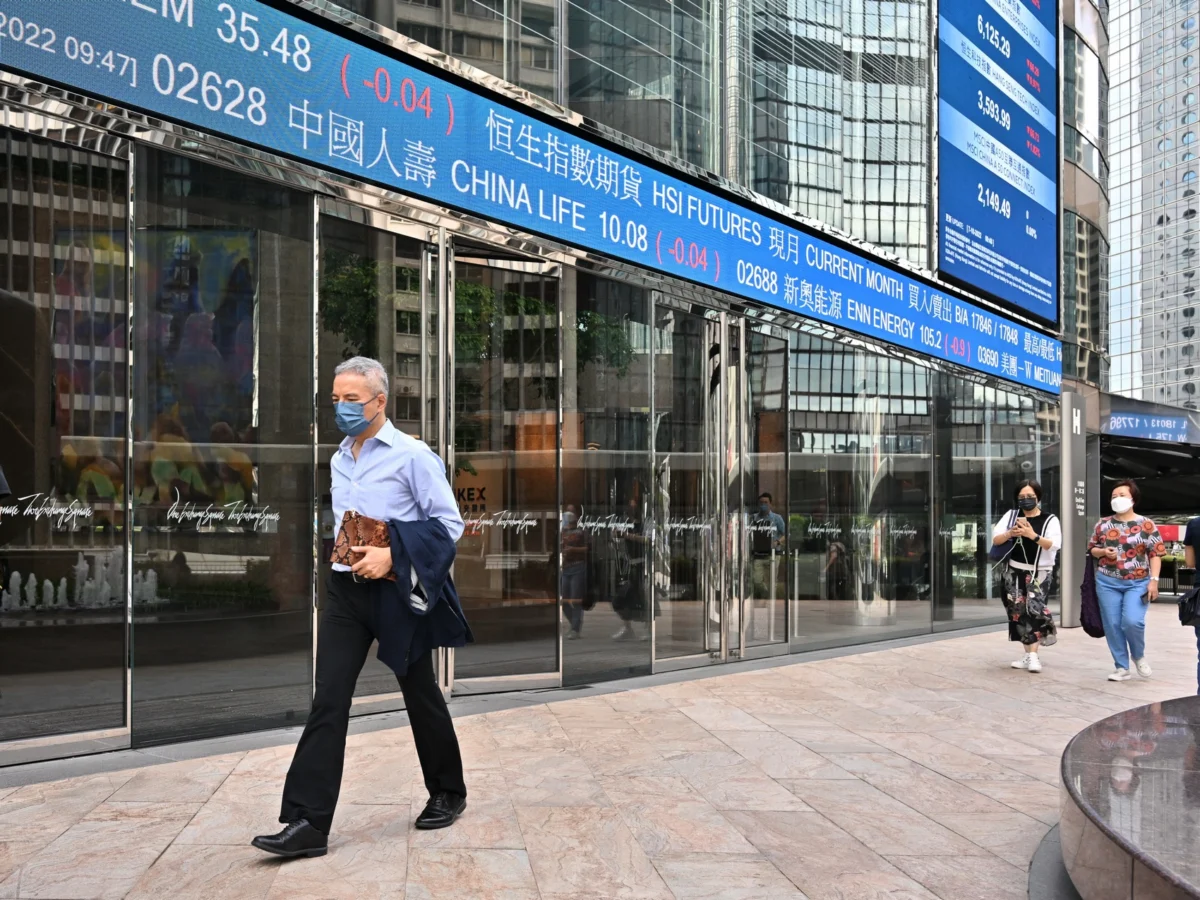
Hong Kong’s stock exchange has reported a surge in profits, reaching record levels, primarily propelled by an unprecedented demand for initial public offerings (IPOs) from technology and artificial intelligence (AI) companies. The bourse operator, Hong Kong Exchanges and Clearing (HKEX), announced these stellar results on Wednesday, underscoring a robust performance in the first half of 2026. This financial triumph reflects a dynamic and evolving capital markets landscape, signaling Hong Kong’s continued relevance as a global financial hub.
A Record-Breaking Half-Year for HKEX
The financial year 2026 has proven exceptionally fruitful for HKEX. In the first six months, the exchange successfully facilitated 87 new listings, a remarkable feat that saw a staggering HK$212.4 billion (approximately US$27 billion) raised. This figure represents a substantial 94 percent increase compared to the same period in the previous year, highlighting a significant acceleration in capital-raising activities.

Attributable profit for HKEX soared to HK$10.6 billion, marking a substantial 24 percent year-on-year increase. This impressive growth in profitability was mirrored by a 19 percent rise in core revenue, which reached HK$15.5 billion. This expansion in revenue is a direct consequence of record trading volumes across the exchange’s cash, derivatives, and commodities markets. Both revenue and profit metrics set new half-yearly records, surpassing the previous benchmarks established in the latter half of 2025.
The AI and Tech Surge: A Strategic Shift
The primary driver behind this exceptional performance has been the influx of listings from the technology, AI, and media and telecommunications sectors. This trend aligns with broader global market dynamics, where innovation in AI and cutting-edge technology continues to attract significant investor interest. The exchange’s ability to cater to these burgeoning industries has been instrumental in its success.
Bonnie Chan, CEO of HKEX, attributed the strong results to a confluence of positive factors. "The performance was supported by robust market sentiment, strong fundraising demand from technology and AI-related companies, and active participation from both Chinese Mainland and international investors," she stated. Chan further emphasized the exchange’s operational strengths, noting, "Trading activity across our cash, derivatives and Stock Connect markets reached record half-yearly highs, underscoring the resilience and relevance of our markets."

Strategic Vision and Leadership Renewal
The strong financial performance coincides with a significant development in HKEX’s leadership. Earlier this week, the exchange announced the renewal of Bonnie Chan’s contract for another three-year term, extending her tenure as CEO until the end of February 2030. This continuity in leadership is expected to provide stability and further strategic direction as the exchange navigates future market opportunities and challenges.
Chairman Carlson Tong expressed confidence in the exchange’s trajectory, stating, "HKEX entered 2026 with resilience and continued strategic progress, delivering record first-half performance against a backdrop of macroeconomic uncertainty and evolving geopolitical dynamics." Tong’s remarks acknowledge the prevailing global economic climate, characterized by uncertainties and geopolitical shifts, which often impact financial markets. The exchange’s ability to achieve record profits despite these headwinds speaks volumes about its adaptability and strategic foresight.
Hong Kong as a Gateway for Global Capital
The surge in IPOs, particularly from the tech and AI sectors, is indicative of a broader trend: the increasing strategic importance of Asian markets, including China and Hong Kong, for global capital allocation. In an era of portfolio diversification and a search for long-term growth opportunities, international investors are increasingly turning their attention to Asia.

This strategic pivot is further evidenced by a series of successful IPOs from Chinese AI companies in Hong Kong throughout 2026. Analysts suggest that this trend is part of a deliberate strategy by Beijing to leverage capital markets to secure the overseas funding necessary to advance its national technology objectives. The "Stock Connect" programs, which facilitate cross-border investment between mainland China and Hong Kong, play a crucial role in this strategy, providing international investors with greater access to Chinese companies and vice versa.
A prime example of this trend is the recent debut of Chinese data centre supplier Zhongji InnoLight. Last month, the company raised approximately US$6.8 billion on its IPO, marking the largest public offering in Hong Kong in seven years. This substantial fundraising underscores the significant capital available for innovative technology companies seeking to list on the exchange.
Broader Market Context and Future Outlook
The robust IPO performance in the first half of 2026 has positioned Hong Kong’s primary market for a strong year. According to recent reports from accounting firms KPMG and PwC, the city’s IPO market had already raised approximately HK$210 billion as of June, marking the strongest first-half result in five years. This sustained activity suggests a healthy pipeline of companies looking to go public and a receptive investor base.

The implications of these record profits and the continued strength of the IPO market are multifaceted. For HKEX, it signifies a reinforcement of its position as a leading international financial center, capable of attracting and facilitating capital for high-growth industries. For the listed companies, it provides access to crucial funding for expansion, research and development, and global market penetration. For investors, it offers opportunities to participate in the growth of innovative sectors and potentially achieve attractive returns.
The strategic focus on technology and AI aligns with the global shift towards a digital economy. Hong Kong’s ability to capitalize on this trend, by providing a robust and efficient platform for these companies to raise capital, is a testament to its adaptive market infrastructure and its strategic importance within the global financial ecosystem. The continued engagement of both mainland Chinese and international investors further solidifies Hong Kong’s role as a vital bridge between East and West.
A Timeline of Growth and Resilience
The recent success of HKEX can be viewed within a broader timeline of its strategic development and market performance:

- Early 2020s: HKEX embarks on a strategic initiative to enhance its position as a global capital markets hub, with a particular focus on attracting technology and biotech companies. This includes reforms to listing rules to accommodate a wider range of innovative businesses.
- Mid-2020s (leading up to 2026): A gradual increase in IPO activity is observed, driven by a growing appetite for technology investments globally. The "Stock Connect" programs continue to mature, facilitating greater cross-border capital flows.
- First Half of 2026: The market witnesses an exponential rise in IPOs, particularly from AI and tech sectors. This period sees record fundraising amounts and a significant increase in the number of new listings.
- May 2026: The exchange announces record half-yearly profits and revenue, driven by the strong IPO performance and increased trading volumes.
- August 2026: Zhongji InnoLight’s IPO, the largest in seven years, further highlights the strength of the Hong Kong IPO market and the demand for Chinese tech companies.
- September 2026: HKEX confirms the renewal of CEO Bonnie Chan’s contract, signaling leadership stability amidst a period of significant growth.
This timeline illustrates a consistent upward trajectory, punctuated by strategic decisions and favorable market conditions, that has culminated in the record-breaking performance of the first half of 2026.
Expert Analysis and Implications
Financial analysts have widely lauded HKEX’s performance, viewing it as a positive indicator for the region’s capital markets. The exchange’s ability to adapt to evolving industry trends and attract high-growth companies is seen as a key competitive advantage. The strong performance also suggests that Hong Kong remains a preferred listing venue for many companies, despite geopolitical uncertainties and competition from other financial centers.
The emphasis on technology and AI listings is not merely a financial trend but also a reflection of global economic priorities. As nations increasingly invest in advanced technologies, capital markets play a pivotal role in financing this innovation. Hong Kong’s success in this domain positions it as a crucial facilitator of technological advancement and economic growth, not only for China but for the wider Asia-Pacific region.

Furthermore, the active participation of both mainland Chinese and international investors underscores Hong Kong’s unique position as a global financial gateway. The city’s robust regulatory framework, combined with its proximity to mainland China’s vast market and its established international connectivity, creates an attractive environment for capital deployment. The renewed confidence from international investors, despite global economic headwinds, is a significant endorsement of Hong Kong’s financial infrastructure and its long-term potential.
The continued development of the Stock Connect schemes and other cross-border initiatives is expected to further bolster HKEX’s position. These programs enhance market accessibility and liquidity, making Hong Kong an even more appealing destination for both issuers and investors seeking to engage with the Chinese market.
In conclusion, the record profits reported by Hong Kong Exchanges and Clearing are a testament to the vibrant activity in its IPO market, driven by a powerful surge in demand from the technology and AI sectors. This success underscores Hong Kong’s enduring role as a critical financial hub, adept at navigating global economic shifts and fostering growth for innovative enterprises. The exchange’s strategic focus, coupled with leadership continuity, positions it for continued success in the dynamic global financial landscape.

 Lina Irawan
 Pevita Pearce