Iffa Jayyana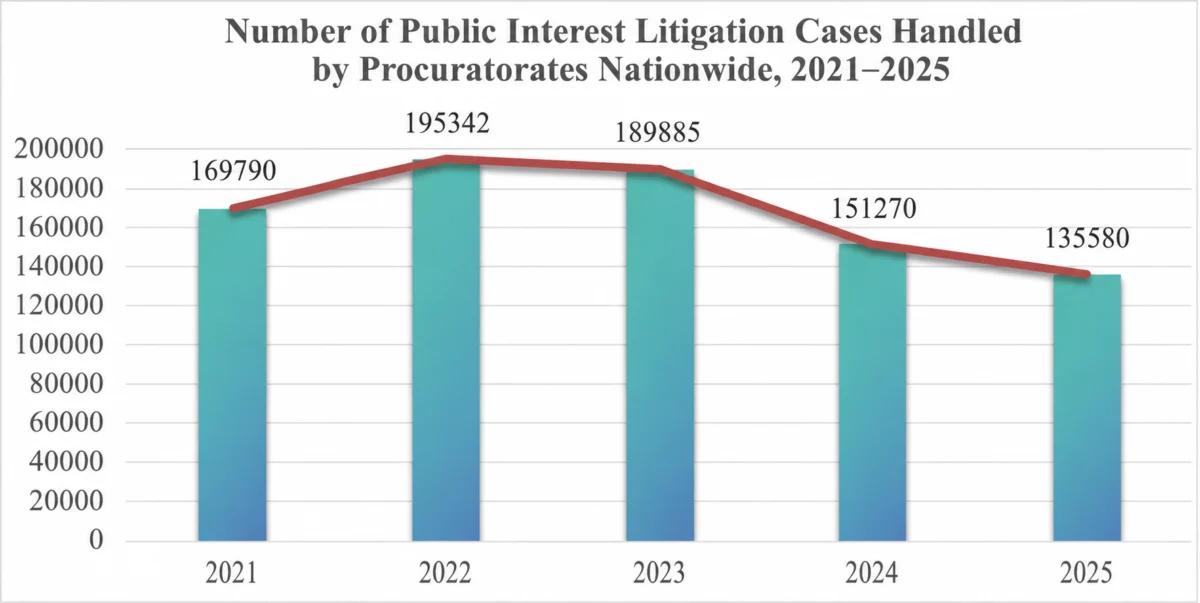
The Standing Committee of the National People’s Congress has officially released the second reading draft of the People’s Republic of China Procuratorate Public Interest Litigation Law, marking a pivotal moment in the nation’s ongoing efforts to codify its unique judicial oversight mechanisms. This legislative milestone follows years of experimental implementation and incremental adjustments to the Civil and Administrative Procedure Laws. The draft law seeks to consolidate the authority of the People’s Procuratorate—China’s state organ for legal supervision—in pursuing cases that involve mass harms, environmental degradation, and threats to the national interest. As the draft moves toward finalization, it has sparked significant international discourse, particularly regarding its potential application to foreign entities and the widening scope of protected "public interests."
The Evolution of Procuratorial Public Interest Litigation
The Procuratorate Public Interest Litigation (PPIL) system was initially conceived as a solution to a systemic gap in China’s legal framework. Historically, despite the existence of laws protecting the environment and consumer rights, the mechanism for seeking judicial remedies for "mass harms" remained underdeveloped. Recurring scandals, most notably in food safety and industrial pollution, created a surge in public frustration. While private citizens and non-governmental organizations (NGOs) technically had the right to file lawsuits, they faced insurmountable hurdles, including prohibitive costs, lack of investigative resources, and a generally "anemic" civil society.
Furthermore, the Chinese government has historically maintained a cautious stance toward organized citizen movements. By empowering the Procuratorate—a state body with significant investigative powers and professional legal staff—to act as the primary advocate for the public interest, the state effectively bypassed the need for independent civil society mobilization. This shift allowed for a state-led response to grievances that might otherwise be directed against administrative agencies or state-owned enterprises.
The system underwent a formal pilot phase beginning in 2015, following a decision by the Fourth Plenum of the 18th CPC Central Committee. By 2017, the system was formally integrated into the Civil Procedure Law and the Administrative Procedure Law. However, the current draft law represents the first time a standalone, comprehensive procedural law has been drafted specifically for PPIL, signaling its elevation to one of the "four core work areas" of the Procuratorate, alongside criminal prosecution, civil supervision, and administrative supervision.

Statistical Overview and Case Handling Trends
The scale of PPIL in China has expanded exponentially over the last decade. According to data reflected in recent judicial reports, the number of cases handled by the procuratorate has reached unprecedented levels. In 2025 alone, the procuratorate handled a total of 135,580 public interest litigation cases. However, a closer examination of the data reveals a nuance often misunderstood by external observers: the vast majority of these cases do not result in a formal courtroom trial.
Of the 135,580 cases handled in 2025, formal lawsuits were filed in only 7,305 instances, representing roughly 5.4% of the total caseload. This discrepancy is explained by the procedural design of PPIL, which prioritizes "pre-litigation" resolutions. In administrative PPIL cases—which constitute approximately 91% of the total volume—the procuratorate is required to issue a "procuratorial recommendation" to the relevant government agency before filing a lawsuit. This recommendation identifies a legal violation or a failure to perform a statutory duty and requests correction within a specific timeframe.
The high success rate of these recommendations is a testament to the "legal supervision" authority of the procuratorate. Most administrative agencies choose to rectify the issue to avoid the public scrutiny and institutional embarrassment of being a defendant in a court of law. Consequently, the PPIL system functions more as a tool for intra-governmental administrative correction than as a traditional adversarial litigation system.
The Scope of Litigation: Expanding Protected Interests
The second reading draft of the law delineates the specific areas where the procuratorate may intervene. These categories have expanded significantly since the 2015 pilot program. Article 3 of the draft law provides a comprehensive list of "public interest" domains, which can be categorized into administrative cases, civil cases, and overlapping areas.
Shared Jurisdictions (Administrative and Civil)
The procuratorate may pursue both government agencies (for failure to supervise) and private actors (for direct harm) in the following areas:

- Environmental and resource protection
- Food and drug safety
- Work safety and emergency management
- Protection of the rights and interests of vulnerable groups (including the elderly, disabled, and children)
- National defense and the protection of the rights of military personnel
- Cultural heritage and relic protection
- Ethnic unity and progress
Administrative-Only Jurisdiction
Certain areas are restricted to suits against government entities, primarily involving the management of state resources:
- Protection of state-owned assets
- Transfer of state-owned land-use rights
Civil-Only Jurisdiction
The procuratorate may pursue civil defendants in specific commercial or social contexts where the public interest is harmed:
- Monopolistic conduct and unfair competition
- Large-scale labor rights violations
- Personal information protection (notably, while government agencies also handle personal data, the current draft places this primarily in the civil sphere)
- Protection of the reputation and honor of "heroes and martyrs"
The inclusion of "Ethnic Unity" in the second reading draft is a notable addition, reflecting the government’s increasing focus on social stability and national cohesion. This expansion suggests that the PPIL system is being utilized not just for environmental or consumer protection, but as a broader tool for implementing state policy and social governance.
The Extraterritorial Reach: Article 51 and Foreign Entities
One of the most debated aspects of the new draft is Article 51, a supplemental provision that addresses the law’s application to foreign organizations and individuals. The article states that the People’s Procuratorates may lawfully initiate public interest litigation against foreign entities that carry out unlawful conduct infringing on China’s national interests or the "societal public interest."
This provision has sparked concern among international legal analysts and foreign business chambers. Some observers have argued that Article 51 could be interpreted as a "blank check" for the Chinese state to target foreign firms, potentially bypassing the specific categories listed in Article 3. A recent analysis in the publication Lawfare suggested that for foreign defendants, the standard of "harm to national or societal interest" might become the sole criteria, leading to unpredictable legal risks.

However, legal experts specializing in Chinese law, including Jeremy Daum of China Law Translate, suggest a more nuanced interpretation. It is highly probable that Article 51 is intended to clarify jurisdictional authority rather than create a separate, unrestricted legal track for foreigners. Under this view, the procuratorate would still need to demonstrate that the foreign entity’s conduct falls within the prescribed categories—such as environmental pollution or food safety—and that the harm meets the "public interest" threshold.
The phrase "National Interest and Societal Public Interest" is a recurring theme throughout the draft. It serves as a limiting principle, ensuring that the procuratorate does not intervene in minor disputes that are better handled through private litigation. In guiding cases released by the Supreme People’s Procuratorate, the "public interest" is often defined by the "indeterminacy" of the victims (i.e., the harm affects an unspecified large group) and the "severity" of the social impact.
Implications for International Business and Compliance
For foreign enterprises operating in China, the formalization of the PPIL Law introduces a new layer of compliance risk. While the government has other, more direct tools for penalizing foreign firms—such as administrative fines, blacklisting, or market access restrictions—the PPIL system introduces a judicial element that is harder to navigate.
Civil public interest litigation requires the defendant to provide compensation for specific harms, such as environmental restoration costs or punitive damages in food safety cases. The involvement of the procuratorate means that defendants are not just facing an NGO or a group of consumers, but a state organ with the full weight of the government’s investigative apparatus.
The potential for "perceived harms" in amorphous areas like "ethnic unity" or "national defense" remains a point of concern. While these categories are less likely to result in frequent litigation compared to environmental cases, they represent a high-stakes legal environment where business activities could be reframed as threats to national stability.

Chronology of Key Legislative Milestones
- October 2014: The CPC Central Committee proposes the establishment of a public interest litigation system led by the procuratorate.
- July 2015: The National People’s Congress Standing Committee (NPCSC) authorizes a two-year pilot program in 13 provincial-level regions.
- June 2017: The Civil Procedure Law and Administrative Procedure Law are amended, officially codifying the PPIL system.
- March 2018: The National Supervision Commission is established, shifting the procuratorate’s anti-corruption duties and prompting a strategic pivot toward PPIL and legal supervision.
- 2021-2023: Several special laws, such as the Personal Information Protection Law and the Wetlands Protection Law, include specific provisions authorizing procuratorial public interest litigation.
- December 2023: The first reading draft of the standalone PPIL Law is submitted to the NPCSC.
- August 2024: The second reading draft is released for public comment, featuring refined language on extraterritoriality and expanded categories.
Conclusion and Future Outlook
The transition of Procuratorate Public Interest Litigation from a pilot project to a specialized, standalone law marks the maturation of a central pillar in China’s judicial system. By centralizing the power to protect the "public interest" within the state’s legal supervision organ, China has created a model of governance that prioritizes state-led correction over grassroots legal mobilization.
While the high volume of cases suggests a robust effort to tackle environmental and safety issues, the low percentage of actual trials highlights the system’s role as a tool for administrative oversight. For the international community, the focus remains on Article 51 and the potential for the law to be used as a geopolitical or economic lever. As the draft nears its final reading and eventual enactment, the global business community will be watching closely to see how Chinese courts define the boundaries of the "public interest" and whether the law provides sufficient procedural safeguards for both domestic and foreign defendants. The final version of the law is expected to serve as a blueprint for "legal supervision with Chinese characteristics" for the next decade.


 Ammar Sabilarrohman
 Reynand Wu