Reynand Wu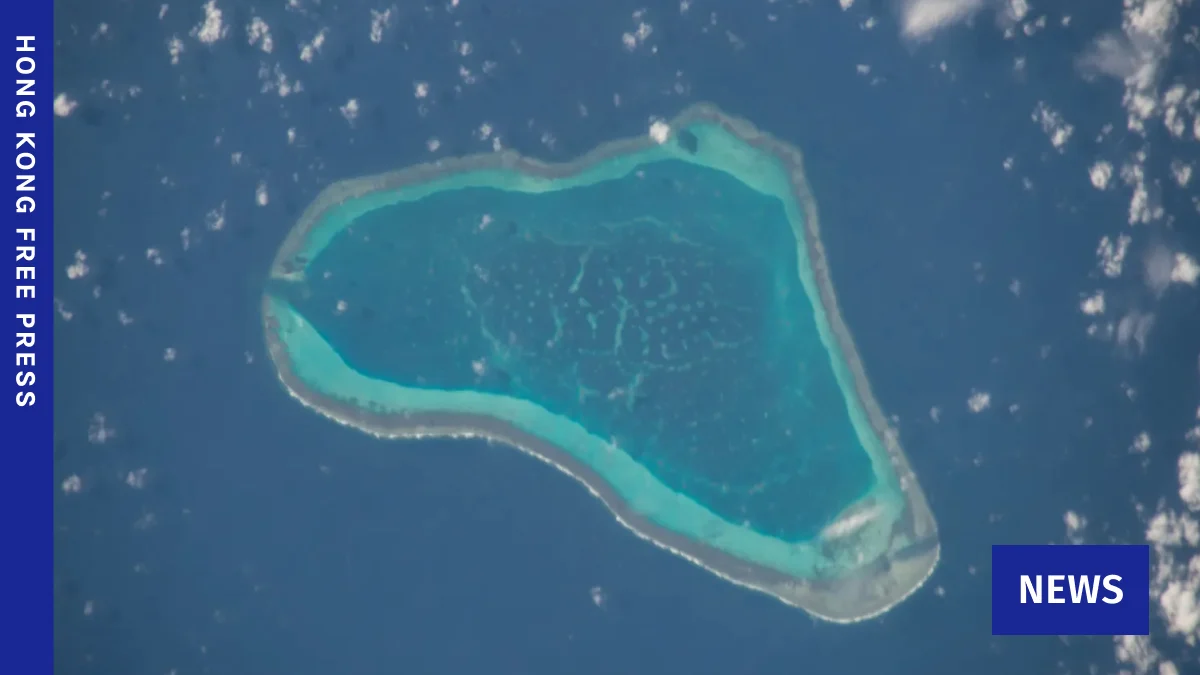
Beijing has issued a stern warning to Manila, accusing a Philippine aircraft of violating Chinese airspace over the weekend in the strategically vital and hotly contested South China Sea. The incident, which occurred near the Scarborough Shoal, marks another escalation in the long-standing territorial disputes that have plagued the region, highlighting the persistent friction between China and the Philippines. The Chinese military’s Southern Theater Command stated that a Philippine plane had “illegally intruded into the territorial airspace over China’s Huangyan Dao,” Beijing’s designation for the disputed shoal. This accusation, coupled with Beijing’s assertive stance, underscores the volatile nature of maritime claims in one of the world’s busiest shipping lanes.

A Pattern of Confrontation
The latest incident is part of a broader pattern of confrontations in the South China Sea, where China asserts expansive claims over nearly 90% of the waters, a claim that has been invalidated by a 2016 international tribunal ruling. Despite this ruling, Beijing continues to enforce its claims through naval patrols, maritime militia, and assertive diplomatic rhetoric. The Philippines, a treaty ally of the United States, has increasingly challenged these assertions, leading to frequent standoffs.
The Philippine armed forces reported that a Chinese J-16 fighter jet engaged in dangerous maneuvers near a Philippine aircraft during a “routine military patrol” conducted by a Cessna 208 turboprop. According to the Philippine account, the Chinese fighter “repeatedly approached and manoeuvred in close proximity to the Philippine aircraft, including manoeuvring ahead of and around it and positioning itself within the Philippine aircraft’s wake.” This aggressive posturing by the Chinese fighter jet is viewed by the Philippines as a direct threat and an attempt to intimidate its patrols.

Beijing’s Response and Warnings
In response to the alleged airspace violation, Chinese military spokesman Zhai Shichen stated that Chinese naval and air forces “tracked and monitored the Philippine aircraft, and issued warnings to expel it in accordance with laws and regulations.” Senior Captain Zhai further asserted that the Philippines’ actions “seriously violate China’s sovereignty” and issued a direct warning to Manila to “stop rights violations and provocative acts immediately.” This statement reflects China’s consistent narrative of defending its sovereign territory against perceived incursions by other claimant states.
The Chinese Ministry of Foreign Affairs has also weighed in, reiterating Beijing’s territorial claims and condemning what it describes as Philippine provocations. While specific statements from the Foreign Ministry regarding this particular incident were not immediately available, their general stance on South China Sea issues has been to emphasize China’s historical rights and to accuse other nations, particularly the Philippines and its allies, of destabilizing the region.

Chronology of Recent Incidents
The alleged airspace violation is not an isolated event. It follows a series of escalating maritime incidents in recent weeks, indicating a heightened level of tension in the South China Sea.
- Early September: The Philippines reported that a China Coast Guard vessel rammed one of its fisheries department boats in another area of the Spratly Islands. Beijing, in turn, blamed the Philippine vessel, stating it “bears full responsibility for the incident.”
- Weekend of the alleged airspace violation: A Philippine aircraft conducting a routine patrol near Scarborough Shoal was reportedly buzzed by a Chinese J-16 fighter jet. The Philippines also reported a separate confrontation occurring on the same Sunday in the Spratly Islands, further south.
This sequence of events suggests a deliberate escalation of actions by both sides, or at least a significant increase in the frequency and intensity of interactions. The Philippines, under President Ferdinand Marcos Jr., has adopted a more assertive stance in defending its maritime rights, a departure from some previous administrations that sought to de-escalate tensions with China.

Geopolitical Context and International Law
The South China Sea is a critical geopolitical flashpoint due to its strategic location, abundant natural resources, and its status as a major global trade route. An estimated one-third of global maritime trade passes through these waters, making stability a paramount concern for international commerce. China’s expansive “nine-dash line” claim, which encompasses virtually the entire sea, is not recognized by international law and has been challenged by Brunei, Malaysia, the Philippines, Taiwan, and Vietnam, all of whom have overlapping claims.
The 2016 ruling by the Permanent Court of Arbitration in The Hague, which invalidated China’s historical claims, remains a significant legal precedent. However, China has refused to acknowledge the ruling, continuing its island-building activities and military presence in the disputed territories.

The Role of Allies and International Pressure
The United States, a treaty ally of the Philippines, has consistently supported Manila’s position and has conducted freedom of navigation operations (FONOPs) in the South China Sea to challenge what it deems excessive maritime claims. The US State Department has issued statements condemning China’s actions in the South China Sea, including its harassment of Philippine vessels and aircraft. While the US has not directly commented on this specific alleged airspace violation, its broader policy is to uphold international law and freedom of navigation in the region.
Other international actors, including Australia, Japan, and European Union member states, have also expressed concerns about China’s assertive behavior and the potential impact on regional stability and freedom of navigation. These concerns are often articulated through diplomatic channels and joint statements, but direct military intervention remains a sensitive issue.

Analysis of Implications
The repeated confrontations in the South China Sea have several significant implications:
- Increased Risk of Accidental Escalation: The close proximity of military and coast guard vessels and aircraft from different nations in a contested area raises the risk of miscalculation and accidental conflict. A minor incident could quickly spiral out of control, with potentially devastating consequences.
- Erosion of Regional Stability: The ongoing disputes and assertive actions by China create an environment of uncertainty and instability, hindering economic development and cooperation in the region.
- Challenges to International Law: China’s persistent disregard for international rulings, such as the 2016 arbitral award, challenges the established international legal order and could embolden other nations to disregard similar rulings.
- Impact on Philippine Sovereignty and Maritime Rights: The Philippines, as a smaller nation facing a significantly larger military power, is particularly vulnerable. Its ability to exercise its sovereign rights within its exclusive economic zone (EEZ) is continuously tested.
- Shifting Alliances and Regional Security Dynamics: The escalating tensions are also shaping regional security dynamics, leading to increased defense cooperation between countries like the Philippines and the United States, and fostering greater vigilance among other claimant states.
Looking Ahead
The recent incidents underscore the persistent challenges in resolving territorial disputes in the South China Sea. Beijing’s unwavering assertion of its claims, coupled with Manila’s more determined stance, suggests that confrontations are likely to continue. The international community will be closely watching to see how these tensions unfold and whether diplomatic channels can be effectively utilized to de-escalate the situation and prevent further incidents. The adherence to international law and the principles of peaceful dispute resolution remain critical for maintaining maritime security and stability in this vital global waterway. The economic and security implications of any further deterioration in the situation are profound, not just for the nations directly involved but for the entire international community.


 Lina Irawan
 Pevita Pearce