Lina Irawan
The Asian Development Bank (ADB) has unveiled an ambitious plan to invest approximately $6.17 billion in 31 projects across China from 2018 to 2020, signaling a robust commitment to the nation’s continued development. This substantial financial pledge includes an estimated $2 billion slated for disbursement in 2018 alone, as outlined in the Manila-based institution’s newly proposed sovereign lending program. The announcement underscores a strategic shift in the ADB’s engagement with China, moving decisively towards initiatives that foster environmental sustainability, inclusive growth, and enhanced governance, aligning with China’s own priorities for high-quality, balanced development.
A Shifting Mandate: From Infrastructure to Sustainable Growth
For decades, the ADB has been a pivotal partner in China’s remarkable economic ascent, primarily channeling investments into large-scale infrastructure projects that underpinned the country’s industrialization and urbanization. However, this strategic focus has been evolving, reflecting both China’s increasing self-sufficiency in conventional infrastructure financing and its growing emphasis on addressing critical environmental challenges and social disparities. Indu Bhushan, Director General of ADB’s East Asia Department, affirmed this transition, stating, "ADB aims to increase its sovereign lending to China in line with the expansion of the bank’s total lending capacity. The 2017 sovereign lending will reach $1.98 billion." This incremental increase in overall lending capacity allows the ADB to deepen its engagement while recalibrating its thematic priorities.
The shift is not merely cosmetic; it represents a fundamental recalibration of development finance. The ADB’s support is now progressively migrating from its traditional infrastructure-oriented projects towards comprehensive environmental and social sector support. This strategic pivot is designed to improve the quality and sustainability of China’s growth trajectory, moving beyond mere economic output to encompass ecological health and social equity. A notable feature of this renewed strategy is the mandate that all new projects approved for China will incorporate significant innovation elements. These innovations could span technological advancements, policy frameworks, institutional reforms, or novel financing mechanisms, all aimed at achieving more impactful and sustainable development outcomes.
Furthermore, the ADB places considerable emphasis on "knowledge solutions" as powerful catalysts for propelling development in China. Recognizing that financial capital alone is insufficient for complex development challenges, the bank actively promotes the creation, management, and sharing of knowledge as a core pillar of its operations in the country. This includes facilitating policy dialogues, providing technical assistance, disseminating best practices, and fostering South-South cooperation, leveraging China’s own development experiences for the benefit of other developing nations. This knowledge-centric approach aims to build institutional capacities, foster policy reforms, and ensure the long-term sustainability and replicability of project successes.
Historical Trajectory and Current Portfolio
China’s partnership with the Asian Development Bank dates back to 1986 when it officially joined the multilateral development bank. Since then, the financial institution has played a significant role in China’s economic transformation. From its inception as a member through September 30 of the current year, the ADB has approved a staggering total of $37.7 billion in loans to China. This cumulative figure comprises $33.9 billion dedicated to sovereign operations, typically involving government-backed projects, and $3.9 billion channeled into private sector operations, supporting non-sovereign entities and fostering market-led growth.
Historically, the distribution of this assistance mirrored China’s developmental needs in its earlier stages. Approximately half of the total assistance, around 50 percent, was directed towards the critical transport sector, funding highways, railways, and port infrastructure essential for trade and connectivity. The energy sector received 16 percent of the funding, supporting power generation and transmission vital for industrial expansion. Water and other urban infrastructure and services accounted for 15 percent, addressing the needs of a rapidly urbanizing population. Finally, agriculture, natural resources, and rural development received 13 percent, underpinning food security and rural livelihoods. This historical snapshot provides a stark contrast to the ADB’s current, more diversified, and environmentally conscious lending strategy.
As of the present, the ADB is actively financing 90 ongoing projects in China, representing a substantial portfolio amounting to $12.3 billion. This active engagement demonstrates the continuous nature of the partnership and the long-term commitment to various development initiatives across the country. In the two years preceding this announcement, the ADB consistently approved new projects worth more than $1.7 billion annually in China, showcasing a steady flow of investment and an enduring partnership. In 2017 alone, the bank’s private sector operations department financed seven projects totaling $790 million, excluding additional loans offered by commercial banks leveraging ADB credit guarantees, highlighting the bank’s role in mobilizing private capital for development.
Future Investment Focus: Pillars of the 2018-2020 Program
The ADB’s Country Partnership Strategy for China, spanning 2016-2020, serves as the guiding framework for these planned investments. This strategy is meticulously crafted to support China in several pivotal areas of development, reflecting both national priorities and global development agendas.
-
Driving Environmental Sustainability and Climate Action: This theme represents a cornerstone of the new strategy. It encompasses two flagship programs: the ambitious Beijing-Tianjin-Hebei air pollution control initiative and the comprehensive Yangtze River Economic Belt development. These programs aim to address severe environmental degradation, promote green development models, and build resilience against climate change impacts. Beyond these major initiatives, ADB support will also target sustainable urbanization projects, promoting eco-cities, green infrastructure, and efficient resource management, along with a host of other environment-related programs focused on biodiversity conservation, waste management, and renewable energy adoption.
-
Fostering Inclusive Growth and Social Equity: This theme seeks to ensure that the benefits of China’s economic progress are broadly shared across all segments of society. It covers critical areas such as rural transformation, aiming to bridge the urban-rural divide through improved infrastructure, services, and economic opportunities in rural areas. The revitalization of Northeast China, a region facing economic restructuring challenges, is also a key focus, supporting industrial upgrades and job creation. Furthermore, the strategy addresses demographic transition, particularly the challenges and opportunities associated with an aging population and investments in education and vocational training to ensure a skilled workforce and social safety nets. Other social inclusion programs targeting vulnerable groups and enhancing access to basic services are also integral.
-
Enhancing Regional Connectivity and Cooperation: Recognizing China’s pivotal role in regional development, this theme promotes its participation in broader regional frameworks. This includes supporting Chinese provinces’ engagement in ADB’s established sub-regional programs, such as the Central Asia Regional Economic Cooperation (CAREC) and the Greater Mekong Subregion (GMS) initiatives. Crucially, it also encompasses robust collaboration with China’s flagship Belt and Road Initiative (BRI), fostering regional connectivity, trade facilitation, and cross-border infrastructure development. The ADB’s involvement aims to ensure these initiatives are executed with high environmental and social standards and contribute to sustainable regional integration.
-
Strengthening Governance and Institutional Frameworks: Good governance and robust institutions are recognized as fundamental to sustainable development. This theme covers public sector management reforms, including promoting public-private partnerships (PPPs) with new concession scopes, central-local fiscal relations to enhance efficiency and equity in public finance, and eco-compensation mechanisms to incentivize environmental protection. Support for the financial sector aims to deepen financial markets, improve regulatory frameworks, and enhance access to finance for small and medium-sized enterprises (SMEs) and green investments. Other institution-building activities, such as legal and judicial reform, are also part of this comprehensive approach to strengthen the rule of law and transparency.
-
Expanding Private Sector and Non-Sovereign Operations: In line with China’s Ministry of Finance’s request, the ADB is actively expanding its private sector and non-sovereign operations. The focus is specifically on inclusive environmental projects across key sectors such as infrastructure, agribusiness, and financial institutions. This expansion reflects China’s greater role in promoting environmentally sustainable development and its growing capacity to attract and manage private capital. The ADB seeks to de-risk private investments in green and social projects, catalyze further private sector participation, and demonstrate viable business models for sustainable development.
Strategic Alignment and Collaborative Ventures
The ADB’s refined strategy in China is deeply aligned with the country’s overarching national development goals, particularly its commitment to building an "ecological civilization" and achieving a "moderately prosperous society" by 2020. The emphasis on environmental protection, inclusive growth, and institutional reform directly supports these strategic objectives. By focusing on areas where its expertise and financial resources can add the most value, the ADB reinforces its relevance as a key development partner.
A significant aspect of the ADB’s approach is its commitment to collaboration. The bank will work closely with the China-led Belt and Road Initiative (BRI), recognizing its potential to transform regional connectivity and economic integration. This collaboration is crucial for ensuring that BRI projects adhere to international best practices in terms of environmental sustainability, social safeguards, and debt sustainability. Furthermore, the ADB plans to engage with other multilateral development partners, including the Asian Infrastructure Investment Bank (AIIB) and the New Development Bank (NDB). This tripartite collaboration among leading development financiers aims to optimize resource allocation, avoid duplication, and collectively promote regional connectivity, trade, and investment, as well as the provision of regional public goods such such as disaster risk management and disease control. This cooperative framework signifies an evolving architecture of development finance in Asia, where traditional and new institutions increasingly find common ground to address shared challenges.
Perspectives from Leadership and Beneficiaries
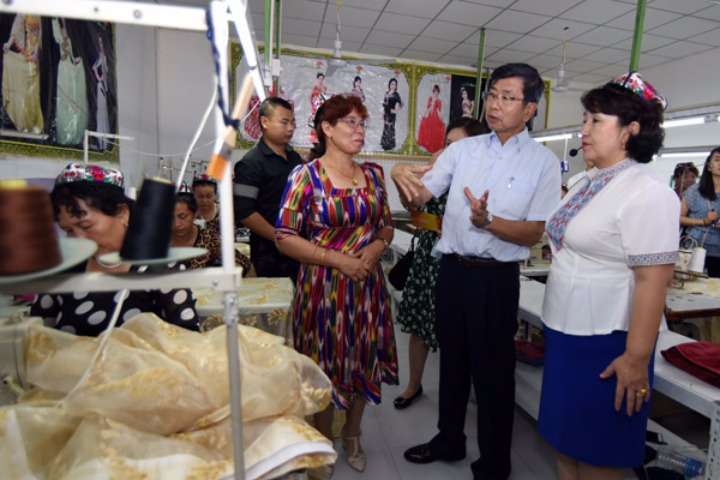
The vision behind these investments is articulated by ADB leadership. Indu Bhushan’s statements underscore the bank’s commitment to adapting its lending strategy to China’s evolving needs, emphasizing quality over quantity and sustainability over rapid expansion. The ADB’s President, Takehiko Nakao, whose image shows him meeting beneficiaries of the grant-financed Turpan Women’s Ethnic Minority Cultural Tourism Development Project, exemplifies the bank’s focus on grassroots impact. Such projects are critical for demonstrating how development finance can directly uplift communities, empower marginalized groups, and preserve cultural heritage while creating economic opportunities. The Turpan project, for instance, likely focuses on empowering women through vocational training, promoting local culture, and developing sustainable tourism, aligning perfectly with the inclusive growth and social sector support themes.
From China’s perspective, the Ministry of Finance’s request for an expansion of private sector and non-sovereign operations highlights the country’s desire to leverage market mechanisms and private capital for development. This signals a mature approach to development finance, where government takes on a facilitating role rather than being the sole financier. It also reflects China’s confidence in its regulatory environment and its capacity to attract responsible private investment into critical sectors. The partnership with ADB allows China to tap into global best practices in private sector engagement and risk mitigation.
Broader Implications for China’s Development Pathway
The ADB’s substantial commitment and its strategic shift carry significant implications for China’s development pathway. Firstly, by prioritizing environmental and social projects, the ADB directly supports China’s transition towards a greener, more sustainable economic model, helping the country meet its climate change commitments and achieve its "ecological civilization" goals. These investments will contribute to cleaner air and water, more efficient resource use, and a healthier environment for its citizens.
Secondly, the focus on inclusive growth, rural transformation, and support for vulnerable regions ensures that the benefits of development are more equitably distributed, addressing widening income gaps and regional disparities. This is crucial for maintaining social stability and achieving the United Nations Sustainable Development Goals (SDGs), particularly those related to poverty reduction, education, and health.
Thirdly, the emphasis on knowledge solutions and institutional reform will strengthen China’s governance capacity, foster innovation, and improve the efficiency and transparency of public services. This institutional strengthening is vital for sustained, high-quality development in the long run.
Finally, the collaborative approach with the Belt and Road Initiative and other multilateral development banks positions China as a proactive and responsible leader in regional and global development. It showcases a willingness to engage with international partners to address complex transnational challenges and build a more interconnected and prosperous Asia.
In conclusion, the Asian Development Bank’s proposed $6.17 billion investment plan for China from 2018 to 2020 represents a significant evolution in their long-standing partnership. By aligning its strategy with China’s evolving development priorities, particularly in environmental sustainability, inclusive growth, and regional cooperation, the ADB is poised to continue playing a crucial role in supporting China’s journey towards a more balanced, high-quality, and sustainable future, while also fostering greater regional integration and collective prosperity.

 Evan Lee Salim
 Suro Senen