Nana
Nana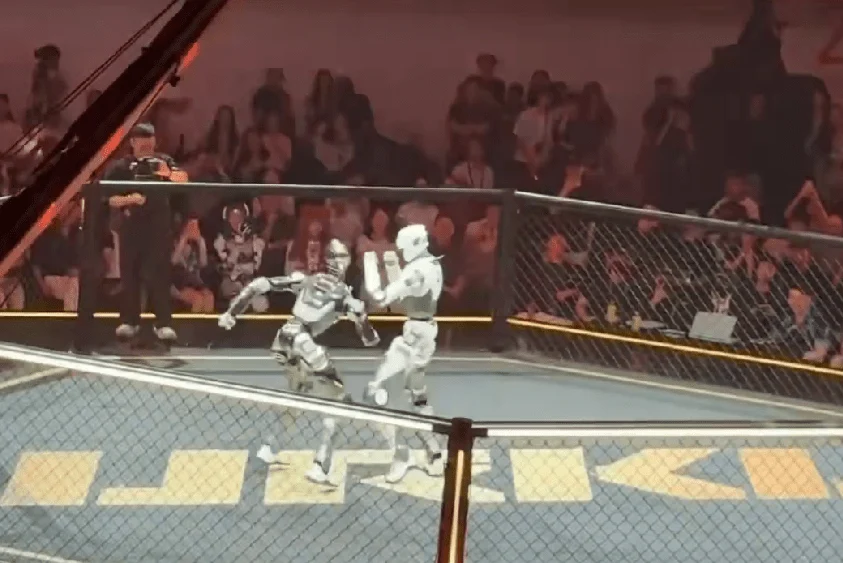
A groundbreaking humanoid robot combat event, orchestrated by a pioneering robotics firm in Shenzhen, China, has achieved widespread virality across global social media platforms, culminating in a notable endorsement from Tesla CEO Elon Musk. On July 19, the tech magnate amplified the event’s reach by reposting a video of the intense spectacle on X (formerly Twitter), succinctly commenting, "Robot fights are fun." The captivating footage showcases two EngineAI T800 full-size humanoid robots engaged in a dynamic exchange of punches and kicks within the confines of an MMA-style octagonal cage, a format traditionally associated with mixed martial arts. One particularly dramatic sequence saw a robot’s head-mounted sensors detach following a powerful kick from its adversary, yet, remarkably, the decapitated machine continued its assault, demonstrating an unforeseen level of resilience powered by its torso-mounted core control system.
The event, which EngineAI has billed as the world’s inaugural industrial-grade humanoid robot free-fighting competition, represents a significant milestone in the development and public demonstration of advanced robotics. The combatants, the EngineAI T800 models, are formidable machines, standing at an imposing 1.73 meters (approximately 5 feet 8 inches) and weighing 75 kilograms (around 165 pounds). These specifications place them squarely within the size and weight range of an average adult human, enhancing the visceral impact of their combat demonstrations. Key to their advanced capabilities are high-strength hydraulic joints, which enable them to execute a sophisticated repertoire of human-like combat maneuvers, including precise jabs, powerful spinning kicks, and intricate takedowns. This fusion of robust hardware and sophisticated control systems underscores a pivotal moment in the trajectory of humanoid robotics, pushing the boundaries of what these machines can achieve in terms of agility, strength, and autonomous action.
The Genesis of a Spectacle: EngineAI and Shenzhen’s Robotics Ecosystem
Shenzhen, often referred to as China’s Silicon Valley, serves as an ideal cradle for such innovation. The city has long been a global hub for manufacturing and technological development, fostering a vibrant ecosystem for hardware startups and advanced robotics companies. EngineAI, though specific details on its founding and full portfolio are emerging, exemplifies the ambitious spirit prevalent in this region. The decision to host a public robot combat event is not merely for entertainment; it serves multiple strategic purposes. Firstly, it acts as a high-profile demonstration of the company’s engineering prowess, showcasing the T800’s robustness, agility, and sophisticated AI control in a challenging, unpredictable environment. Secondly, it generates significant public interest and media attention, positioning EngineAI at the forefront of humanoid robot development, both domestically and internationally. Lastly, such a competition provides invaluable real-world stress testing for the robots, revealing strengths and weaknesses under extreme conditions that might not be replicated in controlled laboratory settings. The very nature of "free-fighting" implies a degree of autonomous decision-making and adaptive response, distinguishing these robots from pre-programmed stunt machines.
The event’s timing, with footage gaining traction around July 2024, aligns with a period of intensified global interest in humanoid robots. Companies like Tesla with its Optimus, Boston Dynamics with Atlas, and Agility Robotics with Digit have all made significant strides, often demonstrating their robots performing complex tasks, navigating varied terrain, or exhibiting impressive dexterity. EngineAI’s approach, however, pivots towards a direct confrontation, a theatrical display of physical capability that resonates with a broader audience beyond engineering circles.
The Combatants: Inside the EngineAI T800
The technical specifications of the EngineAI T800 are central to understanding its performance. The 1.73-meter height and 75-kilogram weight are carefully chosen, likely to mimic human dimensions for training purposes and to optimize for dynamic movements. The "high-strength hydraulic joints" are particularly noteworthy. Hydraulic systems are known for their immense power density, enabling robots to generate significant force and move with high speed and precision. This contrasts with many electric motor-driven humanoid robots which, while quieter and often more energy-efficient, may struggle to match the raw power and impact resistance of hydraulic systems in high-stress applications like combat. The integration of these powerful joints allows for the fluid execution of complex combat maneuvers, from rapid jabs to dynamic spinning kicks, requiring sophisticated balance algorithms and real-time motion planning.
The incident where a robot continued fighting despite losing its head-mounted sensors highlights a critical aspect of its design: redundancy and distributed control. Typically, the "head" of a humanoid robot houses crucial visual and auditory sensors, often including the primary processing unit. The T800’s ability to operate effectively with only its "torso-mounted core control system" indicates that essential processing, balance, and motor control functions are distributed throughout the robot’s body. This design philosophy enhances survivability and operational resilience, suggesting that the robot can adapt to partial system failures, a valuable trait for any machine intended for complex, potentially hazardous environments. This resilience is a testament to advanced engineering in fault tolerance and robust control architectures.
A New Frontier in Robot Entertainment and Testing
The concept of robot combat is not new, with popular events like "BattleBots" having captivated audiences for decades. However, these typically involve custom-built, wheeled, or tracked machines designed purely for destructive engagement. The EngineAI event elevates this concept significantly by featuring bipedal, human-shaped robots capable of human-like combat. This shift from custom-designed combat machines to general-purpose humanoid robots engaging in free-form martial arts marks a distinct evolution. It blurs the lines between entertainment, technological demonstration, and rigorous stress testing.
The "MMA-style octagonal cage" is more than just a visual nod to human combat sports; it dictates the environment, requiring the robots to navigate a defined space, respond to opponents, and withstand impacts without external assistance. This structured yet dynamic environment pushes the boundaries of robot AI, requiring real-time perception, decision-making under pressure, and precise motor control to execute complex offensive and defensive actions. The dramatic visual of a robot losing its head but continuing to fight is precisely the kind of moment that captures public imagination and demonstrates the extreme durability and advanced programming of these machines.
Elon Musk’s Endorsement and Broader Implications
Elon Musk’s repost and comment, "Robot fights are fun," carries significant weight. As a prominent advocate for advanced AI and robotics through Tesla’s Optimus project, his acknowledgment instantly thrusts EngineAI’s event into the global spotlight. Musk’s interest in robots extends beyond entertainment; he envisions Optimus as a general-purpose humanoid robot capable of performing a vast array of tasks, from manufacturing to household chores. The combat demonstration, while seemingly far removed from these applications, nevertheless showcases capabilities crucial for robust general-purpose robots: balance, strength, agility, and resilience in dynamic, unpredictable environments. A robot that can withstand and deliver powerful blows is likely to be robust enough for demanding industrial or even disaster relief tasks.
The implications of such events are multifaceted:
Technological Advancement and Benchmarking
The competition serves as a real-world benchmark for humanoid robot performance. It pushes developers to innovate in areas such as:
- Balance and Locomotion: Maintaining stability while executing powerful strikes and resisting impacts.
- Dexterity and Force Control: Precisely delivering punches and kicks with appropriate force.
- Real-time AI and Decision Making: Adapting to an opponent’s movements and strategizing in milliseconds.
- Robustness and Survivability: Designing robots that can sustain damage and continue functioning.
- Sensor Fusion and Environmental Awareness: Processing real-time data from various sensors to understand the combat situation.
Public Perception and Engagement
Robot combat events can significantly influence public perception of robotics. On one hand, they demystify complex technology, making it accessible and exciting. They can inspire future generations of engineers and scientists. On the other hand, the spectacle of robots fighting, especially with human-like violence, can raise ethical questions about the normalization of combat robotics and the potential for military applications, even if the current context is purely for sport and demonstration.
Ethical Considerations
The "head-kicked off" scenario, while a dramatic highlight, implicitly raises questions about the human-like attributes being imbued into these machines and the implications of simulating violence. While clearly a controlled demonstration, the visual can evoke strong reactions, prompting discussions about the responsible development of autonomous systems, especially those designed for robust physical interaction. The industry must navigate the fine line between showcasing capabilities and inadvertently desensitizing the public to the potential dangers or ethical dilemmas associated with advanced robotics.
The Future of Robot Sports and Entertainment
The success of EngineAI’s event suggests a burgeoning market for robot combat as a legitimate sport. Unlike previous generations of robot battles, humanoid robot combat introduces an element of human-like athleticism and strategy, potentially attracting a wider audience. This could lead to professional leagues, sponsorships, and significant technological investment, further accelerating the development of humanoid robotics.
China’s Role in Robotics Innovation
The event underscores China’s growing leadership in advanced manufacturing and robotics. Shenzhen’s ecosystem, characterized by rapid prototyping, robust supply chains, and significant government support for technological innovation, provides a fertile ground for companies like EngineAI to flourish. The "industrial-grade" designation also implies that the underlying technology is robust enough for practical, real-world applications beyond entertainment, positioning China as a key player in the global humanoid robot market.
Looking Ahead: The Evolution of Humanoid Robotics
The EngineAI T800 combat event is more than just an entertaining spectacle; it is a powerful indicator of the rapid advancements occurring in humanoid robotics. The ability of these machines to engage in complex physical interactions, withstand significant impacts, and continue functioning despite partial failure represents a substantial leap forward. While the immediate application is entertainment and demonstration, the underlying technologies—advanced hydraulics, robust control systems, sophisticated AI for real-time decision-making, and resilient hardware design—have far-reaching implications.
These capabilities could eventually translate into robots capable of performing dangerous inspection tasks, assisting in disaster relief scenarios where human intervention is too risky, or even revolutionizing logistics and manufacturing by handling complex, dynamic physical labor. The path from a combat arena to practical utility is paved with continuous innovation, rigorous testing, and public engagement. The viral spread of EngineAI’s robot fight video, endorsed by a figure as influential as Elon Musk, ensures that this journey will be watched with keen interest by technologists, ethicists, and the general public alike, marking a pivotal moment in the unfolding narrative of humanity’s relationship with intelligent machines.


 Rifan Muazin
 Ali Ikhwan