Nila Kartika Wati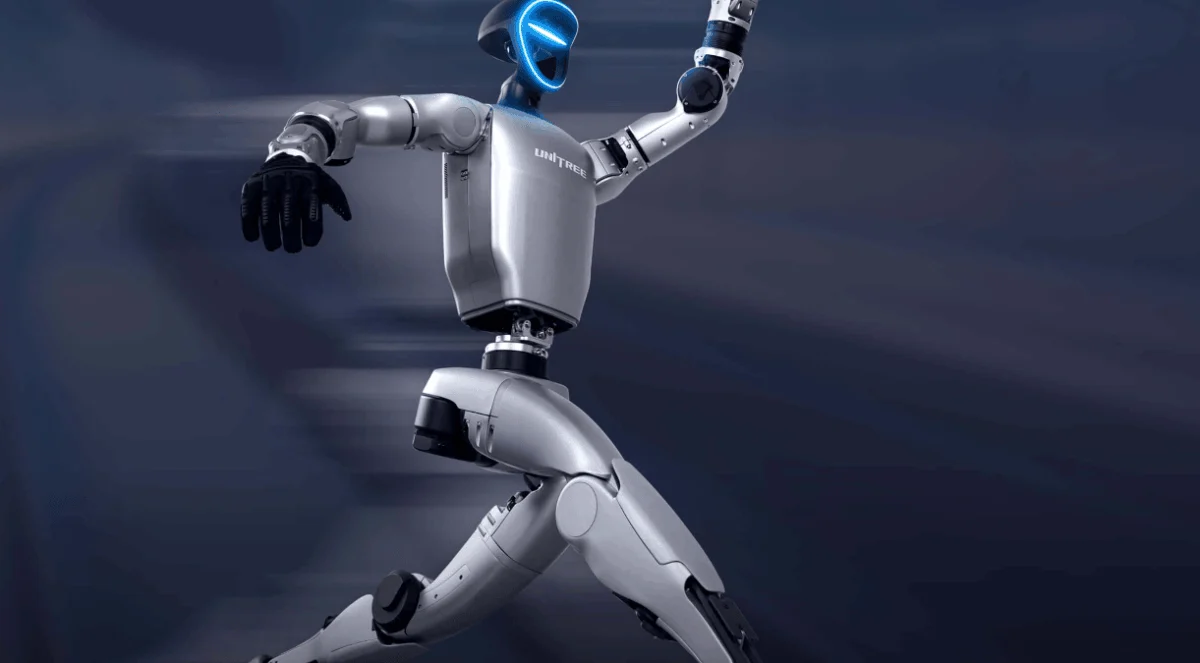
China has emerged as a formidable global leader in advanced robotics, with its domestic manufacturers now accounting for more than half of the world’s humanoid robot products and nearly 70% of global quadruped robot sales. This significant milestone was announced by the Ministry of Industry and Information Technology (MIIT) on July 20, underscoring the nation’s rapid advancements and strategic focus on intelligent manufacturing and cutting-edge technological innovation. The MIIT’s data reveals that Chinese enterprises have developed over 400 distinct humanoid robot products, solidifying the country’s position at the forefront of this burgeoning industry. This unparalleled growth trajectory is a testament to years of dedicated policy support, substantial investment in research and development, and a burgeoning ecosystem of technology companies pushing the boundaries of artificial intelligence, advanced mechanics, and autonomous systems.
Unpacking China’s Robotics Ascendancy
The figures released by the MIIT provide a clear quantitative measure of China’s success in a sector deemed critical for future economic competitiveness and industrial transformation. The development of "more than 400 humanoid robot products" signifies not just a volume of production, but a breadth of innovation spanning various applications, from industrial automation and logistics to healthcare, education, and even consumer services. Humanoid robots, designed to emulate human form and often human-like interaction capabilities, represent the pinnacle of robotic engineering, requiring sophisticated integration of artificial intelligence, advanced sensors, complex motor control, and intricate balance systems. China’s ability to lead in this highly complex domain highlights its growing prowess in high-tech manufacturing and its ambition to move beyond traditional manufacturing roles.
Similarly, the dominance in quadruped robots, often referred to as "robot dogs," with "close to 70% of global sales," points to a robust domestic industry capable of producing highly agile and versatile machines. These robots are particularly valuable for tasks requiring mobility in challenging terrains, such as industrial inspection, surveillance, search and rescue operations, and logistics within complex environments. Their ability to navigate stairs, rough ground, and confined spaces makes them indispensable tools for a range of hazardous or difficult applications where wheeled or tracked robots may struggle. The high sales volume suggests strong domestic demand, robust production capabilities, and competitive pricing, allowing Chinese manufacturers to capture a substantial share of the international market.
A Strategic Trajectory: The Evolution of China’s Robotics Policy
China’s current leadership in robotics is not an overnight phenomenon but the culmination of a deliberate and sustained national strategy spanning over a decade. The impetus for this push can be traced back to the early 2010s, when the government recognized the critical role of advanced manufacturing and automation in upgrading its industrial base, enhancing productivity, and addressing demographic shifts, including an aging workforce and rising labor costs.
One of the foundational policy frameworks has been "Made in China 2025," launched in 2015, which explicitly identified robotics as one of ten strategic emerging industries crucial for transforming China into a global manufacturing powerhouse. The plan set ambitious targets for domestic robot production and market share, aiming to reduce reliance on foreign technology and foster indigenous innovation. This was followed by the "14th Five-Year Plan for Robotics Industry Development" (2021-2025), which further detailed specific goals, including enhancing fundamental technological capabilities, promoting high-end product development, and expanding application scenarios.
These national blueprints have been complemented by a suite of supportive measures:
- Substantial R&D Funding: Government grants and subsidies for robotics research institutes, universities, and private companies.
- Industrial Parks and Innovation Hubs: Establishment of specialized robotics industrial parks across the country, offering preferential policies, infrastructure, and collaborative environments.
- Talent Development Programs: Initiatives to cultivate a skilled workforce in AI, robotics engineering, and related fields through educational reforms and vocational training.
- Market Incubation: Policies encouraging the adoption of robots in various industries, from automotive and electronics manufacturing to logistics and services.
This coordinated approach has created a fertile ground for innovation, attracting significant private capital and fostering a competitive landscape among domestic firms.
Chronology of Key Milestones in China’s Robotics Journey:
- Early 2000s: Initial focus on importing industrial robots to automate manufacturing processes, primarily in the automotive sector. China becomes a major consumer of foreign robotics technology.
- 2010-2012: Recognition of the need for indigenous robotics development. Early government support for research and establishment of key national laboratories.
- 2013: China surpasses Japan as the world’s largest market for industrial robots, signaling a massive scale of automation adoption.
- 2015: Launch of "Made in China 2025," explicitly identifying robotics as a strategic pillar industry. Ambitious targets set for domestic production and technological self-sufficiency.
- 2016: The MIIT issues the "Robotics Industry Development Plan (2016-2020)," outlining specific goals for technological breakthroughs and market expansion.
- Late 2010s: Emergence of several domestic robotics companies gaining traction, particularly in industrial robots, but also starting to venture into service and specialized robots. Increased focus on AI integration.
- 2020-2021: Accelerated development of humanoid and quadruped robots, driven by advancements in AI, sensor technology, and motor control. The COVID-19 pandemic also highlighted the need for automation in various sectors, including healthcare and logistics.
- 2021: Release of the "14th Five-Year Plan for Robotics Industry Development," emphasizing high-end, intelligent, and collaborative robotics, with a strong focus on core technologies.
- 2023-2024: Significant breakthroughs in humanoid robot prototypes and commercialization efforts, with several Chinese firms showcasing advanced models with improved dexterity and AI capabilities. The MIIT’s latest data in July 2024 reflects the culmination of these efforts, indicating a clear global leadership position in specific advanced robotics categories.
Global Market Context and Supporting Data
The global robotics market is experiencing exponential growth, driven by technological advancements, declining costs, and increasing demand for automation across industries. According to various market research reports, the global robotics market size was estimated to be well over $50 billion in 2023 and is projected to exceed $200 billion by 2030, with a compound annual growth rate (CAGR) often cited in the double digits.
Within this broader landscape, the humanoid and quadruped robot segments, while still nascent compared to traditional industrial robots, are projected for particularly rapid expansion. The market for humanoid robots alone is expected to grow significantly, driven by potential applications in logistics, elder care, hazardous environment operations, and personalized services. Projections often place the humanoid robot market at several billion dollars within the next five to seven years. Similarly, the market for quadruped robots, or "legged robots," is also on an upward trajectory, fueled by their utility in inspection, security, and exploration tasks in complex environments.
China’s commanding lead in these segments positions it favorably to capture a substantial share of this future growth. While companies in the United States, Japan, and Europe continue to innovate, China’s scale of production, integrated supply chains, and robust domestic market provide a unique competitive advantage. Prominent Chinese robotics companies like Unitree Robotics (known for its quadruped robots), Fourier Intelligence (focused on rehabilitation and humanoid robotics), and various startups backed by tech giants are at the forefront of this wave, pushing innovation and commercialization.
Official Responses and Broader Implications
The MIIT’s announcement is likely to be met with satisfaction from Chinese policymakers, who view technological self-reliance and global leadership in strategic industries as paramount. While no specific official statements beyond the data release were immediately available, it can be logically inferred that the ministry would emphasize the following:
- Confirmation of Strategic Success: The data validates the effectiveness of China’s long-term industrial policies and investments in advanced manufacturing.
- Boost to National Confidence: It reinforces China’s growing capacity for indigenous innovation and its ability to compete and lead in cutting-edge technological domains.
- Call for Continued Investment: Such achievements typically serve as a foundation for advocating further investment in R&D, talent development, and ecosystem building to maintain and extend this lead.
- Emphasis on Application and Integration: Beyond production numbers, officials would likely stress the importance of integrating these robots into various sectors to enhance productivity, improve living standards, and address societal challenges.
The implications of China’s robotics dominance extend far beyond mere production statistics:
- Economic Transformation: The widespread adoption and export of advanced robots will further accelerate China’s shift from a low-cost manufacturing hub to a high-tech industrial power. It will create new industries, generate high-value jobs, and contribute significantly to GDP growth.
- Technological Leadership: Dominance in humanoid and quadruped robotics signifies mastery of a complex array of underlying technologies, including advanced AI algorithms, sophisticated sensor fusion, precision mechanics, battery technology, and human-robot interaction interfaces. This leadership can have spillover effects into other high-tech sectors.
- Geopolitical and Strategic Impact: In an era of increasing technological competition, leadership in robotics is a strategic asset. It can influence global supply chains, national security capabilities (especially for dual-use technologies), and international standards setting.
- Societal Changes: The proliferation of advanced robots will inevitably bring about profound societal changes. While they promise to alleviate labor shortages, perform dangerous tasks, and enhance efficiency, they also raise questions about the future of work, job displacement, ethical considerations in AI, and the integration of autonomous systems into daily life. China’s experience will offer valuable insights into these evolving dynamics.
- Challenges Ahead: Despite the impressive progress, challenges remain. These include securing stable access to advanced semiconductor chips and other critical components, fostering truly groundbreaking innovation beyond incremental improvements, developing robust regulatory frameworks, and ensuring public trust and acceptance of increasingly autonomous machines. International competition, particularly from well-established players in Japan, Germany, and the United States, will also continue to intensify, necessitating ongoing investment and innovation from China.
In conclusion, the MIIT’s data on China’s leadership in humanoid and quadruped robot production marks a pivotal moment in the global technological landscape. It reflects a nation that has successfully executed a long-term strategic vision, transforming itself from a consumer to a dominant producer and innovator in one of the most critical technological fields of the 21st century. As these advanced robots become more sophisticated and ubiquitous, China’s role in shaping their development and deployment will undoubtedly continue to grow, with far-reaching implications for industry, society, and the global balance of technological power.


 Rifan Muazin
 Ali Ikhwan