Neng Nana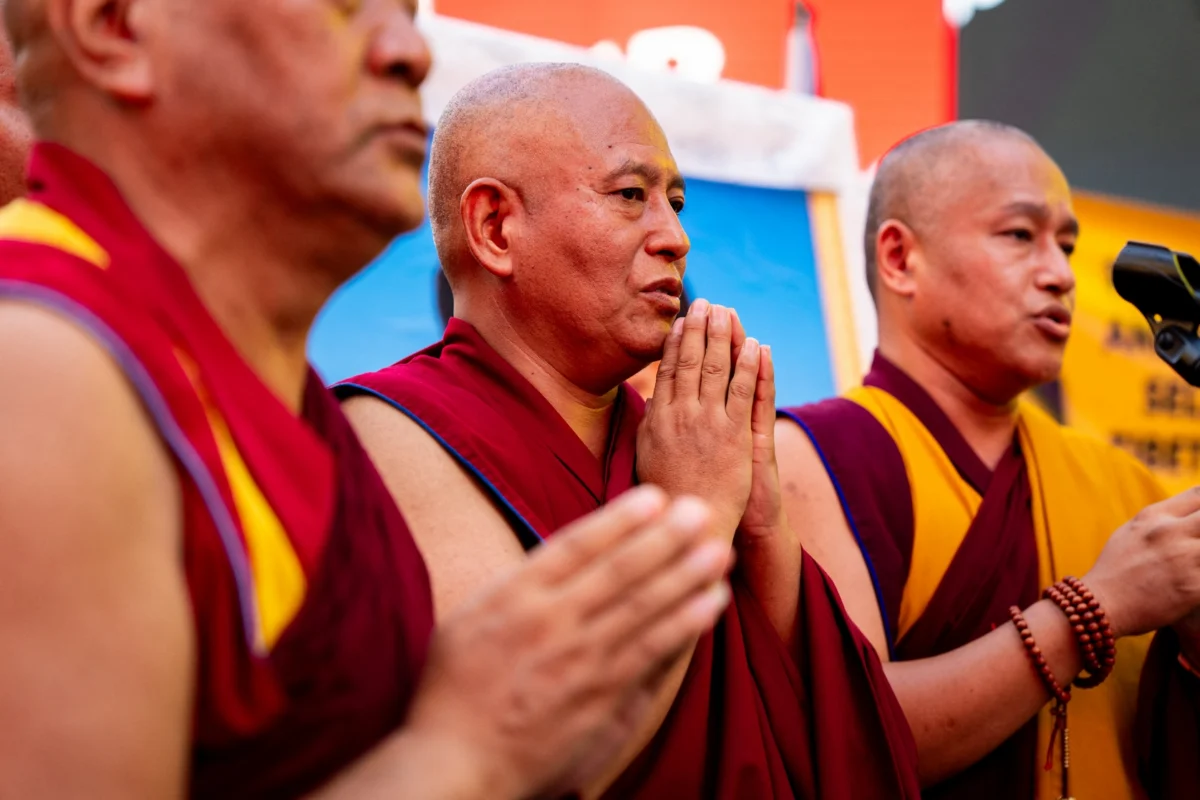
No one knew what Lobga Rangzen was planning. Not the monk who was his friend of 30 years, not his niece in New York. The revelation of his ultimate act, a public self-immolation outside the United Nations Headquarters in Manhattan on a balmy July 2nd night in 2026, sent shockwaves through the global Tibetan diaspora, drawing a stark contrast between their profound anguish and the muted response from a world preoccupied with other headlines. This extreme act of protest, a final, desperate plea for international attention to Tibet’s plight under Chinese rule, underscored the deepening despair and unwavering resolve within the exiled community.

Lobga Rangzen, whose birth name was Lobsang Palden, was a 52-year-old longtime Tibetan activist. His death marked a somber and unprecedented moment, being the first self-immolation for the Tibetan cause on American soil. His niece, Tenzin Choekyi, 21, was watching the World Cup on TV in Queens when the initial, vague news reached her from a friend: her uncle had "burned himself" in front of the United Nations. Initially imagining a minor accident, the true, horrifying details soon emerged, plunging her into "a wave of absolute terror." Rangzen had deliberately set himself ablaze and died, transforming his body into a searing message for a world he felt had forgotten his homeland.
The tragic incident, however, barely registered in the bustling news cycle of the United States. That very night, across Manhattan, pop superstar Taylor Swift’s wedding at Madison Square Garden dominated headlines, overshadowing Rangzen’s profound sacrifice. This stark media disparity highlighted the enduring struggle of exiled Tibetans to gain meaningful international attention for their decades-long opposition to Beijing’s communist rule. While the Western media focused on celebrity and sports, Rangzen’s fellow Tibetans responded with a potent mix of anguish and profound respect. They swiftly erected a makeshift shrine at the scene of his self-immolation, a poignant collection of flowers and ceremonial white "khata" scarves, beneath the distinctive turquoise-windowed facade of the UN building. This site quickly transformed into a rallying point, a somber testament to a life offered for a cause, echoing the sentiments of Jampa Choedup, a monk who had known Rangzen since 1997 and seen him just the day before his death. "His passing has left many of us Tibetans with the fervor to act," Choedup stated, encapsulating the renewed determination that Rangzen’s final act had sparked.

A History of Self-Sacrifice: The Tibetan Resistance
Rangzen’s act was not an isolated incident but a continuation of a grim and deeply symbolic form of protest that has tragically defined the Tibetan struggle in recent decades. He was emulating the more than 170 monks, nuns, and laypeople who had set themselves on fire between 2009 and 2022. The vast majority of these self-immolations occurred within Tibet itself, under the harsh grip of Chinese authority, but a significant number also took place in exile communities in India and Nepal. This wave of self-immolations emerged as a desperate, last-resort protest following a brutal crackdown on widespread mass demonstrations that swept across Tibet in 2008.
The 2008 protests, coinciding with the Beijing Olympics, saw Tibetans across the plateau rise up against Chinese rule, demanding religious freedom, the return of the Dalai Lama, and an end to perceived cultural assimilation. Beijing responded with overwhelming force, deploying military and police, imposing curfews, and initiating a widespread campaign of arrests and repression. This crackdown intensified already stringent controls, leading to a palpable sense of hopelessness among Tibetans both inside and outside their homeland. The subsequent years saw a dramatic increase in self-immolations, acts of ultimate self-sacrifice intended to draw the world’s gaze to the suffering in Tibet and pressure China to change its policies. These acts are rooted in a complex interplay of Buddhist principles of compassion and sacrifice, and the political desperation born from prolonged oppression.

Beijing, for its part, steadfastly maintains that Tibet is an inalienable part of its territory and has consistently tightened its control over the region. On the eve of Rangzen’s death, China further solidified its grip by adopting an "ethnic unity" law. Critics argue that this legislation is another step in a systematic campaign to further degrade minority rights, promote the assimilation of Tibetans into the dominant Han Chinese culture, and suppress any form of dissent or expression of distinct Tibetan identity. These policies include the forced closure of monasteries, restrictions on religious practice, mandatory "patriotic education," and the resettlement of nomadic communities, all aimed at eroding the foundations of Tibetan culture and religion.
Lobga Rangzen’s Path to Sacrifice
Jigme Ugen, president of the exiled Tibetan National Congress, where Rangzen led the New York and New Jersey chapter, confirmed that Rangzen’s act was far from impulsive. "It wasn’t something he did abruptly," Ugen said, adding, "He clearly prepared himself." Rangzen was a mainstay at protests at the UN and the Chinese consulate in New York, a consistent voice in the diaspora’s call for freedom.

His final act was chillingly documented. A livestream of his death shows a heavy-set man, resolute in purpose, striding across a street in a traditional "chuba" robe. He planted a vibrant Tibetan flag firmly outside the United Nations building, a poignant symbol of the nation he fought for. Then, in a horrific display, he erupted in flames twice his height, dark smoke billowing around him. A UN security guard, alerted too late, rushed in with a fire extinguisher, but it was to no avail. Rangzen was pronounced dead about an hour later in hospital, his message delivered in a blaze of defiance. The New York police confirmed they are still investigating the death, a standard procedure for such a public and tragic event.
Rangzen’s life story itself was a testament to the enduring struggle. Born Lobsang Palden, he fled Tibet as a young man, joining the ranks of thousands of Tibetans who sought refuge and freedom in exile. He spent 14 years as a monk in southern India, immersing himself in Buddhist studies and the spiritual traditions that are so central to Tibetan identity. In 2006, he made the journey to the United States, settling in Queens, New York, which is home to a significant portion of the approximately 25,000 Tibetans living in the US. Overwhelmingly, these exiles are followers of the Dalai Lama, their revered spiritual leader who fled Tibet in 1959 after the failed uprising against Chinese occupation and has since lived in Dharamshala, India.

It was in the US that Lobsang Palden adopted the name "Rangzen," a word that profoundly encapsulates his life’s dedication: it means "independence." His English was not fluent, and he navigated various jobs, eventually becoming an Uber driver, a common profession among immigrant communities in New York. Despite the challenges of adapting to a new country and language, his commitment to the Tibetan cause never wavered. He told Ugen he was "married to the movement," a sentiment deeply rooted in his family’s history. According to both Ugen and Choedup, Rangzen carried the stories of his ancestors’ resistance. One of his uncles reportedly died in combat, and another perished in prison after being captured while fighting for Chushi Gangdruk, an anti-China guerrilla force that was established with CIA support in 1958. "He grew up with these stories," Ugen recounted, underscoring the inherited legacy of resistance that fueled Rangzen’s lifelong activism.
A Farewell Message and Lingering Questions
The day before his death, Rangzen had a conversation with monk Jampa Choedup, during which he spoke about Tibetans’ individual responsibility to seek freedom. This theme resonated powerfully in his six-minute farewell video, which was timed to be released posthumously. In the video, Rangzen, sitting cross-legged with sweat dripping from his brow, spoke in Tibetan, his words a clear and deliberate articulation of his motives. "Today, if I engage in alarming activism, it is not because I do not have food, or clothes or out of sadness. I do it for the Tibetan nation," he declared. This statement aimed to counter any perception that his act was born of personal despair or hardship, firmly framing it as a political sacrifice for his people and homeland. He criticized Chinese policies and urged exiled Tibetans to continue their efforts to build a new future for Tibet, concluding with a resolute plea: "There is no need to mourn for me."

Rangzen’s niece, Choekyi, remembered him as a "joyful" man who found solace and community in the weekly Tibetan "gorshey" circle dances, a traditional form of cultural expression. This memory provides a poignant glimpse into the individual behind the ultimate sacrifice, a man who, despite his deep commitment to a demanding political cause, also cherished moments of cultural connection and joy.
The Global Response and Ethical Dilemmas
Rangzen’s self-immolation reignited complex debates within the Tibetan community and among human rights advocates about the efficacy and ethics of such extreme protests. As China continued to solidify its seven-decade grip over the Tibetan plateau, and negotiations on Tibet’s future with the Dalai Lama remained stalled or abandoned, some of his followers have felt compelled to resort to self-sacrifice. This has placed the Dalai Lama, a Nobel Peace laureate known for his advocacy of non-violence and the "Middle Way" approach (seeking genuine autonomy within China rather than full independence), in a difficult position.

Beijing, which consistently frames its presence in Tibet as having "liberated" the region and improved economic and social conditions, has vehemently condemned the self-immolations. Chinese state media and officials have accused the Dalai Lama of "glorifying" such acts, attempting to shift blame onto him for these tragic protests. They argue that the acts are driven by external forces and are not genuine expressions of the Tibetan people.
While the Dalai Lama has consistently expressed profound sorrow over the self-immolations and questioned their long-term efficacy as a protest strategy, he has also been criticized by some scholars and activists for not explicitly trying to stop the practice. His nuanced stance reflects the immense pressure he faces: condemning the acts could be seen as abandoning those who sacrifice themselves for the cause, while not condemning them could be interpreted as tacit approval of self-harm.

Following Rangzen’s death, Penpa Tsering, the head of the Tibetan government-in-exile (also known as the Central Tibetan Administration, CTA), issued a statement urging all Tibetans to "cherish" their lives. "While we honor his devotion, human life is precious and must be preserved to serve the long-term struggle for Tibet," Tsering said. This statement echoes the CTA’s broader strategy of maintaining a moral high ground and pursuing diplomatic and political solutions, while also acknowledging the deep emotional resonance of such sacrifices within the community. The CTA’s message attempts to balance reverence for the profound commitment shown by self-immolators with a practical call to preserve lives for the sustained, collective effort towards Tibetan freedom.
The implications of Rangzen’s act extend beyond the immediate shock. For the Tibetan diaspora, his self-immolation serves as a potent, albeit tragic, symbol of unwavering resistance. It may galvanize further activism, drawing new generations into the struggle, or it could deepen a sense of despair over the seemingly insurmountable challenges they face. For the international community, the incident at the symbolic heart of global diplomacy – the United Nations – forces a moment of introspection, even if fleeting. It raises questions about the effectiveness of international pressure on China regarding human rights and minority rights, and the persistent difficulty for smaller, marginalized communities to capture sustained global attention amidst geopolitical complexities. Lobga Rangzen’s fiery protest, though briefly overshadowed by other news, stands as a stark, unforgettable testament to the enduring yearning for freedom in Tibet.


 Iffa Jayyana
 Jia Lissa