Muslim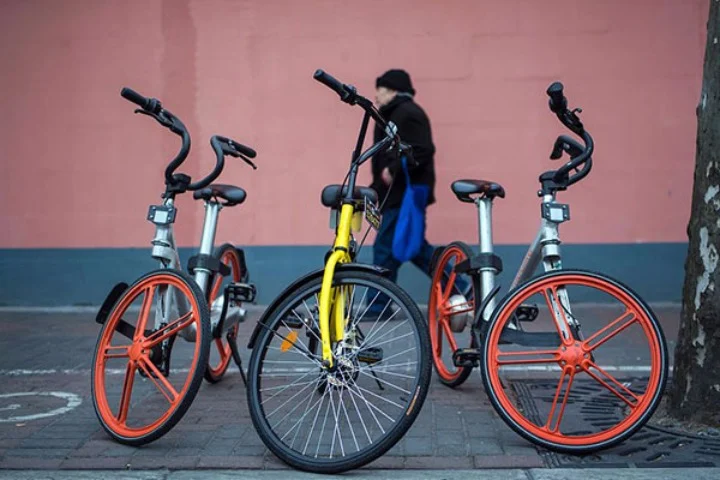
The fierce competition between China’s leading bike-sharing start-ups, Mobike and Ofo, reached a critical juncture in the latter half of 2017, marked by an intensifying debate over a potential merger. While key investors in both companies publicly advocated for consolidation, citing unsustainable "cash burn" and the imperative for profitability, the senior management steadfastly resisted such a move, creating a stark divergence in strategic vision for the future of the burgeoning industry. This high-stakes standoff underscored the challenges of rapid growth fueled by massive venture capital and the ultimate push towards market rationalization.
The Genesis of the Bike-Sharing Phenomenon and the Cash Burn Conundrum
China’s urban landscape witnessed an unprecedented transformation with the advent of dockless bike-sharing in 2016. Companies like Ofo and Mobike spearheaded this revolution, deploying millions of brightly colored bicycles across cities, promising convenient, affordable "last-mile" transportation solutions. Enabled by smartphone apps, GPS tracking, and QR code unlocking, these services quickly captured the imagination of urban commuters and a significant share of venture capital funding. The model, however, was predicated on aggressive expansion and user acquisition, often involving hefty subsidies and wafer-thin rental fees, leading to an unsustainable "cash burn" strategy.
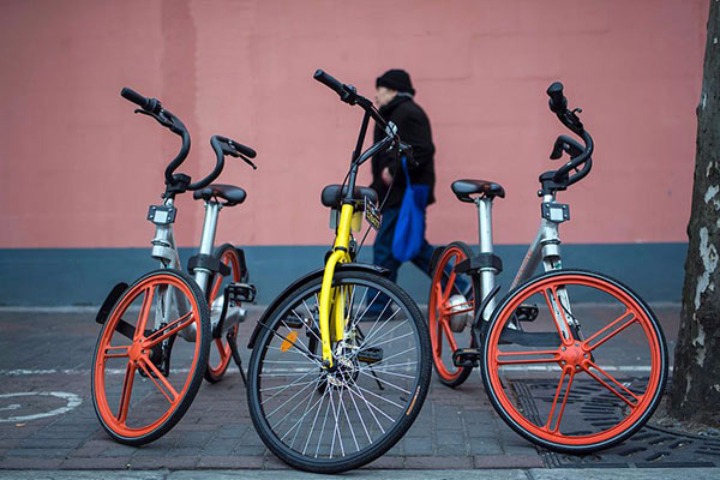
By early 2017, the streets of major Chinese cities, as exemplified by Shanghai on February 1, 2017, were awash with Mobike and Ofo bicycles, symbolizing both the industry’s success and its impending oversupply crisis. This period of hyper-growth, while attracting millions of users and billions in investment, masked a deeper financial vulnerability. The sheer volume of bikes required significant capital for manufacturing, maintenance, redistribution, and technology development, far outweighing the revenue generated from short-term rentals. This financial reality became increasingly apparent as the year progressed, prompting investors to re-evaluate the long-term viability of an industry characterized by intense, loss-making competition.
Investor Pressure Mounts: The Case for Consolidation
The call for a merger gained significant traction among the venture capitalists who had fueled the industry’s explosive growth. These investors, keenly aware of the massive capital outlays and the elusive path to profitability, began to publicly articulate the necessity of combining forces.
One of the most vocal proponents for a merger was Allen Zhu, an early investor in Ofo through GSR Ventures. Speaking at a forum on a Saturday in late 2017, Zhu unequivocally stated that the continued practice of "burning cash" to compete in the bike-sharing market was "meaningless" for both Mobike and Ofo, leading only to "huge loss." He emphasized the complexity of mergers, noting that such decisions require a delicate balancing act of interests among investors, entrepreneurs, shareholders, and users. Zhu’s perspective, widely reported in recent months, highlighted the fact that Mobike and Ofo had collectively secured a dominant market share, and given their relatively matched strengths, a merger was perceived as the sole viable route to achieving profitability. The argument was simple: eliminate direct competition, consolidate resources, and gain pricing power.
Zhu’s sentiments were echoed by another prominent Ofo investor, Wang Gang, who had consistently expressed his support for a merger on multiple occasions. Wang, speaking on a Thursday, acknowledged the limitations of an investor’s influence when a merger decision involves numerous complex factors, hinting at the internal resistance they faced.
On the Mobike side, similar views emerged from its financial backers. Zhou Kui, a partner at Sequoia Capital China, was quoted as asserting that the time for a merger had arrived, especially as both companies had achieved stable market shares within China, leaving little room for domestic expansion. Significantly, Zhou added that the primary resistance to a merger did not originate from the investor community, thereby directing attention towards the companies’ executive leadership. These investor statements collectively painted a picture of financial pragmatism overriding competitive pride. The venture capital model, while excellent at scaling quickly, ultimately demands a return on investment, which, in a hyper-competitive duopoly, seemed increasingly out of reach without consolidation.
Management’s Firm Stance: Resistance and Internal Dynamics
Despite the mounting pressure from their financial benefactors, the senior management teams of Mobike and Ofo maintained a resolute opposition to a merger, publicly denying any such intentions. This pushback highlighted the deep-seated entrepreneurial drive, brand loyalty, and perhaps, the differing visions for their respective companies’ futures.
Wang Xiaofeng, the founder and chief executive of Mobike, made his position clear in late November, unequivocally stating that his company "will never merge with Ofo." This definitive public declaration aimed to quell speculation and project an image of independent strength and determination.
Similarly, Dai Wei, the CEO of Ofo, publicly denied the merger rumors. However, reports from AI Caijing cited an unnamed Ofo employee who revealed an intriguing internal dynamic: Dai Wei had reportedly stated internally that "if there is a merge, it must be Ofo merging with Mobike." This internal sentiment suggested that while a merger was not entirely dismissed behind closed doors, it would only be acceptable on Ofo’s terms, indicating a strong desire for dominance rather than an equal partnership. Such internal posturing underscored the intense rivalry and the battle for strategic control, even in the face of shared financial challenges. The founders, having built their companies from scratch, likely viewed a merger as a concession of their vision and leadership, a perception often at odds with the pure financial logic of investors.
The Rise of a Third Player: Hellobike and the Alibaba Factor
Amidst the Mobike-Ofo merger saga, the competitive landscape of China’s bike-sharing industry continued to evolve, demonstrating that the market was far from a simple duopoly. Hellobike, a significant third player by user numbers, strategically capitalized on the top two rivals’ cash-burning battle.
In October 2017, Hellobike made a strategic move by being acquired by a subsidiary of Changzhou Youon Public Bicycle System Co Ltd, China’s first listed bike-sharing company. This acquisition provided Hellobike with established infrastructure and a stable platform. Following this, Hellobike further bolstered its position by successfully raising an impressive $350 million in its Series-D1 round of financing. This funding round was notable for the involvement of major investors, including Ant Financial, the financial arm of e-commerce giant Alibaba.
The entry of Ant Financial into Hellobike’s investor base significantly altered the industry’s dynamics. Alibaba’s influence was already palpable through its investment in Ofo, creating a complex web of affiliations. Hans Tung, a managing partner at GGV Capital, an early backer of Hellobike, articulated the potential implications of this cross-investment. He remarked to the South China Morning Post that if a single investor has stakes in two competing firms, it inherently facilitates a merger, ultimately aiming to consolidate the top three players into a more manageable two. This perspective from GGV Capital reinforced the broader sentiment that consolidation was "probably inevitable" to achieve necessary scale and guide companies towards profitability, regardless of the founders’ immediate desires. The backing of tech behemoths like Alibaba and Tencent (which had invested in Mobike) transformed the bike-sharing competition into a proxy battle between these internet giants, further complicating merger discussions.
Broader Impact and Implications
The ongoing merger debate and the underlying financial pressures in China’s bike-sharing sector carry significant implications for the industry, investors, urban planning, and users alike.
- Industry Consolidation and Market Structure: A merger between Mobike and Ofo would drastically reshape the market, potentially creating a near-monopoly or a dominant duopoly alongside a strengthened Hellobike. This consolidation could lead to reduced competition, which, while potentially ensuring profitability for the surviving entities, might also result in higher prices, fewer innovation incentives, and a decline in service quality for users. The industry, once characterized by intense rivalry and user subsidies, would likely shift towards a more stable, profit-oriented model.
- The Role of Capital and Investor Influence: This saga vividly illustrates the immense power of venture capital in shaping nascent industries. Investors, with their financial backing and strategic insights, ultimately push for market rationalization when initial growth models prove unsustainable. The involvement of tech giants like Alibaba (via Ant Financial) further underscores how these powerful entities can influence market outcomes, sometimes even facilitating mergers to protect their diversified investments. This trend signals a maturing venture capital landscape where financial sustainability takes precedence over pure market share dominance.
- Sustainability and Profitability Models: The "cash burn" strategy, while effective for rapid user acquisition, proved unsustainable in the long run for bike-sharing. The pressure for a merger is a direct response to this financial reality. Future business models will need to prioritize operational efficiency, robust maintenance, and a clear path to profitability, possibly through diversified revenue streams (e.g., advertising, data services, higher subscription fees) rather than solely relying on low-cost rentals.
- Urban Infrastructure and Management: The bike-sharing boom also presented significant challenges for urban authorities, dealing with bike oversupply, illegal parking, and maintenance issues. A consolidated industry might allow for better coordination with city planners, leading to more organized deployment, efficient management of parking zones, and reduced urban clutter. However, a less competitive market could also reduce the incentive for companies to actively collaborate with authorities if their market position is secure.
- User Experience: While a merger might lead to a more stable service, it could also mean fewer choices and potentially higher prices for consumers. The initial era of ultra-cheap rides, heavily subsidized by venture capital, would likely give way to more economically viable pricing. Users might experience a more streamlined service with fewer defunct bikes, but potentially at a higher cost.
- Lessons for Future Start-ups: The bike-sharing narrative serves as a cautionary tale for other start-ups in emerging sectors: rapid expansion without a clear profitability strategy can quickly lead to financial distress and pressure for consolidation. It highlights the delicate balance between aggressive growth and long-term financial viability, especially in capital-intensive industries.
In conclusion, the debate surrounding a potential merger between Mobike and Ofo in late 2017 encapsulated a pivotal moment in China’s bike-sharing industry. It was a clash between the financial pragmatism of investors seeking returns and the entrepreneurial spirit of founders striving for independent vision. With the strategic entry of powerful entities like Alibaba backing Hellobike, the forces driving market consolidation appeared increasingly irresistible, pointing towards an inevitable restructuring of an industry that, despite its initial promise, faced a reckoning with the fundamental economics of scale and sustainability. The ultimate outcome would not only redefine the future of urban mobility in China but also offer profound lessons for venture-backed industries globally.

 Evan Lee Salim
 Suro Senen