Layla Zulfa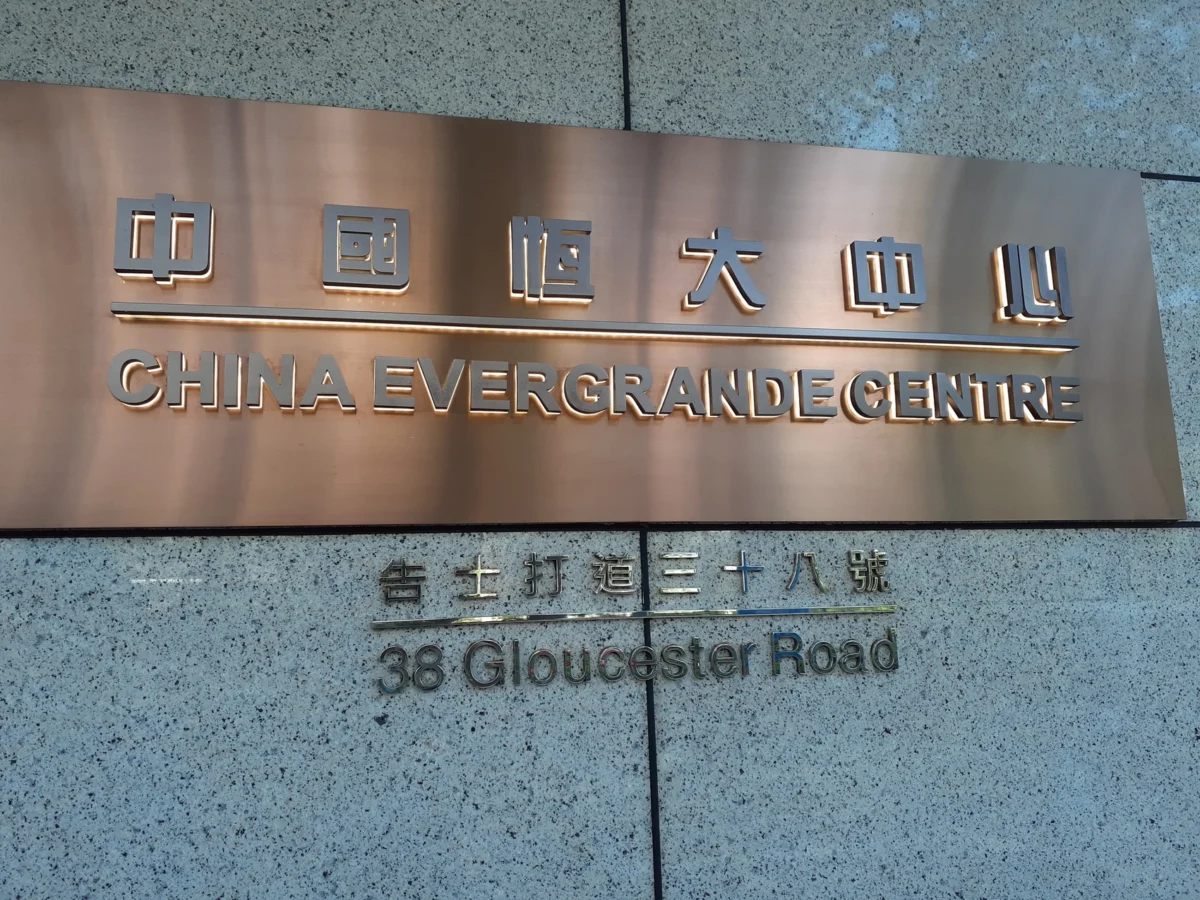
In a landmark decision that underscores Beijing’s resolute stance on corporate accountability and financial stability, China’s judicial system has delivered a life sentence to Xu Jiayin, the charismatic founder of the beleaguered property giant Evergrande Group. The Shenzhen Intermediate People’s Court in Guangdong province announced on Thursday that Xu was found guilty of multiple crimes, including "large-scale financial fraud," embezzlement, and bribery. Concurrent with Xu’s severe punishment, Evergrande Group and its real estate arm were collectively fined a staggering 15.82 billion yuan (approximately US$2.4 billion), five years after the company’s high-profile default sent shockwaves through global financial markets and amplified concerns about China’s economic health. The court’s verdict further stipulated the permanent revocation of Xu’s political rights and the confiscation of all his personal property, marking a dramatic and definitive end to the career of a man once among China’s wealthiest billionaires.
The Verdict and Its Immediate Ramifications

The judicial pronouncement from the Shenzhen court detailed that between 2016 and 2021, Xu Jiayin, acting as the principal figure, and Evergrande Group, systematically "violated national laws by engaging in continuous, large-scale financial fraud and other means to inflate assets and conceal liabilities." The court’s statement, disseminated via its official WeChat account, also accused the parties of "gained control of financial institutions" through illicit means, including bribery, though specific institutions were not named in the public communication. Xu had reportedly pleaded guilty to the charges, which also included embezzlement, in April of the preceding year, setting the stage for Thursday’s definitive sentencing.
Beyond the founder, the crackdown extended to other high-ranking executives within the Evergrande conglomerate. Five additional senior executives received prison terms ranging from six to 18 years for various fraud-related offenses. In total, 56 individuals associated with Evergrande were handed jail sentences, with the shortest term being one year and ten months, as reported by China’s state news agency Xinhua. The court further mandated that all remaining shortfalls resulting from the illegal gains be returned, signaling a comprehensive effort to reclaim illicit wealth and rectify financial irregularities.
The Spectacular Fall of a Property Titan

The life sentence for the 67-year-old Xu Jiayin signifies a spectacular and public fall from grace. Xu, also known by his Cantonese name Hui Ka Yan, founded Evergrande in 1996 and rapidly transformed it into one of China’s largest real estate developers. He embodied the aspirational spirit of China’s economic boom, becoming a symbol of the nation’s rapid urbanization and wealth creation. At his peak, Xu was counted among China’s richest individuals and held a prominent position as a member of the Chinese People’s Political Consultative Conference (CPPCC), the country’s top political advisory body.
The stark contrast between Xu’s past glory and his present predicament was vividly captured in a photomontage widely shared across Chinese social media platforms following the verdict. An older image depicted a beaming Xu, adorned with jet-black hair and a distinctive gold Hermes belt, attending a CPPCC meeting. This was juxtaposed with a grim, white-haired Xu, unsmiling and flanked by two police officers, facing a panel of judges in the court photo released on Thursday. This visual narrative powerfully conveyed the dramatic reversal of fortune for the once-powerful magnate, resonating deeply with a public that has closely followed Evergrande’s saga.
The court explicitly condemned the actions of Xu and Evergrande, stating they "seriously disrupted the socialist market economic order… and undermined the integrity of official conduct by state personnel." It further elaborated that "the circumstances were particularly egregious, causing particularly serious economic losses and causing particularly serious social harm." This strong language underscores the government’s perception of the gravity of the offenses and the extent of their negative impact on both the economy and public trust.

Evergrande’s Ascent and the Genesis of Its Downfall
Evergrande Group’s trajectory mirrored China’s decades-long property boom. The company, initially a small developer in Guangzhou, grew exponentially by embracing an aggressive growth strategy fueled by massive borrowing. It diversified into a vast conglomerate spanning electric vehicles, healthcare, theme parks, and even mineral water, all underpinned by its core real estate business. Evergrande became synonymous with home-ownership dreams for millions of Chinese citizens, constructing vast residential complexes across hundreds of cities. Its rapid expansion, however, concealed an escalating mountain of debt.
The turning point came in August 2020 when the Chinese government, concerned about systemic financial risks and soaring housing prices, introduced its "Three Red Lines" policy. This regulatory framework imposed strict limits on developers’ debt levels, specifically targeting:
- A liability-to-asset ratio (excluding pre-sales) of no more than 70%.
- A net gearing ratio of no more than 100%.
- Cash to short-term debt ratio of at least 1x.
These curbs on excessive borrowing and speculation dramatically curtailed Evergrande’s access to new credit, exposing its precarious financial structure. With liabilities estimated at over US$300 billion (more than 2 trillion yuan), the company found itself unable to service its debts, leading to its eventual default in December 2021. This event was not merely a corporate failure; it became a significant symbol of the broader distress gripping China’s property sector.
The Broader Property Crisis and Economic Implications
Evergrande’s collapse was a harbinger of a wider crisis that has engulfed China’s real estate market, a sector that historically contributed between 25% and 30% of the country’s GDP. The crisis stems from a combination of factors: overleveraging by developers, speculative buying, and a government-led deleveraging campaign. The "Three Red Lines" policy, while aimed at mitigating risk, inadvertently triggered a liquidity crunch for many highly indebted developers.

Since Evergrande’s default, other major developers, including Country Garden and Vanke, have also faced severe financial difficulties, some defaulting on their debts. The consequences have been far-reaching:
- Unfinished Projects: Millions of apartment units remain unfinished, leaving homebuyers in limbo and often struggling to pay mortgages on properties they cannot occupy. This has led to widespread public discontent and protests.
- Economic Slowdown: The downturn in the property sector has had a ripple effect across the economy, impacting related industries like construction, materials, and household consumption. New home prices in China have been contracting for three years, a stark indicator of the market’s prolonged slump.
- Local Government Finances: Local governments, heavily reliant on land sales for revenue, have seen their finances severely strained as land sales plummet.
- Investor Confidence: Both domestic and international investor confidence in China’s economy has been shaken by the ongoing crisis and the perceived lack of a clear, comprehensive solution.
Observers assessing the health of the world’s second-largest economy have been closely following these developments, recognizing that a stable property market is crucial for China’s overall economic recovery and social stability.
Chronology of Key Events in the Evergrande Saga:

- 1996: Xu Jiayin founds Evergrande Group in Guangzhou, embarking on an aggressive expansion strategy.
- 2009: Evergrande lists on the Hong Kong Stock Exchange, raising significant capital for further growth.
- 2016-2021: The period during which the court found Evergrande and Xu Jiayin engaged in "continuous, large-scale financial fraud," inflating assets and concealing liabilities.
- August 2020: Beijing introduces the "Three Red Lines" policy to curb excessive borrowing in the property sector, significantly restricting developers’ access to new financing.
- Late 2020/Early 2021: Evergrande’s liquidity issues become publicly apparent as it struggles to make payments to suppliers and creditors.
- September 2021: Evergrande misses key interest payments, triggering widespread alarm. Protests erupt among homebuyers and investors.
- December 2021: Evergrande officially defaults on its debt obligations, initiating a complex restructuring process.
- March 2022: Evergrande suspends trading of its shares in Hong Kong.
- September 2023: Xu Jiayin is reportedly placed under "residential surveillance," a form of detention.
- April (previous year, exact date not specified in source): Xu Jiayin pleads guilty to charges including fraud, embezzlement, and bribery.
- January 2024: A Hong Kong court orders Evergrande’s liquidation, a significant step in its restructuring.
- February 2024: China’s securities regulator fines Evergrande and bans Xu Jiayin from the securities market.
- Thursday (current report): Shenzhen Intermediate People’s Court sentences Xu Jiayin to life imprisonment and fines Evergrande US$2.4 billion.
Implications for China’s Governance and Economic Future
The severe sentencing of Xu Jiayin and the substantial fine against Evergrande send an unequivocal message from Beijing: corporate leaders will be held personally accountable for financial misconduct, especially when it jeopardizes national financial stability and social order. This move aligns with the government’s broader campaign to rein in powerful private enterprises, promote common prosperity, and deleverage systemic risks within the economy.
The verdict demonstrates the Communist Party’s commitment to maintaining control over the economy and reinforcing the rule of law, even for individuals who were once prominent figures within the Party-state system. The confiscation of Xu’s personal property and the revocation of political rights signify a comprehensive dismantling of his power and influence.

For the property sector, the ruling could introduce a new layer of caution among developers, compelling them to adhere more strictly to regulatory guidelines and prioritize financial prudence over aggressive expansion. While the immediate market reaction might be one of continued uncertainty, the long-term goal for Beijing is to foster a more stable, transparent, and less speculative real estate market. This high-profile prosecution serves as a powerful deterrent against future financial malfeasance and underscores the government’s determination to address the deep-seated issues plaguing its crucial property sector. It also signals to international investors that China is serious about enforcing its financial regulations, even if the methods are often perceived as opaque by Western standards. The ultimate success of these measures will be judged by their ability to stabilize the property market, restore consumer confidence, and ensure a sustainable path for China’s economic development.

 Sagoh
Sagoh
 Asro
Asro