Siti Muinah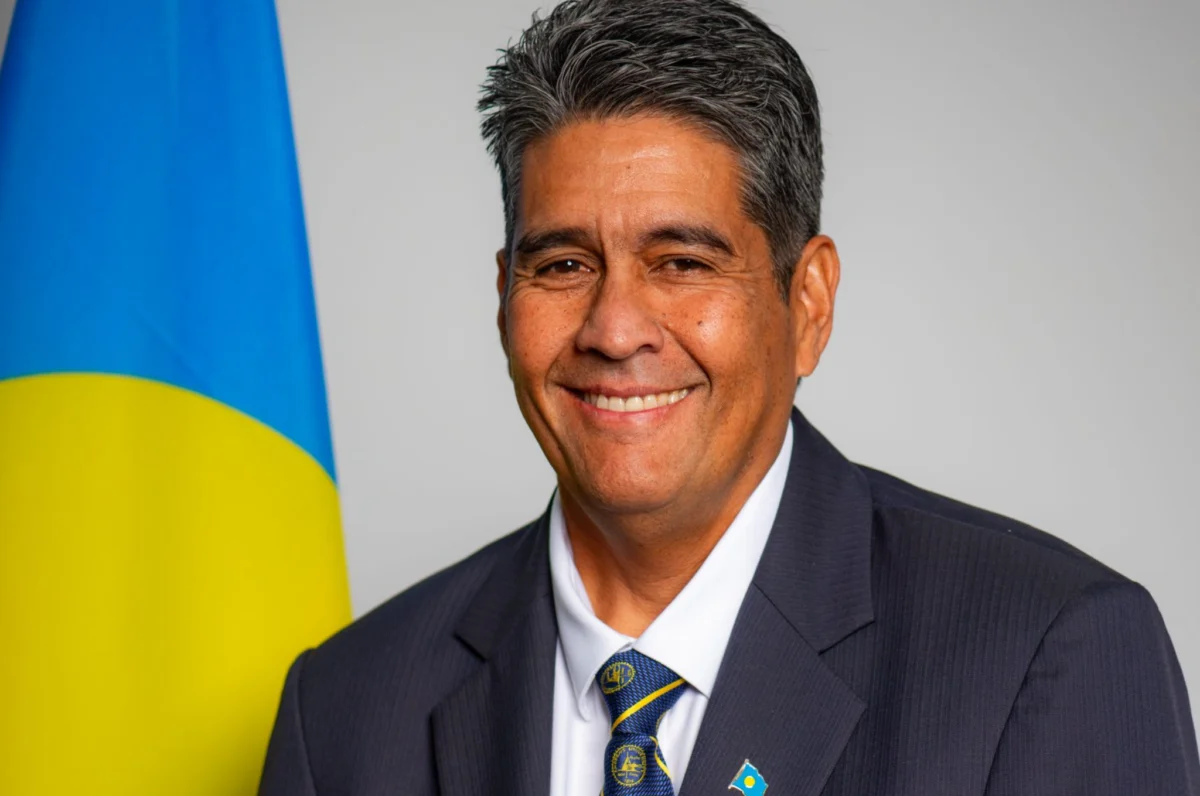
Palau’s President Surangel Whipps Jr. issued a fervent plea on Thursday for a "unified" Pacific response to China’s test-firing of an intercontinental ballistic missile (ICBM) in July, as the final day of a critical regional summit was overshadowed by persistent allegations of Beijing’s meddling. The call came during the 18-member Pacific Islands Forum (PIF) meeting in Koror, Palau, a gathering increasingly defined by the escalating geopolitical competition in the strategically vital Pacific region.
A Direct Challenge to Regional Sovereignty
President Whipps articulated a clear demand for Beijing to "respect sovereignty, to respect transparency, and to be a responsible partner," emphasizing that a cohesive stance from Pacific nations was paramount. The July missile test, which China conducted with only limited, short-notice warnings to a handful of nations, was seen by many as a provocative display of military might and a significant oversight of regional sensitivities. Whipps underscored the gravity of the incident, stating to journalists, "That’s definitely something that we’ll be discussing today, and a unified Pacific voice is critical in getting Beijing to respect sovereignty, to respect transparency, and to be a responsible partner." He added, "I think that’s the message that we should be sending to Beijing. So it’s important we have a unified position and we’ll work on that."

Monitors tracking the launch indicated that the missile likely landed in a remote patch of the Pacific Ocean, somewhere in the vicinity of the Solomon Islands, Nauru, and Tuvalu. The lack of prior, comprehensive notification for such a potent weapons test within a region deeply reliant on maritime safety and environmental preservation drew sharp condemnation from several Pacific leaders. Whipps explicitly characterized Beijing’s actions as having "threatened and really disrespected" the region, primarily due to the failure to adequately inform affected nations. "They never bothered to tell us that that’s what’s happening," he remarked, highlighting the perceived disregard for regional norms and communication protocols.
Beijing’s Defense and the Information Gap
In response to the international outcry, Beijing defended its actions, characterizing the launch as "a routine arrangement of China’s annual military training" and asserting that "relevant countries were informed in advance." However, this statement directly contradicts the accounts of several Pacific leaders, including President Whipps, who maintained that the notifications were insufficient, poorly disseminated, or entirely absent for many nations within the missile’s potential impact zone. The discrepancy in these accounts further fueled distrust and exacerbated concerns about China’s transparency and its broader intentions in the Pacific.
The Pacific Islands Forum: A Geopolitical Battleground

The Pacific Islands Forum, a key regional body promoting cooperation and addressing shared challenges, was poised to culminate in a leaders’ retreat on Thursday. During this critical session, officials were expected to hammer out the wording for a joint communique that would reflect the collective stance of the 18-member bloc on pressing issues, including the missile test and the broader geopolitical pressures facing the region. The forum’s ability to achieve a truly unified and strong statement, particularly regarding China, was under intense scrutiny, given the diverse economic dependencies and diplomatic alignments among its members.
This year’s summit in Palau was particularly resonant due to its host nation’s strong diplomatic ties with Taiwan, a self-governing democracy that Beijing claims as its own territory. Palau notably extended an invitation to Taiwan’s Foreign Minister, Lin Chia-lung, to attend sideline events as an aid partner. This move was a clear signal of Palau’s unwavering commitment to its diplomatic ally, a stance that inevitably drew Beijing’s ire. China’s Pacific envoy, Qian Bo, publicly issued a stern warning of "consequences" following Minister Lin Chia-lung’s participation in the opening ceremony, an overt diplomatic threat that further underscored the high-stakes nature of the forum.
Absent Leaders and Allegations of External Interference
The diplomatic tensions were further exacerbated by a noticeable pattern of absences among key leaders at the summit. A growing number of heads of state opted to send lower-ranked ministers in their place, raising eyebrows and prompting speculation about the underlying reasons. New Zealand’s Foreign Minister, Winston Peters, openly suggested that foreign interference behind the scenes might have played a significant role in these absences. "Well, you’d be defying gravity and logic if you said it wasn’t a big problem," Peters commented, alluding to external pressures that could influence sovereign attendance decisions.

Among the prominent no-shows was Kiribati’s pro-Beijing president, further highlighting the deep ideological and diplomatic fissures within the PIF. Adding to the complexities, Solomon Islands Prime Minister Matthew Wale unexpectedly departed Palau on Sunday, cutting short his attendance to address a rapidly unfolding political crisis at home. A no-confidence motion had been lodged against his leadership, a development with significant geopolitical implications.
The Solomon Islands had previously emerged as China’s closest partner in the Pacific, particularly after signing a controversial secret security pact with Beijing. However, Wale’s recent election marked a potential pivot, as he had vowed to review the security agreement and actively work to repair ties with traditional partners like the United States and Australia. His sudden departure amid a domestic political challenge, therefore, was not merely an internal affair but a development closely watched by regional and international powers vying for influence.
The Broader Geopolitical Landscape: A Region in Flux
The events unfolding at the PIF in Palau are a microcosm of the broader geopolitical shifts and intensifying strategic competition playing out across the Pacific Islands. The region, comprising small island developing states (SIDS) that are particularly vulnerable to climate change and economic shocks, has become a critical arena for influence between established Western powers (the United States, Australia, New Zealand) and an increasingly assertive China.

China’s expanding economic and security footprint in the Pacific has been a source of growing concern for countries like Australia and the U.S. Beijing’s engagement, often characterized by substantial infrastructure projects and aid packages under its Belt and Road Initiative (BRI), has been viewed by some as "debt trap diplomacy" and a means to gain strategic leverage. The establishment of military or dual-use facilities, as speculated with the Solomon Islands security pact, poses a direct challenge to the traditional security architecture of the region and raises fears of militarization.
For the United States and its allies, maintaining a free and open Indo-Pacific is a strategic imperative. This involves bolstering economic partnerships, increasing diplomatic presence, and enhancing security cooperation with Pacific island nations. The U.S. has recently reopened embassies and increased aid commitments, signaling a renewed focus on the region after years of perceived neglect. Similarly, Australia and New Zealand, as immediate neighbors, view the stability and sovereignty of the Pacific Islands as directly linked to their own national security.
Challenges to Pacific Unity: Navigating Diverse Interests
Achieving a "unified Pacific voice" at the PIF, as called for by President Whipps, is a formidable challenge. The 18 member states, though sharing geographical proximity and common vulnerabilities, possess diverse political systems, economic priorities, and foreign policy alignments. Some nations have long-standing ties with Western powers, while others have increasingly embraced China’s economic overtures, seeing it as an alternative development partner without the historical baggage of colonial powers.

The issue of Taiwan’s diplomatic recognition further complicates this dynamic. China actively seeks to isolate Taiwan internationally, exerting significant pressure on countries that maintain official ties with Taipei. Palau is one of a dwindling number of nations that still recognize Taiwan, a stance that puts it directly in Beijing’s crosshairs and tests the resilience of its sovereignty. The "consequences" threatened by China’s envoy are a stark reminder of the diplomatic and economic pressures faced by nations that defy Beijing’s "One China" policy.
The Road Ahead: Implications for Regional Sovereignty and Stability
The outcome of the Pacific Islands Forum and the content of its joint communique will be closely scrutinized as an indicator of the region’s ability to navigate these complex geopolitical currents. A strong, unified statement condemning the missile test and asserting the importance of regional sovereignty and transparency could send a powerful message to external powers. Conversely, a diluted or non-committal response would highlight the internal divisions and the effectiveness of external pressures in fragmenting regional solidarity.
The events in Palau underscore a pivotal moment for the Pacific Islands. As the geopolitical competition intensifies, these small island nations are increasingly finding themselves on the front lines, grappling with the dual challenges of climate change and great power rivalry. Their ability to collectively assert their agency, safeguard their sovereignty, and determine their own future will depend heavily on their capacity to forge and maintain a unified voice in the face of ever-growing external influences. The call by President Whipps is not just about a missile test; it is about the fundamental right of Pacific nations to be respected as sovereign entities and to shape their own destiny in a rapidly changing world.

 Sagoh
Sagoh
 Asro
Asro