Iffa Jayyana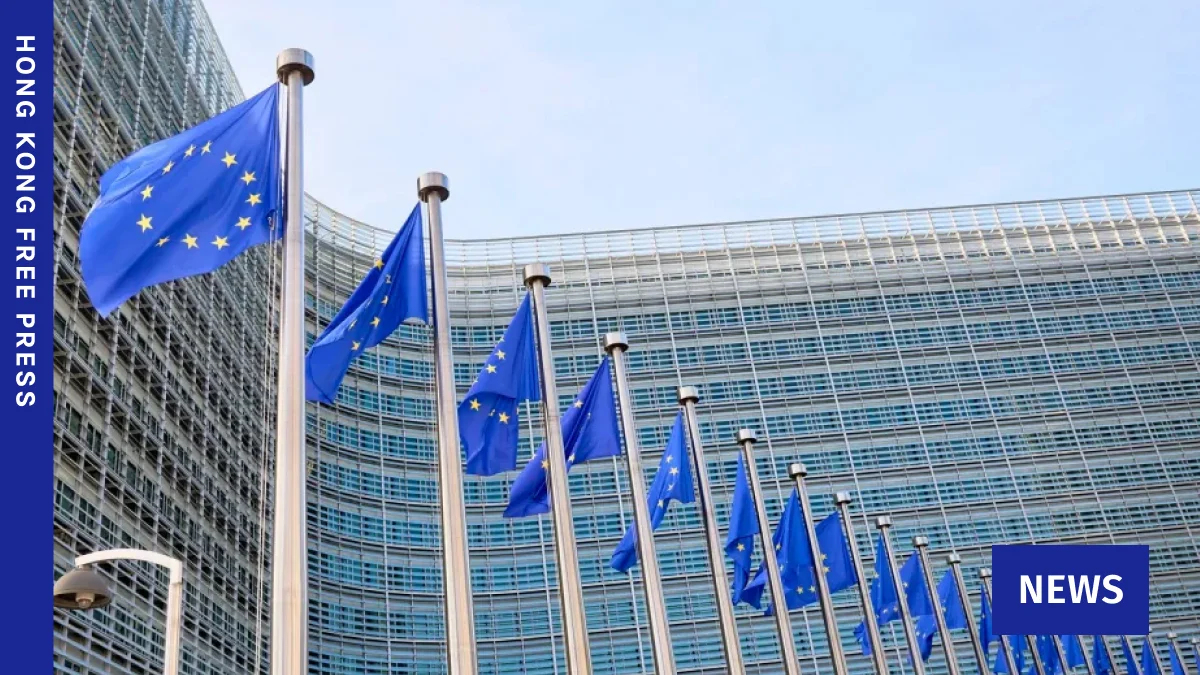
China on Tuesday issued a strong warning to France and Germany, urging them to abandon "protectionist" trade measures, following a joint appeal by the two European powerhouses for the European Union to develop a robust legal framework to prepare for potential trade conflicts. The diplomatic exchange underscores escalating tensions over trade imbalances and perceived unfair practices between the EU and the world’s second-largest economy.
The admonition from Beijing came swiftly after French President Emmanuel Macron and German Chancellor Friedrich Merz dispatched a letter to European Commission President Ursula von der Leyen. In their correspondence, the leaders stressed the urgent need for a "credible instrument" that would enable swift and decisive action against unfair trade practices. Crucially, their proposal included the capability to restrict access to the lucrative European single market "if needed," a significant escalation in the EU’s potential trade defense toolkit. While the letter carefully avoided explicitly naming China, the timing and context left little doubt about the primary focus of their concerns, particularly with EU trade commissioner Maros Sefcovic slated to visit Beijing shortly to address mounting trade frictions.

Deepening Trade Frictions and the Franco-German Impetus
The joint initiative by France and Germany reflects a growing sentiment within the European Union that its existing trade defense mechanisms are insufficient to counter aggressive state-backed industrial policies and market distortions, particularly those originating from China. For years, European businesses have voiced concerns over issues ranging from intellectual property theft and forced technology transfers to opaque state subsidies and non-tariff barriers that disadvantage foreign companies in the Chinese market. This has contributed to a widening trade deficit that Brussels increasingly views as unsustainable and detrimental to key European industries.
In their letter, seen by AFP on Monday, Macron and Merz underscored that the proposed new instrument should allow the European Commission to respond to trade aggression within days. A key aspect of their proposal is a streamlined approval process: such actions would not require unanimous consent from all 27 EU member states, though a weighted majority of states would retain the power to block a measure. This suggests a desire to overcome potential internal divisions that have sometimes hampered the EU’s ability to act decisively on trade matters. The current cumbersome decision-making process is often cited as a weakness, allowing offending parties to continue unfair practices while the EU deliberates.
The call for stronger measures is rooted in a broader shift in EU strategic thinking, moving towards "strategic autonomy" and "economic security." This involves reducing critical dependencies, safeguarding essential industries, and ensuring a level playing field in global trade. European officials have increasingly articulated a need to protect sectors like electric vehicles, renewable energy technology (solar panels, wind turbines), and advanced manufacturing from what they perceive as dumping or unfair competition fueled by massive state subsidies in competitor nations. The European Commission has, for instance, launched investigations into Chinese electric vehicle subsidies, signaling a readiness to impose tariffs if unfair advantages are confirmed.

China’s Vehement Rejection of "Protectionism"
China’s commerce ministry, in a sharply worded statement released on Tuesday, explicitly urged France and Germany to "refrain from encouraging the EU to resort to protectionist tools at every turn." The ministry emphasized that resorting to such measures would be "the wrong path in the wrong way, only to ultimately suffer the consequences themselves." This language is a thinly veiled warning of potential retaliatory measures, hinting at a tit-for-tat escalation if the EU proceeds with its proposed trade defenses.
Beijing’s foreign ministry echoed these sentiments, with spokesman Guo Jiakun stating that the economic and trade relationship between China and the EU is "mutually beneficial." He called upon the EU to "work with China in the same direction, address each other’s concerns through dialogue and consultation, and jointly maintain the stability and smooth operation of global industrial and supply chains." This reflects China’s consistent messaging that it prefers dialogue over confrontation and seeks to frame any EU actions as undermining global free trade principles, despite its own extensive use of state intervention in its economy.
The Chinese government views any attempt to restrict market access or impose tariffs as a form of protectionism, regardless of the underlying rationale presented by European nations. This stance is consistent with China’s broader diplomatic strategy of presenting itself as a champion of free trade and multilateralism, even as its own trade practices face scrutiny from numerous international partners. The reference to "suffering the consequences" is a direct reminder of the significant economic leverage China holds, particularly over certain European industries and companies heavily reliant on the Chinese market or supply chains.

The EU-China Trade Landscape: A Chronology of Growing Imbalance
The current tensions are not isolated but rather the latest chapter in a long-standing and increasingly complex trade relationship between the EU and China.
- Early 2000s: Rapid expansion of trade, with Europe benefiting from access to China’s growing market and inexpensive goods.
- Mid-2000s: Initial EU concerns over intellectual property rights and market access restrictions begin to surface. Anti-dumping duties on specific Chinese products like shoes and textiles are imposed.
- 2012-2013: A major trade dispute erupts over Chinese solar panels, with the EU imposing duties after finding evidence of dumping. This was a significant case highlighting the challenges of competing with state-subsidized Chinese industries.
- Late 2010s: The trade deficit begins to widen significantly, and concerns about Chinese industrial subsidies affecting sectors like steel and aluminum intensify. The EU starts to emphasize "reciprocity" in market access.
- 2020-2021: The COVID-19 pandemic exposes vulnerabilities in global supply chains, leading to a renewed focus in Europe on reducing dependencies and enhancing "economic security." The EU signs the Comprehensive Agreement on Investment (CAI) with China, but its ratification is later frozen due to unrelated sanctions.
- 2022-Present: The EU’s trade deficit with China reaches record levels. Concerns grow over Chinese electric vehicle exports, medical devices, and other high-tech sectors, prompting investigations and calls for stronger defensive tools, culminating in the recent Franco-German letter.
The EU’s trade deficit with China hit an all-time high of approximately €396 billion in 2022, underscoring the severity of the imbalance. While trade figures can fluctuate, this persistent and substantial deficit is a key driver behind the EU’s more assertive stance. European policymakers argue that this deficit is not merely a result of competitive advantages but is exacerbated by unfair trade practices, including massive state subsidies that allow Chinese companies to undercut global competitors. Sectors like electric vehicles, where China has rapidly become a dominant player, are particularly scrutinized, with the EU launching an anti-subsidy investigation in September 2023. This investigation aims to determine if Chinese EV manufacturers benefit from unfair government support, potentially leading to the imposition of additional tariffs.
Maros Sefcovic’s Diplomatic Mission and Broader Implications
The impending visit of EU trade commissioner Maros Sefcovic to Beijing takes on heightened significance in light of these developments. His mission is expected to involve robust discussions aimed at de-escalating tensions and addressing the core issues driving the EU’s concerns. Sefcovic will likely press China on market access for European companies, intellectual property protection, and transparency regarding state subsidies. The success of these talks will largely determine whether the EU proceeds with more aggressive trade defense measures or if a diplomatic pathway can be found.

The Franco-German proposal and China’s response highlight a critical juncture in global trade relations. For the EU, the challenge lies in balancing its desire for open markets and free trade with the imperative to protect its domestic industries and ensure fair competition. The bloc’s internal cohesion will also be tested, as member states have varying economic interests and levels of reliance on trade with China. While France and Germany, as major industrial powers, are keen on stronger protections, some other member states might be more hesitant to provoke a trade war due to their own economic exposure.
For China, the situation presents a dilemma. While it champions multilateralism and free trade, its domestic industrial policies are often seen as incompatible with these principles by its trading partners. A confrontational stance from the EU could further complicate China’s economic outlook, already facing internal challenges and external pressures. The "wrong path" warning, while assertive, also suggests an awareness of the potential self-inflicted harm that a full-blown trade war could entail for all parties.
The implications extend beyond just bilateral relations. A significant escalation in EU-China trade disputes could further fragment the global trading system, potentially leading to a wave of protectionist measures worldwide. This would undermine the rules-based international order and could have severe consequences for global economic growth and stability. The outcome of this diplomatic standoff will be closely watched by other major economies, including the United States, which has also grappled with similar trade challenges with China. The world is observing whether dialogue can prevail, or if the EU and China are headed towards an era of increased trade friction and strategic economic competition.

 Jia Lissa
 Nana Wu