Nana Wu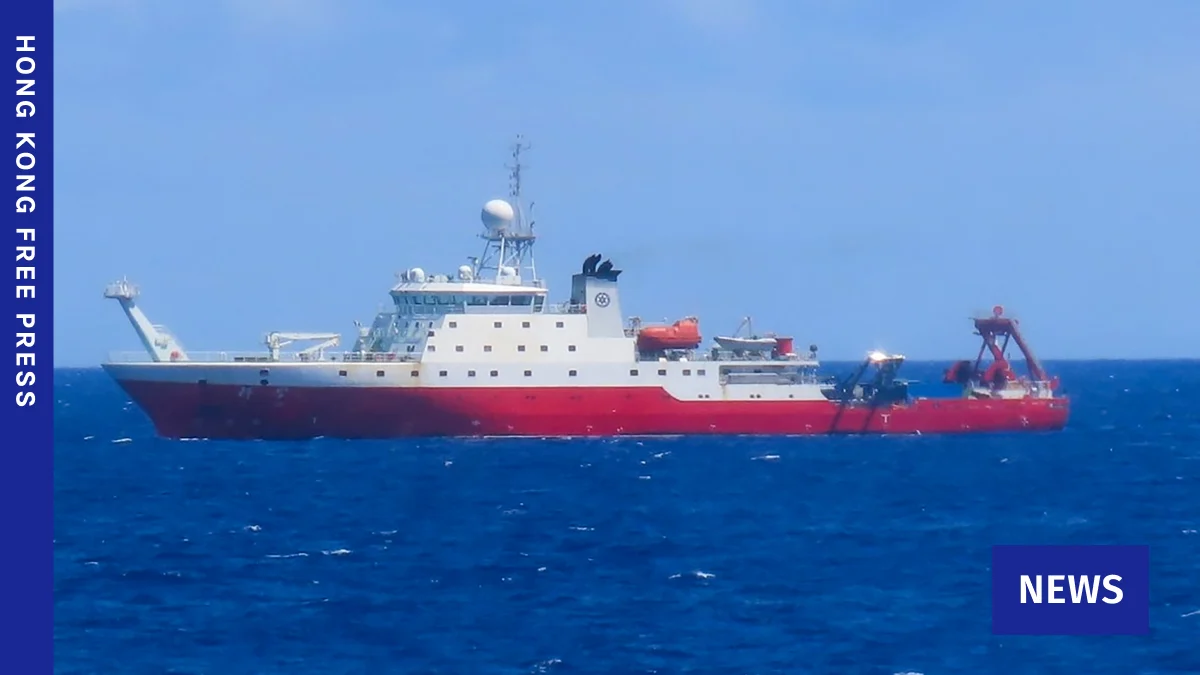
Tokyo, Japan – The Japanese Coast Guard announced on Tuesday, October 7, 2026, that a Chinese survey ship, identified as the Kexue, had departed Japan’s Exclusive Economic Zone (EEZ) after persistent demands to cease its unauthorized research operations. This incident marks a significant development in the ongoing maritime disputes between the two Asian powers and underscores a troubling increase in unapproved Chinese surveys within Japanese waters. The vessel’s presence, first detected on September 27, 2026, and its subsequent departure on Friday, October 5, 2026, highlights a growing pattern of assertive behavior by Beijing in strategically vital sea lanes, prompting renewed calls for vigilance and diplomatic resolution.
The Unauthorized Incursion and Japanese Response
The Chinese marine research vessel Kexue was initially observed by the Japan Coast Guard (JCG) operating approximately 70 kilometers (45 miles) north of Ishigaki Island, a key outpost in Japan’s southernmost prefecture of Okinawa. According to JCG spokesman Masashi Asano, the Kexue was engaged in activities indicative of scientific research, "intermittently extending wire-like objects into the sea from her side and stern." Such actions typically suggest hydrographic, geological, or oceanographic surveys, which often have dual-use applications for both scientific understanding and military intelligence, particularly concerning submarine operations and seabed mapping.

Upon identifying the vessel’s unauthorized activities within its EEZ, the JCG initiated a series of radio messages to the Kexue. These communications unequivocally demanded an immediate halt to the survey, emphasizing that "scientific research in our maritime zone without consent will not be tolerated." The JCG’s actions were in line with international maritime law, specifically the United Nations Convention on the Law of the Sea (UNCLOS), which grants coastal states sovereign rights over the exploration and exploitation of natural resources in their EEZs, and requires explicit consent for marine scientific research conducted by other states. Despite these repeated warnings, the Kexue continued its operations for several days before finally complying and leaving Japan’s EEZ on Friday, October 5.
Understanding the Exclusive Economic Zone (EEZ) and International Law
The Exclusive Economic Zone, as defined by UNCLOS, extends up to 200 nautical miles (approximately 370 kilometers) from a country’s baseline, encompassing an area beyond its territorial waters (which typically extend 12 nautical miles). Within this zone, the coastal state possesses sovereign rights for the purpose of exploring and exploiting, conserving, and managing natural resources, whether living or non-living, of the waters superjacent to the seabed and of the seabed and its subsoil. These rights also extend to other activities for the economic exploration and exploitation of the zone, such as the production of energy from the water, currents, and winds.
Crucially, UNCLOS Part XIII, particularly Article 246, explicitly addresses marine scientific research. It stipulates that coastal states have the right to regulate, authorize, and conduct marine scientific research in their EEZ and on their continental shelf. Other states wishing to conduct such research must obtain the express consent of the coastal state. The rationale behind this provision is to protect the coastal state’s economic interests and to prevent potential misuse of scientific data for purposes detrimental to its security or resource management. China is a signatory to UNCLOS, making its actions a direct challenge to the international legal framework it has pledged to uphold.

Ishigaki Island, near where the Kexue was operating, is part of the Yaeyama Islands and is strategically located in the East China Sea, close to the disputed Senkaku/Diaoyu Islands and vital shipping lanes. Its proximity to both Taiwan and the main islands of Japan makes any unauthorized activity in its surrounding waters a matter of significant national security concern for Tokyo.
A Growing Pattern: Escalation of Unapproved Surveys
The incident with the Kexue is not an isolated event but rather part of a discernible and alarming trend. JCG spokesman Asano revealed that the frequency of unapproved surveys by Chinese ships in Japan’s EEZ has surged dramatically. This year alone, Japan has recorded 14 such cases, more than double the six incidents reported in the previous year. This figure starkly contrasts with the average of just one or two cases observed annually in the three years prior to 2025, indicating a rapid and deliberate escalation in Chinese maritime activities within Japan’s asserted jurisdiction.
This increase is particularly concerning to Japanese authorities, who view it as a systematic challenge to their maritime sovereignty and a potential prelude to more significant incursions. Such repeated breaches not only test Japan’s response capabilities but also contribute to a climate of instability in a region already fraught with geopolitical complexities.

Geopolitical Context: The Japan-Philippines Alignment
The timing of this surge in unauthorized Chinese surveys is not coincidental. According to Asano, the increased frequency has been observed "since around the time Japan and the Philippines announced they would start maritime border negotiations." On May 28, 2026, Japanese Prime Minister Sanae Takaichi and Philippine President Ferdinand Marcos held a summit where they formally agreed to commence negotiations aimed at "delimit[ing] the maritime boundary of the exclusive economic zone and the continental shelf between the two countries… in order to enhance legal certainty in the region."
This bilateral agreement is a significant strategic move, seen by many analysts as a direct response to China’s expansive and often aggressive maritime claims, particularly in the South China Sea. By strengthening their cooperation on maritime delimitation, Japan and the Philippines are seeking to bolster their respective claims and reinforce a rules-based international order against unilateral assertions. Beijing likely perceives this burgeoning alliance as a challenge to its regional dominance and a concerted effort to encircle its maritime ambitions. The increased survey activity could therefore be interpreted as a form of signaling or pushback against this emerging alignment.
Broader Maritime Tensions in the Indo-Pacific

The Kexue incident must be viewed within the wider context of persistent and escalating maritime tensions across the Indo-Pacific region, where China’s territorial ambitions routinely clash with those of its neighbors.
The Contested Senkaku/Diaoyu Islands: A perennial flashpoint in the East China Sea is the dispute over the Tokyo-controlled Senkaku Islands, which Beijing claims and calls the Diaoyu. Coast guard vessels from both Japan and China routinely engage in tense standoffs around these uninhabited islets. These encounters, often involving Chinese vessels entering Japan’s contiguous zone or even territorial waters around the Senkakus, serve as a constant reminder of the unresolved territorial disputes and the potential for miscalculation or escalation. Japan maintains that the islands are an inherent part of its territory, historically and under international law, while China asserts historical claims dating back centuries.
South China Sea Dynamics: Further south, Beijing claims most of the South China Sea, a critical global trade route through which trillions of dollars in commerce pass annually. China’s assertion, often delineated by its controversial "Nine-Dash Line," lacks legal basis, as affirmed by an international arbitration ruling in 2016 from The Hague. Despite this ruling, China has continued to construct artificial islands, militarize features, and deploy its coast guard and maritime militia to enforce its claims. This has led to repeated clashes, most notably between China’s coast guard and that of the Philippines, sparking fears of armed conflict and drawing condemnation from numerous international actors. The Japan-Philippines maritime boundary talks are a direct effort to counter this assertiveness and reinforce legal clarity in the face of China’s expansive claims.
Japan’s Diplomatic Stance Amidst Challenges

Japanese Prime Minister Sanae Takaichi has navigated a complex diplomatic landscape, attempting to balance economic ties with China while robustly defending Japan’s sovereignty and regional security interests. In a policy address delivered on Monday, October 6, 2026, just days after the Kexue departed, Takaichi referred to China as an "important neighbour" and pledged to build a stable relationship between the rival nations. This rhetoric reflects Japan’s desire to manage the relationship and avoid outright confrontation, acknowledging the deep economic interdependence between the two countries.
However, this diplomatic overture comes against a backdrop of significant friction. Diplomatic relations between the Asian economic giants have been at a low point since Takaichi suggested in November of the previous year that Tokyo might intervene in any attack on Taiwan. Beijing views Taiwan as an integral part of its territory, to be reunified with the mainland by force if necessary, and considers any foreign intervention a grave violation of its sovereignty. Takaichi’s comments, therefore, were a clear signal of Japan’s deepening security concerns regarding the Taiwan Strait and its alignment with the United States and other allies in potentially defending democratic Taiwan. This firm stance on Taiwan, coupled with proactive measures like the maritime boundary negotiations with the Philippines, indicates a dual-track approach by Japan: seeking stability while preparing for contingencies and bolstering regional security architecture.
Analysis of Motivations and Implications
The Kexue incident, along with the broader pattern of increased Chinese maritime activity, can be attributed to several overlapping motivations on Beijing’s part:

- Resource Exploration: The waters of the East China Sea and around Japan’s southern islands are believed to hold significant deposits of oil, natural gas, and rare earth minerals. Unauthorized surveys could be aimed at mapping these resources for future exploitation, circumventing international law and Japan’s sovereign rights.
- Military Intelligence Gathering: Hydrographic and oceanographic data, such as seabed topography, water temperature, and salinity, are crucial for submarine operations and anti-submarine warfare. Such data can provide a significant tactical advantage in a potential conflict scenario, allowing submarines to operate more effectively or evade detection.
- Assertion of Maritime Claims: By repeatedly conducting surveys and dispatching vessels into disputed or contested waters, China aims to normalize its presence and implicitly strengthen its claims, gradually eroding the perceived legitimacy of other nations’ EEZs and territorial assertions. This "salami-slicing" tactic avoids direct military conflict while steadily advancing strategic objectives.
- Testing Resolve and Response: These incursions also serve to test the resolve and response capabilities of the Japan Coast Guard and, by extension, the Japanese government. Consistent unauthorized activity forces Japan to expend resources on monitoring and interdiction, potentially revealing operational patterns and vulnerabilities.
- Response to Regional Alliances: The timing of the surge in surveys following the Japan-Philippines announcement strongly suggests that Beijing is reacting to what it perceives as an attempt to form a united front against its maritime ambitions. Such actions could be a form of coercive diplomacy, aimed at deterring further cooperation among regional states.
The implications of these developments are far-reaching. They contribute to an overall increase in regional instability, elevate the risk of accidental encounters escalating into broader conflicts, and place immense strain on diplomatic relations. For Japan, it necessitates continued investment in maritime surveillance and defense capabilities, as well as intensified diplomatic efforts to uphold international law and strengthen partnerships with like-minded nations. The international community, meanwhile, faces the challenge of upholding the principles of UNCLOS and ensuring freedom of navigation and respect for sovereign rights in critical global waterways.
Looking Forward
As the Indo-Pacific region continues to grapple with complex maritime challenges, the departure of the Chinese survey ship Kexue serves as a potent reminder of the delicate balance between diplomacy and deterrence. Japan’s firm but measured response, coupled with its strategic engagement with regional partners like the Philippines, underscores a commitment to defending its national interests and upholding international law. However, with China’s increasing maritime assertiveness and a demonstrated willingness to test boundaries, continued vigilance, robust defense capabilities, and concerted diplomatic efforts will be essential to maintain peace and stability in these vital waters. The incident highlights that maritime security remains a top priority for Tokyo, as it navigates a future shaped by geopolitical competition and evolving power dynamics.


 Lina Hope