Raul Delapena Setiawan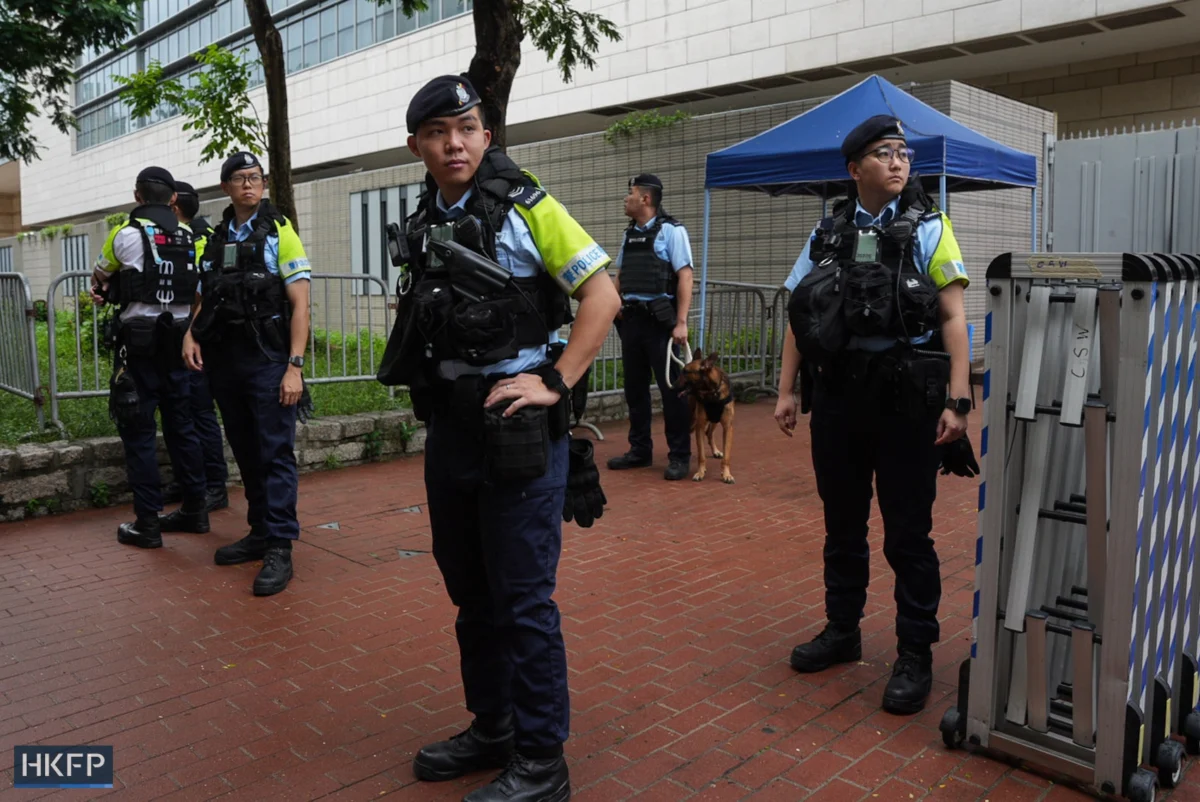
Hong Kong police arrested a woman on suspicion of sedition outside the West Kowloon Law Courts Building on Friday, a development that occurred just hours before leaders of a prominent Tiananmen vigil group were convicted under the national security law. The dual events underscore a continued intensification of security measures and legal actions targeting dissent in the semi-autonomous territory.

Arrest Amidst Heightened Security
The arrest, which took place early Friday morning, involved a 45-year-old woman detained on charges of acting with seditious intention, causing disorder in public places, and obstructing police. According to local media reports citing police, the woman was taken into custody for further investigation. She was reportedly among individuals queuing for public gallery seats to witness the verdict for Chow Hang-tung and Lee Cheuk-yan, former leaders of the Hong Kong Alliance in Support of Patriotic Democratic Movements of China. This organization was historically responsible for organizing Hong Kong’s annual Tiananmen Square Massacre vigils.
The timing of the sedition arrest, occurring as a significant legal judgment was anticipated for figures associated with the Tiananmen commemoration, suggests a broader strategy to preempt or suppress any public displays of dissent or solidarity. The presence of police cordons outside the West Kowloon Law Courts Building, as depicted in accompanying imagery, indicated a heightened security posture in anticipation of the day’s proceedings.

The Tiananmen Vigil Legacy and Legal Fallout
The convictions of Chow Hang-tung and Lee Cheuk-yan represent a significant milestone in the ongoing crackdown on civil society organizations and their leaders in Hong Kong. The Hong Kong Alliance, the group they formerly led, was itself put on trial. The charges against the activists and the organization revolved around allegations of inciting subversion, specifically through their calls for "ending one-party rule." Prosecutors contended that this slogan was tantamount to advocating for the overthrow of the Chinese Communist Party.
The Hong Kong Alliance announced its disbandment in September 2021, following intense pressure from authorities and the freezing of its assets. This disbandment marked the end of an era for a group that had been a potent symbol of public remembrance and political expression in Hong Kong for over three decades. The annual Tiananmen vigils, once a cornerstone of the city’s civic calendar, had drawn tens of thousands of participants, making them one of the largest public commemorations of the 1989 crackdown outside mainland China.

The Nature of Sedition Charges in Hong Kong
The charge of "acting with seditious intention" falls under Article 23 of Hong Kong’s domestic security legislation. This offense carries a maximum penalty of seven years imprisonment. The severity of the punishment can be escalated to ten years if the offense is found to have been committed with the involvement of foreign forces. The inclusion of charges related to disorder in public places and obstructing police in the recent arrest highlights the broad powers authorities possess to manage public gatherings and maintain order, particularly in sensitive political contexts.
Chronology of Events
- Early Friday Morning: A 45-year-old woman is arrested outside the West Kowloon Law Courts Building on suspicion of sedition, disorder in public places, and obstructing police. She was reportedly in the queue for public gallery seats.
- Hours Later on Friday: Verdicts are delivered in the national security law trial of Chow Hang-tung and Lee Cheuk-yan, former leaders of the Hong Kong Alliance. The organization itself was also on trial.
- Following Day (Saturday): The conviction of the Tiananmen vigil activists draws a mixed reaction, with approval from the Hong Kong government and expressions of concern from international human rights groups. The case for the Alliance is adjourned for mitigation statements.
Supporting Data and Context
The national security law, imposed by Beijing in June 2020, has fundamentally altered Hong Kong’s legal and political landscape. Since its inception, it has been used to prosecute a wide range of individuals and organizations deemed to be challenging Beijing’s authority. Data from various sources indicates a significant increase in politically motivated arrests and prosecutions following the law’s implementation. For instance, official figures released by the Security Bureau have shown hundreds of arrests made under the national security law since its enactment, with a substantial number of these leading to convictions.

The prosecution of the Hong Kong Alliance and its leaders can be viewed within the broader context of Beijing’s efforts to suppress dissent and reshape Hong Kong’s political identity. The "ending one-party rule" slogan, central to the prosecution’s case, directly challenges the fundamental political system of mainland China, which the Hong Kong government and Beijing consider a direct threat to national security.
Broader Impact and Implications
The arrest and subsequent convictions underscore a pattern of diminishing freedoms and political space in Hong Kong. The use of sedition laws, alongside the national security law, signals a comprehensive approach to controlling expression and assembly. For civil society groups and activists, these developments create a chilling effect, potentially discouraging participation in public discourse and activism for fear of reprisal.

Internationally, these events have drawn criticism from human rights organizations and a number of Western governments, who view them as evidence of Hong Kong’s eroding autonomy and freedoms promised under the "one country, two systems" framework. Conversely, the Hong Kong government has defended its actions as necessary to restore stability and uphold the rule of law. The conviction of the Tiananmen vigil leaders, for example, was met with approval by the government, which stated its commitment to safeguarding national security and preventing the exploitation of public platforms for seditious purposes.
The implications extend beyond individual cases. The continued application of stringent security laws and the prosecution of figures associated with historical commemorations suggest a deliberate effort to reframe the narrative surrounding events like the Tiananmen Square crackdown and to curtail any public memory or discourse that deviates from official interpretations. This trend has profound consequences for freedom of expression, assembly, and the rule of law in Hong Kong, raising questions about the city’s future as a vibrant and open society. The arrest of the woman queuing for the court session, a seemingly minor act, further illustrates the pervasive atmosphere of surveillance and preemptive action.

 Reynand Wu
 Nana Muazin