Iffa Jayyana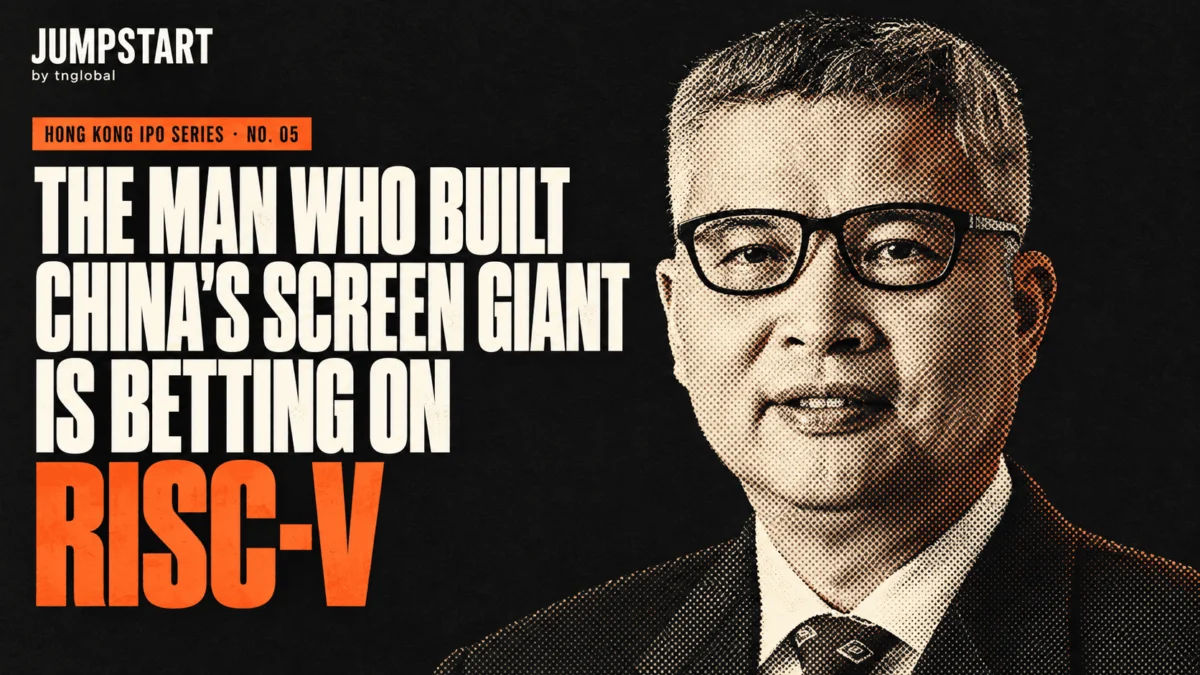
Wang Dongsheng, a name synonymous with China’s rise in display manufacturing, is embarking on a formidable second act with ESWIN Computing, a Beijing-based chip company at the forefront of the open-source RISC-V instruction-set architecture. This ambitious venture, now preparing for a Hong Kong listing, signals a strategic pivot by the 62-year-old industrialist towards a foundational layer of the global electronics industry, echoing the transformative journey he orchestrated with BOE Technology Group. The initial public offering (IPO) aims to raise between HK$1.48 and HK$1.59 per share, offering 1.57 billion H shares, with trading anticipated to commence on October 9 under stock code 1256, according to its prospectus. This move positions ESWIN Computing as a critical test of whether accumulated expertise in display technology can serve as a springboard for a broader, capital-intensive computing business in an increasingly competitive and geopolitically charged semiconductor landscape.
The Visionary Behind the Venture: Wang Dongsheng’s Enduring Legacy
Wang Dongsheng’s initial career stands as a testament to his foresight and industrial acumen. In 1993, he spearheaded the establishment of BOE, a company that would defy initial skepticism to become one of the world’s preeminent display manufacturers. BOE’s panels became ubiquitous, powering hundreds of millions of televisions, laptops, and smartphones globally, fundamentally altering the supply chain dynamics of the display industry and significantly reducing China’s reliance on foreign technology. Wang served as chairman and chief executive from BOE’s inception until 2016, remaining chairman until his term concluded in June 2019. His tenure was characterized by a relentless pursuit of scale, precision, and sustained investment in a sector notorious for its punishing capital expenditure cycles. A single new production line could demand billions of dollars, and rapid technological advancements meant factories often needed financing for the next generation before the previous one had fully amortized. BOE not only survived but thrived under this model, cementing Wang’s belief that a robust industrial platform, encompassing talent, intellectual property, manufacturing relationships, and a diverse customer base, ultimately matters more than any single product’s lifespan. This philosophy, honed over decades, now underpins the strategic direction of ESWIN Computing.
ESWIN Computing’s Genesis and Strategic Focus
Following his departure from BOE, Wang Dongsheng, rather than retiring, chose to confront a new industrial challenge. In 2019, he founded ESWIN Group, which subsequently spun off its semiconductor activities into specialized units, including 12-inch silicon wafers, board-level packaging and testing, display-driver packaging and testing, and crucially, chip products. ESWIN Computing emerged from this structure, formally established in Beijing in September 2019, taking over the chip-product business that had been operating under a predecessor since 2018.
Operating primarily as a fabless company, ESWIN Computing concentrates on the research and design of chips, chipsets, and circuit boards, alongside the development of requisite software. It strategically partners with third parties for fabrication, packaging, and testing, a model that minimizes upfront capital expenditure in manufacturing while maximizing investment in intellectual property and design capabilities. The company quickly established a central research institute dedicated to advancing RISC-V computing architecture, high-speed interfaces, and reusable IP modules. While Wang Dongsheng initially served as chairman, Mi Peng, who joined as CFO in 2019, now holds the dual role of chairman and chief executive. Wang remains an executive director, contributing his strategic insights as chairman of the strategy and investment committee. The leadership team also boasts significant industry veterans, such as Vice Chairman Wang Bo, who brings nearly 24 years of experience from Intel, including a tenure as a product director, underscoring ESWIN’s commitment to attracting top-tier talent in chip design, displays, connectivity, and computing.
The Promise of RISC-V: An Open Architecture Revolution
At the heart of ESWIN Computing’s long-term strategy is RISC-V, an open and royalty-free instruction-set architecture (ISA). Unlike proprietary ISAs such as x86 (dominated by Intel and AMD) or Arm (prevalent in mobile and embedded devices), RISC-V offers an unprecedented level of freedom for chip designers. Its core specifications are publicly available, allowing companies, universities, and individual developers to design custom processors without incurring licensing fees for the instruction set itself. This modular architecture enables designers to start with a compact base and integrate additional functionalities tailored to specific product requirements, from embedded devices and automotive systems to robotics and artificial intelligence applications.
The significance of RISC-V extends beyond cost savings. It empowers greater hardware customization, allowing developers to optimize processors for precise needs regarding performance, power consumption, cost, and real-time responsiveness, particularly in emerging "edge" computing scenarios. While the instruction set is open, companies like ESWIN can still protect their proprietary processor designs, specialized modules, and software, creating a competitive advantage within the open ecosystem. For China, the embrace of RISC-V holds strategic importance amidst escalating geopolitical tensions and the drive for greater technological self-sufficiency. It offers a pathway to reduce reliance on foreign-controlled intellectual property in a critical sector, fostering domestic innovation and supply chain resilience. Global market forecasts predict substantial growth for RISC-V adoption, particularly in IoT, automotive, and industrial applications, making it a pivotal area for investment and development.
ESWIN aims to bridge the gap between the open RISC-V standard and finished devices. It develops proprietary RISC-V cores and reusable IP, integrates them with other processing and connectivity functions, packages these elements into chips or boards, and provides the necessary software for specific applications. Its proprietary development environment, RISAA, is designed to facilitate the reuse of hardware and software modules across projects, theoretically reducing development time and spreading research costs. This strategy allows ESWIN to offer finished products, customize solutions for key customers, or license individual IP blocks, striving for a compounding advantage where each project enriches its technological library.
Navigating the Present: Display Chips as the Revenue Engine
Despite its forward-looking RISC-V positioning, ESWIN Computing’s current financial strength is firmly rooted in Wang Dongsheng’s prior industry: displays. The company’s largest revenue stream, human-machine interaction chips, are essential components in televisions, monitors, laptops, smartphones, and smartwatches. These include timing controllers, which manage image data flow; touch controllers, which translate user input; and power management or display driver support chips. While rarely visible to end-users, these components are indispensable for screen functionality. This sector provided ESWIN with a pre-existing pool of engineering challenges and crucial customer relationships. In 2025, ESWIN was recognized as China’s largest domestic provider of human-machine interaction chips for smart devices by revenue, according to market research cited in its prospectus.
In 2025, human-machine interaction products generated RMB1.86 billion, accounting for a significant 76.3% of ESWIN’s total revenue. Multimedia-processing chips, which encompass television system-on-chips (SoCs), monitor scalers, and Mini-LED/Micro-LED controllers, contributed an additional 6.2%. Cumulatively, screen-related products represented over four-fifths of the company’s business. These are not legacy products but the active revenue base that underpins ESWIN’s ambitious expansion into new computing domains. The company continues to innovate within this segment; for instance, in 2025, a leading monitor manufacturer began mass production of an ESWIN-supplied RISC-V multimedia controller, and its OLED display-driver chip was adopted by a major smartphone manufacturer. These developments demonstrate how RISC-V technology is being incrementally integrated into familiar devices, often within control functions that are invisible to the user but critical to performance.
Pivoting to the Future: Embodied Intelligence and Computing Expansion
ESWIN’s strategic growth areas are categorized into interconnectivity and computing, collectively grouped under the umbrella term "embodied intelligence." This refers to machines that interact with and respond to the physical world, encompassing applications in automotive, robotics, industrial automation, and advanced consumer electronics. Interconnectivity products focus on enabling data transmission and reception via Wi-Fi, Bluetooth, and cellular networks for vehicles, robots, and industrial equipment. Computing products span a broader range, from microcontrollers handling specific operations to advanced AI systems-on-chips capable of localized sensor data processing and decision-making.
The company began prioritizing edge and automotive products in 2021, delivering its first 32-bit RISC-V IP that year, followed by a 64-bit version in 2023. Its dedicated automotive development program commenced in 2022, leading to a significant milestone in 2025: a RISC-V microcontroller entering mass production with an automotive-parts supplier and a vehicle manufacturer. ESWIN has further expanded its computing offerings through boards and systems, now providing edge-computing chips, multi-purpose computing hardware, and video-transcoding cards. In 2026, it initiated development of a high-performance RISC-V AI system-on-chip for large-model inference, and another RISC-V AI chip found adoption with a consumer-storage manufacturer for personal storage products.
The financial data reflects this strategic shift. Computing products, which generated a mere RMB375,000 in 2023, saw a dramatic increase to RMB72.3 million in 2024 and RMB319.8 million in 2025, reaching 13.2% of total revenue. During the first quarter of 2026, computing revenue surged to RMB223 million, accounting for nearly half of the quarterly sales. While such quarterly fluctuations can be influenced by large system projects, this trend undeniably signals ESWIN’s growing traction beyond its display-chip origins and justifies its ambition to be viewed as a comprehensive computing solution provider. The transition is not a complete abandonment of its display heritage but rather an attempt to leverage its existing platform—processor cores, interfaces, software, and supply-chain relationships—across new categories demanding enhanced connectivity and local computing capabilities. The critical challenge lies in the technical and economic viability of this reuse, as the requirements for a monitor timing controller, an automotive microcontroller, and an AI inference chip are vastly different, demanding specialized engineering and customer support for each market.
Financial Landscape: Investment Ahead of Profitability
ESWIN Computing’s revenue has demonstrated consistent growth, rising from RMB1.75 billion in 2023 to RMB2.03 billion in 2024, and further to RMB2.43 billion in 2025. Over the same period, its gross margin improved from 15.4% to 18.6%. However, the company remains significantly loss-making, reflecting the intense investment phase characteristic of a platform-building chip enterprise. ESWIN reported losses of RMB1.84 billion in 2023, RMB1.55 billion in 2024, and RMB1.52 billion in 2025. A further loss of RMB374.9 million was recorded in the first quarter of 2026, with the company projecting continued losses in the foreseeable future.
A substantial portion of these losses can be attributed to aggressive research and development (R&D) expenditure. R&D expenses peaked at RMB1.44 billion in 2023, representing over 80% of that year’s revenue, and remained above RMB1 billion in 2025. These costs, combined with administrative and sales expenses, underscore the significant investment required to develop a broad portfolio of new products long before they achieve meaningful commercial scale. This situation draws parallels with BOE’s early years, where sustained, patient investment was crucial for eventual market dominance. However, the scaling dynamics differ: a display factory, once operational, can produce high volumes of standardized output, whereas a chip-platform company must continuously convince customers to integrate its technology, then provide ongoing software and engineering support across a multitude of applications.
ESWIN’s strategy hinges on the premise that platform reuse will gradually enhance its economic model. By developing and verifying processor cores, interfaces, and software modules that can be incorporated into multiple products, the company aims to reduce the development burden for subsequent projects. Increased shipment volumes are expected to spread tape-out, software, and support costs over a larger unit base, with customized projects also generating reusable modules for future customers. While adjusted net loss (excluding share-based payments and listing expenses) narrowed from RMB1.70 billion in 2023 to RMB1.16 billion in 2025, and gross profit increased annually, ESWIN is clearly operating with significant capital expenditure ahead of the scale required for profitability.
The Hong Kong Listing: Fueling Future Ambitions
The impending Hong Kong IPO is designed to extend ESWIN’s financial runway, providing critical capital for its continued platform development and market expansion. At the midpoint of its projected price range, the company anticipates net proceeds of approximately HK$2.27 billion. The allocation of these funds is highly strategic: 35% is earmarked for developing and updating chip products, 30% for enhancing the RISAA hardware-software platform, 15% for potential acquisitions, 10% for marketing and fostering the broader RISC-V ecosystem, and the remaining 10% for working capital. This allocation transparently signals to investors that the listing is fundamentally a call to finance further platform development before the existing platform has achieved profitability, a high-stakes proposition common in early-stage tech growth but made more compelling by Wang Dongsheng’s track record.
The prospectus also reveals a concentration of ESWIN’s revenue base, both by product and customer. In 2025, the five largest customers accounted for 89.5% of total revenue, with the single largest customer contributing 64.6%, although this figure was down from 82.1% in 2023. During the first quarter of 2026, this concentration eased further, with the largest customer’s share falling to 39.3% as computing revenue expanded. While such concentration is typical for young chip suppliers securing high-volume designs with major electronics manufacturers, offering rapid growth, it also grants significant influence to these key customers over pricing, inventory, and order timing. The prospectus describes this largest customer as a Shenzhen-listed provider of intelligent interface products and professional services, primarily purchasing human-machine interaction chips for televisions, monitors, and smartphones—a clear link to Wang Dongsheng’s BOE heritage and the display ecosystem. The long-term success of ESWIN’s platform strategy hinges on its ability to diversify its customer base beyond any single display ecosystem.
Inventory management also presents a related risk. Net inventory grew from RMB328.6 million at the end of 2023 to RMB780.1 million by March 2026, as the company ramped up for new product launches and anticipated demand. Previous generations of connectivity products have already necessitated substantial write-downs. In the fast-paced chip industry, insufficient inventory can lead to missed customer launches, while excessive inventory risks costly obsolescence.
Broader Implications: China’s Semiconductor Quest and Global RISC-V Adoption
Wang Dongsheng’s second major company, ESWIN Computing, represents a significant undertaking that could have far-reaching implications. His first venture, BOE, fundamentally reshaped the global geography of display manufacturing. ESWIN aims for something potentially broader: the creation of reusable computing technology embedded across diverse categories of machines. RISC-V provides a crucial opening, lowering the initial barrier to processor design and offering a compelling alternative to proprietary instruction sets. However, it does not alleviate the more formidable challenges: the immense effort required for software development, rigorous verification, complex manufacturing coordination, building customer trust, and the substantial capital needed to sustain a long-term product roadmap.
ESWIN has demonstrably assembled many of the requisite components: commercial products, key customers, proprietary processor cores, a rapidly expanding IP library, and the invaluable leadership of a founder who has successfully navigated one demanding industrial cycle. Its established display business provides a vital revenue stream and a direct entry point into high-volume devices, while its burgeoning computing products are gradually diversifying its revenue mix. Yet, the company’s profile still reflects a venture in the midst of proving its core thesis. Revenue remains heavily concentrated in screen-related chips, losses are substantial, and customer concentration, while improving, remains a notable factor. The markets for AI inference, robotics, and automotive computing are undeniably promising but are also highly competitive, populated by entrenched chipmakers and well-funded startups.
The Hong Kong listing, therefore, serves not as a resolution to these contradictions but as a means to provide ESWIN with the necessary time and capital to navigate them. This dynamic reveals perhaps the most profound connection between Wang Dongsheng’s two major industrial endeavors. BOE’s ascendancy was not the result of a singular technological breakthrough but rather a product of persistent investment, rigorous manufacturing discipline, and an unwavering commitment to an arduous industry until economies of scale could fundamentally alter its economics. ESWIN is now making a similar argument for its computing platforms. The crucial difference lies in the open architecture of RISC-V, which lowers the entry barrier for numerous companies. Ultimately, only a select few will succeed in building a sufficiently robust and compelling technological ecosystem around it to secure sustained customer loyalty and market leadership. ESWIN’s journey will be a bellwether for the broader RISC-V ecosystem and China’s strategic ambitions in the global semiconductor arena.


 Dwi Wanna
 Reynand Wu