Evan Lee Salim
Zhu Rongji, the visionary former Premier of China, passed away on Wednesday at the age of 97 in Beijing, leaving behind an indelible mark on the nation’s economic landscape through his staunch advocacy for free-market principles and the implementation of sweeping reforms during his five-year tenure at the helm. His death marks the end of an era defined by radical shifts that propelled China onto the global stage, transforming it from a centrally planned economy into an economic powerhouse, albeit with significant social repercussions.
A Life Forged in Tumult: Early Years and Political Persecution
Born in Changsha, the capital of Hunan province, in 1928, Zhu Rongji’s life began amidst the profound upheaval of a China ravaged by civil war and foreign invasion. His lineage was rumored to trace back to Zhu Yuanzhang, the formidable founding emperor of the Ming dynasty, a detail that, whether fact or folklore, hinted at a destiny of leadership. His formative years coincided with a period of intense ideological struggle and nation-building.

Zhu pursued higher education at Beijing’s prestigious Tsinghua University, a cradle for China’s intellectual elite, where he studied electrical engineering. In 1949, the pivotal year when Mao Zedong declared the establishment of the People’s Republic of China, Zhu joined the Communist Party, aligning himself with the nascent political order. His early career was characterized by a focus on economic planning and engineering, roles that would profoundly shape his later approach to national governance. He served as an economic planner and engineer at the State Planning Commission, gaining an intimate understanding of China’s industrial and economic machinery.
However, Zhu’s path within the Party was far from smooth. He endured two significant purges during the tumultuous initial decades of the People’s Republic, experiences that offered him a harsh education in the volatile nature of Chinese politics. His first downfall occurred during the "Hundred Flowers Campaign" of the mid-1950s. Initiated by Mao Zedong, this campaign ostensibly encouraged public criticism and intellectual discourse, encapsulated by the slogan "Let a hundred flowers bloom, let a hundred schools of thought contend." However, it quickly turned into an "Anti-Rightist Campaign" when the criticisms directed at the Party and Mao’s policies proved too extensive and scathing. Zhu Rongji, for his "irrational" economic policy critiques, was branded a "rightist" and subsequently purged from his positions. This period saw hundreds of thousands of intellectuals and officials persecuted, exiled, or imprisoned, a stark reminder of the dangers of dissent within the Party.
Though eventually pardoned, Zhu’s political rehabilitation was short-lived. He was purged once more during the even more chaotic and brutal Cultural Revolution (1966-1976). This decade-long socio-political movement, launched by Mao to reassert his authority and purge perceived ideological opponents, saw widespread destruction of cultural heritage, persecution of millions, and a virtual halt to economic and educational progress. Zhu, like countless others deemed "intellectuals" or "capitalist roaders," was sent into exile in rural China, a common fate for those targeted during this period. These experiences of political ostracism and forced labor undoubtedly instilled in him a pragmatic understanding of governance and a resilience that would serve him well in later life.
Rehabilitation and the Rise to Prominence

Following Mao Zedong’s death in 1976 and the subsequent end of the Cultural Revolution, the Communist Party embarked on a process of rehabilitating many of its purged cadres. Zhu Rongji was among them, gradually being brought back into the fold. He was assigned roles at the Ministry of Petroleum and the State Economic Commission, where his considerable talents and expertise in economic management quickly became apparent.
His abilities did not escape the notice of Deng Xiaoping, the paramount leader who initiated China’s "reform and opening-up" policies. Deng, known for his pragmatic approach encapsulated by the maxim "It doesn’t matter whether a cat is black or white, as long as it catches mice," recognized in Zhu a kindred spirit – a capable administrator unafraid of bold economic experimentation. This recognition proved to be a turning point in Zhu’s career.
In 1988, Zhu Rongji was appointed mayor of Shanghai, China’s bustling economic hub and a crucial testing ground for market reforms. During his tenure in Shanghai, he cultivated a reputation as an unwavering proponent of market-oriented policies. He famously declared in a speech that year that state-owned enterprises (SOEs), the backbone of China’s planned economy, must be "allowed to swim by themselves in the markets." This statement signaled his belief in competition and efficiency over state subsidies and protection, a philosophy that would later underpin his national reform agenda. His success in transforming Shanghai, attracting foreign investment, and spearheading the development of the Pudong New Area, a special economic zone, showcased his executive prowess and cemented his status as a reformist leader.
The "Soft Landing" and Radical Reforms as Premier

Zhu’s ascent continued in 1991 when he was appointed Vice Premier under then-Party General Secretary Jiang Zemin. His decisive actions and reformist zeal earned him the moniker "China’s Mikhail Gorbachev," drawing parallels to the Soviet leader who attempted to reform the USSR’s command economy. This comparison, while highlighting his reformist credentials, also implicitly hinted at the immense challenge he faced in navigating a complex political and economic transition.
One of his most significant achievements as Vice Premier was orchestrating China’s "soft landing" in the mid-1990s. Following Deng Xiaoping’s renewed push for opening up during his "Southern Tour" in 1992, China experienced an unprecedented period of runaway economic growth, accompanied by soaring inflation. Zhu was largely credited with implementing austerity measures and tightening monetary policy that successfully brought inflation under control without triggering a severe economic recession – a delicate balancing act that showcased his macroeconomic management skills. From 1993 to 1997, Zhu was responsible for tackling an overheated economy, reining in credit, and reforming the tax system to centralize revenue, laying the groundwork for greater fiscal stability.
However, it was his tenure as Premier from 1998 to 2003 that truly solidified his reputation as a no-compromise free marketeer and the chief architect of China’s modern economic structure. He inherited an economy grappling with the inefficiencies of decades of central planning, a bloated state sector, and nascent but growing social inequalities. Zhu embarked on a series of radical reforms designed to dismantle the remnants of the planned economy and integrate China more fully into the global capitalist system.
Dismantling the "Iron Rice Bowl": SOE and Housing Reforms
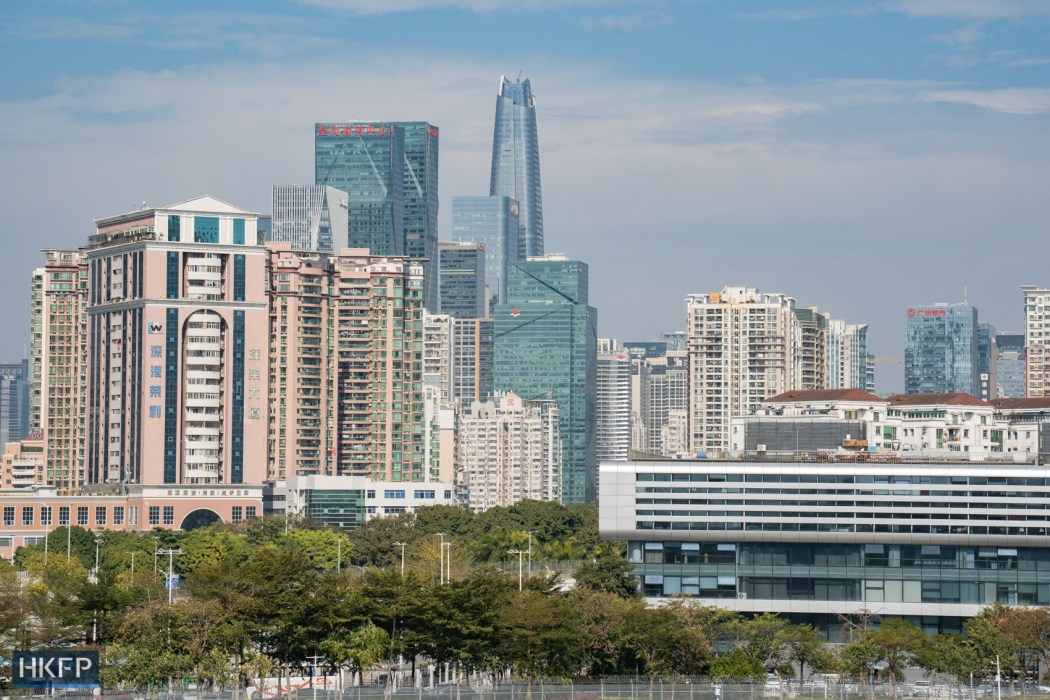
At the heart of Zhu’s reform agenda was a broad program to privatize or restructure hundreds of thousands of unprofitable state-owned enterprises. These SOEs had long been the guarantors of the so-called "iron rice bowl" – a system that provided lifelong employment, housing, healthcare, and pensions for millions of urban workers, regardless of productivity. While offering social stability, this system drained public finances and stifled innovation. Zhu’s reforms were ruthless in their efficiency, aiming to make these enterprises competitive or shut them down.
The scale of this transformation was immense. Over five years, these reforms resulted in the elimination of an estimated 30 million jobs, a staggering number that represented a significant portion of the urban workforce. Millions of workers, many of whom had spent their entire careers in state factories, were suddenly thrust into a cutthroat market economy with little social safety net. While these reforms undeniably spurred massive economic growth by increasing efficiency and attracting foreign investment, they also massively exacerbated economic inequality, creating a new class of urban poor and widening the gap between the prosperous coastal regions and the lagging interior. The social cost was considerable, leading to widespread protests and social unrest in some areas, which Zhu’s government suppressed while continuing the reforms.
In parallel with SOE restructuring, Zhu also oversaw the privatization of urban housing. For decades, urban housing was allocated by state-owned work units or local governments, often substandard and insufficient. Zhu’s reforms scrapped this welfare-based housing system, encouraging home ownership and the development of a commercial real estate market. This policy, implemented from the late 1990s, aimed to free up state resources and stimulate domestic consumption. It sparked an unprecedented boom in real estate and construction, sectors that would eventually grow to represent a quarter of China’s economy. However, this boom also laid the foundations for future challenges, including rapidly escalating housing prices and a crippling debt crisis that began to manifest prominently around 2020.
Navigating Global Challenges and WTO Accession

Beyond domestic reforms, Zhu Rongji’s leadership was crucial in navigating significant external economic challenges. He is widely credited with helping China avoid the worst impacts of the 1997 Asian financial crisis, a severe economic contagion that swept through East and Southeast Asia, devastating economies like Thailand, Indonesia, and South Korea. While other regional economies buckled under speculative attacks and currency devaluations, China maintained its currency peg and implemented prudent fiscal policies, projecting an image of stability and strength on the global stage. This steadfastness bolstered international confidence in China’s economic management.
Perhaps his most enduring international legacy was leading the complex and protracted negotiations for China’s accession to the World Trade Organization (WTO) in 2001. This monumental achievement was the culmination of more than a decade of talks and required China to commit to significant market liberalization, including reducing tariffs, opening various sectors to foreign investment, and adhering to international trade rules. WTO accession was a transformative moment, consolidating China’s shift from an isolated, largely agrarian economy under Mao Zedong to the "factory of the world" and a major player in global commerce. It unleashed an unprecedented wave of foreign investment, turbocharged China’s export-driven growth, and fundamentally reshaped global supply chains.
A Hard-Nosed Opponent of Corruption and a Distinct Public Persona
Zhu Rongji also cultivated a reputation as a hard-nosed opponent of corruption, a problem he frequently described as one of China’s most pressing and corrosive issues. He famously declared, "Prepare 100 coffins, 99 for corrupt officials and one for myself." During his tenure, his anti-corruption drive saw high-ranking officials face severe penalties. Notably, a former vice governor of eastern Jiangxi province was executed for taking bribes, marking the highest-ranking official to be put to death for such charges in five decades and sending a powerful message about the government’s resolve.

Beyond his policies, Zhu was known for a distinct public persona. A fluent English speaker, he formalized the tradition of the premier’s press conference at the conclusion of the yearly "Two Sessions" political meet (the National People’s Congress and the Chinese People’s Political Consultative Conference). During these televised events, he was known for his directness, intellectual rigor, and often sardonic sense of humor, tackling questions head-on in a manner rarely seen from other Chinese leaders. At his debut press conference as premier, he famously vowed to face down "multitudinous minefields and 30,000-meter abysses" in his mission to reform China, conveying both the scale of the challenge and his unwavering determination. This candor and accessibility contrasted sharply with the more reserved and opaque style often associated with Chinese officialdom.
Legacy and the Shifting Tides of Chinese Governance
In retirement, Zhu Rongji, affectionately known to some as "Boss Zhu," remained a respected figure. He published several books of speeches on economic reform and was recognized as one of the country’s top philanthropists, contributing to educational initiatives. However, his brand of market reformism, which had lifted millions out of poverty but also unleashed unprecedented inequality, gradually fell out of favor with the ascent of Xi Jinping in 2012.
Xi Jinping, China’s most powerful leader in generations, ushered in a new ideological era. Under Xi, there has been a significant shift away from the unbridled marketization championed by Zhu. Xi has frequently condemned "runaway capitalism" and has sought to steer China onto a "more balanced development path" focused on "common prosperity." This has involved cracking down on perceived excessive displays of wealth, reining in powerful private firms seen as monopolistic (especially in the tech sector), and strengthening the role of the state and the Party in all aspects of economic and social life.

The contrast between Zhu’s era and Xi’s is stark. Zhu’s approach prioritized efficiency and integration into the global market, even at the cost of social disruption and rising inequality. Xi’s vision, while not abandoning market mechanisms entirely, emphasizes state control, social equity, and national security, signaling a pivot towards a more state-centric form of capitalism. The Wall Street Journal reported in 2022 that Zhu Rongji notably clashed with the current leadership over Xi’s consolidation of power and statist approach, underscoring the ideological divergence. Furthermore, under Xi, the relatively open and frank communication style epitomized by Zhu has been largely replaced by a much more staid, closed-off approach from officials, emphasizing Party unity and discipline.
In a poignant reflection of his priorities and character, when asked by a Danish reporter what he hoped the Chinese people would remember him for, Zhu Rongji offered a humble yet profound response. "I only hope that after I step down, people across the country will say that ‘he was an honest official, not a corrupt one,’ and I’ll be very satisfied with that," he stated. He added, "If they are a bit more generous and say that ‘Zhu Rongji did accomplish some practical things,’ I will thank the heavens." These words encapsulate his dedication to public service and his pragmatic focus on tangible results over personal accolades.
Zhu Rongji is survived by his wife, Lao An, and their two children. His death closes a chapter in China’s modern history, one characterized by monumental economic transformation and the complex legacy of reforms that simultaneously lifted millions from poverty and created profound new social challenges. His vision and decisive leadership were instrumental in shaping the economic contours of 21st-century China, setting the stage for its emergence as a global economic superpower, even as the ideological currents within the Party have shifted to re-evaluate the very market principles he championed.

 Jia Lissa