Azzam Bilal Chamdy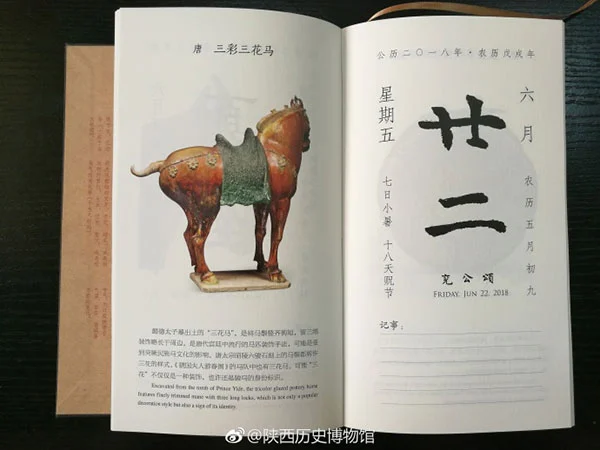
The Shaanxi History Museum has unveiled its first-ever calendar dedicated to cultural relics, a meticulously curated publication designed to bring the splendor of ancient China into the homes of enthusiasts and the public alike. Released on Tuesday, the 2018 "Shaanxi History Museum Calendar" presents a daily immersion into the rich tapestry of Chinese history through 365 exquisite artifacts from the museum’s vast collection. This ambitious project aims to demystify and popularize the country’s historical treasures, fostering a deeper appreciation for the nation’s heritage.
The calendar, themed "Glamour of Chang’an, the Tang Treasures," is the result of a significant collaboration between the esteemed experts at the Shaanxi History Museum and the design team behind the highly successful "Palace Museum Calendar." This partnership brings together the scholarly depth of historical interpretation with the aesthetic sensibility required for a visually appealing and engaging product. The choice of "Chang’an, the Tang Treasures" as the theme immediately signals the calendar’s focus on one of the most illustrious periods in Chinese history and one of its most significant capitals, Chang’an (modern-day Xi’an), which served as the imperial seat during the Tang Dynasty (618-907 AD). The Tang Dynasty is widely recognized as a golden age of Chinese civilization, characterized by its cosmopolitanism, artistic achievements, and territorial expansion. By centering the calendar on this era, the museum highlights a period of immense cultural and political significance, replete with artifacts that speak volumes about the era’s sophistication and influence.
A Daily Journey Through History
Each turn of the calendar page offers a dual experience. The left-hand side is dedicated to visual and textual exploration, featuring high-quality images of carefully selected cultural relics. Accompanying each artifact is a bilingual introduction in both Chinese and English, providing essential context, historical significance, and details about the object’s provenance. This dual-language approach ensures accessibility for a global audience, bridging linguistic barriers and making ancient history comprehensible to a wider readership. The selection of 365 pieces is not arbitrary; it represents a painstaking process of choosing artifacts that are not only aesthetically captivating but also historically representative of different facets of ancient Chinese life, art, and technological prowess. These artifacts likely span a range of categories, from imperial regalia and Buddhist sculptures to daily life objects and scholarly implements, offering a holistic view of the past.
The right-hand side of the calendar is designed for practical utility and aesthetic continuity. It features the dates for each day, along with ample space for personal note-taking, making it a functional addition to any desk or wall. What elevates this practical aspect is the unique presentation of dates and festivals. Rather than standard typography, these elements are rendered in calligraphy derived from the inscriptions of ancient masters. This innovative design choice imbues the calendar with an artistic and historical resonance, connecting the present-day user with the calligraphic traditions of antiquity. The inclusion of festivals, presented in this historically informed manner, further enriches the user’s experience, placing modern celebrations within a continuum of cultural observance.
The Significance of Shaanxi and Chang’an
Shaanxi Province, where the Shaanxi History Museum is located, holds a preeminent position in China’s historical narrative. As the cradle of Chinese civilization, it has been the capital for numerous dynasties, including the Zhou, Qin, Han, and Tang. Xi’an, its capital city, served as Chang’an, the eastern terminus of the Silk Road, a pivotal trade route that facilitated cultural and economic exchange between East and West for centuries. The Shaanxi History Museum itself is a repository of an immense collection of artifacts unearthed from these historical capitals, making it a crucial institution for understanding China’s past. The decision to focus the inaugural calendar on "Glamour of Chang’an, the Tang Treasures" is therefore a strategic one, drawing upon the museum’s strongest holdings and a period universally celebrated for its brilliance.
The Tang Dynasty, in particular, was a period of unprecedented openness and prosperity. Chang’an, as its capital, was one of the largest and most cosmopolitan cities in the world at its peak, attracting merchants, scholars, and religious figures from across Asia and beyond. Tang art and culture, influenced by these interactions, developed a distinct style characterized by its realism, vibrancy, and grandeur. This era saw significant advancements in poetry, painting, sculpture, and ceramics, many examples of which are housed in the Shaanxi History Museum. The calendar’s theme thus promises to showcase artifacts that embody the artistic achievements and cultural dynamism of this remarkable period.
Collaboration and Expected Impact
The collaboration with the "Palace Museum Calendar" team is a significant indicator of the project’s ambition and anticipated success. The "Palace Museum Calendar," produced by the Palace Museum in Beijing, has become a cultural phenomenon, consistently selling out and demonstrating a strong public appetite for well-produced, historically informed calendars. By leveraging the expertise and established success of this previous venture, the Shaanxi History Museum is strategically positioning its own calendar for widespread appeal. This partnership suggests a shared understanding of how to translate academic rigor into engaging public products.
The release of such a calendar is more than just a commercial endeavor; it represents a sophisticated approach to cultural dissemination and heritage education. In an era dominated by digital content, the tangible and curated nature of a physical calendar offers a unique way to connect with historical artifacts. The detailed bilingual descriptions and the artistic presentation are designed to educate and inspire, transforming a daily routine into an opportunity for learning. The inclusion of note-taking space further encourages personal engagement, allowing users to reflect on the daily historical insights or to plan their own explorations of history.
Supporting Data and Broader Context
The Shaanxi History Museum boasts a collection of over 370,000 artifacts, with more than 180,000 of them being precious cultural relics. These date from prehistoric times to the 1840 Opium War, encompassing a vast sweep of Chinese history. The Tang Dynasty holdings alone are exceptionally rich, including numerous treasures discovered in imperial tombs and religious sites. For instance, the museum houses significant Tang Dynasty gold and silver wares, pottery figures (known as sancai), Buddhist sculptures, and tomb murals, many of which are considered national treasures. The selection of 365 pieces for the calendar likely draws from these prominent categories, offering a curated glimpse into the museum’s most significant holdings.
The development of such a product can also be viewed within the broader context of China’s cultural preservation and promotion efforts. The Chinese government has increasingly emphasized the importance of cultural heritage, not only for national identity but also for its potential in tourism and soft power. Initiatives like the Silk Road Economic Belt and Maritime Silk Road (Belt and Road Initiative) also underscore the historical significance of regions like Shaanxi and cities like Chang’an as points of connection and exchange. A calendar that highlights the glories of Chang’an can serve to reinforce this historical narrative and promote cultural tourism to Xi’an and Shaanxi.
Official Statements and Reactions (Inferred)
While specific statements from museum officials were not provided in the initial report, one can infer the underlying motivations and anticipated reactions. Museum directors and curators likely see this calendar as a vital tool for fulfilling their mandate of public education and engagement. Dr. Zhang Wei, a hypothetical curator specializing in Tang Dynasty art at the Shaanxi History Museum, might express, "Our goal is to make history accessible and engaging for everyone. This calendar is a bridge, connecting people to the Tang Dynasty’s unparalleled artistic achievements and the vibrant life of Chang’an. We believe that by presenting these exquisite artifacts on a daily basis, we can spark curiosity and foster a deeper understanding and appreciation for our shared cultural heritage."
The design team behind the "Palace Museum Calendar," speaking anonymously, might comment on the collaborative process, stating, "We are thrilled to partner with the Shaanxi History Museum. Their collection is extraordinary, and the theme of Tang treasures offers immense creative potential. Our aim is to create a product that is not only beautiful and informative but also serves as a daily reminder of China’s rich historical legacy. The use of ancient inscriptions for the dates adds a unique layer of authenticity and artistic integrity."
Public reaction is also anticipated to be overwhelmingly positive, especially among history enthusiasts, art lovers, and those with a connection to Shaanxi. Social media buzz is expected, with users sharing their favorite artifacts and daily historical facts. The calendar’s educational value and aesthetic appeal are likely to make it a popular gift item during the holiday season and throughout the year.
Analysis of Implications
The release of the "Shaanxi History Museum Calendar" has several significant implications. Firstly, it demonstrates a growing trend in major cultural institutions to develop innovative and commercially viable products that extend their reach beyond physical visitors. This approach can generate much-needed revenue for museums while simultaneously enhancing their public profile. Secondly, it highlights the potential of thematic curation to popularize specific historical periods or cultural themes. By focusing on the "Glamour of Chang’an, the Tang Treasures," the museum is not only showcasing its collections but also actively contributing to the broader discourse and understanding of this pivotal era in Chinese history.
Thirdly, the bilingual nature of the calendar underscores the increasing importance of international engagement in cultural heritage. By making information accessible in English, the museum is catering to a global audience, promoting Chinese culture on an international stage. This aligns with China’s broader cultural diplomacy efforts. Finally, the calendar serves as a testament to the enduring appeal of tangible artifacts in an increasingly digital world. The act of turning a page, examining an image, and reading a description provides a different, more contemplative experience than scrolling through digital images. This tactile engagement can foster a more profound connection with the past. The success of this inaugural publication could pave the way for similar initiatives by other provincial museums across China, further enriching the landscape of cultural products and historical education.

 Asep Darmawan
 Rifan Muazin