Nana Wu
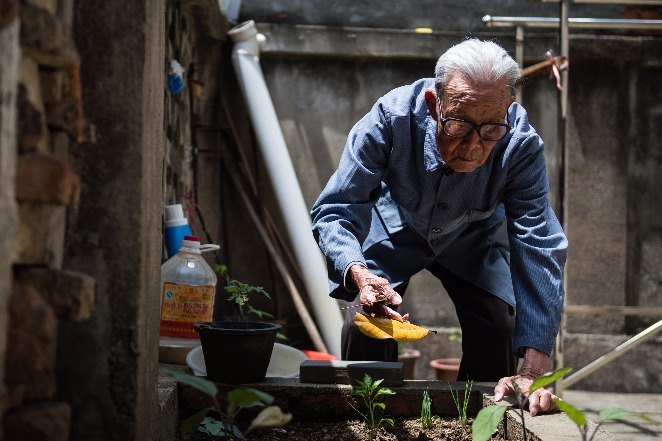
The solemn passage of time continues to diminish the living links to one of humanity’s darkest chapters, as Guan Guangjing, the oldest known survivor of the Nanjing Massacre, passed away on Sunday at the age of 100. His death, just three days before China’s National Memorial Day for Nanjing Massacre Victims, brings the number of remaining survivors to fewer than 100, according to the Memorial Hall of the Victims in the Nanjing Massacre by Japanese Invaders. This poignant event casts a somber shadow over the upcoming 80th anniversary commemoration, emphasizing the critical urgency of preserving historical truth through the dwindling voices of those who bore witness to unimaginable atrocities.
A Century of Life, Marked by Unspeakable Trauma
Guan Guangjing, born in 1917, lived a century, much of it defined by the harrowing experiences of December 1937. He succumbed to multiple organ failure at his home, having been bedridden for six months due to heart disease, his 76-year-old son-in-law, identified only by his surname Liu, confirmed. Guan’s passing is particularly significant given his role as a crucial oral historian, having contributed his testimony to "Irrefutable Evidences, A Memoir of the Lishui Bombing Caused by Japanese Invaders," a book published by Nanjing Press in November 2016. This publication meticulously compiled the oral accounts of 31 survivors detailing the brutal bombing of Nanjing’s Lishui county on November 29, 1937, an event that claimed more than 1,200 lives.
In his poignant testimony, Guan recounted hiding under a large rock during the aerial assault, an act of sheer instinct that saved his life. From his precarious refuge, he was forced to witness the horrific deaths of his neighbors, including four generations of a single family surnamed Sun. As the Japanese forces advanced and occupied Nanjing, then China’s capital, Guan managed to survive the subsequent massacre by constantly hiding, navigating a city transformed into a killing field. Officials from the Memorial Hall highlighted Guan’s repeated narration of witnessing Japanese invaders killing people multiple times, a testament to the pervasive and systematic violence he endured.
Beyond his role as a witness to history, Guan Guangjing was remembered by his community as a man of integrity and generosity. An orphan before 1937, he had no siblings and outlived his wife, who died at 84 five years ago. He was a barrel maker in Lishui county, known for his frugal lifestyle and unwavering willingness to help others, earning him high esteem in the local community. His family’s donation of several personal articles—a paper fan, a watch, and a teapot—to the Memorial Hall ensures that tangible links to his life and testimony will continue to educate future generations. News of his death prompted an outpouring of grief and remembrance on social media platforms like Sina Weibo, with internet users mourning the loss of another irreplaceable voice.
The Nanjing Massacre: A Dark Chapter in History
To understand the profound impact of Guan Guangjing’s death, it is essential to revisit the historical context of the Nanjing Massacre, an event that remains a deeply painful and contested chapter in modern history. The massacre occurred during the Second Sino-Japanese War, which escalated into full-scale conflict in July 1937. Following the Battle of Shanghai, Japanese forces swiftly advanced on Nanjing, then the capital of the Republic of China. The city fell on December 13, 1937. What followed was a six-week period of unimaginable brutality perpetrated by the Imperial Japanese Army.
During this horrific period, Japanese soldiers engaged in widespread murder, rape, looting, and arson. Estimates from Chinese sources and the International Military Tribunal for the Far East (Tokyo Trials) place the death toll at over 300,000 Chinese civilians and disarmed soldiers. The methods of killing were often exceptionally cruel, including bayoneting, beheadings, live burials, and burning. Beyond the killings, an estimated 20,000 to 80,000 women and girls were raped, many of them subjected to gang rape and mutilation before being killed. The city was systematically looted and much of it burned, leaving behind a devastated landscape and a traumatized populace.
International witnesses, including missionaries, doctors, and businessmen from Western countries, played a crucial role in documenting the atrocities. Figures like John Rabe, a German Nazi Party member who helped establish the Nanking Safety Zone, and Minnie Vautrin, an American missionary who protected thousands of women and children, provided harrowing accounts and photographic evidence that became critical in post-war trials. Their diaries and letters offered a window into the horror unfolding within the besieged city, often at great personal risk.
The Nanjing Massacre is not merely a historical event; it is a symbol of the barbarity of war and a stark reminder of the consequences of unchecked military aggression. Its legacy continues to shape Sino-Japanese relations, often resurfacing in diplomatic disputes and discussions about historical memory. For China, it represents a profound national trauma and a call for justice and remembrance.
The Urgent Race Against Time: Preserving Survivor Testimony
The passing of Guan Guangjing serves as a stark reminder of the rapidly diminishing window for collecting firsthand accounts of the Nanjing Massacre. With fewer than 100 survivors remaining, and most of them well into their late eighties or nineties, the task of documenting their experiences has taken on unprecedented urgency. As Zhang Sheng, a history professor at Nanjing University, points out, only about half of the remaining survivors can express themselves clearly due to advanced age and declining health. This makes every testimony, every memory, invaluable.
The challenges extend beyond physical frailty. Wu Lisong, a history lecturer at Nanjing University who has led a project collecting oral accounts since September 2016, highlights the profound and lasting psychological trauma endured by survivors. "Some of them are stricken with fright when people wearing Japanese military uniforms appear on the TV screen, and some become irritable whenever people mention those years to them," Wu explained. This enduring pain underscores the fact that the suffering inflicted during the massacre did not end when the violence ceased; it etched itself into the very fabric of their beings, manifesting as lifelong emotional scars. The process of recounting these painful memories can be re-traumatizing, requiring immense sensitivity and care from historians and interviewers.
The Memorial Hall of the Victims in the Nanjing Massacre by Japanese Invaders plays a pivotal role in this preservation effort. Beyond collecting artifacts and photographs, the institution is dedicated to recording oral histories, organizing commemorative events, and educating the public, particularly younger generations, about the massacre. Each survivor’s testimony contributes to a collective memory, serving as irrefutable evidence against historical denial and revisionism. The donation of Guan Guangjing’s personal articles to the Memorial Hall symbolizes this crucial link between individual memory and collective historical preservation.
National Memorial Day and the 80th Anniversary Commemoration
The National Memorial Day for Nanjing Massacre Victims, observed annually on December 13th, was established by the Chinese government in 2014 to mourn the victims, expose the atrocities of Japanese imperialism, and underscore China’s commitment to peace. This year’s commemoration holds particular significance as it marks the 80th anniversary of the tragedy. State leaders are expected to attend a public memorial ceremony at the Memorial Hall, a solemn tradition that underscores the national importance of remembering this historical event.
The annual commemoration serves multiple purposes. Firstly, it honors the memory of the over 300,000 victims, ensuring their suffering is not forgotten. Secondly, it provides a platform for historical education, reminding both domestic and international audiences of the brutal realities of war and the importance of peace. Thirdly, it reinforces China’s stance on historical issues, particularly in relation to Japan. The ceremonies typically include a moment of silence, ringing of the peace bell, and speeches emphasizing historical truth and the pursuit of peace. The presence of state leaders elevates the event to a symbol of national unity and resolve in the face of historical injustice.
Sino-Japanese Relations and the Imperative of Historical Clarity
The Nanjing Massacre remains a significant point of contention in Sino-Japanese relations. While China views the event as an undeniable historical fact and a severe war crime, elements within Japan, particularly revisionist politicians and historians, have sought to deny, downplay, or reinterpret the massacre. This persistent historical revisionism is a major obstacle to genuine reconciliation between the two East Asian powers. The varying interpretations often lead to diplomatic friction and fuel nationalist sentiments on both sides.
Wu Lisong’s insightful observation captures the core of this complex issue: "Neither an apology nor compensation can reverse the traumas to the victims and survivors, but we still must make clear the history, which may be a starting point of reconciliation." This statement highlights the profound psychological and moral dimensions of the issue, suggesting that while material redress might be insufficient, a clear and unambiguous acknowledgment of historical facts is foundational. For China, a sincere apology and acceptance of historical responsibility from Japan are seen as crucial steps toward building trust and fostering a more stable relationship. Without a common understanding of history, moving forward constructively remains challenging.
The international community generally recognizes the Nanjing Massacre as a historical fact, with numerous academic studies, historical documents, and the findings of the Tokyo Trials corroborating the scale and nature of the atrocities. However, the political sensitivity surrounding the issue means that its full implications for regional stability and historical justice continue to be debated.
Broader Implications and the Global Call for Remembrance
The lessons of the Nanjing Massacre extend far beyond the borders of China and Japan. It stands as a powerful testament to the destructive potential of unchecked militarism, racial hatred, and the systematic dehumanization of an enemy. The systematic nature of the violence, the targeting of civilians, and the widespread sexual assault resonate with later instances of genocide and mass atrocities across the globe.
The urgency to preserve the memory of the Nanjing Massacre, particularly through the voices of its last survivors, is not just about Chinese national memory; it is about universal human rights and the global imperative to prevent future atrocities. Education plays a crucial role in this endeavor, ensuring that new generations understand the historical context, the human cost of conflict, and the importance of promoting peace, empathy, and respect for all peoples. As the number of living witnesses dwindles, the responsibility to carry forward their stories and ensure that "never again" is more than just a slogan falls upon historians, educators, memorial institutions, and indeed, all of humanity. Guan Guangjing’s death marks the end of a long life lived in the shadow of unspeakable horror, but his testimony and the collective memory he represents will continue to serve as a vital beacon against historical amnesia and a powerful call for justice and peace.

 Evan Lee Salim
 Jia Lissa