 Siti Muinah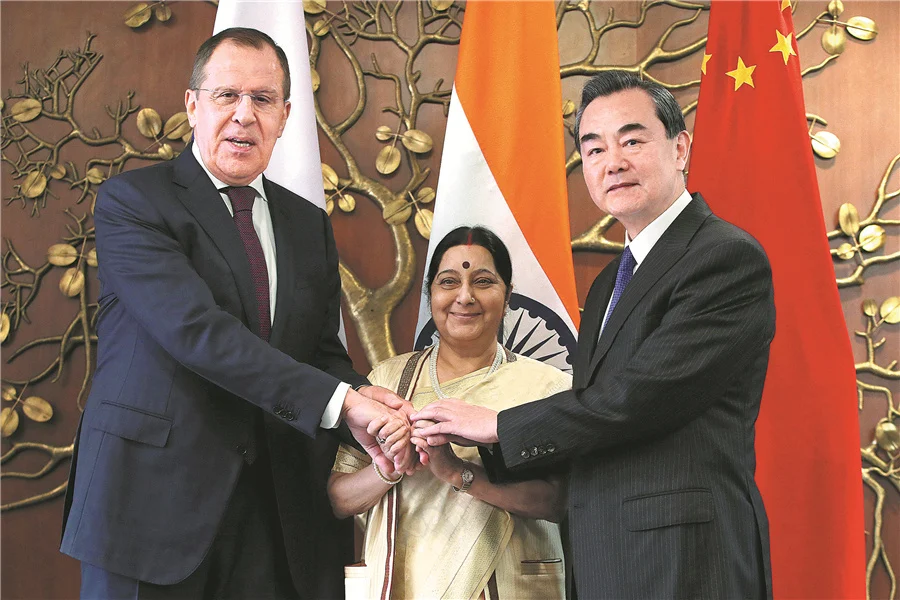
New Delhi Hosts Landmark Trilateral Summit: Beijing, Moscow, and New Delhi Forge Consensus on Regional Security and Economic Architecture
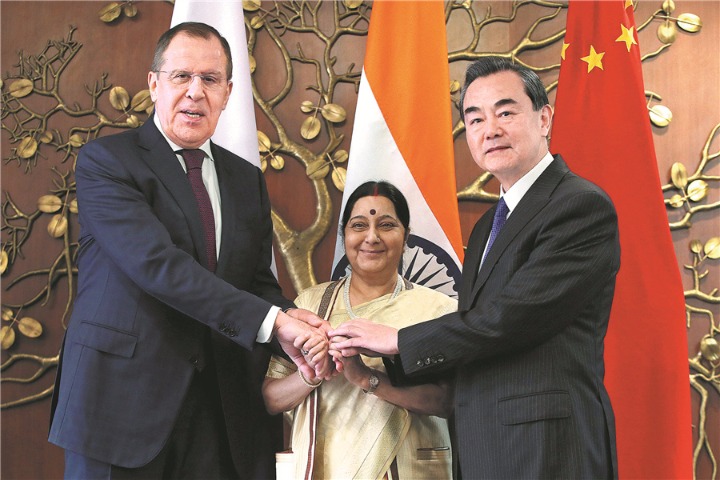
New Delhi, India – December 11, 2017 – Foreign ministers from China, Russia, and India convened in New Delhi today for their 15th trilateral meeting, reaffirming a shared commitment to fostering regional security and economic architecture built on multilateralism and international law. The high-level gathering, which saw Chinese Foreign Minister Wang Yi, Russian Foreign Minister Sergey Lavrov, and Indian Minister of External Affairs Sushma Swaraj engage in extensive discussions, concluded with a joint statement emphasizing the imperative for an "open, inclusive and based on multilateralism and universally recognized principles of international law" regional order.
The ministers underscored the critical role of coordinated efforts within various regional forums and organizations, including the East Asia Summit, in safeguarding peace, stability, and promoting development and prosperity across the Asia-Pacific. This consensus highlights a strategic alignment among the three major powers on key geopolitical and economic issues shaping the region.
A Foundation of Cooperation: BRICS and SCO as Pillars

A significant portion of the discussions revolved around strengthening cooperation within the BRICS (Brazil, Russia, India, China, South Africa) and the Shanghai Cooperation Organization (SCO). The joint statement explicitly pledged to "work together to implement all outcomes of BRICS summits to strengthen cooperation in economic, political, security and people-to-people fields, so as to usher in the second golden decade of BRICS cooperation." This sentiment acknowledged China’s successful hosting of the Ninth BRICS Summit in Xiamen in September 2017, which set an ambitious agenda for future collaboration.
The SCO was also recognized as a vital instrument for advancing multilateral engagement in political, security, economic, and people-to-people interactions within the region. The three nations’ emphasis on these multilateral platforms signals a collective approach to regional governance, aiming to create a stable and predictable environment conducive to growth and development.

The Russia-India-China trilateral format itself was described as a valuable platform for fostering "closer dialogue and practical cooperation in identified areas." Crucially, the joint statement clarified that this cooperation is not directed against any third country, underscoring its inclusive and cooperative nature. The ministers expressed a desire to "strengthen the trilateral dialogue for consultation and coordination on regional and global issues of mutual interest in the spirit of mutual understanding and trust." They concluded that their collective efforts are "conducive to maintaining international and regional peace and stability, and promoting global economic growth and prosperity."
Background and Context
The 15th China-Russia-India trilateral meeting occurred at a time of evolving geopolitical dynamics in the Asia-Pacific. The region is a nexus of growing economic interdependence, but also faces challenges related to security, territorial disputes, and the rise of new global powers. The summit provided a crucial opportunity for these three influential nations to align their perspectives and reinforce their commitment to a stable and rules-based international order.

Historical Trajectory of the Trilateral Dialogue:
The China-Russia-India trilateral dialogue was first established in 2002, reflecting a shared interest in fostering a multipolar world order and addressing common security concerns. Over the years, the meetings have evolved from informal consultations to more structured engagements, encompassing a broad spectrum of issues.

- Early Years (2002-2007): The initial meetings focused on building trust and understanding, laying the groundwork for future cooperation. Discussions often centered on regional security challenges and the need for enhanced economic ties.
- Expansion of Scope (2008-2013): As the dialogue matured, the agenda expanded to include global issues such as climate change, energy security, and counter-terrorism. Cooperation within BRICS and the SCO also became a more prominent feature.
- Strategic Alignment (2014-Present): In recent years, the trilateral meetings have increasingly focused on reinforcing regional architecture and addressing emerging geopolitical challenges. The emphasis on multilateralism and a rules-based order has become more pronounced, particularly in response to shifting global power dynamics.
The 2017 meeting, held in New Delhi, followed a period of significant diplomatic activity, including the BRICS Summit in Xiamen and ongoing discussions within the SCO. The participants were keen to translate the outcomes of these broader multilateral forums into concrete actions at the trilateral level.
Key Discussion Points and Outcomes
The foreign ministers engaged in a comprehensive exchange of views on a wide array of global and regional issues of common concern. While the joint statement broadly outlined the consensus, specific areas of discussion likely included:

- Regional Security Architecture: The ministers likely deliberated on strategies to enhance stability in areas such as maritime security, counter-terrorism, and the prevention of proliferation of weapons of mass destruction. The emphasis on an "open and inclusive" architecture suggests a shared vision of a regional order that accommodates diverse interests and promotes peaceful dispute resolution.
- Economic Cooperation and Development: Discussions likely covered ways to deepen economic ties, promote trade and investment, and foster sustainable development. The focus on BRICS cooperation points towards a desire to leverage the economic potential of this grouping to drive global growth and address shared developmental challenges.
- Multilateralism and International Law: The unwavering commitment to multilateralism and universally recognized principles of international law signifies a shared belief in the efficacy of international institutions and norms in maintaining global peace and order. This stance is particularly relevant in the context of ongoing debates about the future of global governance.
- Connectivity Initiatives: While not explicitly detailed in the provided text, it is plausible that discussions touched upon connectivity initiatives, such as China’s Belt and Road Initiative (BRI), and how such projects can be integrated within a framework that respects regional interests and promotes inclusive development.
- Counter-Terrorism and Cyber Security: Given the increasing global threat of terrorism and the rise of cyber warfare, it is highly probable that these ministers addressed strategies for enhanced cooperation in combating these challenges, including intelligence sharing and joint operational planning.
Supporting Data and Analysis
The strategic importance of the China-Russia-India trilateral grouping can be underscored by several key indicators:
- Economic Clout: Collectively, China, Russia, and India represent a significant portion of the global economy. In 2017, their combined GDP was estimated to be over $15 trillion, and their populations exceeded 3 billion people. This economic weight provides them with substantial influence in shaping global economic policies.
- Military Capabilities: All three nations possess substantial military capabilities, contributing to the regional and global security landscape. Their coordinated approaches to security matters can have a significant impact on regional stability.
- Geopolitical Influence: As major powers with expanding global footprints, their alignment on key issues can influence the direction of international relations and the effectiveness of multilateral institutions. The shared commitment to multilateralism, as evidenced in the joint statement, reflects a desire to shape a global order that is more representative and equitable.
- BRICS and SCO Growth: The continued emphasis on BRICS and SCO cooperation reflects the growing importance of these platforms in addressing global challenges. BRICS, in particular, has evolved from an economic concept to a significant political and developmental bloc, with members increasingly coordinating their stances on global issues. The SCO has also expanded its membership and scope, becoming a key player in regional security and cooperation.
Broader Implications and Future Outlook
The outcomes of the 15th China-Russia-India trilateral meeting carry significant implications for the Asia-Pacific region and the broader international order.

- Strengthening Multipolarity: The consistent reinforcement of multilateralism and cooperation among these three major powers contributes to the ongoing shift towards a multipolar world order, where power is more distributed among several centers.
- Regional Stability and Development: The focus on maintaining regional security and economic architecture is crucial for fostering a stable environment conducive to economic growth and development. By coordinating their policies and approaches, these nations can collectively address common challenges and create opportunities for shared prosperity.
- Balancing Global Influence: The trilateral dialogue provides a platform for China, Russia, and India to articulate their perspectives and coordinate their actions on global issues, thereby contributing to a more balanced international discourse and decision-making process.
- Challenges and Opportunities: While the consensus achieved at the meeting is a positive development, the region continues to face complex challenges. Navigating issues such as trade disputes, maritime security, and ideological differences will require sustained dialogue and a commitment to pragmatic cooperation. The emphasis on "cooperation is not directed against any other country" is a crucial signal of intent, aiming to allay any potential concerns from other global actors.
The 15th China-Russia-India trilateral meeting in New Delhi has reaffirmed the strategic importance of this partnership. The commitment to multilateralism, regional security, and economic cooperation, particularly within the frameworks of BRICS and the SCO, sets a positive trajectory for the future of the Asia-Pacific and the broader global landscape. The continued dialogue and implementation of agreed-upon outcomes will be key to translating this consensus into tangible benefits for the region and the world.


 Nana Wu
 Suro Senen