Nana
Nana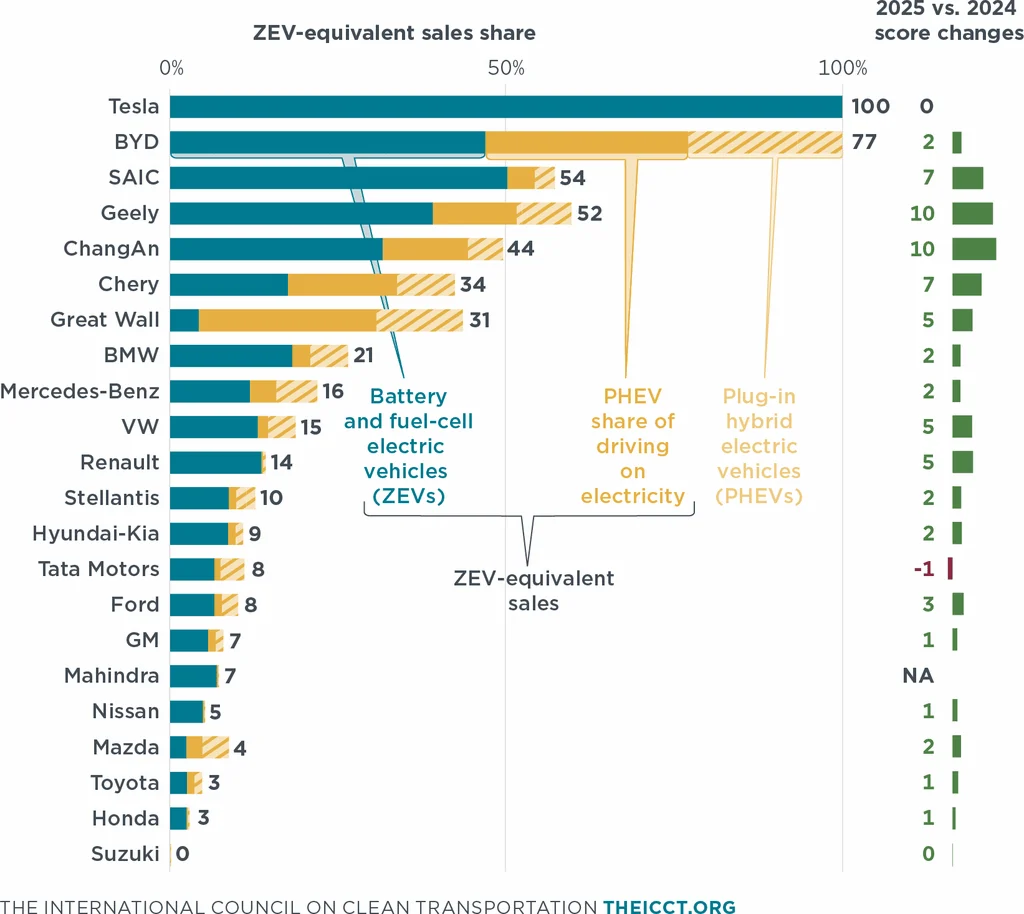
The transition to zero-emission transportation is rapidly reshaping the global automotive landscape, yet the pace of this seismic shift varies dramatically among leading manufacturers. A recent webinar hosted by Greenpeace Japan on July 13th illuminated these diverging trajectories, highlighting how some of the world’s largest car companies are navigating the critical pivot to battery-electric vehicles (BEVs). The session featured insights from Dale Hall, a representative from the International Council on Clean Transportation (ICCT), and Erin Eunseo Choi from Greenpeace East Asia, who presented a stark analysis of automakers’ strategies and their implications for both market dominance and climate action.
The webinar, titled "Green Mobility and Climate," served as a crucial platform to dissect the current state of electric vehicle (EV) adoption and the strategic decisions influencing future market share. With the global community increasingly focused on decarbonization targets, the automotive sector stands at a crossroads, its choices now directly impacting environmental sustainability and economic competitiveness. Greenpeace Japan’s initiative underscores the growing urgency for transparency and accountability from automotive giants as they steer the industry towards a cleaner future.
Southeast Asia: A Microcosm of Global EV Strategies
Southeast Asia has emerged as a pivotal battleground for the future of mobility, with Indonesia playing a particularly significant role. As one of the region’s largest automotive markets, Indonesia is strategically positioning itself as a burgeoning hub for electric vehicle production and consumption. The market’s rapid growth trajectory is undeniable: by the end of 2025, Indonesia’s BEV market had expanded significantly, becoming the third-largest in Southeast Asia, with over 103,000 units sold within the year. For established automakers, particularly those from Japan, the stakes are incredibly high. Losing ground in this dynamic region carries substantial long-term consequences, potentially impacting their global standing and profitability for decades to come.
According to Erin Eunseo Choi of Greenpeace East Asia, the contrasting approaches of automakers from China, Japan, and South Korea offer a clear illustration of how different strategic decisions yield vastly different outcomes in this crucial emerging market. This regional dynamic serves as a bellwether for broader global trends in EV adoption and the competitive landscape.
China’s Ascendancy: Aggressive Expansion and Market Domination
Chinese automakers, spearheaded by industry giants BYD and Geely, have embarked on an aggressive expansion of their electric vehicle sales, capturing significant market share across the globe, and notably, within Southeast Asia. Despite a contraction in Indonesia’s overall automotive market, Chinese brands achieved a remarkable year-on-year sales surge of 153%, effectively tripling their market share to 10%. This explosive growth signals a fundamental shift in consumer preference and the increasing competitiveness of Chinese EV offerings.
BYD, in particular, has emerged as the undisputed leader in the Indonesian BEV segment, securing more than half of the market share. The dominance of Chinese EV brands is further underscored by the fact that they accounted for over 90% of Indonesia’s total EV sales in the first half of 2025. This overwhelming success is attributed to a combination of factors, including competitive pricing, advanced battery technology, and a proactive approach to meeting local market demands. The rapid penetration of Chinese EVs is not merely a regional phenomenon but reflects a global strategy to challenge established players and redefine the automotive industry.
Japan’s Eroding Dominance: A Legacy of Hesitation
While Japanese automotive brands have historically enjoyed a dominant position in Southeast Asia, their long-standing stronghold is showing clear signs of erosion. In the first quarter of 2025, a significant number of Japanese brands, with the notable exception of Toyota, recorded sales declines. This downturn occurred precisely as their Chinese competitors were experiencing exponential growth.
Choi attributed this weakening grip to a fundamental strategic misstep: Japanese manufacturers have remained heavily reliant on internal combustion engine (ICE) vehicles and hybrid technologies, failing to prioritize a clear and aggressive roadmap for battery-electric vehicles in key emerging markets like Southeast Asia. This strategic inertia not only jeopardizes their market share but also exacerbates regional climate inequities. Vehicles powered by combustion engines, which are still predominantly sold in Southeast Asia, emit significantly higher amounts of carbon dioxide equivalent per vehicle compared to their counterparts in markets with high EV adoption rates, such as Europe. Consequently, climate-vulnerable communities in these regions are disproportionately bearing the brunt of climate change impacts.
South Korea’s Warning: Stalled Electrification and Market Retreat
The trajectory of South Korean automakers, particularly Hyundai, offers a stark cautionary tale. Within the BEV segment, Hyundai’s sales in Indonesia have plummeted dramatically, falling from 7,590 units in 2023 to a mere 1,828 units in 2025 – a staggering 75.9% decrease.
Hyundai has publicly articulated clear commitments to phase out internal combustion engines in its European and US markets, setting ambitious timelines for electrification. However, the company has conspicuously failed to establish similar concrete timelines for the crucial Southeast Asian region. This disparity between its pledges in developed markets and its actions in the Global South risks undermining its regional competitiveness and alienating a growing segment of environmentally conscious consumers. As Choi emphasized, this gap between stated intentions and tangible execution highlights the challenges faced by legacy automakers in adapting to evolving market demands and regulatory environments.
"This is not simply a story of government policy succeeding or failing in isolation," stated Erin Eunseo Choi, Climate and Energy Campaigner at Greenpeace East Asia. "It’s a story about which companies adapted their business models fast enough to meet that policy environment – and which didn’t." Her statement underscores that the success or failure of electrification strategies is intrinsically linked to corporate agility and strategic foresight.
The ICCT Global Automaker Rating 2025: A Definitive Ranking
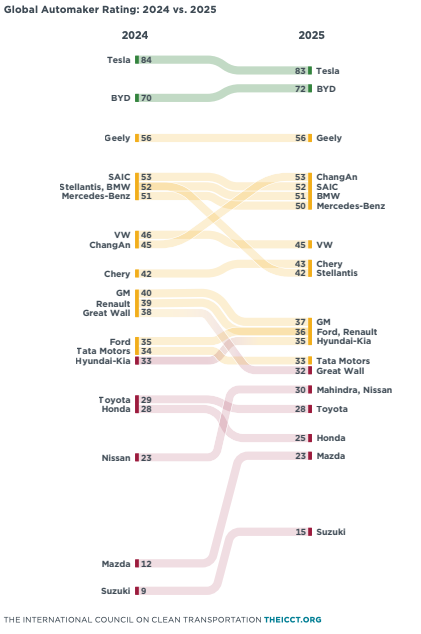
Adding further weight to these observations, Dale Hall of the ICCT presented findings from the organization’s comprehensive "Global Automaker Rating 2025." This in-depth report evaluates the 22 largest global auto manufacturers across six key markets, collectively representing approximately 80% of global new car sales. The rating system assesses automakers on their commitment to and progress in transitioning towards zero-emission vehicles, providing a critical benchmark for industry performance.
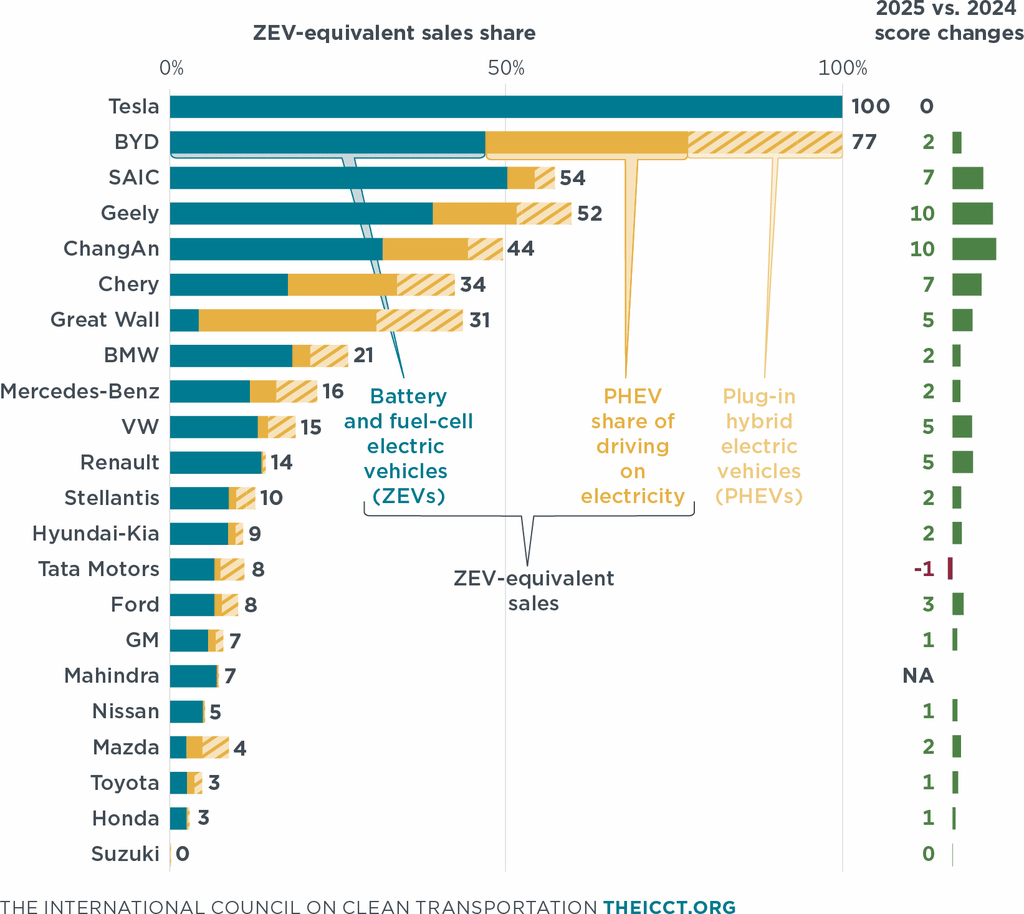
The report’s findings paint a clear picture of the current competitive landscape:
-
Overall Ranking: Tesla and BYD stand out as leaders in the top tier of the global ranking, demonstrating strong performance in EV adoption and sales. In stark contrast, Japanese manufacturers occupied the bottom five positions overall, trailing significantly behind their global peers in their transition to electric mobility. This positions them at a considerable disadvantage in the rapidly evolving automotive market.
-
ZEV-Equivalent Sales Share: The data indicates that nearly all evaluated automakers have increased their electric sales share. Chinese brands such as Geely, Changan, and SAIC have led this charge. However, legacy foreign automakers continue to lag considerably behind these frontrunners. To meet upcoming stringent climate standards and remain competitive, these companies will need to dramatically accelerate their EV sales volumes. The analysis suggests a widening gap between those actively embracing the EV transition and those who are lagging.
-
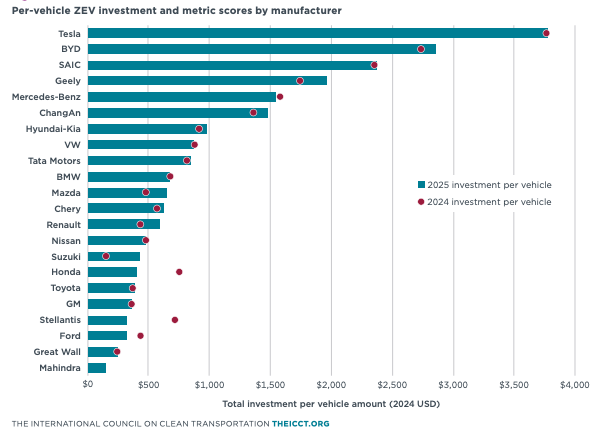
ZEV Investment: Chinese manufacturers are actively ramping up their capital investments per vehicle, with a strategic focus on expanding their overseas presence in high-growth markets like Southeast Asia and Latin America. Conversely, legacy automakers in the US, Europe, and Japan have either scaled back or maintained flat investment levels in zero-emission vehicle technology. This divergence in investment strategies is critically important, as it directly impacts future production capacity, technological innovation, and the ability to capture market share in the coming years. Reduced investment by established players weakens their long-term market position and ability to compete with more agile and forward-thinking rivals.
-
ZEV Targets: While leading companies like Changan and BYD have demonstrably strengthened their zero-emission vehicle targets, a concerning trend has emerged among several major legacy brands. These companies have reportedly rolled back or lowered their 2030 EV targets, often opting to pivot towards hybrid vehicles. This retreat from ambitious electrification goals poses a significant threat to global climate targets and indicates a potential lack of commitment to the full transition away from fossil fuels.
Dale Hall elaborated on these findings, stating, "In terms of long-term strategic vision, we see a clear divergence across regional lines. Several of the legacy brands – like Stellantis in Europe, Ford in the US, and Honda in Japan – reduced their mid-term targets amid short-term policy changes and are trying to hedge their investments by adopting more flexible platforms and hybrids, reducing their EV investments. Whereas the market leaders – like BYD, Geely, and SAIC, all from China – are aggressively increasing their EV investments and expanding their production capacity into new markets, again like Southeast Asia and Latin America. That will continue to give them more economies of scale and further footholds in the fastest-growing car markets in the world."
Implications for the Global Automotive Industry and Climate Action
The insights shared by Greenpeace East Asia and the ICCT highlight a critical juncture for the global automotive industry. The diverging strategies among major automakers have profound implications, not only for market dominance and economic competitiveness but also for the collective ability to meet global climate objectives.
For legacy automakers, particularly those from Japan and South Korea, the data suggests an urgent need for strategic recalibration. Continued reliance on internal combustion engines and hybrids in key growth markets like Southeast Asia is becoming increasingly untenable. Failure to accelerate EV development and deployment risks not only market share erosion but also a loss of long-term relevance. The success of Chinese manufacturers demonstrates that a proactive, EV-centric approach, coupled with competitive pricing and innovative technology, can rapidly redefine market dynamics.
Furthermore, the disparity in EV targets and investment strategies between leading Chinese firms and some established Western and Japanese brands raises concerns about the pace of global decarbonization. If major players continue to hedge their bets on hybrids or reduce their EV ambitions, achieving the ambitious climate goals set forth in international agreements, such as the Paris Agreement, will become significantly more challenging. The ICCT’s report serves as a critical warning: a fragmented and hesitant approach to electrification will inevitably hinder progress towards a sustainable transportation future.
The environmental implications are equally significant. As Choi pointed out, the continued sale of high-emission vehicles in regions like Southeast Asia disproportionately impacts vulnerable populations already at the forefront of climate change. A more rapid and equitable transition to zero-emission vehicles globally is therefore not only an economic imperative but also a matter of climate justice.
In conclusion, the automotive industry’s journey towards electrification is far from uniform. The strategic choices made today by global automakers will shape the future of mobility, the health of our planet, and the distribution of economic power within this vital sector for decades to come. The urgency for decisive action and a clear commitment to zero-emission technologies has never been greater.

 Azzam Bilal Chamdy