
 Evan Lee Salim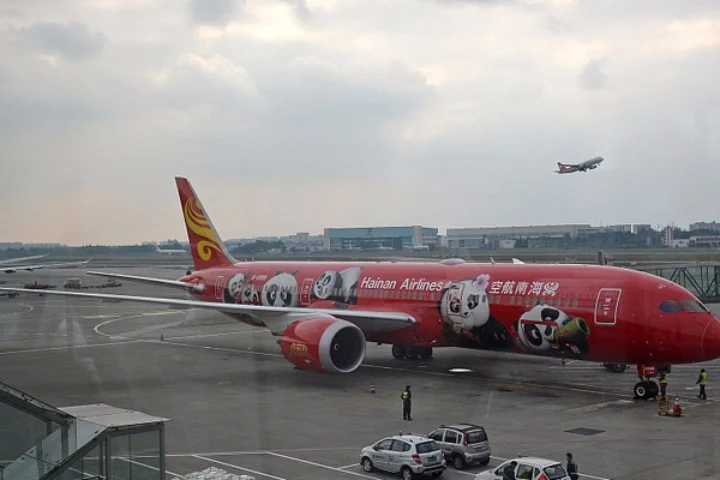
Hainan Airlines, China’s largest private air carrier, is actively pursuing new flying rights to establish direct air links between Shanghai, a pivotal global economic hub, and major cities across the United States. This strategic initiative underscores the airline’s aggressive expansion in the lucrative trans-Pacific market, driven by a burgeoning demand from Chinese travelers and robust bilateral economic ties. The carrier’s ambition extends beyond securing new routes, encompassing enhanced network coverage through strategic code-sharing agreements and a continued focus on connecting second-tier Chinese cities directly with key American destinations.
Strategic Expansion in a Dynamic Market
The airline’s push for Shanghai-US routes represents a significant strategic pivot, aiming to tap into one of China’s most important international gateways. Shanghai, with its vast metropolitan area and strong business connections, serves as a crucial departure point for both business and leisure travelers. Currently, Hainan Airlines operates direct flights between Shanghai and Boston, but its aspirations include launching services to other major US cities, particularly those already serviced by direct flights from Beijing. This would allow Hainan Airlines to offer a more comprehensive portfolio of US-bound flights from China’s two primary international hubs, Beijing Capital International Airport (PEK) and Shanghai Pudong International Airport (PVG).
According to Pubin Liang, regional managing director of Hainan Airlines in the United States, the carrier is committed to increasing its market share in North America, which is identified as one of its most critical markets. This commitment is reflected in the airline’s proactive search for new opportunities and its track record of launching innovative routes. The China-US aviation market has witnessed remarkable growth over the past decade, fueled by an expanding Chinese middle class with increased disposable income, simplified visa procedures, and a growing interest in international travel. Data from the US Department of Commerce typically shows a steady increase in Chinese tourist arrivals, contributing billions of dollars to the American economy annually. For instance, in pre-pandemic years, China consistently ranked among the top inbound tourism markets for the United States, with millions of visitors each year. While recent geopolitical and health-related challenges have impacted these figures, the long-term outlook for the market remains optimistic, making strategic positioning crucial for carriers like Hainan Airlines.
Enhancing Connectivity Through Partnerships
Beyond direct route expansion, Hainan Airlines is also focused on bolstering its network coverage within the United States through strategic partnerships. In the coming year, the airline plans to initiate code-sharing programs with two prominent American carriers: Alaska Airlines and JetBlue Airways. These agreements are designed to significantly strengthen Hainan Airlines’ reach, particularly on the east and west coasts of the United States.
Code-sharing allows airlines to sell seats on each other’s flights, offering passengers seamless connections and expanded destination options. For Hainan Airlines, partnering with Alaska Airlines, a major player on the West Coast, and JetBlue Airways, a strong presence on the East Coast, will enable it to provide comprehensive itineraries from its direct flight arrival points to a multitude of secondary US cities. This strategy effectively extends Hainan Airlines’ virtual network far beyond its direct international gateways, enhancing convenience for travelers and competitiveness against rival carriers. Passengers arriving from China into hubs like Los Angeles, Seattle, or Boston would be able to connect effortlessly to numerous domestic destinations operated by Alaska Airlines or JetBlue under a single ticket, streamlining their travel experience and improving customer satisfaction. Such partnerships are vital in an increasingly competitive global aviation landscape, allowing airlines to leverage each other’s strengths without the substantial investment required for direct route expansion within foreign domestic markets.
Pioneering Second-Tier City Connections
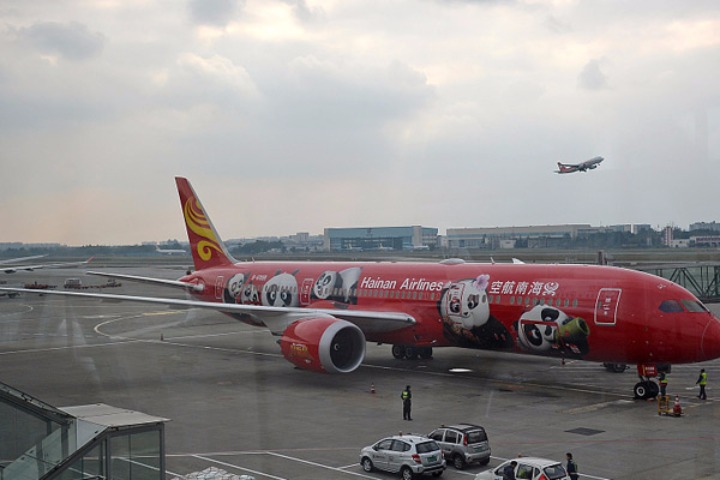
Hainan Airlines has distinguished itself by pioneering direct flight connections between second-tier Chinese cities and major US hubs. This strategy acknowledges the shifting demographics of Chinese outbound tourism, where demand is increasingly originating from cities beyond Beijing and Shanghai. On October 20 and October 26, the airline launched direct flights connecting Chongqing and New York, and Chengdu and New York, respectively. These routes marked a significant milestone, being the first direct services from western China to New York, and complement existing direct flights operated by Hainan Airlines between these two dynamic Chinese cities and Los Angeles.
Liang emphasized the "significant breakthrough" these routes represent, signaling a successful strategy in identifying and capitalizing on emerging market demand. Chongqing, a sprawling municipality in southwest China, and Chengdu, the capital of Sichuan province, are major economic centers with rapidly growing populations and increasing international travel needs. By establishing direct links, Hainan Airlines not only caters to this demand but also facilitates business, tourism, and cultural exchange, bypassing the need for domestic transfers via Beijing or Shanghai. This approach not only provides convenience for travelers from these regions but also reduces travel time and complexity, making international travel more accessible. The airline views these successes as a springboard for further expansion, with plans to explore more direct flight opportunities between New York and other Chinese cities in the future.
A Decade of Trans-Pacific Growth: A Chronology of Hainan Airlines’ American Routes
Hainan Airlines embarked on its ambitious trans-Pacific journey in 2008, launching its inaugural China-US direct flight between Beijing and Seattle. This pioneering step laid the foundation for what has become the most extensive network of direct flights operated by a Chinese airline between the two countries. Today, Hainan Airlines boasts an impressive 12 direct routes, connecting diverse Chinese and American cities.
- June 2008: Hainan Airlines inaugurated its first China-US direct flights, linking Beijing, the capital of China, with Seattle, a major technology and aerospace hub in the United States. This route established a critical bridge for business and tourism between the two nations.
- September 2013: The airline launched direct flights between Beijing and Chicago, marking the first such route operated by a Chinese airline. This strategic move aimed to capture demand from the Midwest region of the United States and further solidified Beijing’s position as a gateway to North America.
- June 2014: Hainan Airlines introduced nonstop flights connecting Beijing and Boston. This route provided direct access to the vibrant academic and biotech hub of Boston, facilitating educational and research exchanges.
- June 2015: A period of significant expansion saw Hainan Airlines launch multiple new routes. This included direct flights between Shanghai and Seattle, complementing its Beijing-Seattle service and providing a second major Chinese gateway to the Pacific Northwest. Simultaneously, direct flights between Beijing and San Jose, California, were established, catering to the booming Silicon Valley tech industry. The airline also reinforced its presence in the Northeast with the launch of direct flights connecting Shanghai and Boston.
- December 2016: Hainan Airlines further diversified its US network by launching direct flights between Beijing and Las Vegas. This route was notable as the first direct flight between Las Vegas, a global entertainment capital, and the Chinese mainland, opening up new tourism opportunities.
- January 2017: Expanding its reach to central China, Hainan Airlines initiated direct flights between Changsha, the capital of Hunan province, and Los Angeles, a major West Coast gateway. This move continued the trend of connecting second-tier Chinese cities to prominent US destinations.
- October 2017: A landmark month for the airline saw the launch of direct flights between Chongqing and New York, as well as Chengdu, capital of Sichuan province, and New York. These two routes were historic, becoming the first direct flights to connect New York with these two significant western Chinese cities, significantly reducing travel times and enhancing convenience for millions.
This systematic expansion illustrates Hainan Airlines’ long-term vision and its responsiveness to evolving market demands, consistently identifying and serving underserved routes while strengthening its presence in established markets.
Financial Performance and Operational Realities
Hainan Airlines’ aggressive expansion has translated into strong financial performance. Between January and September of the current year, the airline reported sales revenue of 2.59 billion yuan (approximately $390 million) from its China-US flights, marking a robust 19 percent increase year-on-year. This growth underscores the profitability and strategic importance of the trans-Pacific market for the carrier. Furthermore, the average passenger load ratio for these flights consistently exceeded 80 percent, indicating high demand and efficient utilization of aircraft capacity. A load factor above 80% is generally considered very healthy in the aviation industry, demonstrating strong passenger uptake for the routes.
However, the airline acknowledges the inherent seasonality of international travel. During peak travel seasons, typically from June to October (summer holidays and early autumn travel) and again in December and January (winter holidays and Lunar New Year), Hainan Airlines experiences outstanding sales performance. Conversely, during off-peak seasons, the airline faces operational pressures. To mitigate these challenges and maintain healthy load factors, Hainan Airlines strategically adjusts its business by offering various promotions, including attractive package deals that bundle flights with tourism destination resort tickets and hotel accommodations. This approach not only stimulates demand during quieter periods but also enhances the overall value proposition for travelers, particularly those seeking leisure experiences.
Challenges in a Competitive Landscape
Despite its successes, Hainan Airlines navigates a highly competitive and dynamic market fraught with challenges. Lin Zhijie, a respected aviation industry analyst and columnist at Carnoc, a leading civil aviation website in China, notes that direct flights between major Chinese cities (like Beijing and Shanghai) and the United States are becoming increasingly saturated. This saturation intensifies competition among both Chinese and American carriers vying for market share. As a result, airlines are increasingly shifting their focus to launching direct flights between second-tier Chinese cities and the United States, a strategy Hainan Airlines has successfully adopted. However, this shift comes with its own set of challenges, particularly the existence of significant operating cost pressures on these newer, sometimes less established routes. Factors such as lower initial passenger volumes, marketing costs to build awareness, and the fixed costs of international operations can impact profitability in the early stages.
A specific operational challenge highlighted by Pubin Liang pertains to the weakening of a previous code-sharing cooperation with American Airlines. Earlier, this partnership facilitated seamless connections, particularly in the Midwest. However, after Hainan Airlines launched its direct flights between Beijing and Chicago, directly competing with American Airlines on the same route, the cooperation significantly diminished. Liang expressed concern over this development, stating, "This has a significant negative impact, especially on our expansion of networks in the Midwest. Now, we face significant challenges in growing our business in this area with Chicago as the hub." This situation underscores the complexities of airline alliances and partnerships, where direct competition can undermine cooperative efforts, forcing airlines to re-evaluate their network strategies. For Hainan Airlines, it necessitates finding alternative ways to penetrate the critical Midwest market, potentially through new partnerships or organic growth, which can be a time-consuming and resource-intensive endeavor.
Broader Implications and Future Outlook
The expansion of airlines like Hainan Airlines has profound implications for the broader economic and cultural relationship between China and the United States. Increased direct air connectivity facilitates greater trade, investment, and tourism, strengthening bilateral ties. The convenience of direct flights encourages more business travel, supporting cross-border collaborations and market access. For the tourism sector, these routes open up new avenues for cultural exchange, allowing more Chinese visitors to experience American culture and attractions, and vice versa. This influx of tourists directly benefits local economies in the US through spending on accommodation, dining, retail, and entertainment.
However, the future growth of the China-US aviation market, as cautioned by analyst Lin Zhijie, is not without external factors. The possible fluctuation of Sino-US relations remains a significant consideration for airlines operating in this space. Geopolitical tensions, trade disputes, or changes in bilateral agreements can directly impact travel demand, visa policies, and the regulatory environment for air services. Airlines must continuously monitor these developments and be prepared to adapt their strategies accordingly.
The ongoing pursuit of flying rights, particularly for high-demand routes like Shanghai-US, requires complex negotiations between governments under bilateral air service agreements. These agreements dictate the number of flights, routes, and airlines permitted to operate between countries. Securing additional rights is a lengthy process that involves diplomatic discussions and regulatory approvals, highlighting the strategic importance of Hainan Airlines’ current efforts.
In conclusion, Hainan Airlines’ sustained drive to expand its China-US network reflects a strategic vision to capitalize on a robust and evolving trans-Pacific travel market. By combining direct route expansion, particularly from second-tier cities, with enhanced network partnerships and a focus on operational efficiency, the airline aims to solidify its position as a leading carrier in this critical corridor. While facing intense competition and geopolitical uncertainties, its commitment to growth and adaptability positions Hainan Airlines as a key player shaping the future of China-US air travel.



 Suro Senen