Evan Lee Salim
China’s vast automotive market, a critical barometer of the nation’s economic health and consumer sentiment, experienced a noticeable deceleration in growth during November, recording a modest 0.7 percent year-on-year increase to 2.96 million units sold. This figure, released by the China Association of Automobile Manufacturers (CAAM) on Monday, underscored a broader trend of cooling expansion throughout the year, marking a significant shift from the robust double-digit growth rates that characterized previous periods. The cumulative sales for the first 11 months of the year reached 25.85 million units, representing a 3.6 percent growth from the previous year. While seemingly healthy in a global context, this growth rate pales in comparison to the 14.1 percent year-on-year increase observed during the same January-to-November period in 2016, indicating a substantial slowdown of 10.5 percentage points.
A Decelerating Trajectory and Revised Forecasts
The diminished growth trajectory has prompted industry observers and associations to revise their initial, more optimistic projections. Xu Haidong, an assistant to CAAM’s secretary-general, confirmed the revised outlook, stating that the overall sales growth for the year would "definitely fall to below 4 percent." This updated forecast notably misses the organization’s initial estimate of 5 percent growth made at the beginning of the year, reflecting the unexpected extent of the market’s deceleration. The factors contributing to this slowdown are multifaceted, ranging from the gradual erosion of a key government purchase tax discount to broader shifts in China’s economic landscape.
The Ebbing Effect of the Purchase Tax Incentive
A primary catalyst for the recent slowdown has been the tapering of a government-backed purchase tax discount, a policy initially introduced in late 2015 to stimulate consumption and support the automotive sector. This incentive, which initially slashed the purchase tax on small-engine vehicles (those with engines smaller than 1.6 liters) by 50 percent, proved highly effective in boosting sales. However, its gradual reduction has predictably softened demand. From January of the current year, the discount was halved, increasing the effective tax rate from 5 percent to 7.5 percent. With the complete expiration of this incentive slated for the end of the current month, the market is bracing for further contraction in the coming year. As Xu Haidong remarked, "The trend is clear. Growth will slow down even further next year," highlighting the direct correlation between policy shifts and market performance.
The purchase tax incentive was a critical component of China’s economic stimulus measures, particularly aimed at boosting sales of smaller, more fuel-efficient vehicles. Its initial implementation saw a surge in demand, helping the market achieve impressive growth rates even as the broader economy faced headwinds. The decision to gradually phase out the incentive reflected a strategic shift by the government towards more sustainable, market-driven growth, rather than relying on short-term stimulus. However, the immediate impact has been a noticeable dip in consumer urgency, as potential buyers, no longer benefiting from the substantial tax break, are less compelled to make immediate purchases. This ‘pull-forward’ effect, where future sales are brought into the present due to incentives, is now reversing, contributing to the current sluggishness.
Divergent Fortunes in Passenger Car Segments
The passenger car segment, which constitutes the bulk of China’s automotive sales, exhibited an even more pronounced slowdown than the overall market. From January to November, a total of 22 million passenger cars were sold, marking a meager 1.9 percent year-on-year growth. This modest expansion would have been nearly impossible without the sustained robust performance of Sports Utility Vehicles (SUVs). SUVs continued their dominance, with sales soaring by 14.5 percent year-on-year to 9.09 million units during the same period. This trend reflects evolving consumer preferences for larger, more versatile vehicles, driven by factors such as increasing disposable incomes, larger family sizes, and a desire for vehicles perceived as safer and more comfortable.
In stark contrast to the SUV boom, other traditional passenger car segments faced significant headwinds. Sedan sales, once the undisputed king of the Chinese market, dipped by 2.3 percent, signaling a clear shift in consumer tastes. The decline was even steeper for Multi-Purpose Vehicles (MPVs), which saw sales fall by 16.5 percent, and minivans, which slumped by 20.1 percent. This segmentation reveals a highly dynamic market where certain vehicle types are rapidly gaining traction while others are losing relevance, forcing automakers to recalibrate their production and marketing strategies. The shift towards SUVs is not unique to China but has been particularly pronounced given the country’s rapid urbanization and the aspiration for more premium, lifestyle-oriented vehicles among its burgeoning middle class.
The Ascendancy of New Energy Vehicles (NEVs)
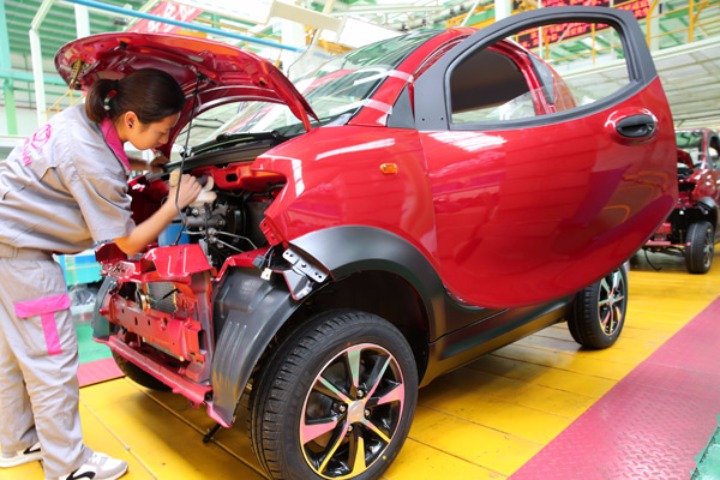
Amidst the broader slowdown, one segment stands out as a beacon of exceptional growth and future potential: New Energy Vehicles (NEVs). Comprising electric cars, plug-in hybrids, and fuel-cell vehicles, NEVs have consistently defied the overall market’s deceleration, demonstrating solid and accelerating growth. November witnessed a record-breaking 119,000 NEV units sold, representing a phenomenal 83 percent surge year-on-year. This remarkable performance pushed cumulative NEV sales for the first 11 months to 609,000 units, a robust 51.4 percent increase from the previous year.
The rapid development of the NEV market aligns perfectly with the Chinese government’s ambitious environmental goals and industrial policy. China has positioned itself as a global leader in NEV adoption and manufacturing, driven by a desire to combat air pollution in its major cities, reduce reliance on imported oil, and establish a dominant position in the automotive technology of the future. Government subsidies, preferential licensing policies (especially in congested mega-cities where conventional car registrations are restricted), and mandates for automakers to produce a certain quota of NEVs have all played crucial roles in fostering this explosive growth.
Xu Haidong expressed confidence in the segment’s trajectory, stating, "Their development is in line with our expectations. It is now almost certain that their sales this year would reach our whole-year estimate of 700,000 units." Looking ahead, the optimism remains high: "We are confident in new energy cars and see no problems in their sales reaching 1 million units in 2018." This forecast underscores the significant momentum and strategic importance attached to NEVs within China’s automotive industry. The continuous introduction of new models by both domestic and international manufacturers, coupled with improving battery technology and range, is further fueling consumer interest and adoption.
Expanding Charging Infrastructure: A Key Enabler
The robust growth in NEV sales is inextricably linked to the parallel expansion of charging infrastructure, a critical enabler for widespread electric vehicle adoption. According to the China Electric Vehicle Charging Infrastructure Promotion Alliance (EVCIPA), a total of 431,800 charging poles had been built across the country by the end of November. This aggressive build-out reflects a concerted effort by both government and private entities to alleviate range anxiety and provide convenient charging options for NEV owners.
The rapid deployment of charging stations, including both public and private chargers, is crucial for convincing consumers to switch from conventional gasoline-powered vehicles. China has made significant investments in this area, recognizing that a comprehensive and accessible charging network is fundamental to achieving its NEV targets. This infrastructure development not only supports current NEV owners but also acts as a powerful incentive for future buyers, reassuring them about the practicality and convenience of owning an electric vehicle. The EVCIPA’s data highlights the scale and speed of this deployment, setting a global benchmark for charging infrastructure development.
Strong Performance in Commercial Vehicles
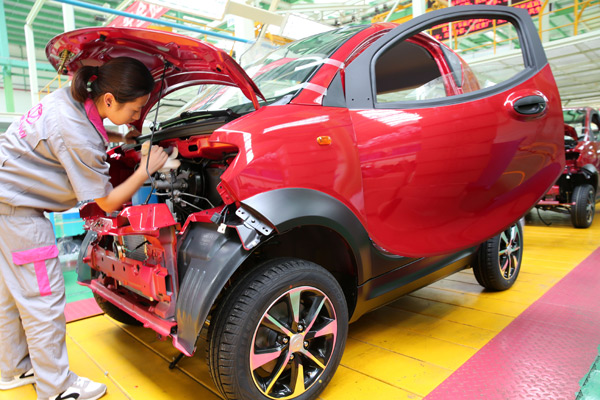
Beyond passenger cars, the commercial vehicle segment, encompassing buses and trucks, also reported a decent sales performance, contributing positively to the overall market figures. In November, 368,000 commercial vehicles were sold, marking a 7.3 percent rise from the same month last year. This strong showing brought total sales in the first 11 months to 3.75 million units, representing an impressive nearly 15 percent year-on-year increase. This growth rate significantly outpaced the industry’s average by 11.2 percentage points.
The sustained strength in commercial vehicle sales can be attributed to several factors. China’s ongoing infrastructure projects, robust logistics sector growth driven by e-commerce expansion, and stricter emission standards prompting fleet upgrades have all contributed to healthy demand for new trucks and buses. The commercial vehicle market is often seen as a leading indicator of economic activity, and its solid performance suggests underlying strength in key industrial and service sectors.
Broader Implications and Future Outlook
The trends observed in China’s automotive market carry significant implications for both domestic and international automakers, as well as the broader global economy. The overall slowdown, while expected due to policy adjustments, necessitates a recalibration of growth strategies for manufacturers. Brands heavily reliant on the segments experiencing declines, such as sedans and minivans, face increasing pressure to innovate and adapt their product offerings to align with evolving consumer preferences. This might involve a stronger focus on SUVs, a faster transition to NEVs, or a re-evaluation of pricing strategies.
For global automakers, China remains the single largest market, and its performance directly impacts their worldwide sales volumes and profitability. The shift towards NEVs, in particular, presents both challenges and opportunities. Those with strong electric vehicle portfolios and advanced battery technologies are well-positioned to capitalize on this boom, while others may struggle to keep pace with the rapid technological advancements and policy-driven market shifts. The increasing competition in the NEV space, with both established giants and agile startups vying for market share, is fostering rapid innovation and driving down costs.
The Chinese government’s unwavering commitment to NEVs is a long-term strategic play, aiming to transform its automotive industry from a follower to a leader in the global transition to sustainable mobility. This commitment is reflected not just in sales targets and subsidies but also in significant investments in research and development, battery manufacturing, and smart transportation systems. The goal of reaching 1 million NEV sales in 2018 is an ambitious but achievable target, given the current momentum and policy support.
In conclusion, China’s automotive market is undergoing a significant transformation. While overall growth is moderating from its previous frenetic pace, largely due to the phasing out of fiscal incentives and a maturing market, specific segments are demonstrating remarkable dynamism. The explosive growth of New Energy Vehicles, supported by extensive infrastructure development and robust government policy, highlights a strategic pivot towards a greener, more technologically advanced automotive future. Meanwhile, the sustained strength of commercial vehicles underscores ongoing economic activity in infrastructure and logistics. Automakers, both domestic and international, must navigate these divergent trends with agility and foresight to succeed in what remains the world’s most vital automotive market. The coming years will undoubtedly see continued evolution, driven by innovation, policy, and shifting consumer desires, as China continues to redefine the global automotive landscape.


 Suro Senen