Nana Muazin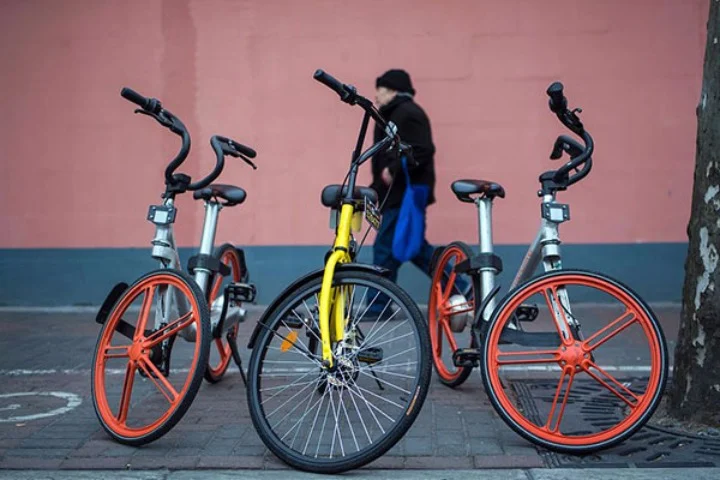
The latter half of 2017 witnessed an escalating debate over the potential merger of China’s two dominant bike-sharing giants, Mobike and Ofo, as investors increasingly voiced their support for consolidation while company management steadfastly resisted the notion. This dynamic tension underscored a critical juncture in the burgeoning, yet financially challenging, landscape of the shared mobility sector, with billions of dollars in venture capital and the future of urban transportation hanging in the balance. The intense competition, characterized by massive cash burn rates and a relentless pursuit of market share, had reached a point where many stakeholders believed that only consolidation could pave a viable path to profitability.
The Genesis of a Phenomenon: China’s Bike-Sharing Boom
The mid-2010s marked the explosion of the "sharing economy" in China, a movement epitomized by the rapid proliferation of dockless bike-sharing services. Emerging in 2016, companies like Mobike and Ofo quickly captured the imagination of urban dwellers and investors alike. Their premise was simple yet revolutionary: an extensive fleet of bicycles, unlocked via a smartphone app, available anywhere and anytime for short-distance travel. This model addressed the "last mile" problem in urban commuting, offering a convenient, affordable, and environmentally friendly alternative to traditional public transport or private vehicles.
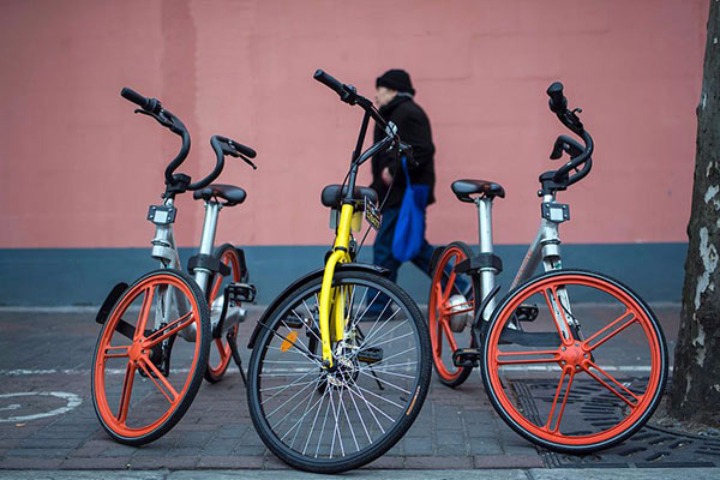
Mobike, launched by Beijing Mobike Technology Co. Ltd., distinguished itself with its distinctive orange bikes and proprietary smart locks, emphasizing durability and technology integration. Ofo, founded by university students at Peking University, initially focused on a campus-based model before expanding nationwide with its iconic yellow bicycles, often employing simpler, less expensive locking mechanisms. Both companies rapidly scaled their operations, deploying millions of bikes across hundreds of cities, attracting tens of millions of users, and raising staggering amounts of venture capital from some of the world’s most prominent investment firms. The initial euphoria painted a picture of boundless growth, transforming urban landscapes and user habits at an unprecedented pace.
The Unsustainable Race: Cash Burn and Investor Intervention
Beneath the veneer of meteoric growth, however, lay a stark economic reality: the bike-sharing industry was hemorrhaging cash. The fierce rivalry between Mobike and Ofo led to an aggressive subsidy war, where rides were often offered at impossibly low prices, sometimes even free, to attract and retain users. This, coupled with the immense costs associated with manufacturing millions of bikes, maintaining them, redistributing them, and combating widespread vandalism and theft, created an unsustainable operational model. Reports from the period estimated that the industry was burning hundreds of millions of dollars monthly, pushing companies further into the red despite their skyrocketing valuations.
It was against this backdrop of escalating losses that investors, who had poured billions into these "unicorns," began to advocate for a merger. Allen Zhu, an early investor in Ofo through GSR Ventures, publicly articulated this sentiment. Speaking at a forum on a Saturday in late 2017, Zhu stated unequivocally that the continued practice of burning cash to compete was "meaningless" for both Mobike and Ofo, leading only to "huge losses." He stressed the inherent complexities of mergers, highlighting the necessity of balancing the diverse interests of investors, entrepreneurs, shareholders, and users. Zhu’s views, which had been reported extensively in prior months, hinged on the observation that Mobike and Ofo had collectively secured a dominant market share, reaching a point of saturation where further expansion within China offered diminishing returns. Given their relatively matched strengths, he argued, only a strategic consolidation could pave the way for long-term profitability and sustainable operations.
Zhu’s perspective found resonance with other significant investors. Wang Gang, another prominent Ofo investor, echoed his support for a merger on multiple occasions. He conceded, however, that as an investor, his influence was limited when a merger decision involved a multitude of complex factors beyond financial considerations, as reported by AI Caijing. On the Mobike side, similar sentiments emerged from its backers. Zhou Kui, a partner at Sequoia Capital China, was quoted as asserting that the time for a merger was ripe, especially given the stable market shares and limited domestic expansion opportunities for both companies. He notably suggested that any resistance to a merger was not originating from the investor community, subtly pointing towards the companies’ respective managements.
Management’s Stand: Pride, Power, and Public Denials
Despite the mounting pressure from financial backers, the leadership teams of Mobike and Ofo publicly and internally resisted the calls for consolidation. The reasons were multifaceted, rooted in corporate pride, valuation disputes, and the inevitable power struggles over leadership roles in a combined entity.
Wang Xiaofeng, the visionary founder and chief executive of Mobike, issued a definitive statement in late November, declaring that his company would "never merge with Ofo." This firm stance underscored a strong belief in Mobike’s independent trajectory and its technological superiority, often positioning itself as a premium service compared to Ofo. Similarly, Dai Wei, the CEO of Ofo, publicly denied any merger talks, maintaining a posture of defiance against investor demands. However, AI Caijing cited an anonymous Ofo employee who revealed an intriguing internal dynamic: Dai Wei had reportedly conveyed to his team that if a merger were to occur, it would explicitly be Ofo acquiring Mobike, not the other way around. This internal statement, if true, vividly illustrated the deep-seated rivalry, the strong sense of corporate identity, and the high-stakes battle for ultimate control that characterized the relationship between the two competitors. The prospect of integrating two distinct corporate cultures, vastly different technological infrastructures, and rival management teams presented an enormous challenge that neither CEO seemed willing to concede on their terms.
The resistance from management was not merely about ego; it also stemmed from strategic differences and a belief in their individual paths to profitability, perhaps through international expansion or diversification of services. Moreover, the valuations of both companies, which had soared into the billions of dollars, were a contentious point. Disagreements over which company held a superior valuation, and thus deserved a more dominant position in a merged entity, were significant hurdles that often scuttled potential consolidation talks in the tech sector.
The Rise of a Third Player: Hellobike and the Alibaba Factor
As Mobike and Ofo grappled with their internal and external pressures, the competitive landscape of China’s bike-sharing industry grew even fiercer with the emergence and rapid ascent of Hellobike. Positioned as the third-largest player by user base, Hellobike strategically focused on second and third-tier cities, which were often underserved by the dominant duo. This shrewd market segmentation allowed Hellobike to carve out a significant niche and attract substantial investment.
In a pivotal development, Hellobike announced in late 2017 that it had successfully raised $350 million in its Series-D1 financing round. Crucially, among the leading investors was Ant Financial, the financial arm of Alibaba Group. This investment was particularly significant as Ant Financial’s parent company, Alibaba, was also a prominent investor in Ofo. This dual investment immediately raised speculation that Alibaba, a behemoth in the Chinese tech landscape, could play a kingmaker role in the inevitable industry consolidation.
Further strengthening its position, Hellobike had been acquired in October 2017 by a subsidiary of Changzhou Youon Public Bicycle System Co Ltd, China’s first listed bike-sharing company. This acquisition brought valuable experience in public bike systems and potentially a more stable financial footing to Hellobike, positioning it as a serious contender rather than just a distant third.
GGV Capital, an early backer of Hellobike, articulated a similar sentiment regarding industry consolidation. Speaking to the South China Morning Post, a GGV Capital representative stated that a merger between the top players was "probably inevitable," asserting that such a move would ensure the necessary scale and put the consolidated entity on a clear path to profitability. Hans Tung, a managing partner at GGV Capital, elaborated on the Alibaba connection, suggesting that if a single major investor had stakes in two competing firms (as Alibaba/Ant Financial did with Ofo and Hellobike), it would naturally facilitate mergers to streamline the market, potentially consolidating the top three players into two dominant entities. This strategic financial leverage hinted at a future where investor influence, particularly from major tech conglomerates like Alibaba, would increasingly dictate the structure of the bike-sharing market.
Implications and the Road Ahead
The protracted merger discussions and the evolving competitive landscape held profound implications for the bike-sharing industry, urban mobility, and the broader venture capital ecosystem. For the bike-sharing companies themselves, consolidation promised a potential end to the ruinous price wars, allowing for a focus on sustainable business models, operational efficiency, and innovation. A merged entity could leverage combined user bases, optimize bike deployment and maintenance, and develop more sophisticated data analytics for demand prediction and resource allocation. However, it also carried the risk of reduced competition, potentially leading to higher prices or diminished service quality for users in the long run.
For urban mobility, the consolidation could mean a more rationalized deployment of bikes, addressing issues like "bike graveyards" – massive piles of discarded or impounded bikes that became an unsightly consequence of rapid, unregulated expansion. A more stable industry might also lead to better integration with public transport systems and more sustainable urban planning solutions.
From a venture capital perspective, the situation highlighted the boom-and-bust cycle inherent in highly competitive, capital-intensive "unicorn" investments. Investors, having poured billions into these companies, were naturally seeking an exit or a path to return on investment, which often necessitated consolidation in markets nearing saturation. The involvement of tech giants like Alibaba further underscored the trend of strategic investments aimed at controlling key sectors of the digital economy.
The debate in late 2017 foreshadowed a period of significant restructuring in the Chinese bike-sharing market. While the immediate merger between Mobike and Ofo did not materialize in the way investors hoped, the pressures for consolidation remained relentless. Ultimately, Mobike was acquired by Meituan-Dianping in April 2018, while Ofo faced severe financial difficulties, grappling with immense debt and dwindling operations. Hellobike, with its strategic focus and backing from Ant Financial, continued to grow, eventually rebranding as Hellogroup and diversifying its services beyond bikes to include e-mopeds.
The saga of Mobike and Ofo stands as a powerful testament to the exhilarating, yet often unforgiving, dynamics of China’s tech industry. It demonstrated how rapid innovation, intense competition, and colossal capital injections can create unprecedented user adoption, but also how the harsh realities of unit economics and the complexities of human ambition ultimately dictate the long-term viability of even the most revolutionary business models. The investor calls for consolidation in 2017 were not merely a suggestion but a prescient warning of the inevitable shakeout that awaited the bike-sharing giants.


 Evan Lee Salim
 Suro Senen