
 Suro Senen
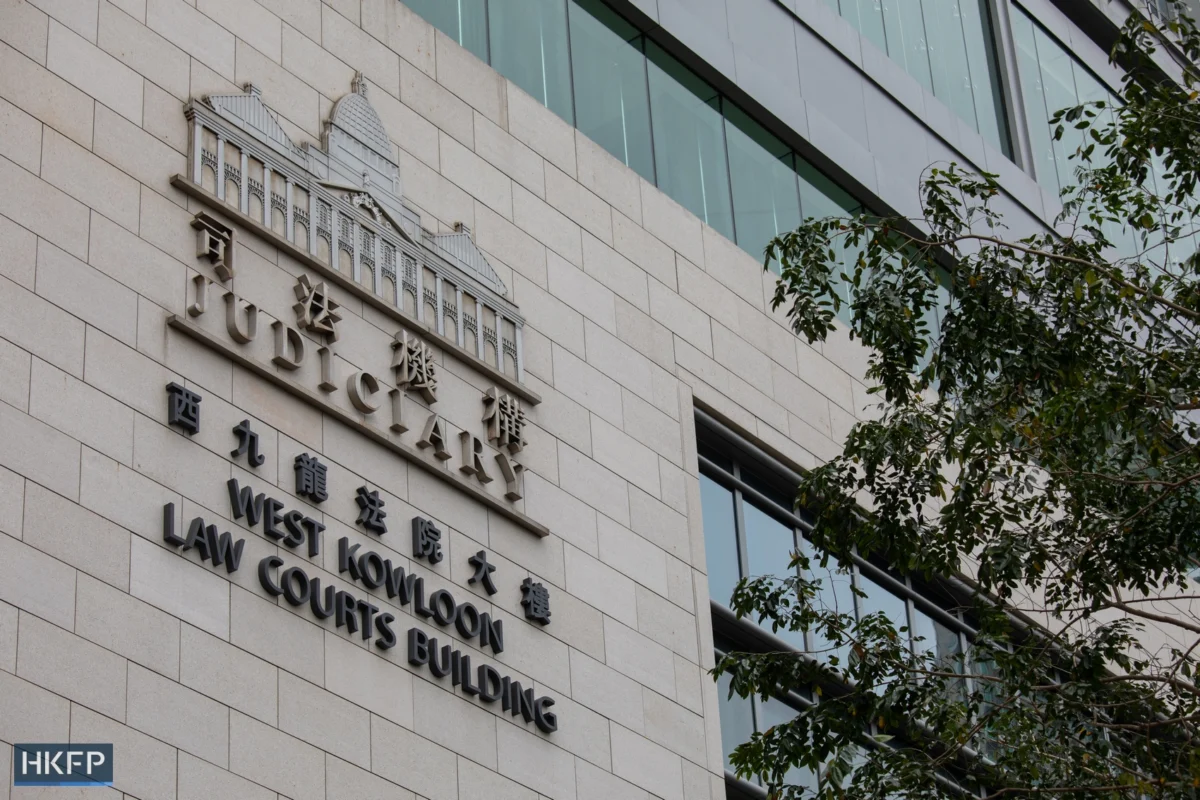
A 61-year-old woman, Yang Chau-kei, is scheduled to go to trial for allegedly displaying seditious publications from her Hong Kong apartment, a case that has brought to the forefront complex legal and ethical questions, particularly in light of her recent diagnosis of psychosis and delusional disorder. The court had previously ordered a psychological evaluation for Yang, the results of which were reviewed earlier this month. Despite these findings, Yang pleaded not guilty to the charges at the West Kowloon Magistrates’ Courts on Monday, proceeding unrepresented.
The charges stem from Yang’s alleged act of displaying seditious materials outside her flat in Tin Shui Wai. This offense falls under the Safeguarding National Security Ordinance, colloquially known as Article 23, Hong Kong’s domestic national security legislation. The trial is slated to commence on October 14 and is expected to last for three days.

Background of the Charges and Legal Proceedings
Yang Chau-kei was accused of displaying materials with seditious intent outside her Tin Chung Court apartment, including on her apartment door, living room window, and in the building corridor. The alleged incidents occurred between March and November 2024. According to the charge sheet prepared by the prosecution, Yang’s actions were intended to stir up hatred against Hong Kong authorities and “the fundamental system of the state established by the Constitution of the People’s Republic of China.”
The Safeguarding National Security Ordinance, enacted in March 2024, is distinct from the Beijing-imposed national security law of 2020. Article 23 targets a range of offenses including treason, insurrection, sabotage, external interference, sedition, theft of state secrets, and espionage. The ordinance grants authorities significant powers, including pre-charge detention for up to 16 days and the potential for restricted access to legal counsel for national security suspects. Convictions under this law can carry penalties of up to life imprisonment. For Yang’s specific charge of displaying seditious publications, the potential penalty upon conviction is up to seven years imprisonment.

Court Proceedings and Defendant’s Plea
During the court appearance on Monday, Chief Magistrate Victor So acknowledged the psychiatric reports submitted by the prosecution. These reports, as conveyed by the prosecution, indicated that Yang was fit to enter a plea. When the charge was read to her, Yang, speaking in Cantonese, declared, "Your Honour, I have committed no crime – they are framing me." Despite her assertion, the magistrate recorded her plea as not guilty.
The prosecution informed the court that their case would rely on the testimony of two civilian witnesses and two police witnesses. Yang’s application for bail was denied, and she remains in custody pending the commencement of her trial.

Psychological Evaluation and its Implications
The court’s decision to order a psychological evaluation earlier this month highlights the defendant’s mental state as a significant factor in the proceedings. The diagnosis of psychosis and delusional disorder raises profound questions about her capacity to form the necessary intent for the alleged offense and her ability to comprehend the legal proceedings against her. While the psychiatric reports suggest she is fit to plead, the nature of her diagnoses, particularly delusional disorder, could be central to her defense. Individuals with delusional disorders may hold firmly fixed, false beliefs that are resistant to reason or contrary evidence. This could impact the prosecution’s ability to prove intent and the defense’s strategy in presenting her case.
The legal framework in Hong Kong, like many jurisdictions, allows for considerations of mental health in criminal proceedings. This can range from fitness to stand trial to the defense of diminished responsibility or insanity. The outcome of Yang’s trial will likely depend on how her mental health condition is presented and interpreted within the context of the sedition charges and the stringent national security laws.

Broader Context of National Security Legislation in Hong Kong
The case of Yang Chau-kei is unfolding against a backdrop of intensified national security measures in Hong Kong. Following the widespread pro-democracy protests in 2019, Beijing imposed the National Security Law in 2020, which significantly curtailed freedoms of expression and assembly. The subsequent enactment of Article 23 in March 2024, a domestic security law, further broadened the government’s powers to prosecute offenses deemed a threat to national security.
Critics of these laws argue that they have stifled dissent and eroded Hong Kong’s autonomy and fundamental rights. International observers and human rights organizations have expressed concerns about the broad scope of these legislations and their potential for misuse. Supporters, however, maintain that these laws are necessary to restore stability and prevent acts that could undermine national security and China’s sovereignty.

The implementation of Article 23 has led to a surge in arrests and prosecutions for offenses related to national security, including sedition. This case, involving an elderly woman with diagnosed mental health conditions, brings a unique dimension to the ongoing application of these laws. It raises questions about the proportionality of applying stringent security legislation to individuals whose actions may be influenced by mental health challenges.
Potential Ramifications and Public Interest
The trial of Yang Chau-kei will likely attract significant attention, both domestically and internationally, given the sensitive nature of national security laws and the defendant’s mental health status. The proceedings could shed further light on how Hong Kong courts handle cases involving individuals with mental health issues under the new security legislation.

Legal analysts suggest that the defense may focus on establishing that Yang lacked the requisite intent due to her mental condition, potentially challenging the prosecution’s ability to prove her guilt beyond a reasonable doubt. The court will need to carefully weigh the evidence presented, including the psychiatric reports, against the legal definitions of sedition and the intent required to commit the offense.
The outcome of this case could have implications for how similar situations are handled in the future. It also highlights the ongoing debate surrounding the balance between national security and individual rights, particularly for vulnerable populations. The case serves as a stark reminder of the complex legal and ethical considerations that arise when national security legislation intersects with mental health and freedom of expression.
The legal battle ahead for Yang Chau-kei underscores the challenges faced by individuals accused under Hong Kong’s evolving national security framework. Her plea of not guilty, coupled with her diagnosed mental health conditions, sets the stage for a trial that will scrutinize the application of sedition laws in a jurisdiction grappling with significant legal and political shifts. The court’s ultimate decision will undoubtedly be closely watched as a barometer of the legal landscape in Hong Kong.

 Ammar Sabilarrohman





Hong Kong Political Commentator Claims No Investigation Underway During National Security Police Meeting
Wong Kwok-ngon, known by his online moniker Wong On-yin, has testified in the District Court that he did not believe he was part of a national security investigation when he…