Ali Ikhwan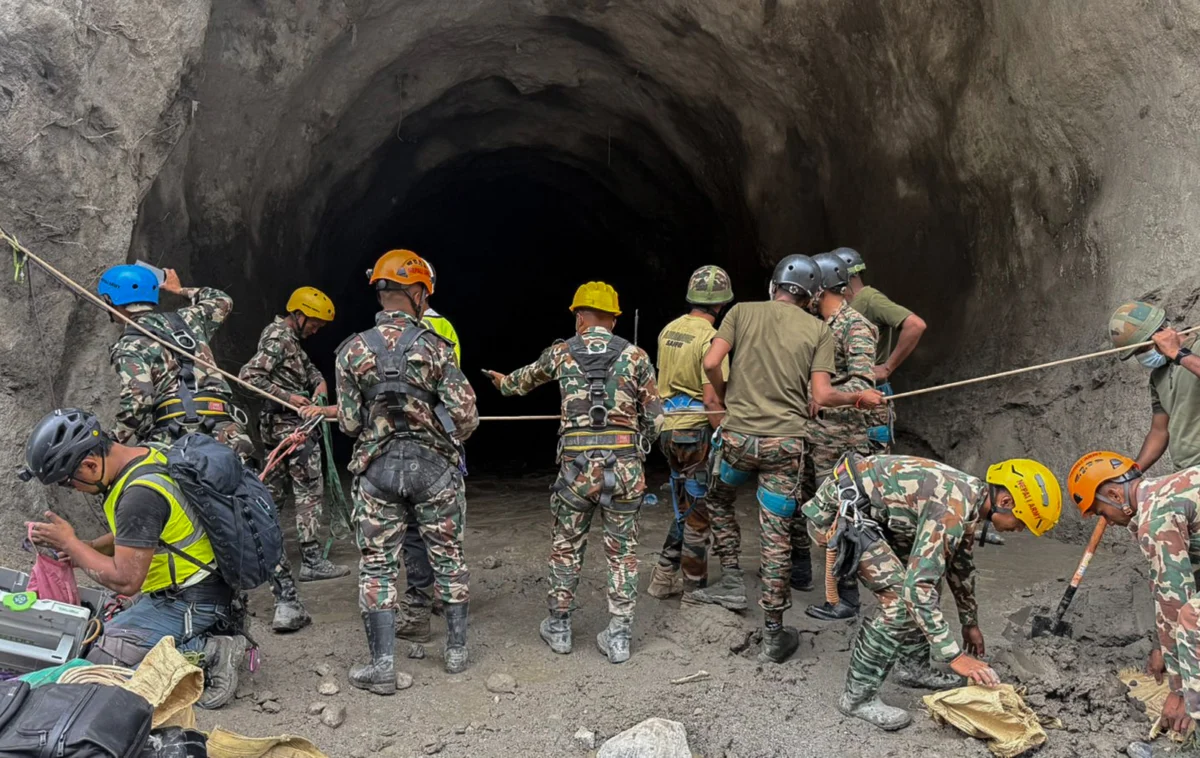
The devastating Himalayan glacial floods, triggered by a catastrophic Glacial Lake Outburst Flood (GLOF) last Wednesday, have now claimed over 1,000 lives, with the grim milestone crossed on Tuesday as search and rescue operations intensified across Nepal and China. The monumental disaster has left nearly 4,500 people missing, believed to have been swept away by the colossal wave of freezing water, rocks, and debris that roared downstream, obliterating entire settlements and carving a path of destruction through the mountainous terrain. As rescue teams from both nations race against time in treacherous conditions, the focus remains on locating survivors, particularly dozens of hydropower workers feared trapped in submerged tunnels, even as hopes dwindle with only recovered bodies emerging from the sludge-choked passages.
The Unfolding Humanitarian Crisis
The scale of the humanitarian crisis gripping the Himalayan region is immense. In Nepal, search and rescue teams, spearheaded by the Nepal Army, are engaged in a relentless effort, employing digging, drilling, and even blasting techniques to penetrate debris-filled tunnels. "We are focused on search and rescue efforts at the tunnels; our work is continuing," stated Raja Ram Basnet, spokesman for the Nepal Army, on Tuesday, emphasizing the dual mission of recovering victims and preventing disease outbreaks amidst the widespread devastation. The sheer volume of casualties has overwhelmed local infrastructure, with mortuaries in Nepal reaching capacity. Authorities have been compelled to initiate mass burials for hundreds of unidentified bodies after meticulous DNA sampling, a stark indicator of the disaster’s magnitude. The cross-border impact is also evident, with at least 17 bodies retrieved from rivers far downstream in India, underscoring the floodwaters’ far-reaching destructive power.

The human toll is perhaps best encapsulated by the poignant scenes unfolding in Nepal’s capital, Kathmandu. Crowds of anxious relatives have converged, lining up outside hospitals to affix photographs of their missing loved ones onto a "wall of hope," a desperate attempt to find any trace of them alive. Among them is Debu Sapkota, a 58-year-old driver, whose heart-wrenching quest is for his 83-year-old mother-in-law and granddaughter, both swept away in the town of Trishuli Bazaar. Despite a warning alert sounding, Sapkota recounted, his elderly mother-in-law was "too old to run," and her granddaughter, attempting to help her escape, was tragically carried away with her by the torrent. With eyewitness accounts confirming their fate, Sapkota holds "no hope that they survived," his sole remaining wish being to "find their bodies." In other affected regions like Chitwan district, mourning relatives have already begun the painful process of cremating their dead, while soldiers continue the grim task of unloading victims’ bodies from helicopters in the hard-hit Nuwakot and Rasuwa districts.
Understanding the Glacial Lake Outburst Flood (GLOF)
The catastrophe originated as a Glacial Lake Outburst Flood (GLOF), a rapid release of water from a glacial lake due to various factors, including the collapse of natural dams formed by ice or moraine. The Himalayas, home to thousands of glaciers and glacial lakes, are particularly susceptible to GLOFs. These events are often triggered by glacial collapses, intense rainfall, earthquakes, or even landslides into glacial lakes, causing an abrupt surge of water and debris to rush down valleys. Last Wednesday’s event was described as a "gigantic wave of freezing water, rocks and debris from a high-altitude glacial collapse," indicating a massive failure within the glacial system itself, likely exacerbated by factors such as rapidly melting ice.
The immediate aftermath was one of unbridled destruction. The floodwaters, carrying an immense load of sediment, boulders, and tree trunks, scoured riverbeds, widened valleys, and engulfed everything in their path. Entire villages, once vibrant communities nestled in the Himalayan foothills, were simply wiped off the map. Agricultural lands were buried under meters of mud and rocks, rendering them unusable for years to come. The sheer velocity and destructive force of the GLOF left little chance for those caught unaware, transforming serene landscapes into scenes of unimaginable devastation within minutes.

Widespread Infrastructure Devastation and Economic Strain
Beyond the tragic loss of life, the GLOF has inflicted catastrophic damage on critical infrastructure, exacerbating the humanitarian crisis and posing immense challenges for recovery. Roads, essential for connecting remote communities and delivering aid, have been smashed or completely washed away, severing vital lifelines. Dozens of bridges, crucial for traversing the rugged terrain, have been destroyed, isolating vast swathes of the population. Power plants, including those under construction or recently operational, which are vital for Nepal’s energy supply and economic development, have been extensively damaged or rendered non-functional. The ongoing search for trapped hydropower workers underscores the severity of the damage to these crucial facilities.
The destruction has left countless families homeless, their residences reduced to rubble or buried under thick layers of mud. Many are now forced to live in makeshift shelters, contending with the harsh elements, including heavy rains that continue to lash the region. In Nuwakot, AFP photographers observed residents sifting through the mud and debris of their former homes, desperately salvaging usable items, while others attempted to string up plastic sheeting to create rudimentary shelters amidst the ruins. Police officer E. Hawadi in Nuwakot articulated the overwhelming nature of the challenges, simply stating, "There are too many challenges."
Nepal, already facing economic pressures as a developing nation, now confronts a reconstruction effort of monumental proportions. The country’s Prime Minister Balendra Shah has warned that reconstruction costs could easily run into the "billions of dollars," a staggering sum for an economy with limited resources. The long-term economic implications are severe, affecting livelihoods dependent on agriculture, tourism, and hydropower generation, potentially setting back development efforts by years.

International Scope: Missing Foreigners and Cross-Border Impact
The disaster’s reach extends beyond national borders, with a significant number of foreign nationals among the missing. Reports indicate that 583 foreigners are missing in Nepal, and an additional 261 in China, hailing from more than 30 nations worldwide. These individuals include tourists who had ventured into the seemingly serene Himalayas for trekking adventures, as well as Hindu pilgrims undertaking spiritual journeys to Tibet’s sacred Mount Kailash. The presence of such a diverse international group highlights the region’s global appeal as a tourist and pilgrimage destination, and the global ramifications of this natural disaster. Consular services and diplomatic missions worldwide are now working to ascertain the fates of their citizens, adding another layer of complexity to the already arduous search and recovery efforts.
The Climate Change Nexus: A Call for Global Action
Amidst the immediate crisis, a critical conversation has emerged regarding the underlying causes of such extreme events: climate change. There is growing anger and frustration in Nepal, a largely rural nation of 30 million people, which has historically contributed very little to the greenhouse gas emissions driving global warming. Despite its minimal contribution, Nepal finds itself on the frontlines of climate change impacts, experiencing increasingly frequent and intense natural disasters.

Prime Minister Balendra Shah articulated this sentiment strongly in a statement late Monday: "It is now time for us to strongly raise with the international community the issue of the disasters we are experiencing as a result of climate change." His call reflects a broader demand from vulnerable developing nations for climate justice and increased support from industrialized nations, whose historical emissions are largely responsible for the changing global climate.
Scientific consensus unequivocally links rising global temperatures to the accelerated melting of glaciers in the Himalayas, the world’s highest mountain range. This rapid melt not only contributes to sea-level rise but also significantly increases the volume and instability of glacial lakes, thereby elevating the risk of GLOFs. As temperatures continue to climb, the frequency and intensity of such catastrophic events are projected to increase, posing an existential threat to communities living downstream. The current disaster serves as a stark warning and a powerful testament to the urgent need for global climate action, adaptation strategies, and international support for vulnerable nations.
Bilateral Efforts and Transparency Concerns
The response to the GLOF has involved concerted efforts from both Nepal and China, reflecting the cross-border nature of the Himalayan disaster. While Nepal focuses on its severely affected regions, China has also mobilized significant resources for search and rescue operations in Tibet. China’s state media reports 16 dead and 546 people missing on its side of the border. This brings the overall confirmed death toll to 1,003 and the total number of missing individuals to 4,462 across both nations.

In Tibet, which remains largely inaccessible to foreign journalists, Chinese authorities are the primary source of official information. Emergency workers, officials, and residents in Tibet held solemn memorial services on Tuesday, honoring the victims. China’s official news agency Xinhua reported that "rescuers, local officials and residents stood in silence to mourn the victims," and that over 2,000 people, including soldiers, are actively aiding rescue operations. Xinhua further detailed that teams are "working around the clock to search for survivors, repair roads, set up communication base stations and restore power lines."
However, the transparency of China’s reporting has been questioned by Tibetan advocacy groups in exile. Tencho Gyatso, president of the International Campaign for Tibet, called for China to disclose "complete and verifiable information about the damage and casualties," raising concerns about potential underreporting. In response, Beijing’s foreign ministry asserted on Monday that the "release of information has been open, transparent and timely," rejecting any claims of obfuscation. This divergence highlights the broader challenges of information flow and verification in politically sensitive regions, even during times of humanitarian crisis.
Long-Term Recovery and Resilience Building
As the immediate search and rescue efforts continue, the focus will inevitably shift towards long-term recovery and the monumental task of rebuilding. This disaster underscores the urgent need for enhanced disaster preparedness mechanisms, early warning systems for GLOFs, and robust infrastructure development in vulnerable regions. International aid and cooperation will be paramount, not only for humanitarian relief and immediate recovery but also for supporting Nepal’s efforts to build climate resilience and adapt to the increasing risks posed by a warming planet. The tragedy in the Himalayas serves as a sobering reminder of humanity’s vulnerability to the forces of nature, amplified by the pervasive and escalating impacts of climate change, demanding a collective and sustained global response.


 Sagoh
Sagoh
 Asro
Asro